

Fine construction dust like gypsum, plaster, or concrete can instantly choke an industrial vacuum cleaner, causing a rapid drop in static pressure and risking motor overheating. Restoring airflow requires a careful balance of mechanical agitation and aerodynamic force to preserve the microscopic pores of the filter media.
The Physics of Filter Clogging
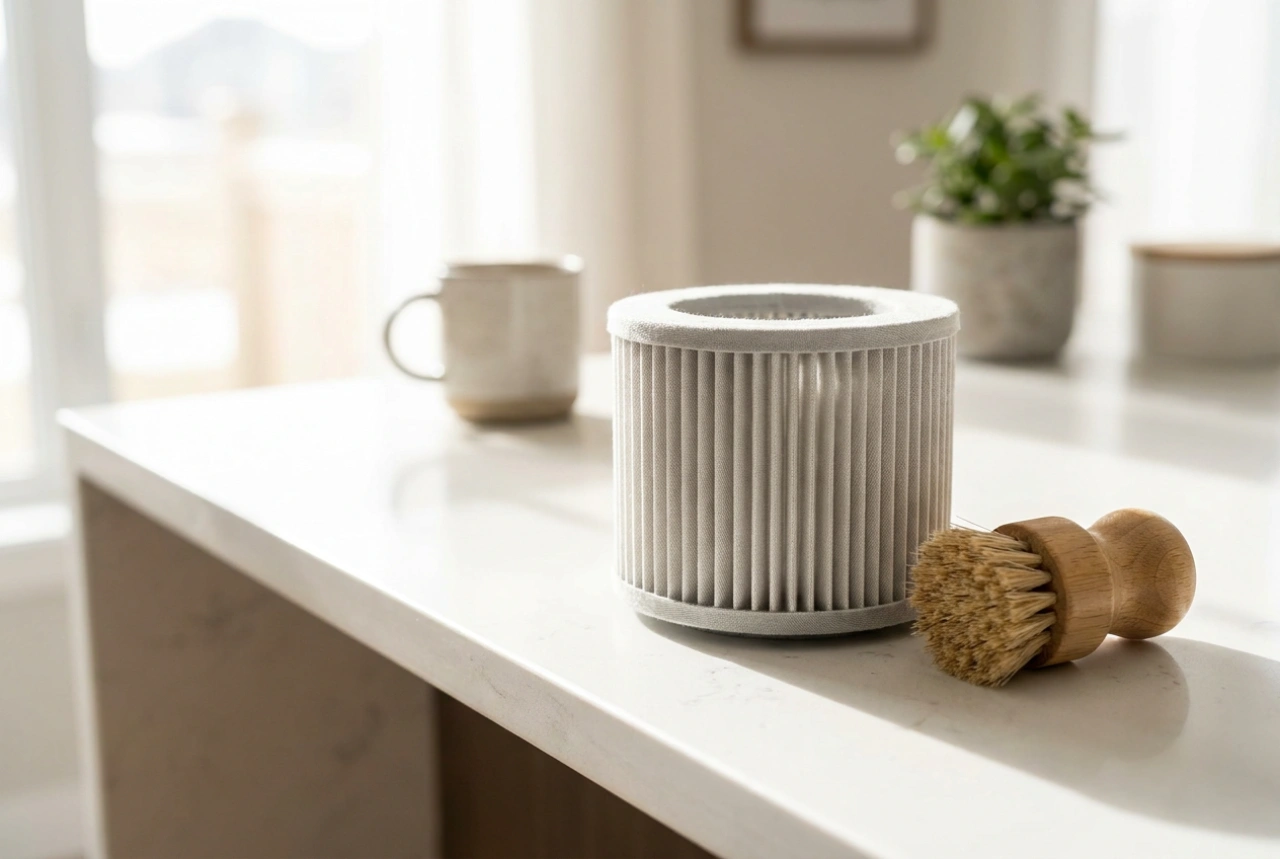
To clean a filter effectively, one must understand how it captures dust. Industrial vacuums typically use pleated cartridges made from cellulose, polyester, or polytetrafluoroethylene membranes. These filters operate on physical principles: inertial impaction, interception, and diffusion. Fine dust particles, particularly those under 5 microns, often wedge deep within the microscopic gaps of the fibre matrix—a phenomenon known as depth loading. Standard dust forms a porous cake on the filter surface, which actually aids filtration up to a point. However, once this cake becomes too dense, airflow drops. If the dust is hygroscopic, such as gypsum or cement, it absorbs ambient moisture and hardens inside the fibres, sealing the filter permanently if not addressed immediately.
Dry Extraction: The Correct De-dusting Protocol
Before introducing any liquids, a dry extraction process must be executed. The temptation to blast the filter with high-pressure compressed air must be resisted. Standard air compressors operate at pressures exceeding 6 bar, which easily tears the delicate non-woven structure of the filter or widens the microscopic pores, permanently destroying its filtration efficiency.
- Gentle Tapping: Hold the filter by its rigid plastic end caps and tap it flat against a hard surface protected by a disposal bag. Never strike the pleated paper or fabric directly, as this causes microscopic fractures in the media.
- Low-Pressure Reverse Purging: If using compressed air, regulate the pressure down to a maximum of 2 bar. Direct the air nozzle from the clean side of the filter pointing outwards. This uses the reverse path of the original airflow to dislodge particles from the matrix. Keep the nozzle at least 15 centimetres away from the pleats.
- Vacuuming the Filter: Use a secondary vacuum equipped with a soft brush attachment to gently sweep the exterior pleats, drawing dust away rather than pushing it deeper.
The Chemistry of Wet Washing: Polyester vs. Cellulose
Not all industrial filters can tolerate water. Cellulose-based filters will disintegrate when wet because water breaks down the organic binders holding the wood pulp fibres together. Only synthetic filters, primarily made from spun-bond polyester or those with a laminated membrane, are washable.
If washing is appropriate, the presence of reactive dust must be managed. If the filter is coated in gypsum or cement, any residual dry dust will hydrate when exposed to water, turning into a solid barrier. Ensure the dry extraction phase is almost complete before washing. Use lukewarm water without any pressure. Submerge the filter in a vessel of clean water and gently agitate it. Avoid harsh alkaline detergents or chlorine-based bleaches, as these chemical agents degrade the synthetic polymer bonds and strip away any hydrophobic coatings applied during manufacturing. Rinse thoroughly from the inside out with a low-pressure stream of water.
Crucial Drying Mechanics
Reinstalling even a slightly damp filter into an industrial vacuum is catastrophic. The moisture acts as a powerful adhesive, causing incoming dry dust to instantly liquefy and form an impermeable mud layer over the media, permanently ruining the filter. Dry the filter naturally in a well-ventilated space. Do not use heat guns, radiators, or direct sunlight, as extreme thermal exposure causes synthetic fibres to shrink and warp, compromising the seal around the filter housing. Allow at least 24 to 48 hours for complete desiccation before reassembly.