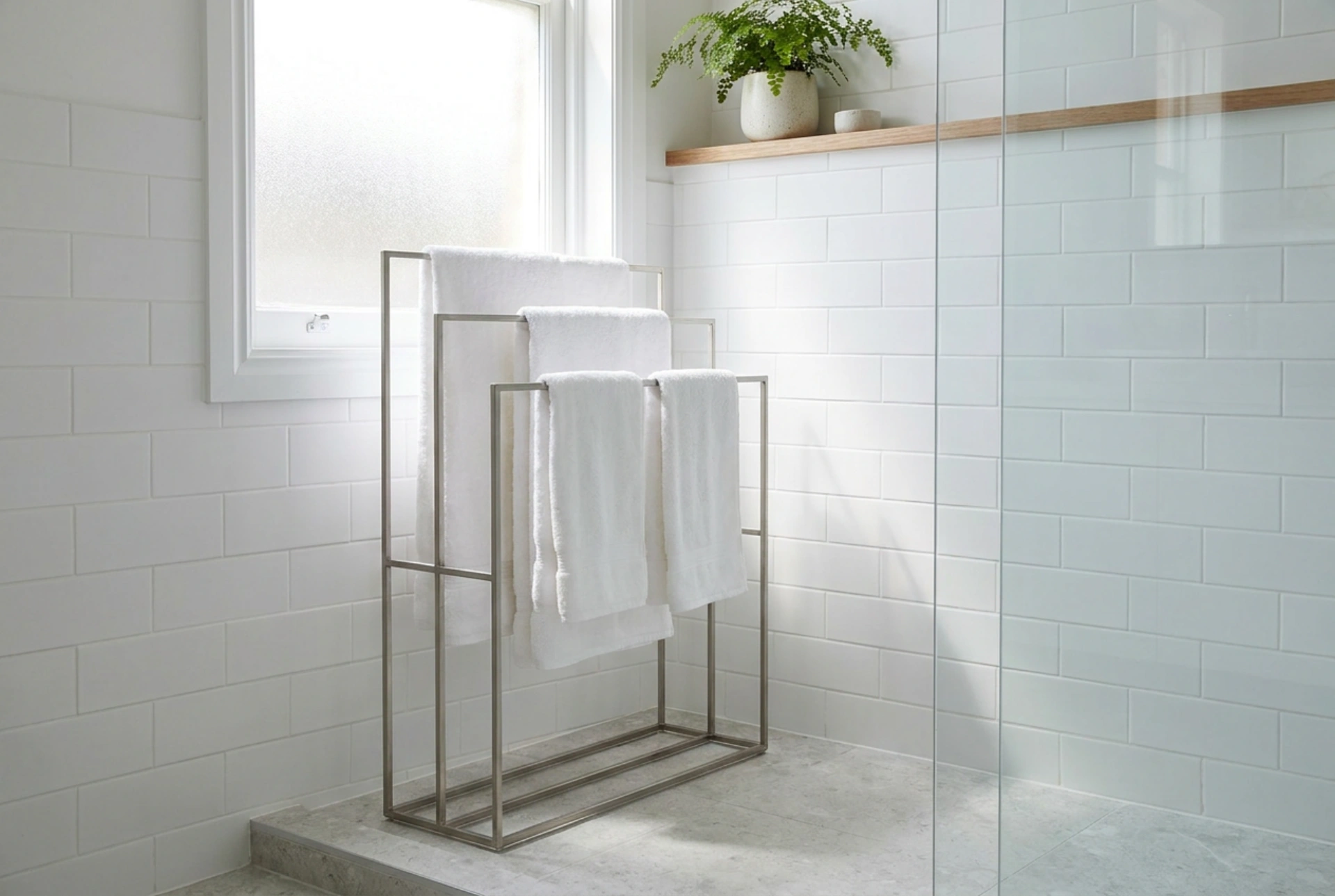


Managing laundry in a tight bathroom requires more than just squeezing in a drying frame; it demands a strategic understanding of thermodynamics and indoor air circulation. By understanding how air moves and how humidity behaves in confined spaces, a slim clothes drying rack can become a highly efficient tool for rapid moisture evaporation.
The Physics of Drying in Confined Spaces
Drying clothes is essentially a process of phase transition, where liquid water in fabric fibers evaporates into the surrounding air. In a small bathroom, this process is governed by two key factors: relative humidity and the boundary layer of air. When wet garments are placed close together on a slim rack, they quickly saturate the immediate air layer with moisture. If this stagnant, humid boundary layer is not disrupted, evaporation slows down significantly or stops altogether.
To overcome this, you must facilitate convection. Warm air rises because it is less dense than cold air. By utilizing a vertical slim drying rack, you can take advantage of this natural convective flow. Placing the rack in a spot where air naturally circulates—such as between a doorway and an extraction vent—ensures that dry air continuously replaces the saturated boundary layer, speeding up the drying process without mechanical assistance.
Material Science of Compact Drying Racks
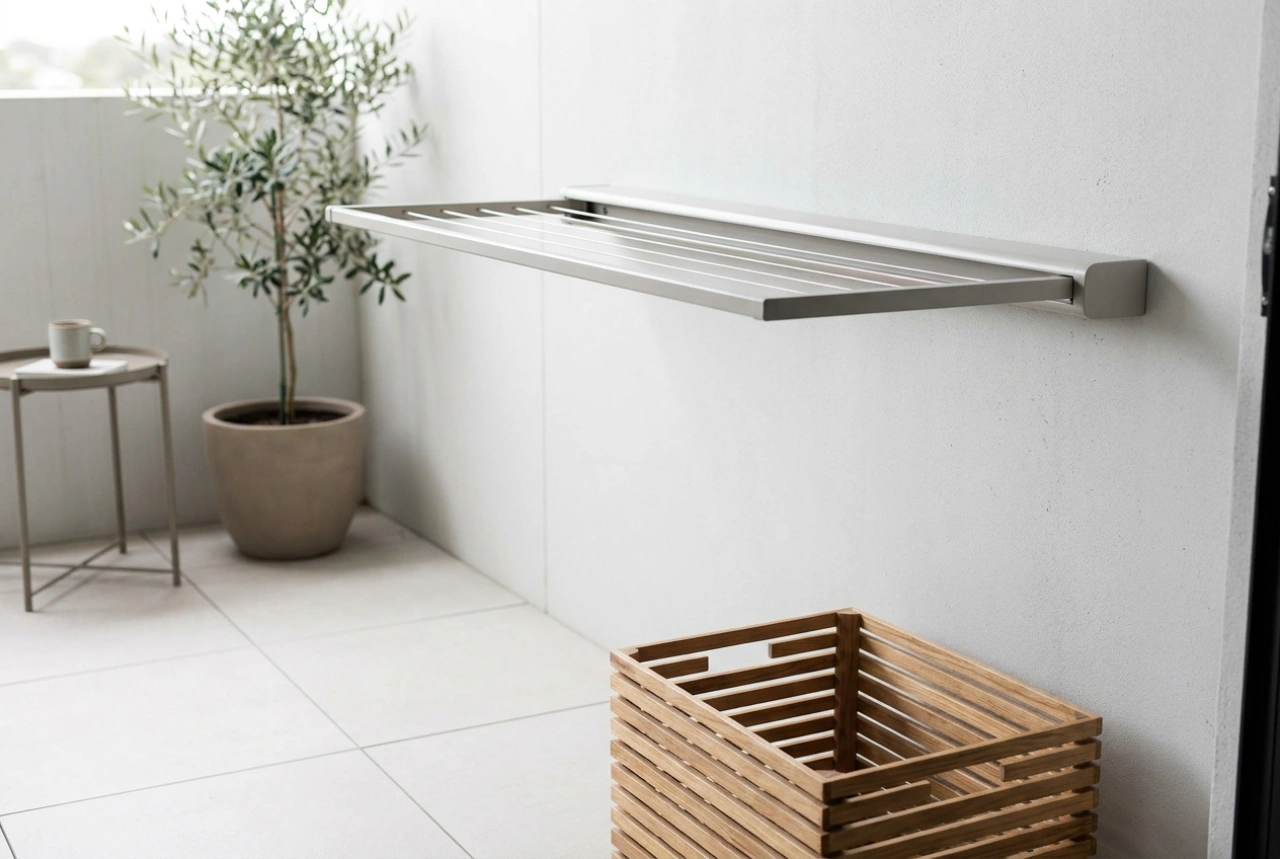
The choice of material for your slim drying rack directly impacts both its longevity and its drying efficiency. In high-humidity environments like bathrooms, raw metals will rapidly oxidize, leading to rust stains on fabrics. Therefore, high-quality slim racks are typically constructed from anodized aluminum, powder-coated steel, or stainless steel.
Anodized aluminum offers excellent corrosion resistance and is lightweight, making it easy to maneuver in tight spaces. However, powder-coated steel provides greater structural density, preventing the rack from tipping when loaded unevenly. The polymer coating on powder-coated frames acts as a barrier against water and household chemicals, but it must be inspected for chips; any exposed iron will quickly rust when exposed to bathroom moisture. Stainless steel (specifically 304 grade) offers the highest resistance to moisture and chemical exposure, maintaining its structural integrity and cleanliness indefinitely without the risk of paint flaking.
Strategic Placement for Maximum Vapor Transport
Where you position your slim drying rack determines how quickly water molecules escape the fabric. Avoid placing the rack flat against a wall or tucked into a tight corner. These areas are "dead zones" where air velocity drops to near zero, trapping moisture and encouraging mold growth on wall surfaces.
Instead, position the rack parallel to the path of airflow. If your bathroom has an exhaust fan, place the rack beneath or near it to pull humid air out of the room. Simultaneously, keep the bathroom door slightly cracked to allow dry air from the rest of the home to enter. This creates a low-pressure pathway that continuously draws fresh, dry air through the wet clothes. If the bathroom features a radiator or underfloor heating, position the rack nearby to harness the rising thermal currents, which increases the air's capacity to hold water vapor before reaching saturation.
Loading Techniques: Optimizing Air Gaps and Weight
To maximize the efficiency of a slim drying rack, the arrangement of garments must follow physical principles of spacing and heat distribution. Heavy fabrics, such as denim or thick cotton, hold significantly more water and should be placed at the top of a vertical rack or on the outer edges. This exposes them to the warmest air in the room and prevents them from dripping moisture onto lighter garments below.
Lighter fabrics, such as synthetics and thin cottons, dry quickly and should be spaced on lower rungs with at least two fingers of space between each item. Never double-layer garments over a single bar; this collapses the air gaps and quadruples drying time by trapping moisture between the fabric layers. Instead, utilize hangers suspended from the rack's frame to hang shirts vertically, utilizing the vertical volume of the room while keeping the horizontal rungs free for flat drying of delicate woolens or knits that could stretch out of shape if hung vertically.