

Maximizing the efficiency and lifespan of a cordless stick vacuum cleaner relies heavily on the correct installation of its docking station and proper battery maintenance. Understanding the underlying physics of cyclonic airflow and lithium-ion chemistry ensures your appliance maintains peak suction power for years.
Strategic Docking Station Installation and Physics
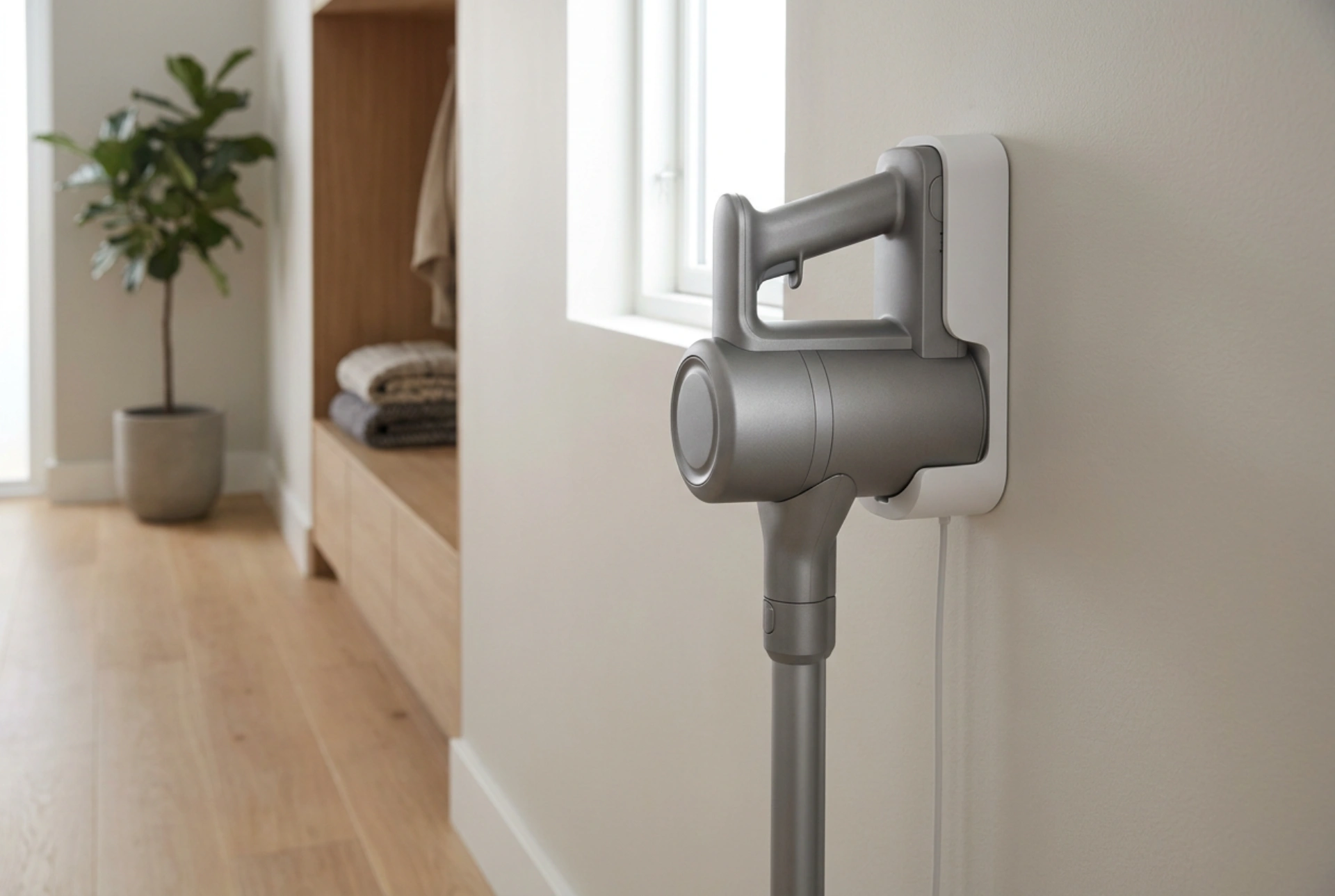
The docking station serves a dual purpose: secure storage and electrical charging. Proper installation requires selecting a mounting location that accounts for structural load and thermal dynamics. When mounting the dock to drywall, you must use appropriate hollow-wall anchors or secure the bracket directly into a wooden wall stud. A standard stick vacuum weighs between 2 and 4 kilograms; when docked, gravity exerts downward force, but pulling the unit out of the dock exerts an outward, sheer force that can easily tear unanchored screws out of plasterboard.
Additionally, position the dock in a climate-controlled area. Lithium-ion batteries are sensitive to ambient temperatures. Charging a battery in an environment above 30°C or below 10°C accelerates chemical degradation inside the cells, reducing the overall lifespan of the battery pack. Ensure there is at least 10 centimeters of free space around the docked unit to allow heat dissipation during the charging cycle.
Battery Chemistry and Charging Discipline
Modern cordless vacuums utilize lithium-ion (Li-ion) batteries due to their high energy density. To prevent premature capacity loss, it is crucial to understand how these cells operate. Unlike older nickel-cadmium batteries, Li-ion batteries do not suffer from "memory effect," meaning they do not need to be fully discharged before recharging.
- Continuous Docking: Keeping the vacuum on its docking station when not in use is generally beneficial. Modern docking stations feature integrated charge-control circuits that stop the flow of current once the battery reaches 100%, preventing overcharging.
- Thermal Regulation: Never charge the vacuum immediately after a heavy cleaning session on maximum power. The high current draw heats the battery pack; charging a hot battery causes thermal stress that damages the internal cathode materials. Allow the device to cool for 15 minutes before placing it back on the dock.
- Deep Discharge Prevention: Avoid running the battery down to absolute zero. Modern electronics will shut the vacuum off before complete depletion to protect the cells, but storing a completely empty vacuum for weeks can lead to a state of deep discharge, rendering the battery permanently unusable.
Maintaining Aerodynamic Suction and Filtration
A cordless vacuum relies on centrifugal force created within its cyclonic chambers to separate dust particles from the airflow. When the dust bin is full, or the filters are clogged, the static pressure within the system drops, reducing cleaning efficiency and forcing the motor to work harder, which drains the battery faster.
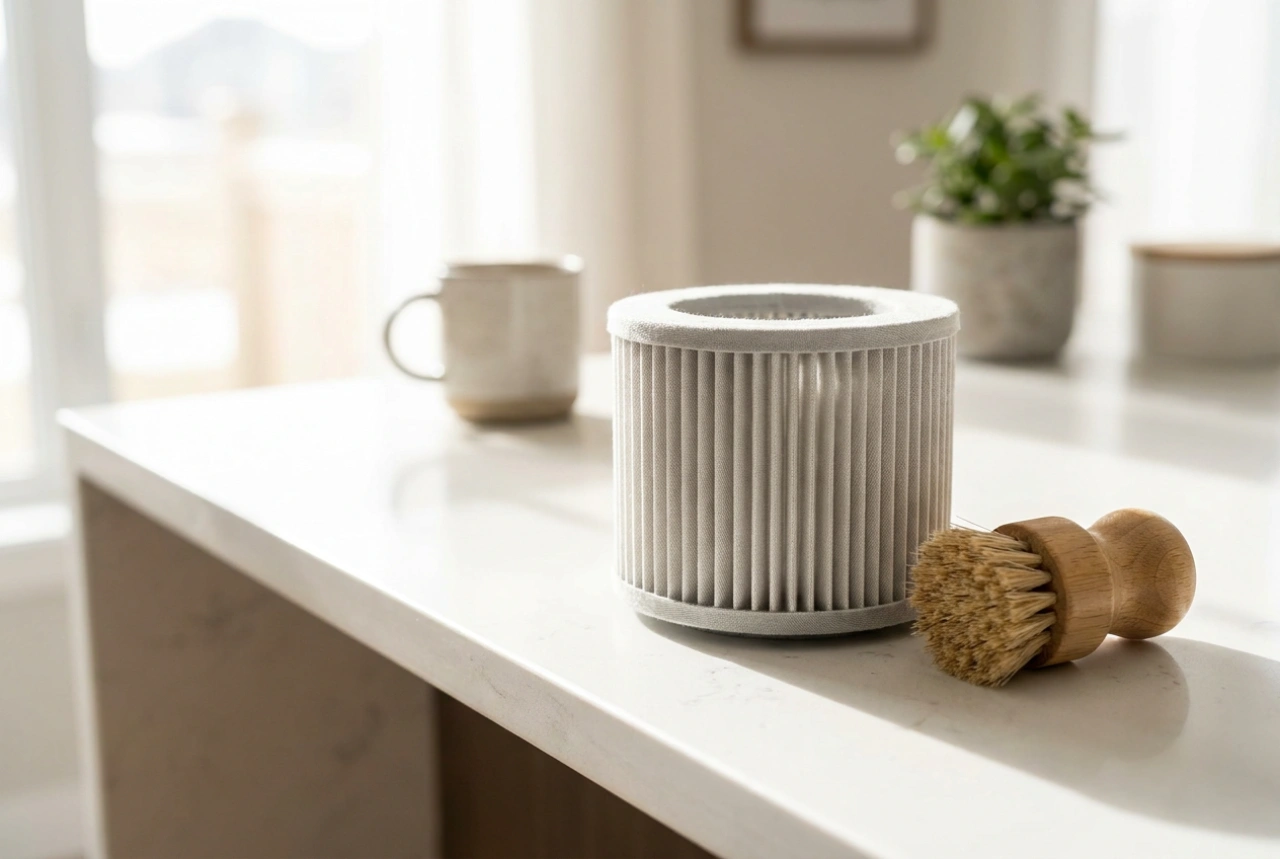
To maintain optimal aerodynamics, empty the dust cup when it reaches the maximum fill line. This ensures the vortex-generating cone has enough volume to spin incoming air and separate heavier debris before it reaches the pre-motor filter. Wash the filters (both foam pre-filters and pleated HEPA post-filters) once a month using cold water without any detergents, as soap residue can clog the microscopic pores. Allow them to air-dry completely for at least 24 hours before reassembling. Reinstalling a damp filter introduces moisture into the high-speed motor, leading to corrosion and electrical short-circuits.
Optimizing Mechanical Agitation
Efficient vacuuming is not about speed; it is about contact time and mechanical agitation. The motorized brush roll uses stiff bristles to lift fibers and dislodge particles from carpets. Moving the vacuum too quickly does not allow the brush roll enough rotations over a single spot to agitate the fibers effectively. Maintain a steady, slow pace, allowing the brush to lift debris into the airflow channel, where the negative pressure can carry it to the cyclonic chamber.