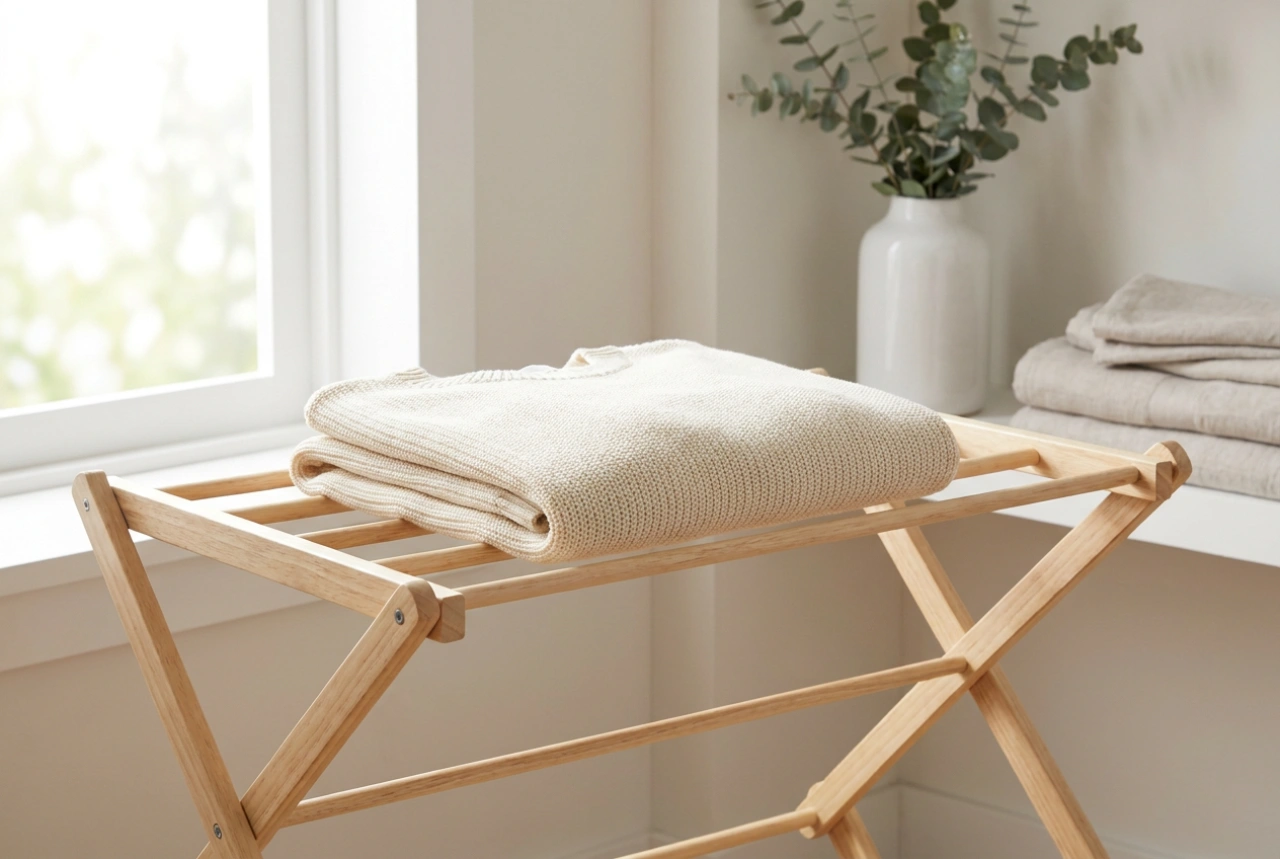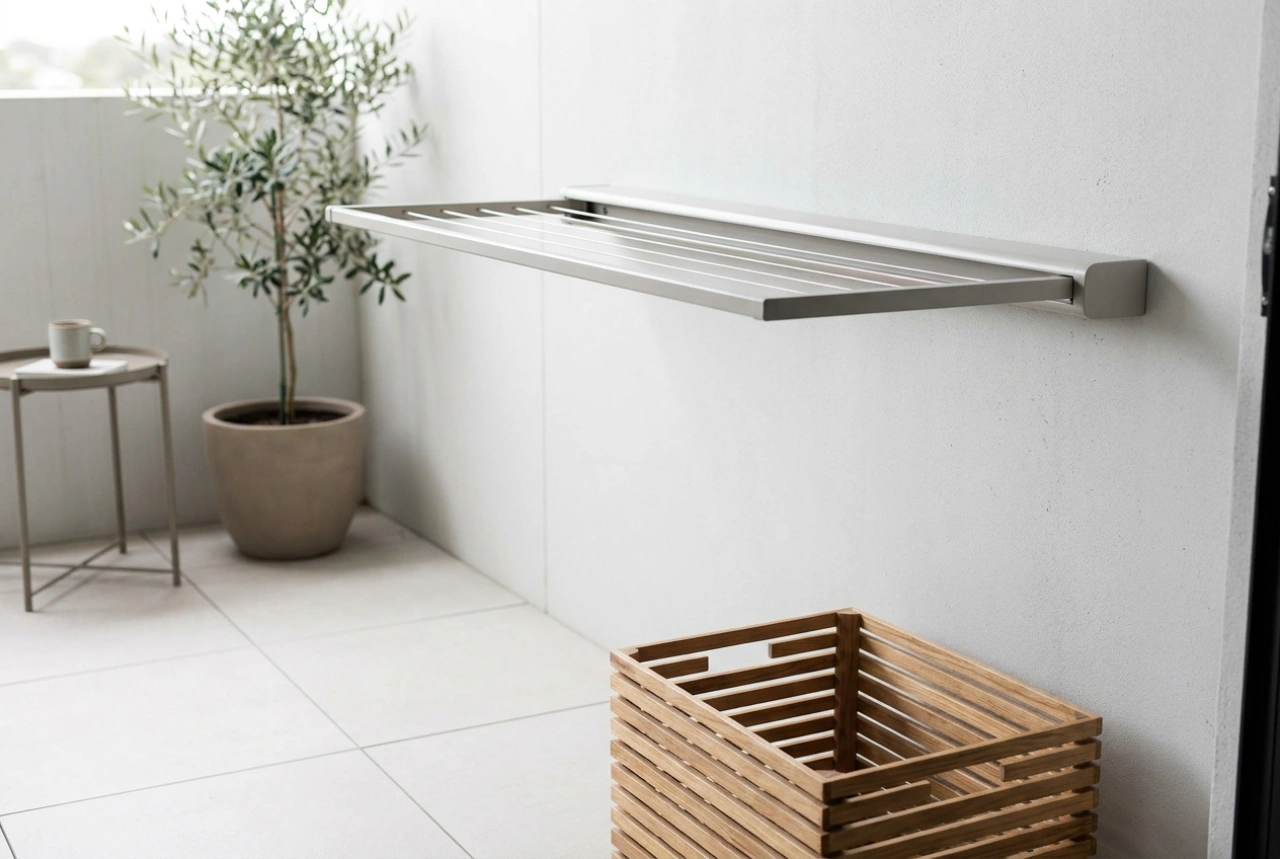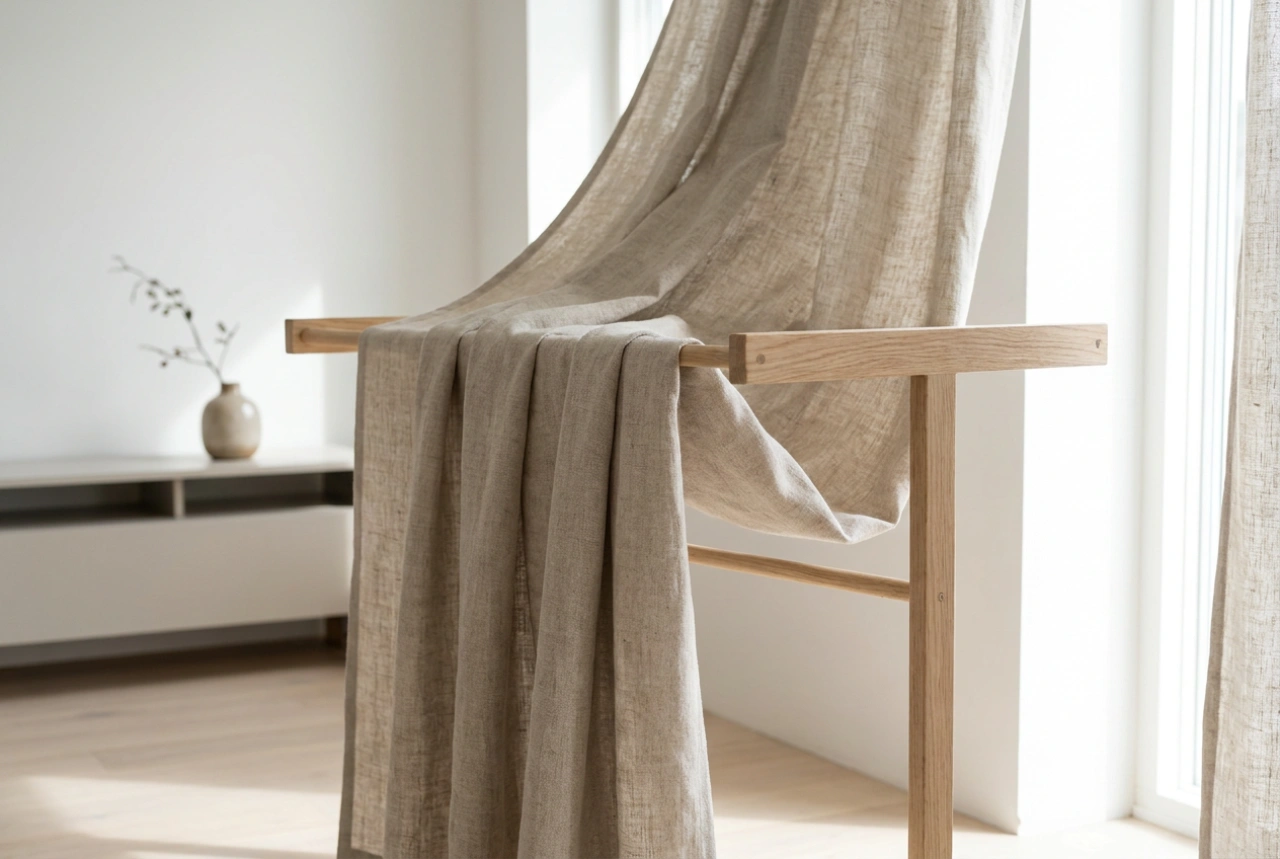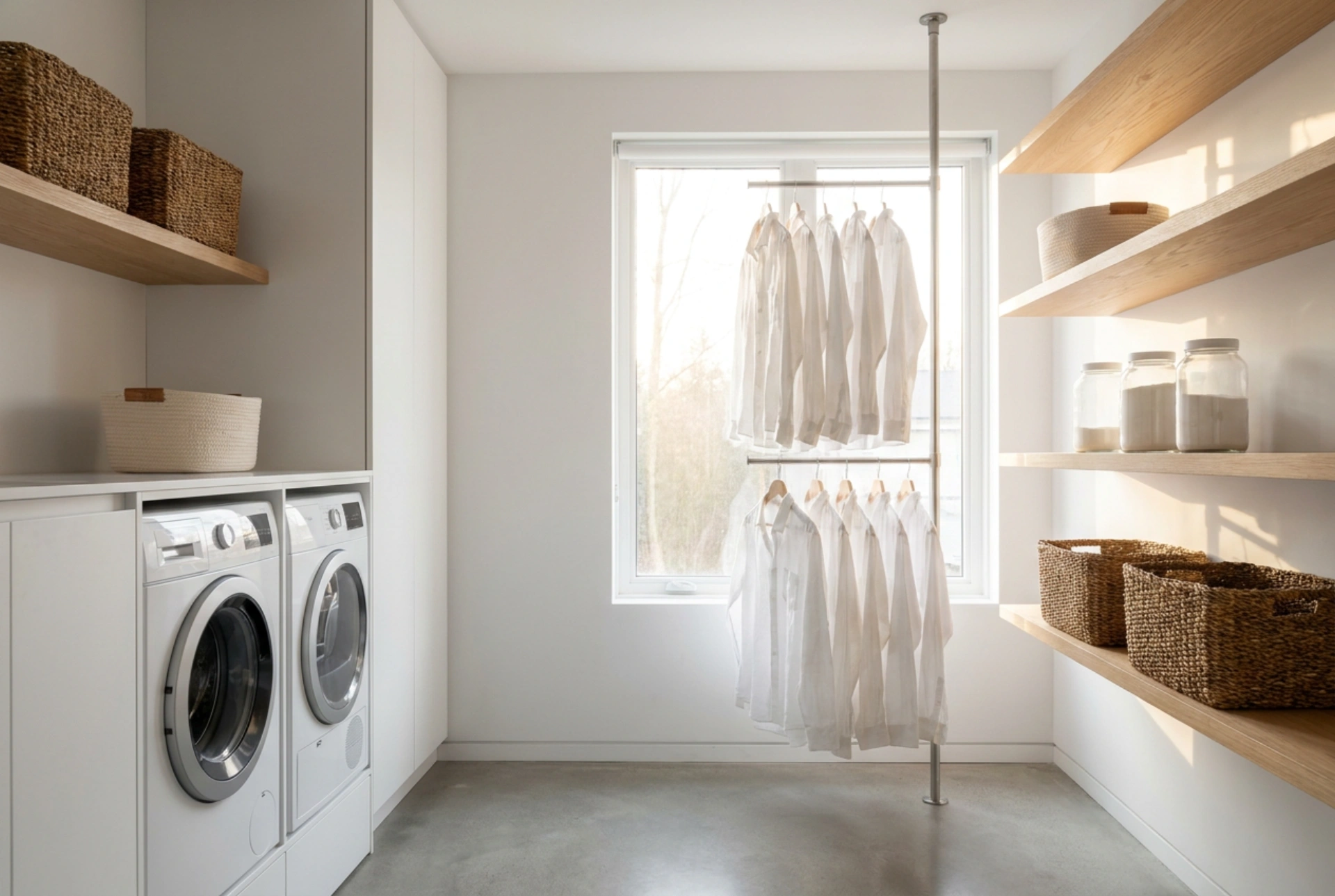


Managing laundry in confined spaces requires an understanding of thermodynamics and indoor airflow. Using a vertical standing drying rack, also known as a tower airer, optimises the evaporation process by exploiting natural air currents and minimising the physical footprint of wet garments.
The Thermodynamics of Vertical Drying
Drying clothes is not merely a waiting process; it is a thermal dynamic reaction where water changes from a liquid state to a gaseous state. This phase transition relies heavily on temperature, surface area exposure, and the movement of the surrounding air. In a typical indoor environment, warm air naturally rises due to its lower density—a phenomenon known as thermal convection.
Standard horizontal drying racks spread wet laundry across a wide, flat plane, which can create a stagnant microclimate of cool, moisture-laden air directly above and below the clothes. A vertical standing rack, by contrast, utilises vertical space. As moisture evaporates from the lower tiers, the slightly cooled and humid air sinks, while dry, warm air from the room is drawn into the structure. This creates a natural chimney effect, accelerating the drying process without the energy expenditure of mechanical dryers.
Optimising Airflow and Fabric Placement
To maximise the efficiency of a vertical drying rack, the arrangement of textiles must align with the laws of fluid dynamics. Air must flow freely between the layers of fabric to prevent humidity pockets from forming. Stagnant air leads to prolonged drying times and can encourage the growth of musty odours caused by microbial activity on damp fibers.
- The Spacing Rule: Avoid draping clothes too closely together. Leave at least one empty rail between heavy fabrics to allow vertical air channels to remain open.
- Graduation by Weight: Hang lighter fabrics, such as synthetics and thin cottons, on the lower tiers. These materials release moisture quickly. Place heavier items, like denim and wool blends, on the upper tiers where they can benefit from the rising warmth of the room.
- Utilising the Hanger Attachments: Many vertical racks feature dedicated corner hooks for clothes hangers. Suspending shirts and delicate linen on hangers utilises the outermost boundary layer of air, where circulation is at its peak, while preventing creasing by letting gravity naturally pull the fabric straight.
Material Science and Structural Stability
The structural efficiency of a vertical rack depends on its materials and design geometry. High-quality vertical airers are constructed from powder-coated steel or anodised aluminium. These metals offer high tensile strength to weight ratios, ensuring that the rack does not bend or buckle under the weight of wet textiles, which can weigh up to three times their dry mass.
The physical footprint of a vertical airer is typically half that of a traditional wing-style horizontal rack. This compact base lowers the center of gravity relative to the height when fully loaded. To maintain equilibrium and prevent tipping, users should load the rack symmetrically, distributing the weight evenly from the central vertical axis. Placing heavier items closer to the central support column further enhances stability.
Environmental Control and Indoor Air Quality
For optimal indoor vertical drying, room ventilation must be managed. A single load of wet laundry can release up to two litres of water vapour into the indoor air. Without proper air exchange, the relative humidity in the room will rise, eventually reaching saturation point where evaporation ceases entirely.
Positioning the vertical drying rack near a passive air source, such as a slightly open window, or in a room with active exhaust ventilation, ensures that moist air is continuously replaced with drier air. By aligning the rack parallel to the direction of the airflow, rather than perpendicular to it, you minimise the aerodynamic resistance, allowing the air to sweep through the vertical tiers efficiently and sweep away the boundary layer of moisture surrounding each garment.