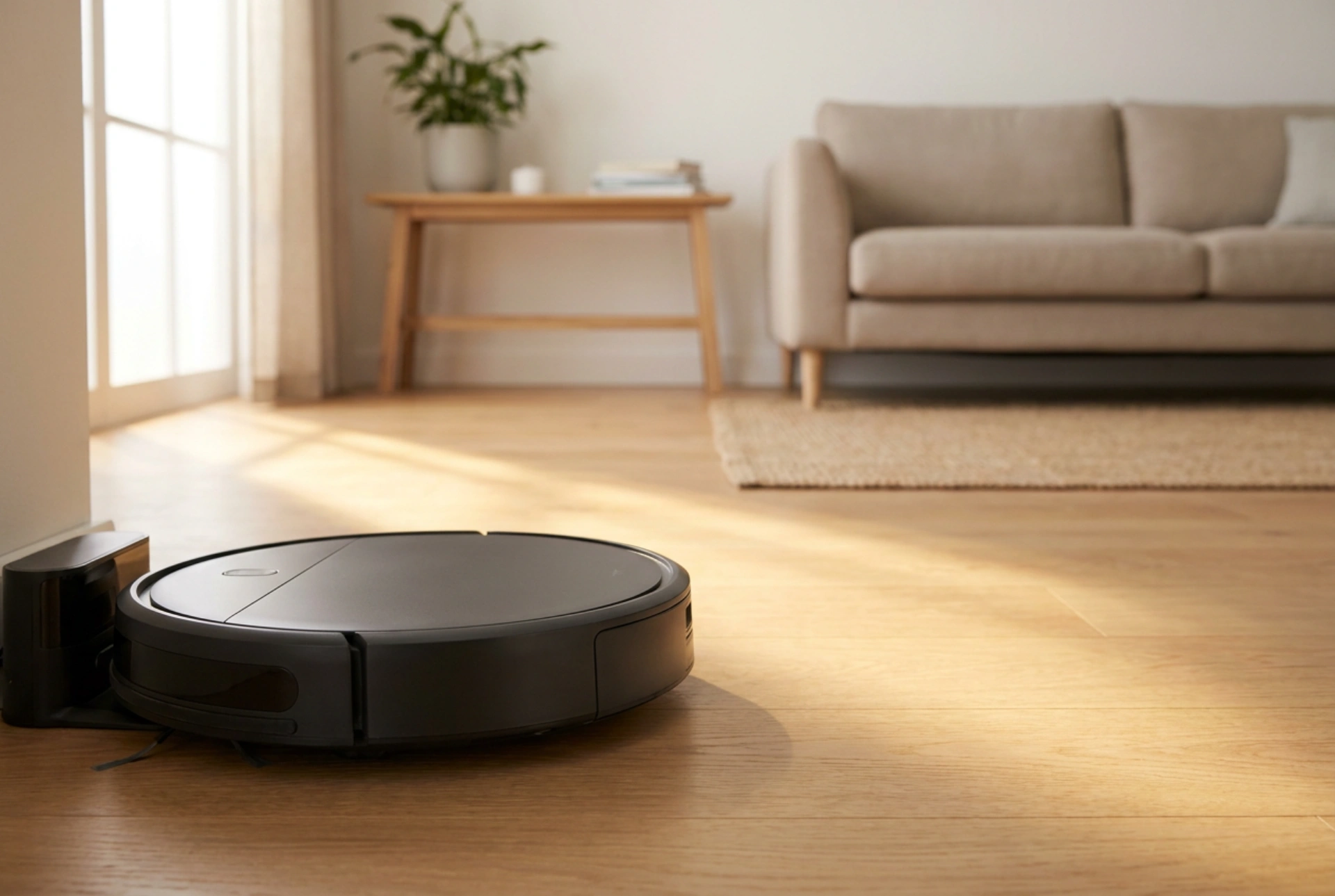


Transitioning your robotic vacuum and mop from an occasional luxury to a seamless daily routine requires a systematic approach to spatial mapping, room sequencing, and moisture management. Understanding how these automated systems navigate physical boundaries ensures consistent dirt extraction and streak-free floor maintenance.
Understanding Robot Navigation and Sensor Physics
Modern robotic vacuum cleaners rely on complex sensor suites to interpret their physical surroundings. The two primary mapping technologies are LIDAR (Light Detection and Ranging) and vSLAM (Visual Simultaneous Localization and Mapping). LIDAR units project a rotating laser beam that calculates distance based on the Time-of-Flight (ToF) of light. While highly accurate, this light-based system can be disrupted by highly reflective surfaces. Large mirrors, floor-to-ceiling glass doors, and high-gloss black tiles can refract or absorb the laser pulses, creating "phantom rooms" or causing navigation drift. To mitigate this, position the charging dock on a level surface against a solid wall, with clear sightlines, allowing the robot to establish a reliable coordinate origin point every time it deploys.
Sequencing Rooms to Prevent Cross-Contamination
The order of operations is critical when scheduling a daily combined vacuum and mop run. To maintain high hygiene standards, always configure your pathing to move from the cleanest areas of the home to the dirtiest. A typical sequence should begin in bedrooms and home offices, move to the living room, and conclude in high-traffic zones like the hallway and kitchen.
Reversing this order leads to cross-contamination. If the robot mops the kitchen first, the microfibre pad will absorb food residues, oils, and grease. As the robot continues its route into the bedroom, it will drag these organic residues across the floor, resulting in unsightly streaks. If your home has a mix of thick carpets and hard floors, program the robot to complete all dry vacuuming tasks first. Once the dry cycle is complete, the robot should return to the dock to wet its mopping pad before tackling hard floor zones.
Moisture Control and Flooring Material Science
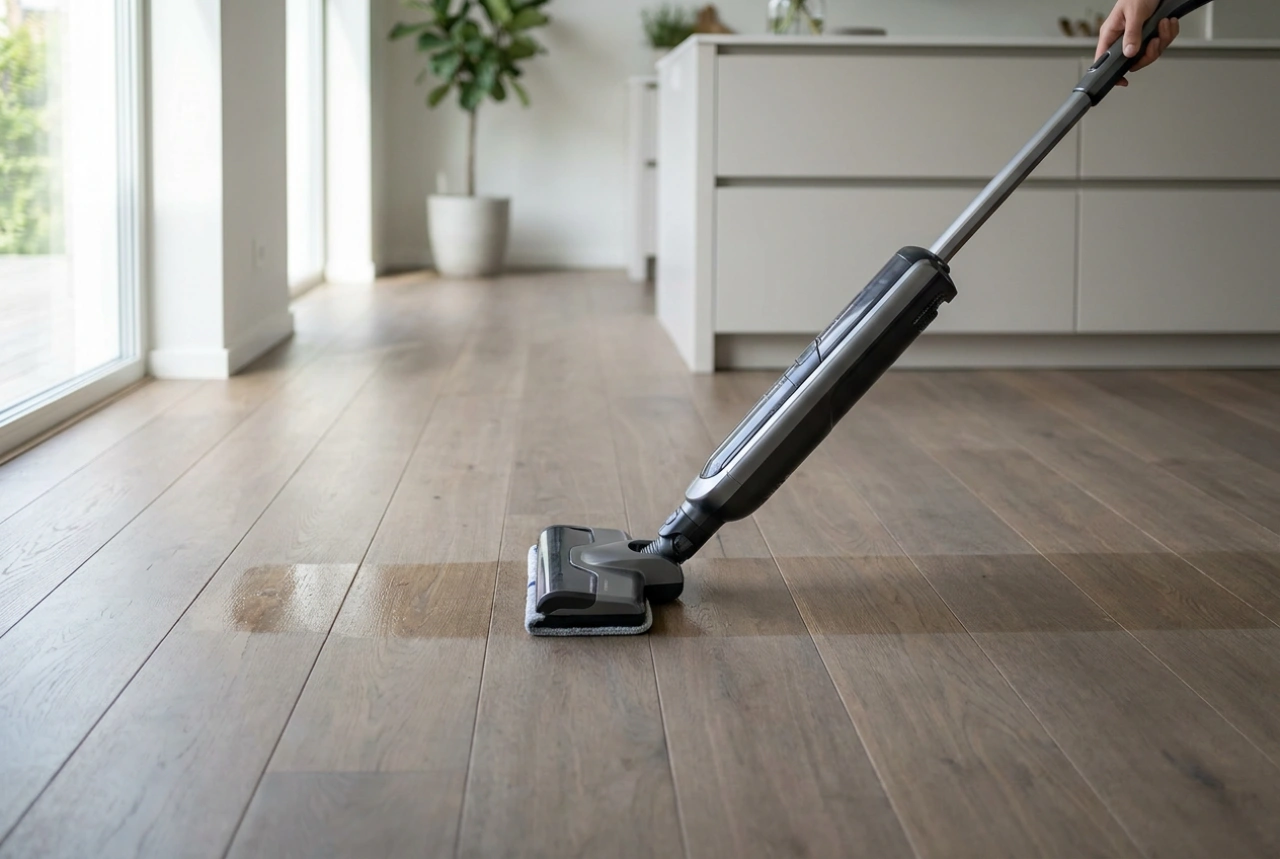
The water reservoir in a robotic mop operates via an electronic peristaltic pump that drips water onto a microfibre pad. Microfibre uses capillary action to lift and trap fine particulate matter. However, different flooring materials require distinct moisture levels to prevent structural damage:
- Ceramic Tiles: These non-porous surfaces can tolerate high moisture levels. A higher water flow rate helps dissolve dried mud or food spills.
- Laminate Flooring: Highly sensitive to water. Excess moisture can seep into the joints, causing the internal medium-density fibreboard (MDF) to swell, warp, and delaminate. Set the moisture level to low.
- Engineered and Solid Wood: Wood is hygroscopic, meaning it absorbs moisture. Constant exposure to dampness can damage the sealant and cause cupping. Use the absolute minimum water flow setting, ensuring the damp trail left by the robot evaporates within 60 seconds.
Defining Virtual Boundaries and No-Go Zones
Setting up virtual boundaries in your robot's application is essential for protecting both your home's interior and the machine itself. Liquid water and electrical components are a dangerous combination, so establish strict "no-go" zones around television units, power strips, and computer setups. Pet feeding areas should also be isolated to prevent the robot from colliding with water bowls, which can flood the internal suction motor.
Additionally, define carpet zones clearly. While some models feature automated plate-lifting mechanisms that raise the damp cloth by 5 to 8 millimetres when transitioning onto textiles, thick or high-pile rugs will still make contact with the wet pad. For these environments, set up carpet avoidance zones to ensure the robot only traverses these areas when the mopping module is physically detached.
Routine Mechanical Maintenance for Consistent Pathing
A daily cleaning schedule will quickly fail if the robot's physical sensors and mechanical parts are neglected. To keep the pathing algorithm running smoothly, perform these quick maintenance steps weekly:
- Clean the sensors: Wipe the downward-facing cliff sensors and the lateral wall-following sensors with a dry, lint-free microfibre cloth. Dust accumulation on these sensors can cause the robot to stall or refuse to cross dark thresholds (which it misinterprets as drop-offs).
- Clear the brush roll: Long hair and threads wrap around the brush roller, increasing rotational friction. This places extra torque on the motor, leading to high battery drain. Remove the roller and use a cutting tool to clear the spindle.
- Inspect the drive wheels: Debris trapped in the tread can reduce traction, causing the robot to slip on wet floors and lose its position on the map. Clean the wheels to ensure consistent movement.