

Reducing the time spent ironing starts long before the iron is plugged in, beginning instead with the physics of how wet clothes drape over a drying rack.
The Science of Fabric Creasing During Drying
To understand why thin wire drying racks leave deep, stubborn lines across your garments, we must look at the molecular behavior of textile fibers. When clothes are washed, water molecules penetrate the polymer chains of natural fibers like cotton, linen, and wool. This moisture breaks the temporary hydrogen bonds that keep the fibers rigid. While wet, the fabric is highly malleable and conforms easily to whatever shape it is held in. As the water evaporates, new hydrogen bonds reform between the cellulose or protein chains, locking the fibers into their dried position. If a garment is draped over a thin, sharp metal wire, gravity pulls the heavy, wet fabric down on either side of this narrow point. This concentrates the entire mechanical stress onto a tiny surface area, creating a sharp fold. Once the moisture evaporates, these compressed fiber networks are cemented in place, resulting in a crease that requires significant heat and steam to undo.
The Advantage of Thick-Bar Geometry
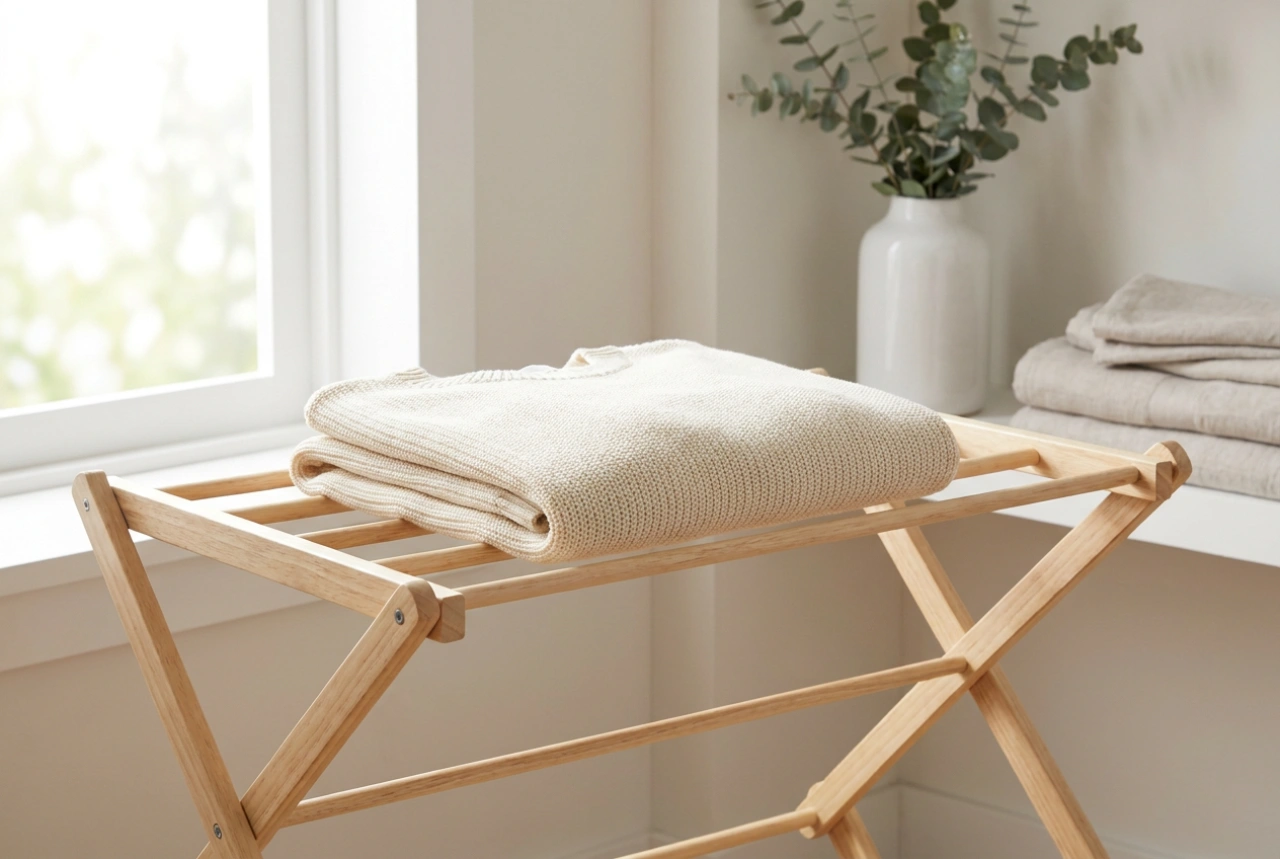
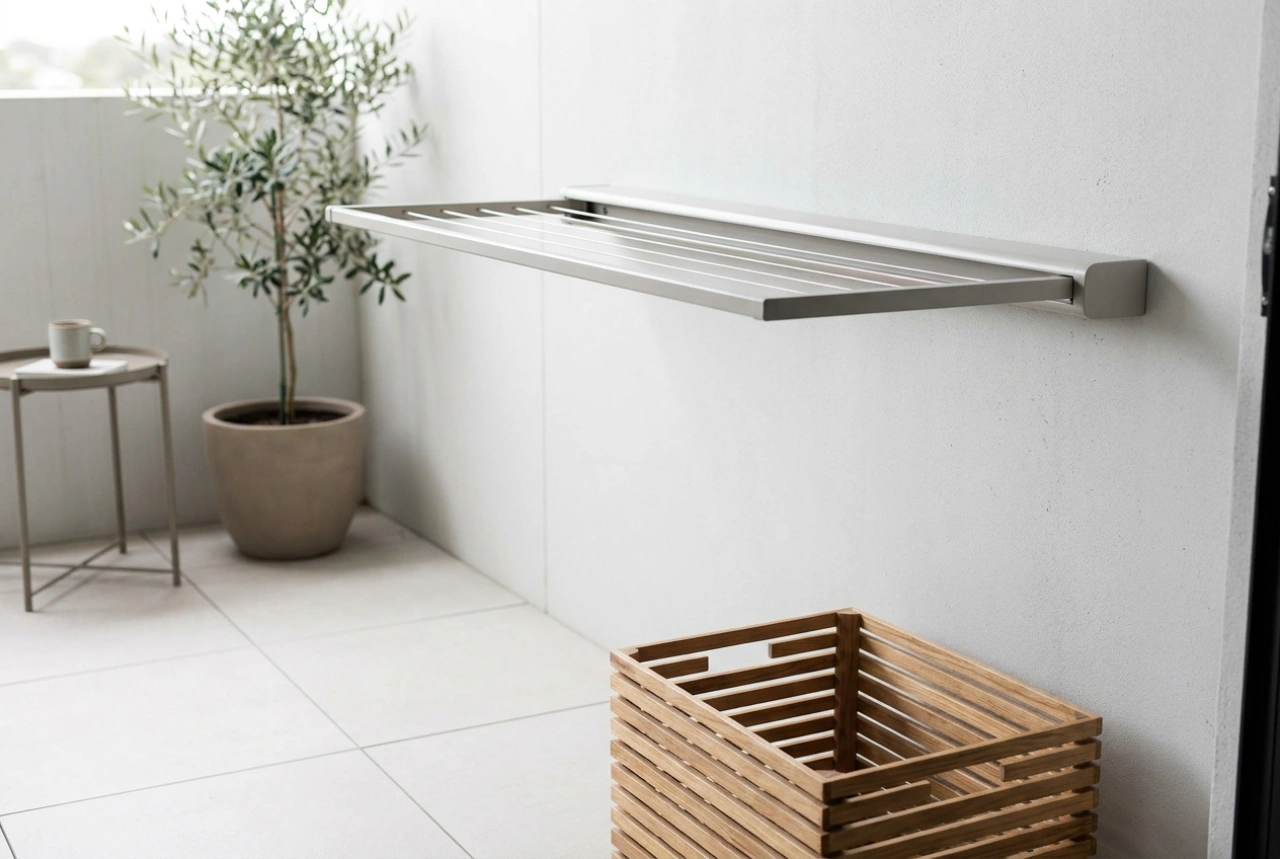
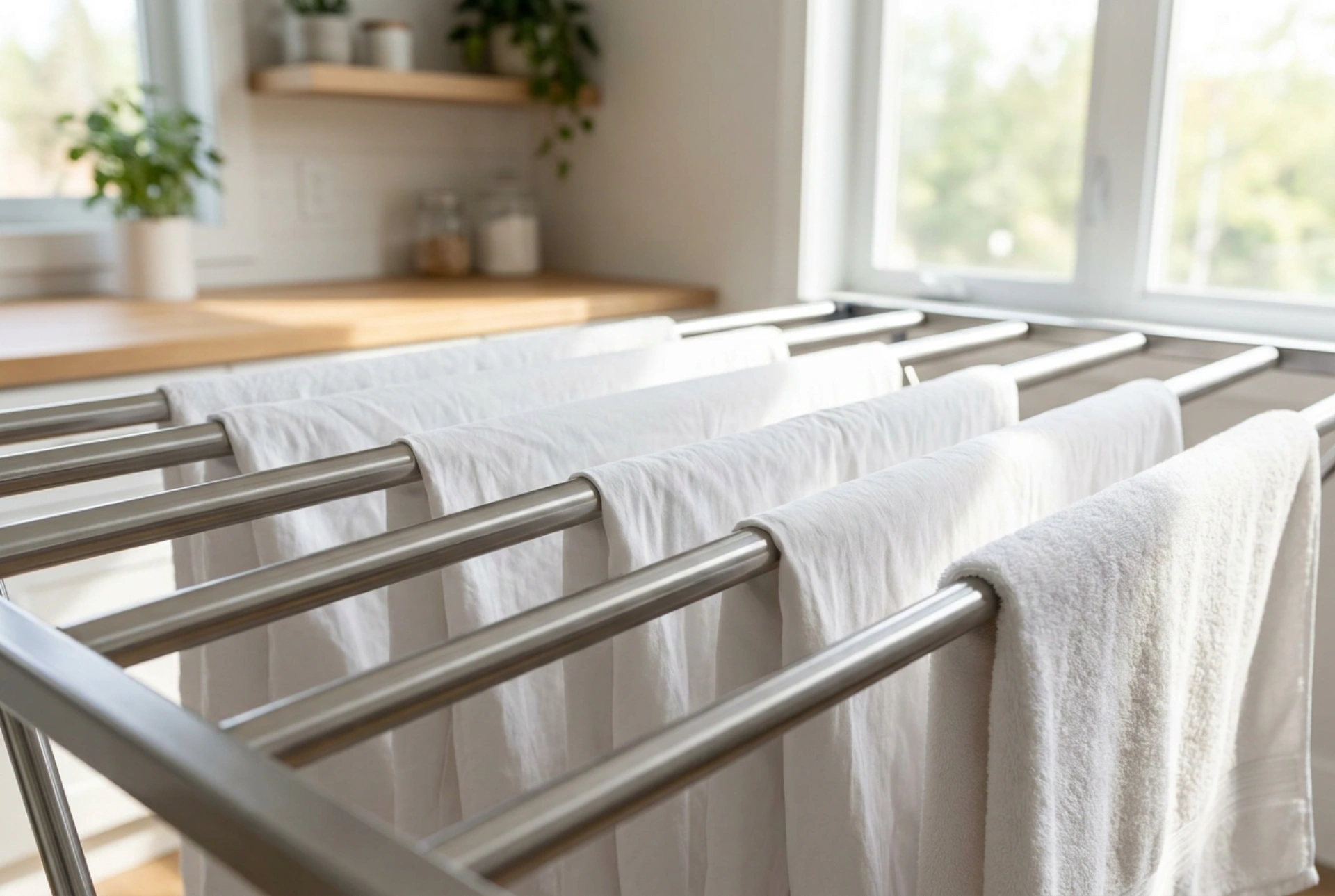
Upgrading to a drying rack with thick horizontal bars—typically ranging from 8 to 12 millimeters in diameter—alters the physical forces acting on the wet textiles. Instead of a sharp, concentrated bend, the fabric wraps around a gentle, wide radius. This distributes the weight of the damp garment over a much broader surface area, reducing localized pressure. The wider curve prevents the fibers from folding at an acute angle, maintaining a smooth transition from one side of the bar to the other. Furthermore, thicker bars create a natural gap between the front and back layers of a draped garment. On a thin wire, the two sides of a folded shirt or towel cling closely together, trapping humid air inside. A thicker bar forces these layers apart, increasing air circulation inside the draped fabric, which accelerates evaporation and prevents musty odors.
Techniques to Maximize Crease-Free Drying
Combining the physics of thick bars with correct hanging techniques can virtually eliminate the need for ironing. Follow these practical steps when transferring wet laundry to the rack:
- The Mechanical Snap: Before hanging any garment, give it a firm shake or snap. This sudden kinetic energy aligns the fibers, flattens out wrinkles caused by the washing machine spin cycle, and prepares the fabric to dry smoothly.
- Draping by the Seams: Hang trousers and shirts from their strongest, naturally reinforced areas, such as the waistband or the shoulder seams. For delicate tops, hang them upside down from the bottom hem to allow gravity to pull the main body of the garment straight.
- The Double-Bar Method: For heavy wool sweaters or thick cotton hoodies, drape the garment across two or three parallel thick bars. This minimizes the downward pull on any single point, preventing the fabric from stretching out of shape under its own wet weight.
- Symmetrical Weight Distribution: Ensure that the front and back of the hung item are of equal length on either side of the bar. Unequal weight distribution pulls one side harder, creating tension lines and lopsided stretching.
Airflow, Temperature, and the Drying Environment
The rate of evaporation plays a critical role in how soft or stiff a fabric feels once dry. Fast, uneven drying in direct, intense heat can cause fibers to lock rapidly in a distorted state, a phenomenon known as fiber binding. Ideally, place your thick-bar drying rack in a room with consistent cross-ventilation. Moving air gently agitates the drying fibers, preventing them from setting too rigidly and helping them maintain their natural drape and softness.