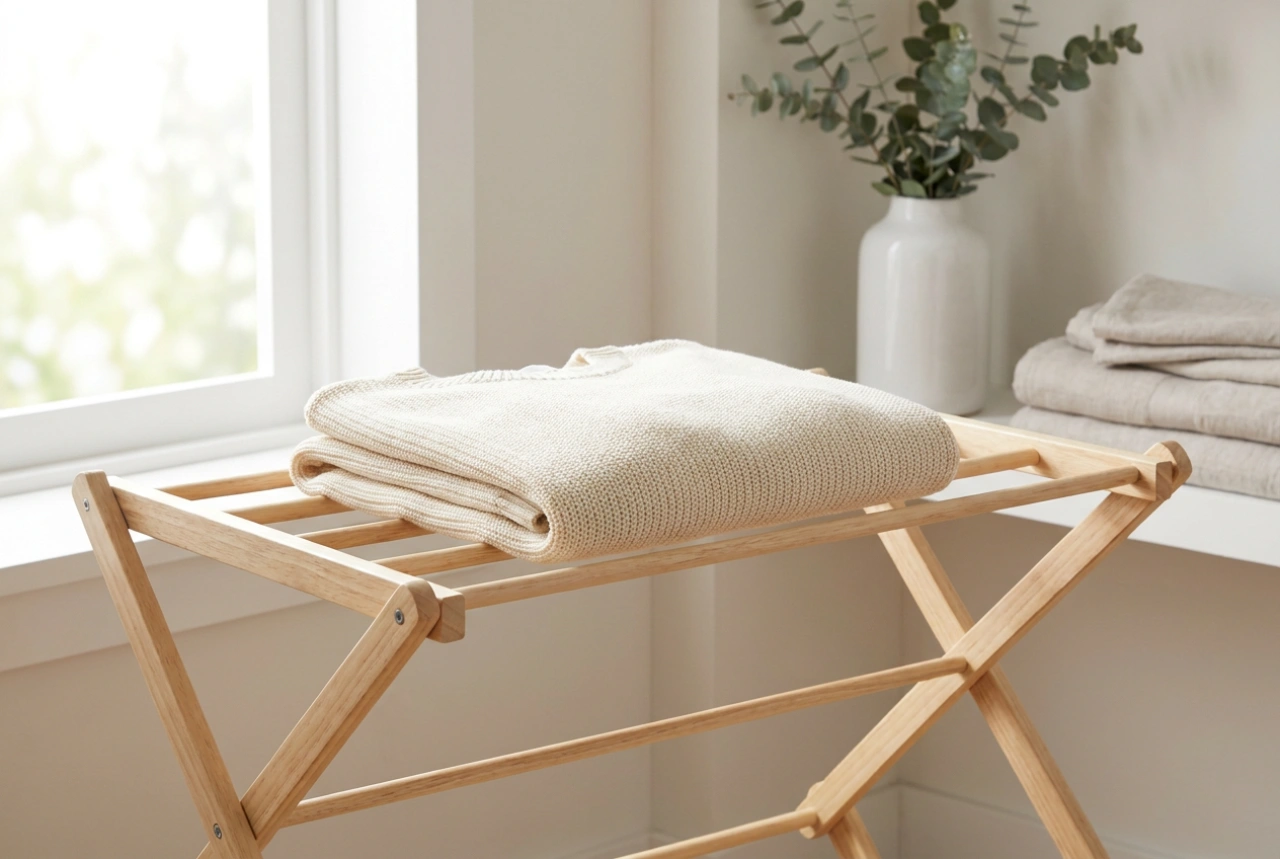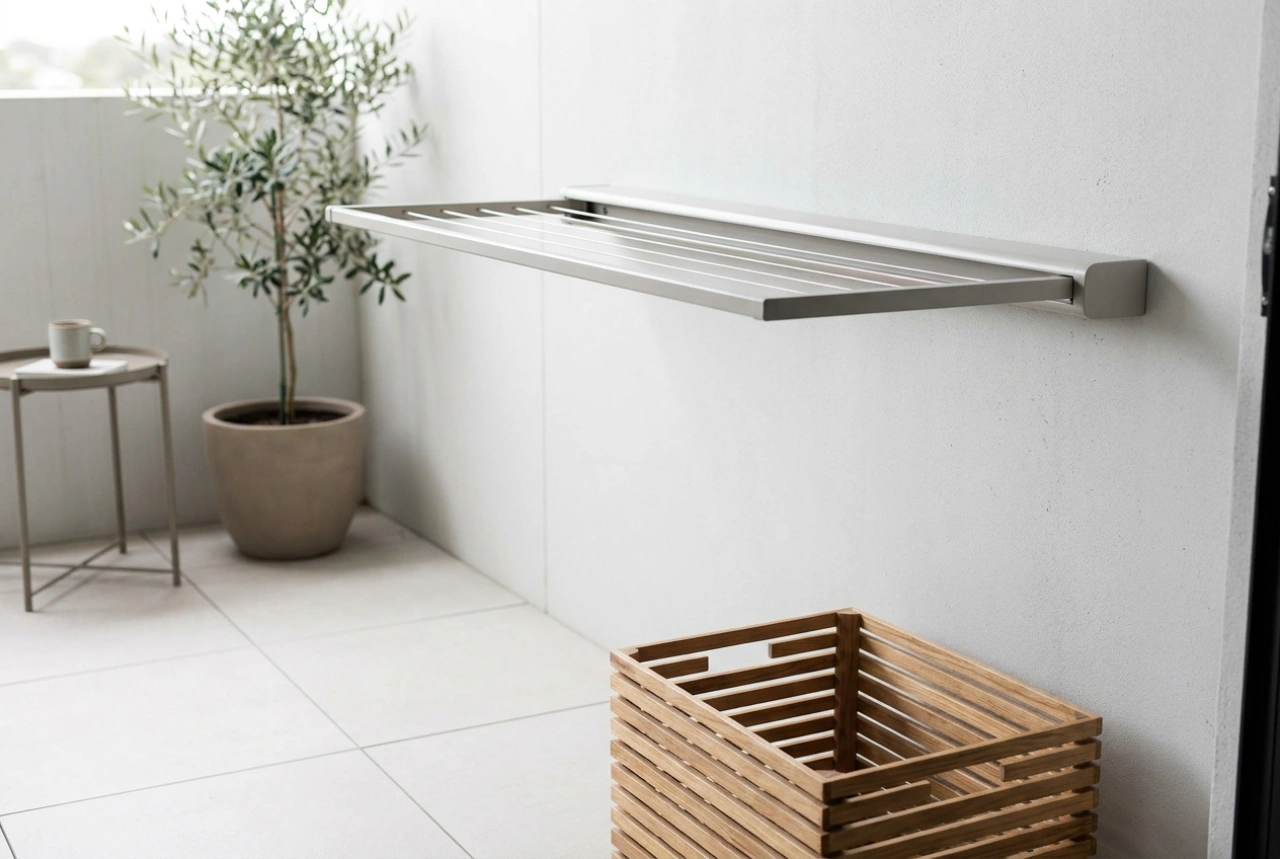


Optimising the use of a hanging balcony drying rack during unpredictable weather requires a firm grasp of atmospheric physics and textile science. Successfully drying laundry outdoors when the forecast is unstable depends on managing relative humidity, airflow boundary layers, and fibre-specific moisture retention.
The Physics of Outdoor Evaporation
To dry clothes efficiently, liquid water inside the fabric must transition into water vapour. This process is driven by the vapour pressure deficit—the difference between the moisture level of the air immediately surrounding the wet fabric and the surrounding atmosphere. On a balcony, air movement is your primary asset. Wind strips away the highly saturated boundary layer of air that clings to damp fibres, replacing it with drier air that can absorb more moisture. Even on an overcast day with high relative humidity, a gentle breeze can dry garments faster than a warm, static indoor room. Hanging a drying rack on the outer railing capitalises on these micro-currents, accelerating the transition of moisture.
Strategic Draping and Airflow Optimization
How you arrange textiles on your hanging rack directly impacts evaporation rates, especially when skies are changing.
- The Chimney Effect: Hang heavier items like denim and thick cottons on the outer rods of the balcony rack, and lighter synthetics or linen on the inside. This creates an aerodynamic gradient, allowing wind to penetrate the centre of the rack and escape upwards, carrying moisture with it.
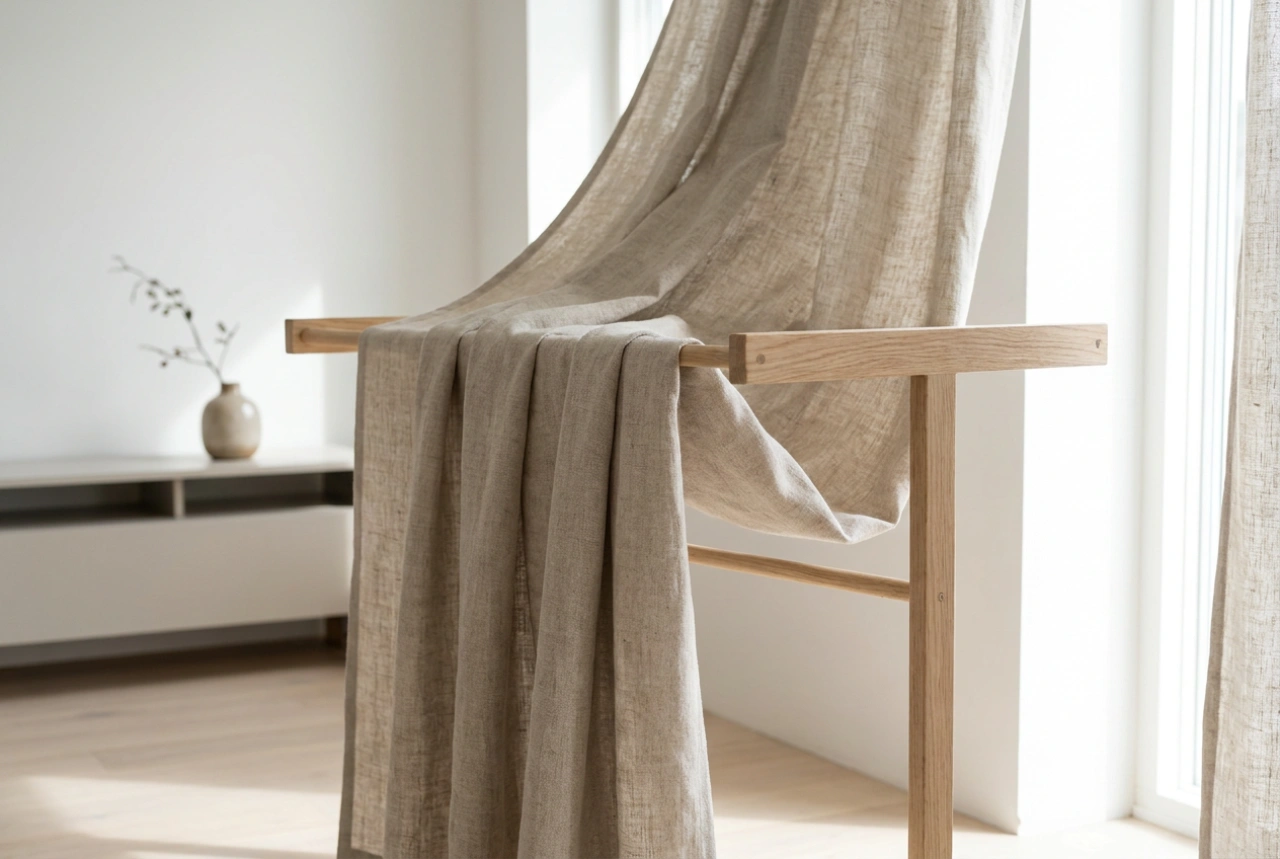
- Maximising Surface Area: Never fold garments over multiple bars unless necessary. Use a single rod per item, allowing the fabric to hang straight down. For delicate items like linen, draping them over two parallel rods creates a flat, horizontal surface that prevents stretching while allowing air to circulate beneath the fabric.
- Friction and Peg Placement: When wind speeds increase unexpectedly, mechanical friction can damage wet fibres, which are more vulnerable to stretching. Secure garments at their strongest points—such as the waistband of trousers or the underarm seams of shirts—using tension-adjustable pegs.
Handling High Humidity and Sudden Showers
Variable weather often brings sudden spikes in relative humidity or brief rain showers. Understanding material science helps you make quick decisions. Hydrophobic synthetic fibres, such as polyester or nylon, absorb very little water into their core because moisture is held mechanically between the weave. These dry rapidly even in high humidity and can withstand a brief drizzle without absorbing deep moisture. Conversely, hydrophilic natural fibres like cotton, wool, and linen absorb water directly into their molecular structure. If a sudden shower occurs, these fibres will hold onto the rainwater, extending drying times significantly and risking mildew growth. If the sky darkens, prioritize bringing in natural fibres first. Synthetics can often remain on the rack through a light drizzle, as any superficial water will evaporate quickly once the sun returns or the wind picks up.
Thermodynamic Management of Temperature Fluctuations
Temperature plays a critical role in how molecules move within wet textiles. Warm air can hold more water vapour than cold air. However, direct, intense sunlight can cause uneven drying, leading to fibre shrinkage and fading due to UV radiation. When weather changes rapidly from bright sun to dense clouds, adjust your rack's position if possible. Placing the rack in a semi-shaded area of the balcony preserves fabric colours and maintains a steady, moderate evaporation rate. This prevents the stiff, cardboard-like texture that cottons often develop when dried too quickly under direct solar radiation.