

Selecting a wet-dry vacuum cleaner requires understanding how different flooring materials interact with moisture, mechanical agitation, and suction pressure to prevent structural damage while ensuring deep hygiene.
The Vulnerability of Natural Wood: Controlling Moisture and Suction
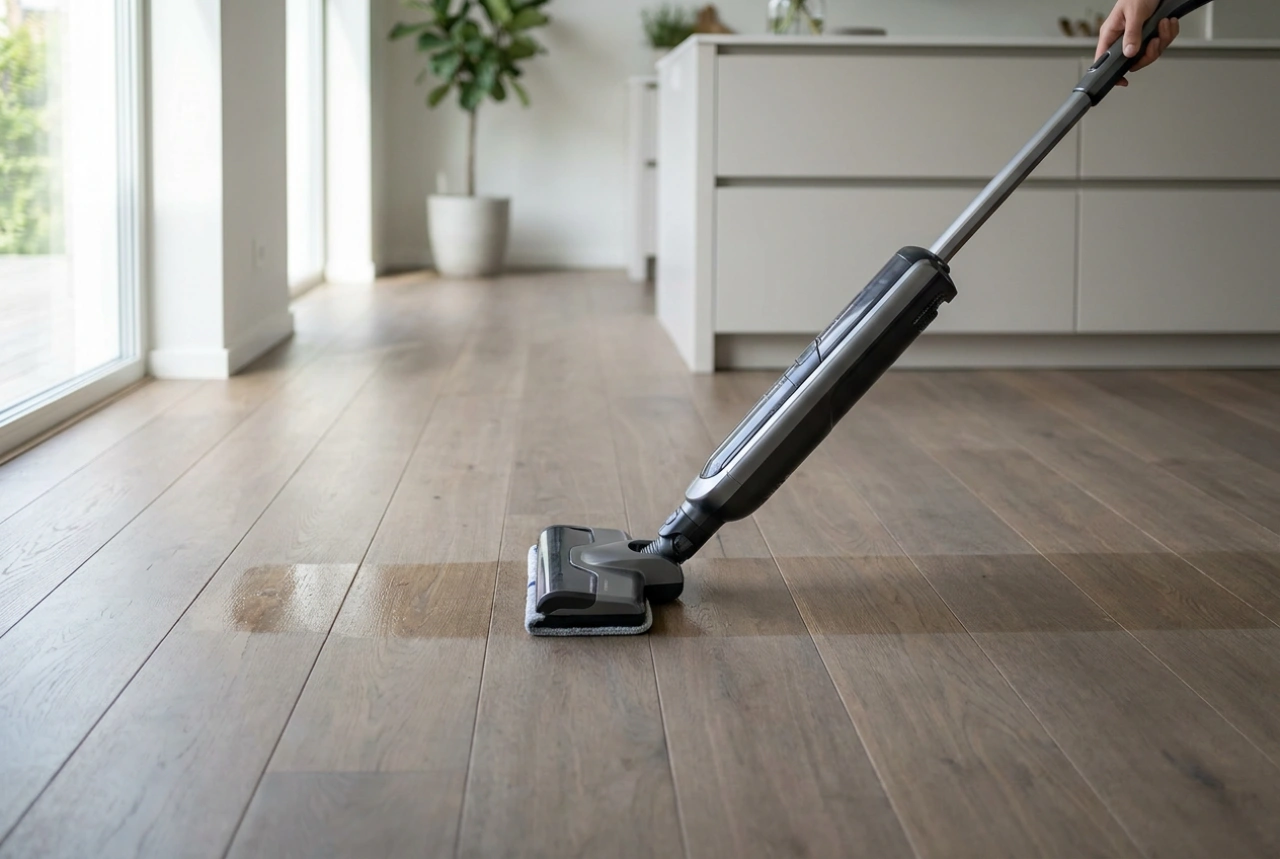
Natural timber floors, whether solid wood or engineered planks, are highly hygroscopic. This means they naturally absorb and release moisture from the surrounding environment. When liquid water remains on the surface for too long, it penetrates the joints and micro-cracks in the protective polyurethane or oil finish. This leads to capillary action, causing the wood fibres to swell, which results in irreversible cupping (edges curving upwards) or crowning (the centre bulging). To clean wood safely, a wet-dry vacuum must employ a strict, low-moisture delivery system combined with high negative pressure (suction power). Look for devices that feature active water control—ideally a pump-driven system rather than gravity-fed—which distributes a micro-fine mist onto the roller. The roller itself must be composed of soft, non-abrasive microfibre to sweep away debris without stripping the protective sealant. Immediate extraction is vital; the suction motor must generate enough Pascals (Pa) to pull the water back into the recovery tank instantly, leaving the wood dry to the touch within sixty seconds.
Porous Ceramics and Grout: The Dynamics of Deep Agitation
Ceramic, porcelain, and stone tiles are highly durable, but their grout lines present a different mechanical challenge. Grout is typically cement-based and highly porous, acting as a capillary network that easily traps grease, dirt, and dirty water. Standard mopping often pushes dirty water into these lower-lying joints, where it dries and discolours over time. To clean tiled surfaces effectively, a wet-dry vacuum needs mechanical force and a high-rotation roller. Brushes featuring a blend of soft microfibre and stiffer polymer bristles are ideal here; the stiffer bristles physically reach into the recessed grout lines to dislodge packed dirt. The cleaning mechanism relies on the mechanical lifting of soil combined with surfactant action. The dirty water must be aggressively vacuumed up before it can settle back into the porous grout. For textured stone or unglazed ceramic, choose a machine with a higher scrub-rate (RPM) to lift debris from the natural pits and crevices of the material surface.
Laminate and Luxury Vinyl: Thermal and Structural Limits
Laminate and Luxury Vinyl Tiles (LVT) are engineered synthetics that require specific cleaning parameters. Laminate consists of a high-density fibreboard (HDF) core topped with a photographic layer and a melamine wear layer. While the top layer is waterproof, the interlocking joints are highly susceptible to moisture ingress. If water seeps into these joints, the HDF core swells, causing the edges to lift and bubble permanently. LVT, on the other hand, is highly water-resistant but sensitive to extreme heat and harsh chemical reactions, which can degrade the adhesive backing or warp the PVC layers. When selecting a wet-dry vacuum for these synthetics, precise flow control is paramount. A machine with adjustable water levels allows you to use minimal moisture for laminate while applying slightly more for textured vinyl. Avoid steam-generating models on LVT and laminate, as the intense thermal energy can break down synthetic resins and adhesive polymers, leading to delamination.
Analysing Roller Composition and Fluid Dynamics
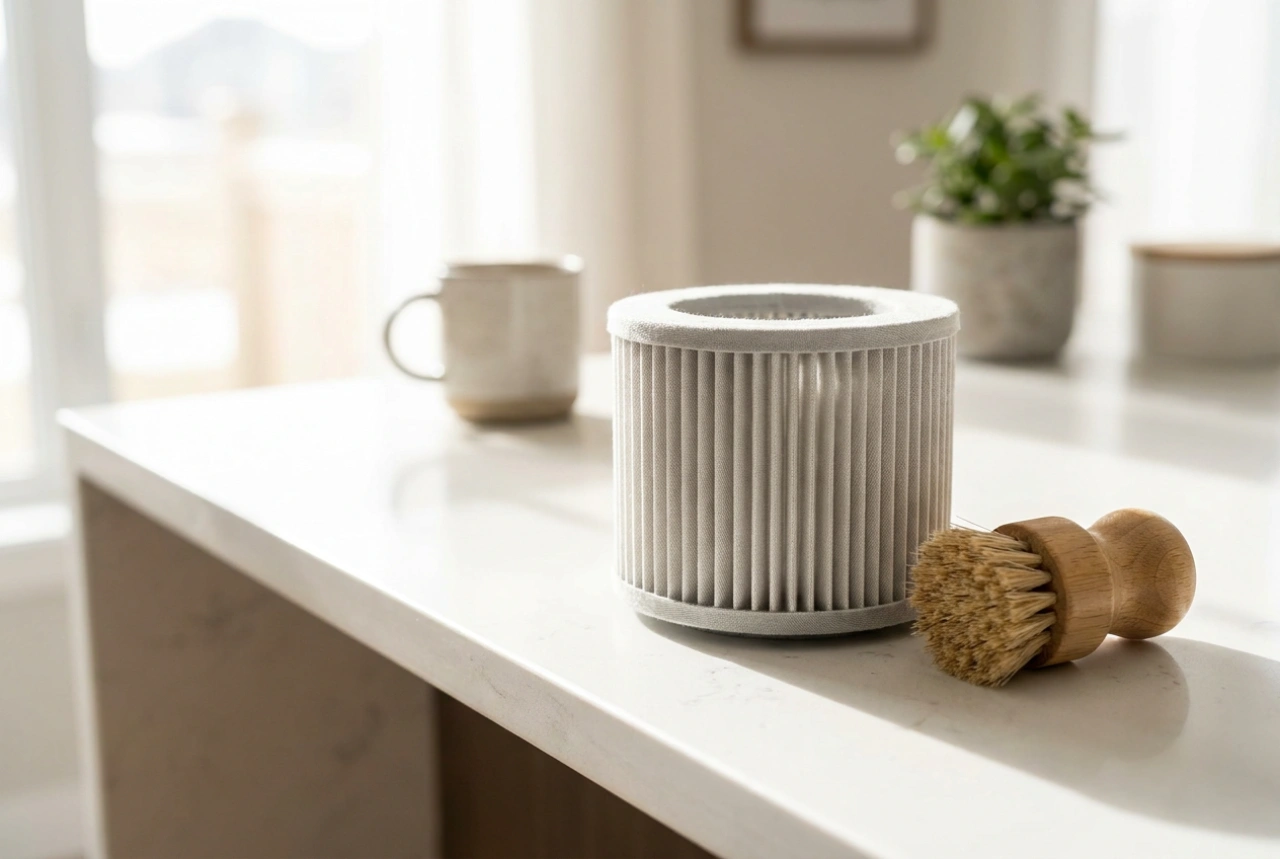
The effectiveness of a wet-dry vacuum depends on the synergy between the brush roller material and the water extraction mechanism. Single-tank systems that recirculate dirty water should be avoided; instead, look for dual-tank technology that completely separates the clean solution from the recovered wastewater. The roller’s surface speed and composition dictate its cleaning efficiency. Microfibre rollers are excellent for polished surfaces, as they use electrostatic attraction and capillary absorption to lift fine dust and liquids without scratching. For textured floors, composite rollers with nylon strips provide the necessary mechanical scrubbing action. Finally, look for a self-cleaning cycle that uses high-speed centrifugal rotation and clean water flushes to prevent bacterial growth and odours inside the roller housing between cleaning sessions.