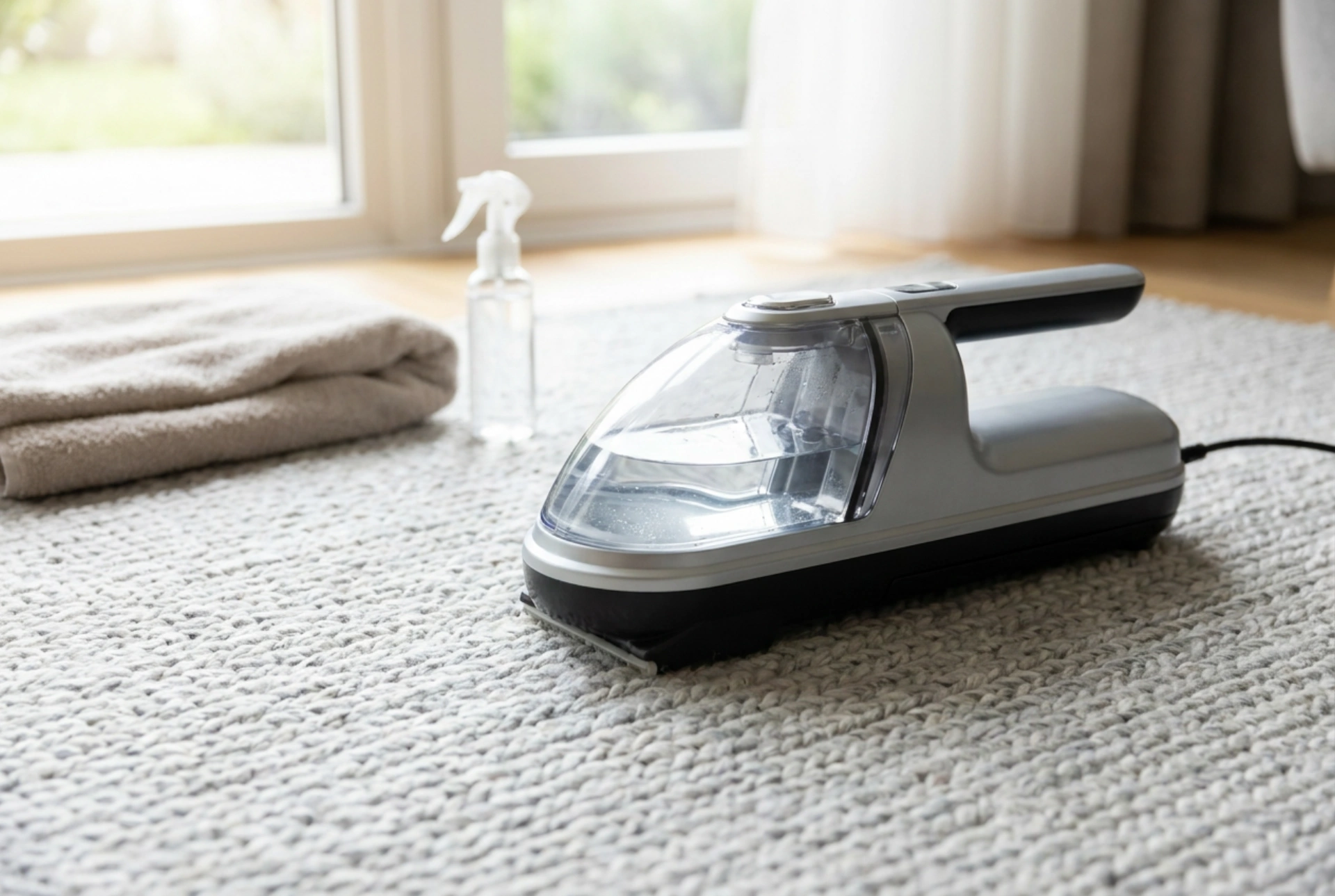


Selecting the correct chemical formulation for spray-extraction carpet cleaners is crucial for maintaining textile integrity and preventing rapid resoiling. Understanding the fundamental science of surfactants and fiber interaction allows you to bypass misleading online advice and protect your home textiles.
The Chemistry of Extraction Cleaning
To evaluate any cleaning fluid advice, one must first understand how surfactants work at a molecular level. Surfactants, or surface-active agents, contain both hydrophilic (water-attracting) and lipophilic (fat-attracting) poles. When applied to dirty carpet fibers, the lipophilic ends bind to oily soils, while the hydrophilic ends remain oriented toward the water. This forms structures called micelles, which suspend the dirt in the aqueous solution so it can be vacuumed away.
A common but highly detrimental online recommendation is using standard laundry detergents or dish soaps in carpet extractors. These products are formulated for high-immersion washing or manual scrubbing and contain heavy foaming agents. In an extraction machine, excessive foam fills the recovery tank instantly, risking motor damage. More importantly, these soaps leave behind a dense, sticky residue that cannot be easily extracted. Once dry, this residue acts as a magnet for new dust and oils, leading to rapid resoiling.
The Role of pH and Fiber Sensitivity
Different fibers react uniquely to chemical environments, which is why a universal cleaning solution does not exist. The potential hydrogen (pH) level of your cleaning fluid determines its safety on specific materials:
- Protein-based fibers (wool, silk): Highly sensitive to alkaline environments. High pH solutions (above 8.5) cause the cuticle scales of wool fibers to swell and weaken, leading to permanent texture damage and dye bleeding. Always use neutral to slightly acidic fluids (pH 5.5 to 7) for these materials.
- Synthetic fibers (nylon, polyester): More resilient to alkaline solutions, which are highly effective at breaking down grease. However, even synthetics require careful neutralization to prevent the fibers from stiffening.
The Mechanics of Injection and Extraction
Proper extraction cleaning is not a single-pass process, despite what many quick-fix tutorials suggest. The physics of spray-extraction rely on pressure, dwell time, and mechanical suction. When the solution is injected into the carpet pile, it requires a short contact time (dwell time) of 2 to 5 minutes to break the chemical bonds between the soil and the fiber.
Following the chemical application, a dedicated rinse phase is essential. Running clean, pure water through the extractor removes the soil-laden micelles and any residual surfactants. Skipping this step leaves active chemicals in the carpet, which will continue to attract airborne particulates long after the fibers dry.
Temperature Dynamics and Evaporation
Thermal energy accelerates chemical reactions. Raising the water temperature decreases its surface tension, allowing it to penetrate tightly twisted fibers more effectively. For synthetic carpets, an optimal temperature of 40°C to 50°C significantly boosts the efficiency of the surfactants.
However, excessive heat must be avoided. High temperatures can melt the synthetic glues used in carpet backing or cause wool fibers to shrink. Furthermore, successful extraction depends on removing as much moisture as possible. After the final rinse, perform multiple dry vacuum passes (suction only) to remove residual water, ensuring the carpet dries within 4 to 8 hours to prevent the colonization of mold and mildew spores.