

The operational radius of a corded vacuum cleaner, primarily dictated by its power cable length, directly influences cleaning efficiency, physical fatigue, and the longevity of household fittings. Selecting the appropriate cord length requires an understanding of spatial geometry and ergonomics rather than relying on arbitrary manufacturer specifications.
The Geometry of the Cleaning Radius
When assessing a vacuum cleaner’s reach, it is essential to distinguish between the physical length of the cable and the total working radius. The working radius is the combined length of the power cord, the vacuum body, the flexible hose, and the rigid suction wand. However, the power cord remains the primary limiting factor in this spatial equation.
The mathematical relationship between cord length and coverage area is exponential. Because a vacuum sweeps out a circular or semi-circular path around a wall socket, the coverage area scales with the square of the radius. For example, a vacuum with a modest 5-metre cord provides a theoretical cleaning circle of roughly 78 square metres, assuming no structural barriers. Increasing the cord length to 9 metres expands this theoretical coverage to over 250 square metres. In practice, walls and furniture segment this space, but a longer cord dramatically reduces the need to navigate around obstacles to reach far corners, saving both time and physical effort during household chores.
Ergonomics, Momentum, and Socket Wear
Frequent socket transitions interrupt the kinetic momentum of cleaning. Every time a user stops to unplug, move, and replug a machine, they must bend down, which puts repetitive strain on the lumbar spine. Over a lifetime of household maintenance, minimizing these bending movements protects joint health and reduces overall fatigue.
Furthermore, operating a vacuum at the absolute limit of its cord length introduces mechanical stress. When the cable is pulled taut, it exerts lateral force on the wall socket and the internal plug connections. Over time, this repetitive tension can loosen the socket assembly within the wall plaster or damage the cord’s internal copper wiring, leading to electrical faults. A cord with adequate slack prevents tension spikes, ensuring a safer and more stable electrical connection during operation.
Thermal Dynamics and Cord Management
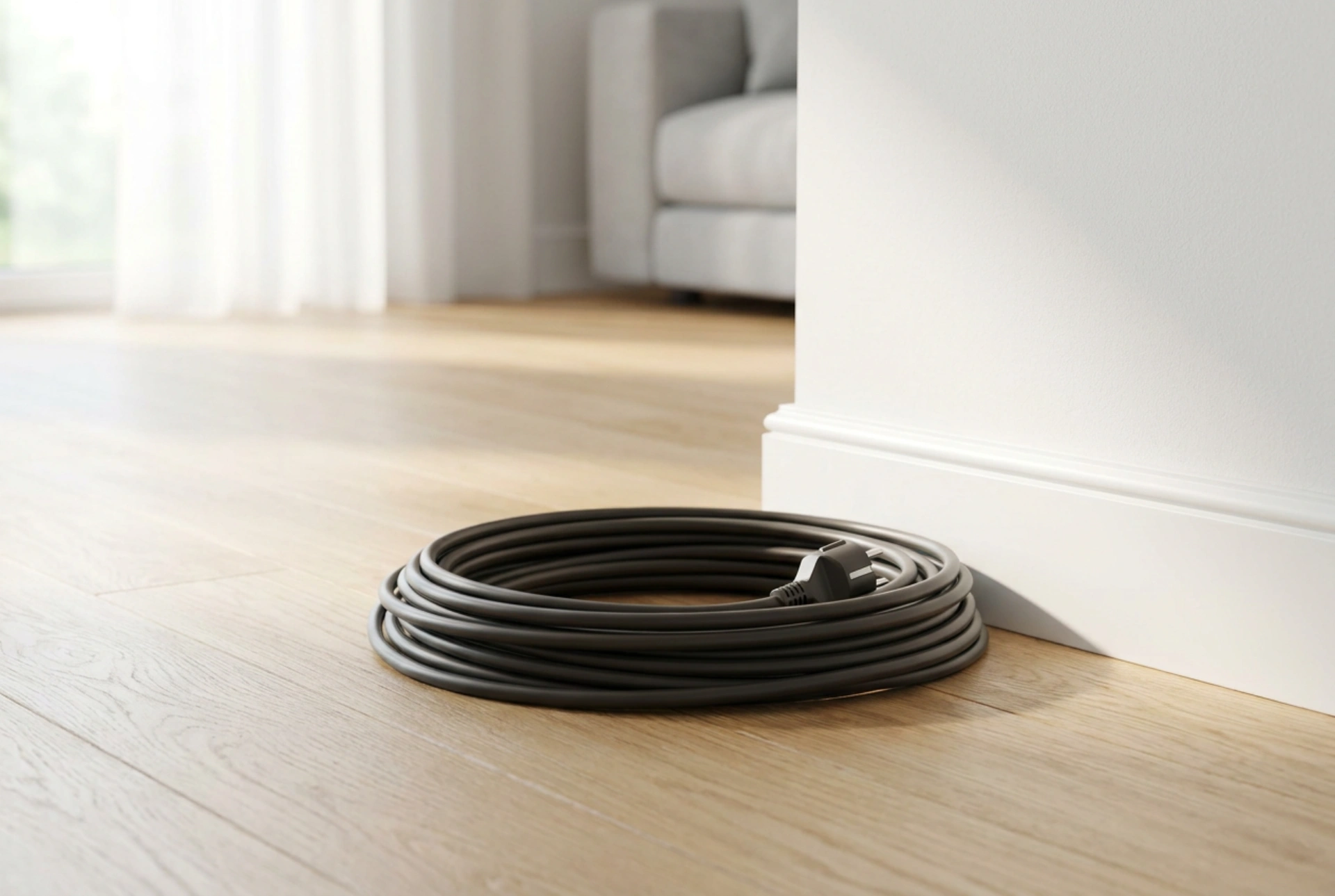
The physical storage and deployment of the cable also affect the machine's performance and safety. Most modern vacuum cleaners feature automatic cord rewind mechanisms, which rely on internal spring-loaded spools. While convenient, storing a long cable inside a compact housing presents thermal challenges.
When an electrical current flows through a copper conductor, it generates heat due to natural electrical resistance. If a long cord is left tightly coiled inside the vacuum body during a prolonged cleaning session, this heat cannot dissipate efficiently. The accumulated thermal energy can soften the protective sheathing, leading to premature wear or, in extreme cases, short circuits. For heavy-duty cleaning sessions, it is scientifically optimal to pull the power cable out to its full length, allowing maximum airflow and heat dissipation around the copper core.
Determining the Ideal Cord Length for Your Home
To determine the optimal cord length for your living space, consider the architectural layout and socket distribution rather than just total square footage. Here are key guidelines based on common residential dimensions:
- Compact Apartments (under 60 m²): A cord length of 5 to 7 metres is generally sufficient. At this scale, a single centrally located socket can often cover the entire living area without requiring a swap.
- Standard Family Homes (60 to 120 m²): A cord of 8 to 10 metres is ideal. This length allows you to clean multiple rooms, hallways, and staircases from a single power source, maintaining a steady workflow.
- Large or Multi-storey Residences (over 120 m²): Cords exceeding 10 metres provide the necessary range to tackle expansive open-plan areas and long corridors. For multi-storey homes, the cord should be long enough to safely reach from a landing socket to the very top or bottom of the staircase without stretching.
By matching the technical specifications of your vacuum cleaner’s cable to the physical dimensions and electrical layout of your home, you can optimize your cleaning workflow, protect your physical health, and extend the lifespan of your appliance.