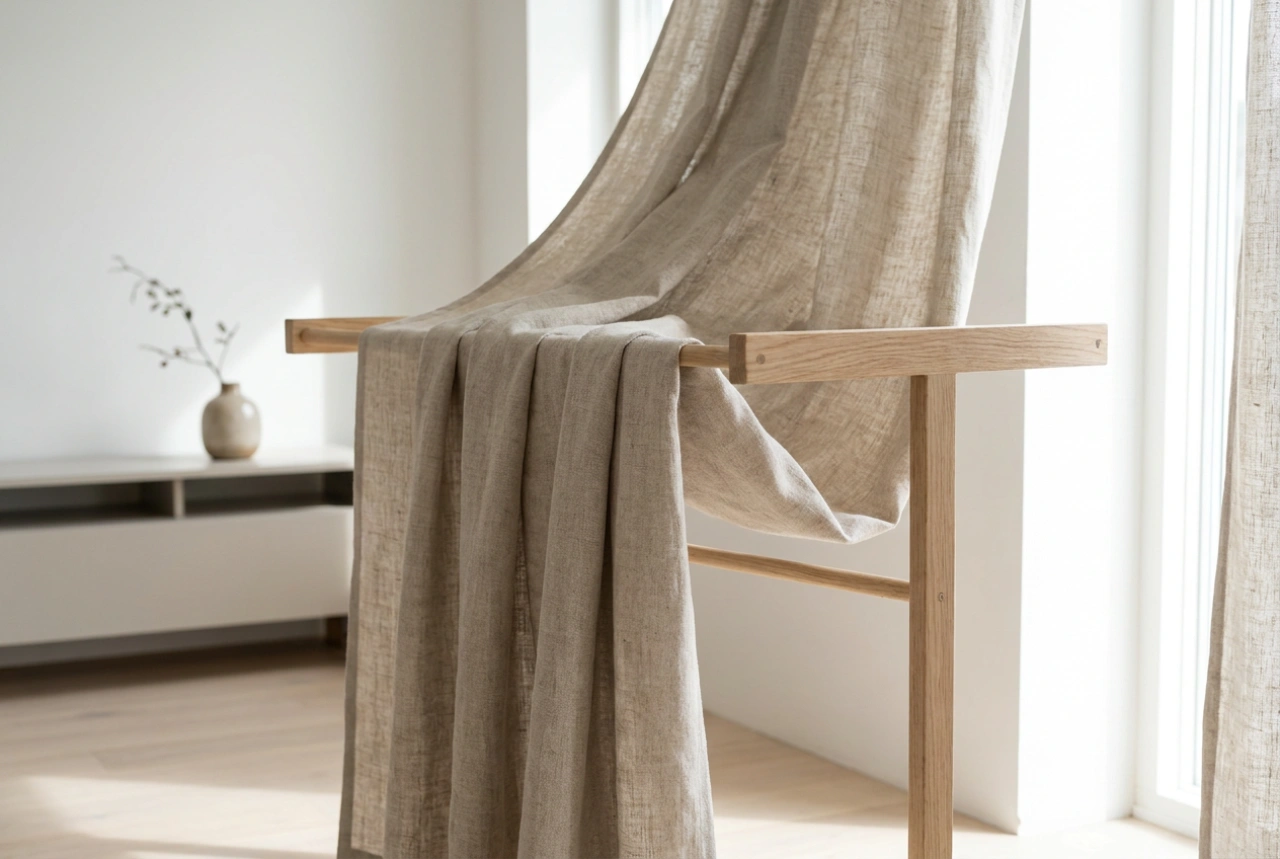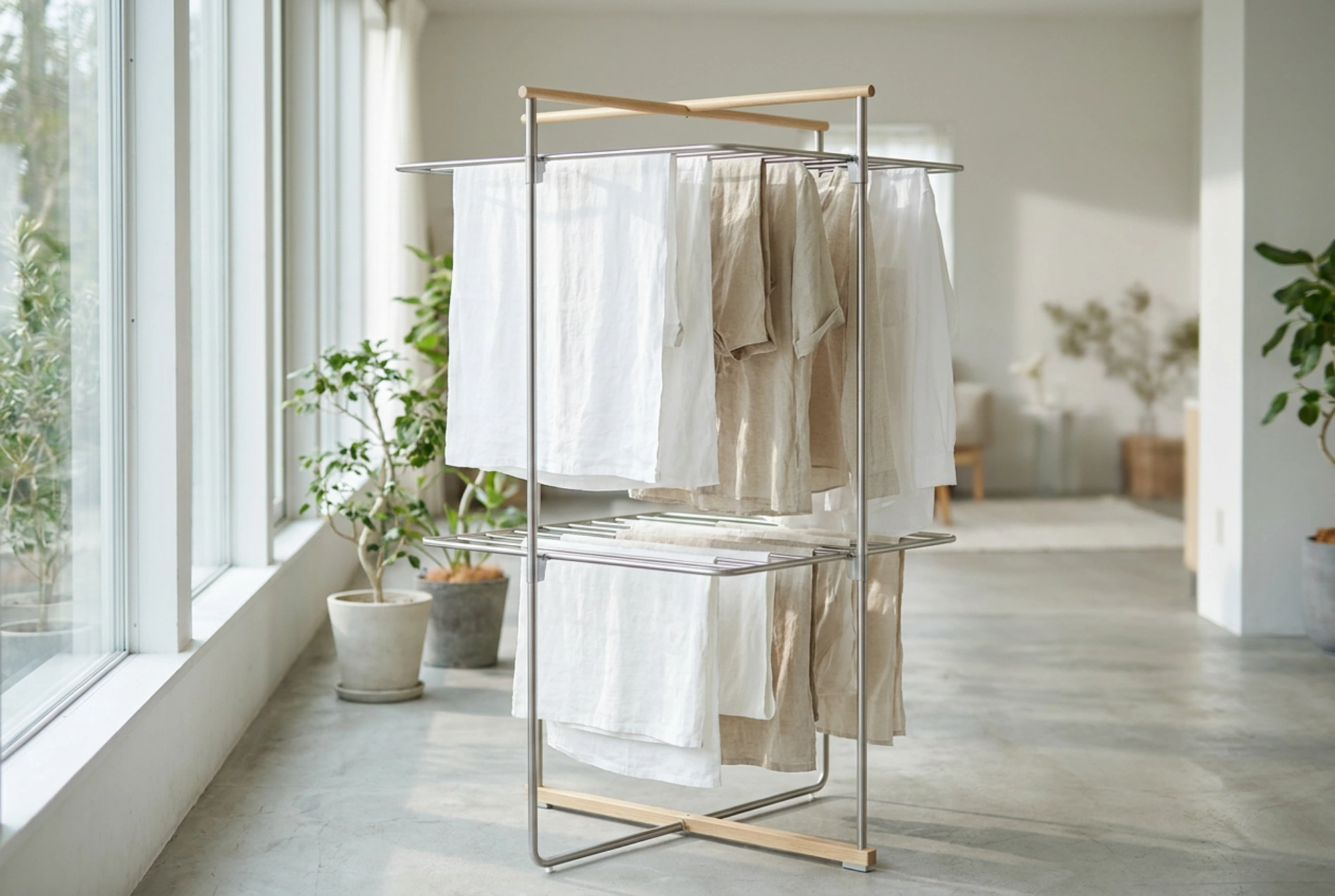


Hanging long garments such as dresses, trench coats, and trousers often presents a practical challenge when using standard, low-profile drying racks. Utilizing vertical space with a tall laundry drying rack not only prevents fabrics from touching dusty floors but also significantly optimizes the evaporation process through the natural laws of thermodynamics and gravity.
Thermodynamics and the Mechanics of Vertical Drying
The drying of wet laundry is fundamentally a process of phase transition, where liquid water evaporates into the surrounding air. This process is governed by temperature, relative humidity, and airflow. In any enclosed room, a temperature gradient exists: warmer, less dense air rises toward the ceiling, while cooler, denser air settles near the floor. Standard flat drying racks position wet textiles in this cooler, stagnant lower zone, delaying evaporation.
By elevating garments on a tall drying rack, you place them directly into the path of rising warm air currents. Furthermore, gravity plays a critical role in moisture migration. When a garment hangs vertically, water molecules naturally migrate downward through the capillary action of the fibers. On a low rack, the bottom of a long garment will bunch or rest on the ground, trapping this pooling water. A tall rack ensures that the lower hem remains suspended, allowing the descending moisture to evaporate efficiently into the passing air rather than collecting at the base of the fabric.
Preserving Fabric Integrity and Preventing Tension Distortion
When textile fibers absorb water, their hydrogen bonds temporarily weaken, making them highly susceptible to stretching and permanent deformation. Hanging heavy, wet garments improperly can ruin their structure. Folding a long dress or trousers over a low, thin horizontal bar concentrates the entire weight of the wet fabric onto a single narrow line, creating a deep crease and stretching the fibers at the fold point.
Suspending garments fully extended from a tall rack distributes the weight more evenly. For structural garments like linen dresses, wool-blend coats, or structured shirts, hanging them from high racks on wide, contoured hangers is ideal. The vertical pull of gravity acts as a natural tensioner, gently straightening the fibers and reducing wrinkles as the fabric dries. However, for highly elastic materials such as heavy knitwear, vertical hanging can cause vertical elongation. In these cases, utilizing the middle adjustable shelves of a tall rack to lay the knit flat while hanging lighter, woven long garments on the perimeter balances the load perfectly without damaging delicate weaves.
Optimizing Air Circulation and Combating Stagnant Zones
As water evaporates from wet clothing, it creates a localized boundary layer of highly saturated air immediately surrounding the fabric. If this boundary layer is not disturbed, evaporation slows down or stops entirely, leading to musty odors caused by bacterial growth in prolonged damp environments. Tall vertical racks are uniquely engineered to disrupt this boundary layer.
To maximize this effect, place the tall drying rack in a position that leverages natural convective currents—ideally near a heat source or perpendicular to a window or ventilation duct. Because tall racks have a smaller footprint but greater vertical extension, they allow air to flow freely underneath and rise up through the hanging columns of clothing. For optimal results, ensure a minimum of five to eight centimeters of clearance between each hanging item. This gap allows room air to pass horizontally through the garments, sweeping away the saturated boundary layer and accelerating drying times without the need for mechanical energy.
Step-by-Step Hanging Strategy for Tall Racks
- Sort by Length and Density: Hang the longest, heaviest items like denim, trench coats, or maxi dresses on the highest bar. Place lighter, shorter items on lower, secondary rungs.
- Utilize Hanger Physics: Always use broad-shouldered hangers for heavy wovens to distribute the weight across a larger surface area, preventing shoulder dimples.
- Invert Trousers: Hang trousers from the hem rather than the waistband. The heavier waistband acts as a natural weight, pulling the legs straight and eliminating the need for extensive ironing later.
- Manage the Drip Zone: Since water migrates downward, ensure the area beneath the tallest hanging items is clear to allow unobstructed airflow around the dampest parts of the garments.