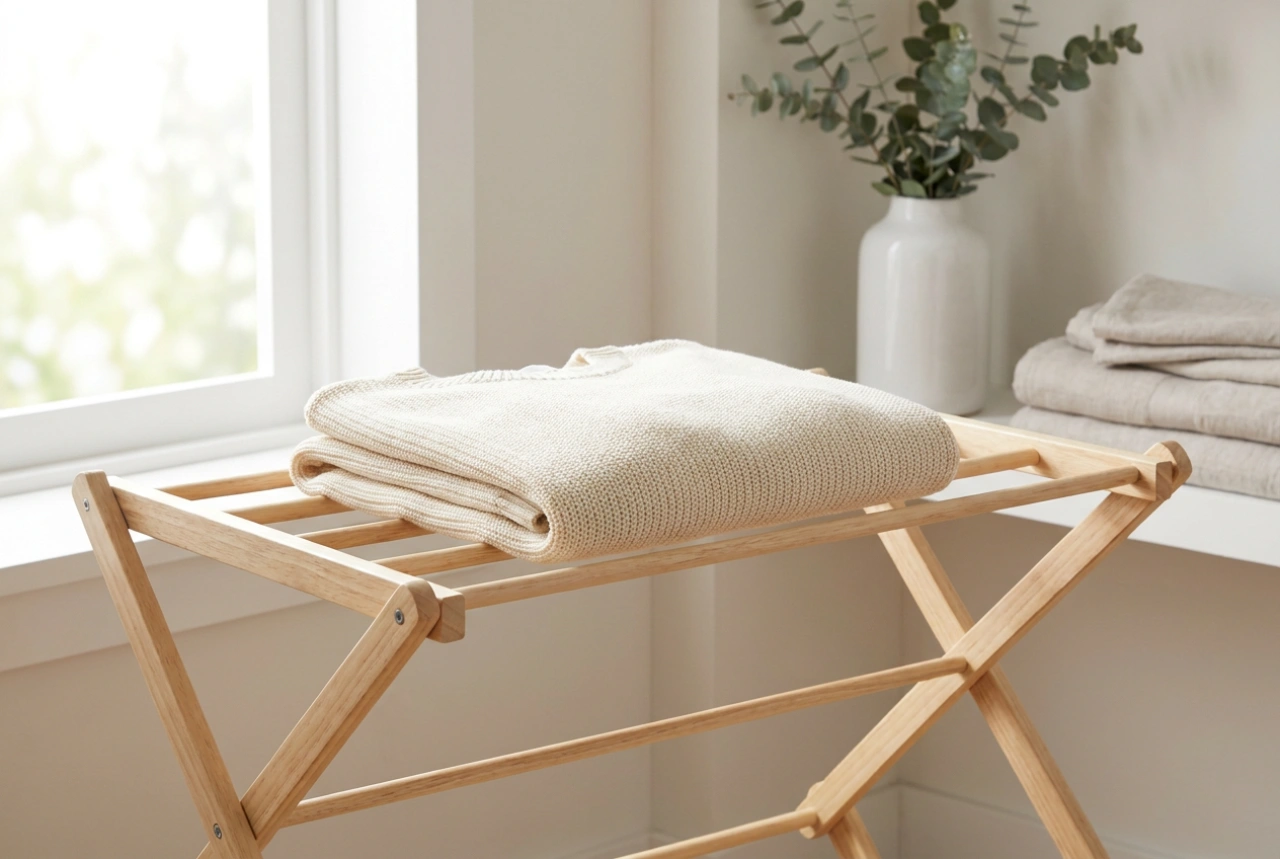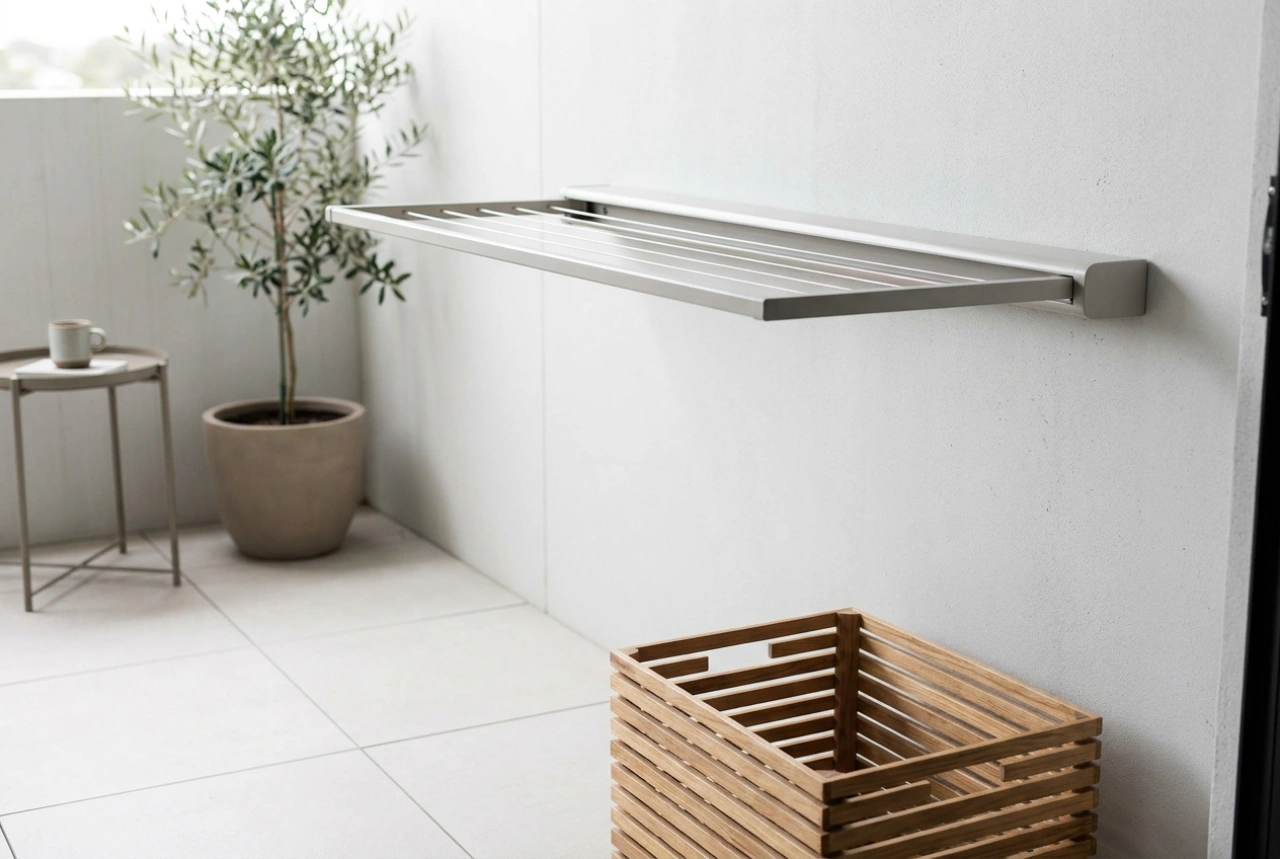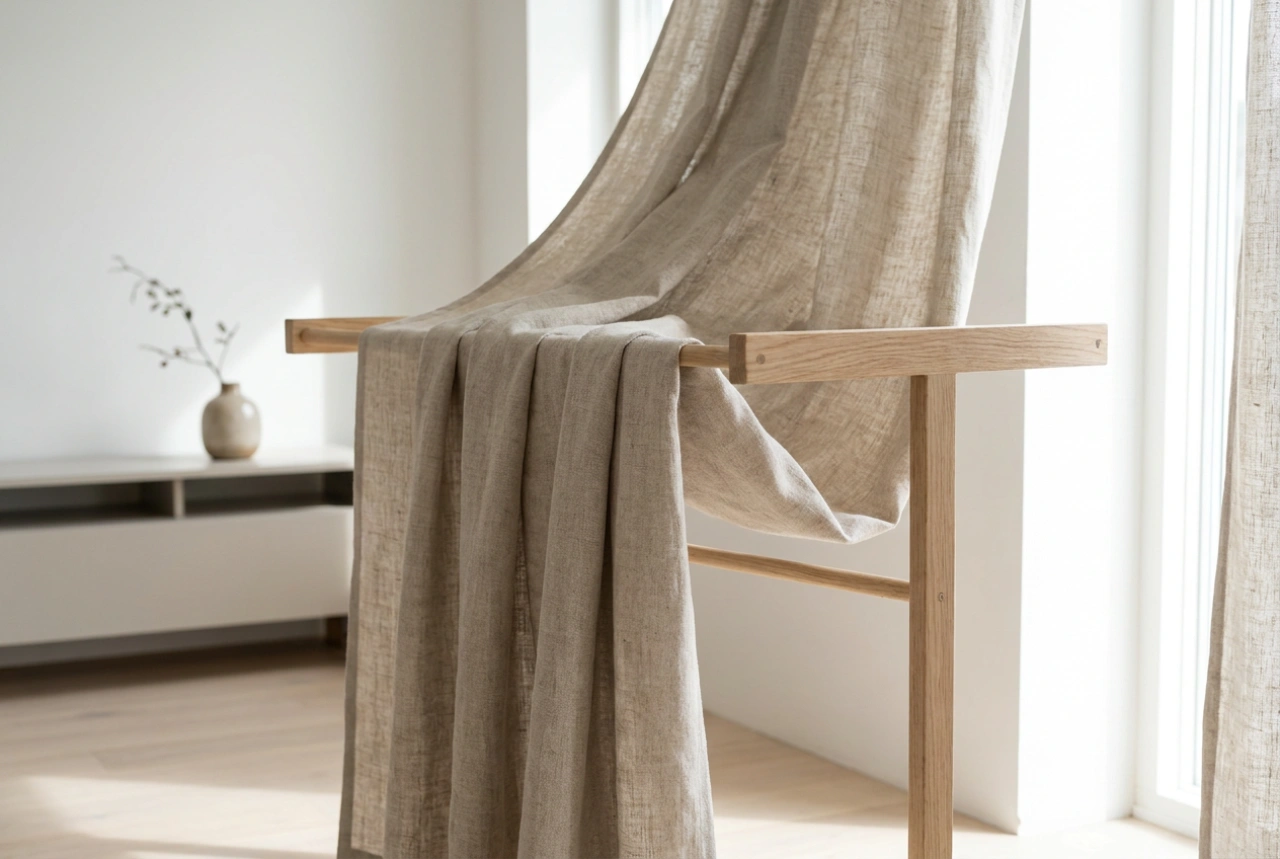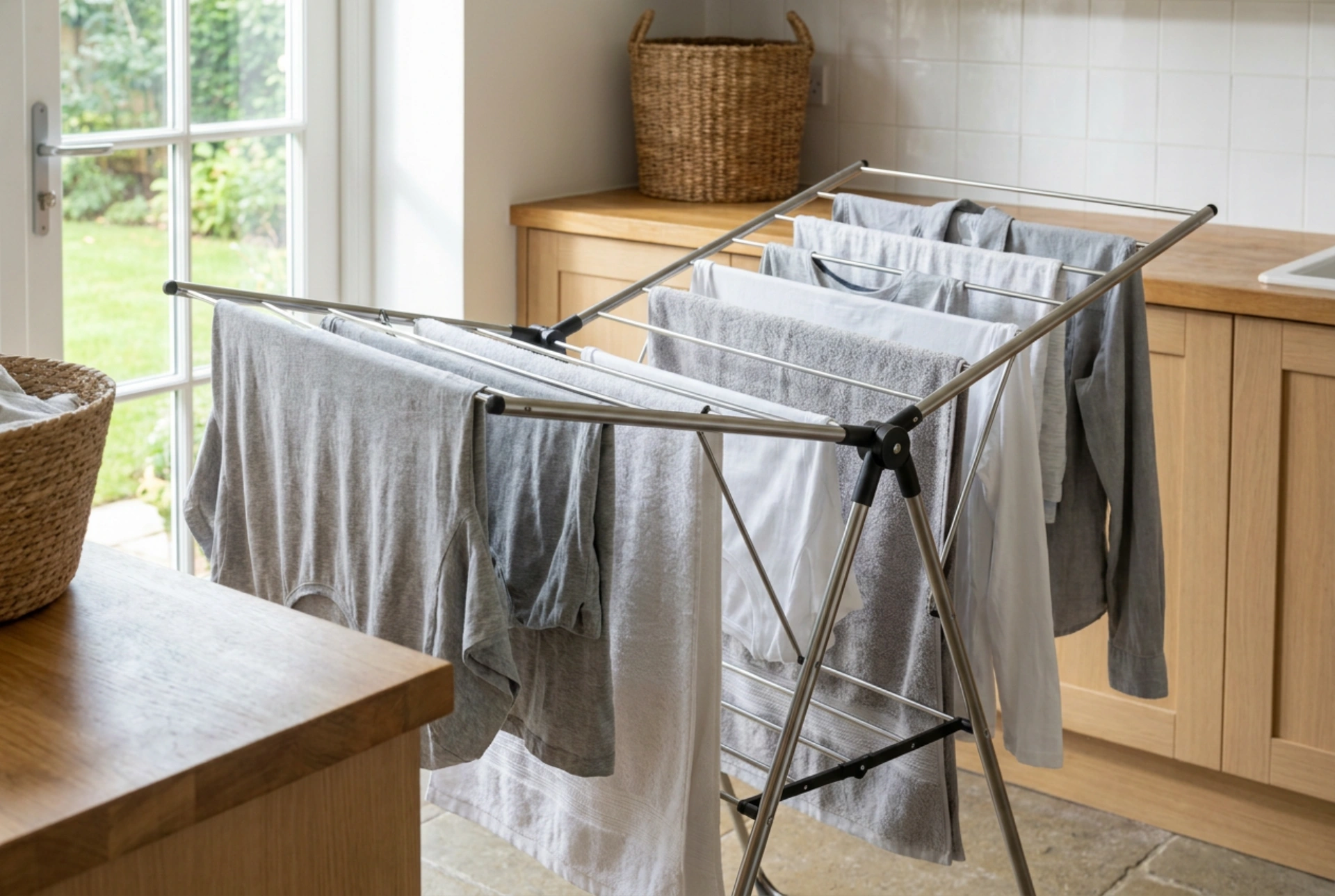


Positioning a freestanding clothes drying rack strategically can reduce drying times by hours, preventing musty odours and lowering indoor humidity. By understanding basic thermodynamic principles and room airflow patterns, you can optimise moisture evaporation without relying on energy-intensive tumble dryers.
The Science of Evaporation on a Drying Rack
Drying clothes is essentially a thermodynamic process of evaporation, where liquid water trapped in fabric fibres transforms into water vapour. This transition relies heavily on the vapour pressure deficit—the difference between the humidity inside the wet fabric and the moisture level of the surrounding air. When a drying rack is loaded with wet clothes, a microclimate of high humidity quickly forms directly around the garments. If this saturated air layer remains stagnant, the evaporation process slows down dramatically.
To break this boundary layer of moisture, continuous airflow is essential. Even a gentle, barely perceptible air current replaces the saturated air with drier air, maintaining a steep humidity gradient that coaxes water out of the fabric fibres much faster. Therefore, the physical placement of the rack must prioritise air movement over mere proximity to heat.
Strategic Room Placement for Maximum Convection
Placing a drying rack in a corner or tight hallway traps moisture and creates a localized humid zone. Instead, position the rack in the path of natural convective currents. The ideal spot is near an interior wall opposite a window or door, rather than directly pushed against a cold exterior wall where condensation can occur.
- Leverage natural drafts: Place the rack between two open interior doors or near a slightly cracked window to utilise cross-ventilation.
- Utilise convective rising heat: Position the rack near, but not directly touching, a radiator or heat source. As warm air rises, it flows upward through the damp fabrics, carrying moisture away. Always maintain a safe distance of at least one metre to prevent fabric damage and allow the warm air plume to spread.
- Avoid cold zones: Keep the rack off cold tiled floors in unheated basements, as low temperatures reduce the kinetic energy of water molecules, significantly delaying evaporation.
Fabric Spacing and the Chimney Effect
Fabric Spacing and the Chimney Effect
How you arrange garments on the metal rails directly dictates how air flows through the rack. Crowding clothes blocks horizontal air movement, turning the rack into a solid block of damp material. To prevent this, apply the chimney effect—a principle of thermal convection where warm air rises through vertical channels.
Hang heavier, thicker garments like denim and heavy cottons on the outer rails of the rack where air exposure is greatest. Lighter materials, such as synthetics and thin cotton t-shirts, should go on the inner rails. Always leave empty rails between thick garments to create open air channels. When draping trousers or sweaters, hang them across two parallel bars instead of one; this widens the fabric profile, preventing the front and back of the garment from sticking together, which effectively doubles the exposed surface area for drying.
Managing Indoor Relative Humidity
A single load of wet washing can release up to two litres of water into the indoor air. If this moisture cannot escape, the relative humidity in the room rises, stalling the drying process entirely. To combat this, ensure the room has active moisture management. Keep a window on a latch to allow damp air to escape, or run a simple extraction fan. Using a mechanical dehumidifier nearby can also rapidly lower the room's relative humidity, maintaining the ideal gradient needed for rapid fabric drying without relying on heat.