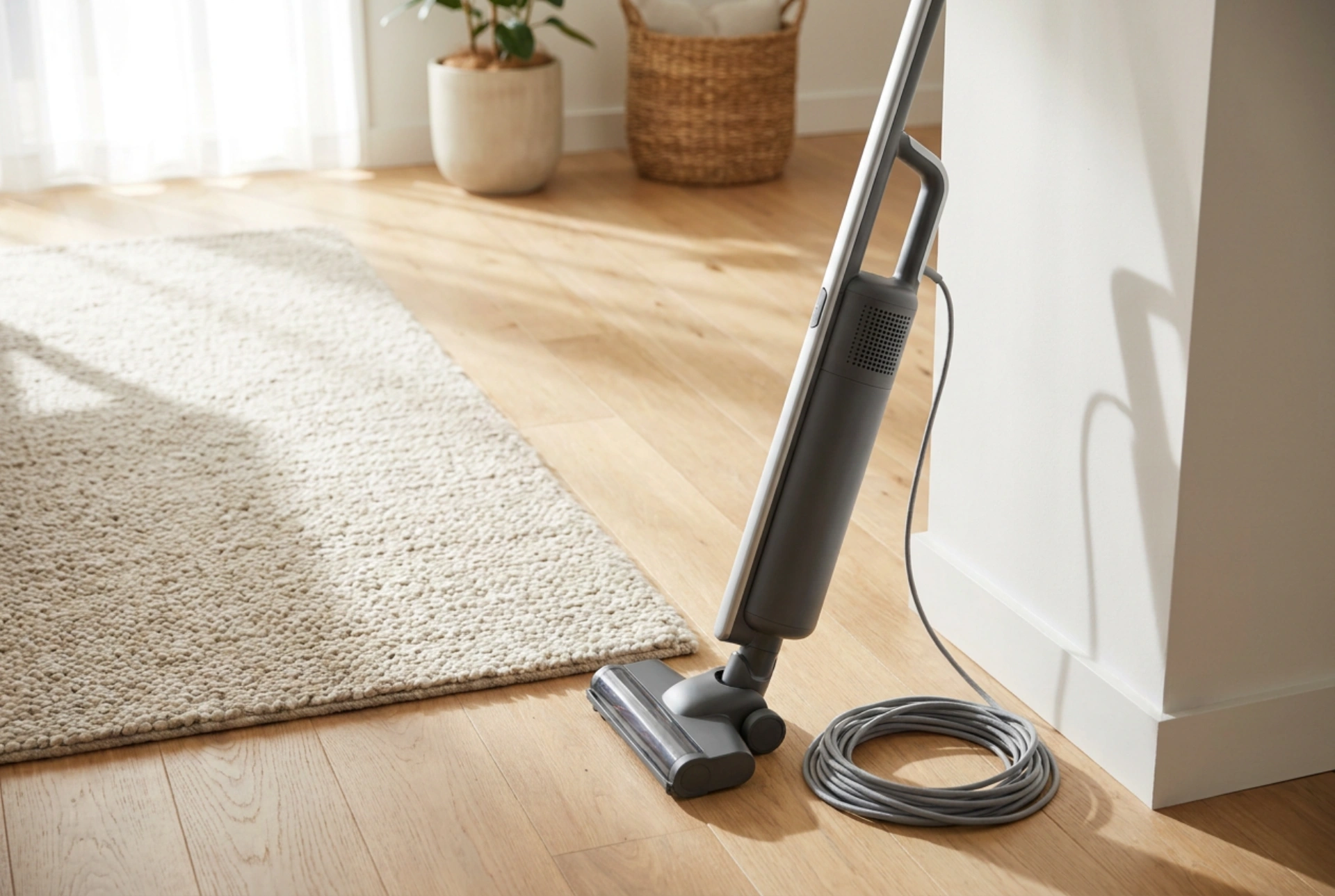


While cordless models offer freedom, corded stick vacuums provide uninterrupted, high-velocity suction that never degrades mid-clean. Mastering this tool requires understanding ergonomics, cable management physics, and systematic room navigation to eliminate physical strain and cable frustration.
The Physics of Ergonomics and Weight Distribution
Unlike traditional cylinders, a corded stick vacuum concentrates its motor and dust canister assembly near the handle or the base. This high centre of gravity shifts the physical leverage required to manoeuvre the appliance. To reduce wrist strain, maintain a neutral wrist position—keep your forearm parallel to the floor where possible and avoid hyper-extending your wrist at the end of each stroke.
Utilise your core muscles and body weight to push and pull the vacuum rather than relying solely on your arm. Standard strokes should be slow and deliberate; rapid jerking motions increase kinetic resistance on carpets and put unnecessary torque on the machine's joints and your shoulder girdle.
Strategic Cable Management and the Loop Technique
The primary friction point of using a corded appliance is managing the power cable. To prevent tripping or constantly snagging furniture, employ the active loop technique. Hold the main length of the cable in your non-vacuuming hand, leaving a slack loop of about one to two metres between your hand and the vacuum body.
- The over-shoulder drape: For long corridors, drape the slack cable over your shoulder opposite the vacuum arm to keep the floor directly in front of you completely clear.
- S-curves: Work in S-shaped sweeps starting from the wall containing the power outlet and moving progressively away from it. This prevents you from running over your own cord.
- Coiling mechanics: When wrapping the cord after use, avoid tight winding around the storage hooks. Tight coils twist the copper conductors inside the insulation, leading to internal fatigue and memory retention in the outer sheath, which makes the cord loop and tangle during future uses. Use a loose, alternating loop method.
Optimising Suction and Airflow Dynamics
Corded stick vacuums rely on a continuous supply of mains power to drive high-RPM motors, but this power is wasted if airflow is restricted. Suction is a function of atmospheric pressure differential. To maintain peak performance, you must manage the path of resistance.
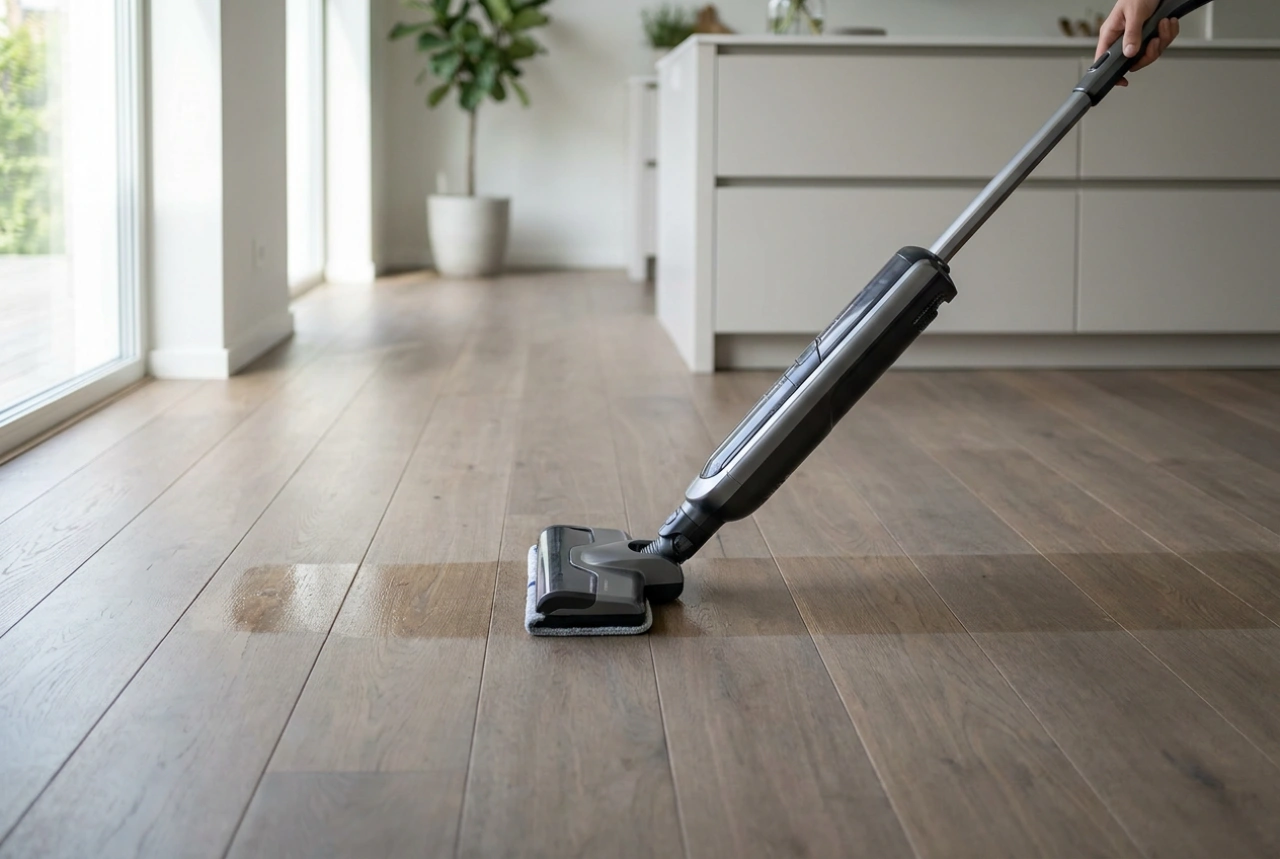
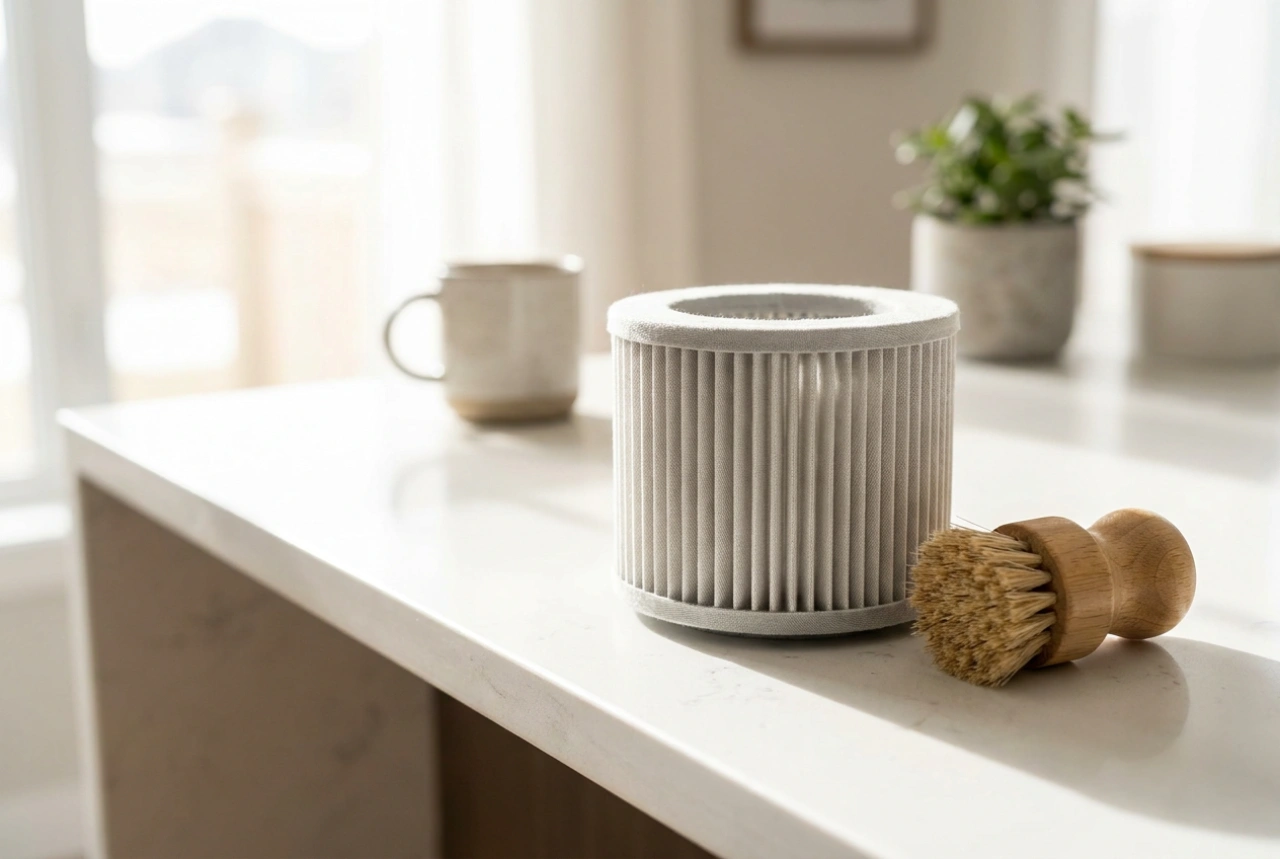
Ensure the floor nozzle maintains flat contact with the surface. Lifting the edge of the vacuum head breaks the vacuum seal, instantly dropping static pressure and leaving heavy particulate matter behind. Additionally, clean the internal filters regularly. Fine dust particles block the microscopic pores of HEPA or foam filters, forcing the motor to work harder against restricted airflow, which generates excess heat and reduces cleaning efficiency.
The Inside-Out Navigation Method
To clean efficiently without repeatedly unplugging the machine, plan your route based on the location of the power socket. Treat the socket as the epicentre of your cleaning radius.
Begin cleaning the areas furthest from the outlet first, working your way back towards it. This ensures that you are always pulling the cord away from previously cleaned zones, preventing the cable from dragging dirt and hair back onto fresh carpets. When moving between rooms, identify central sockets—such as hallway outlets—that allow the maximum reach into adjacent spaces without needing to change power sources mid-task.