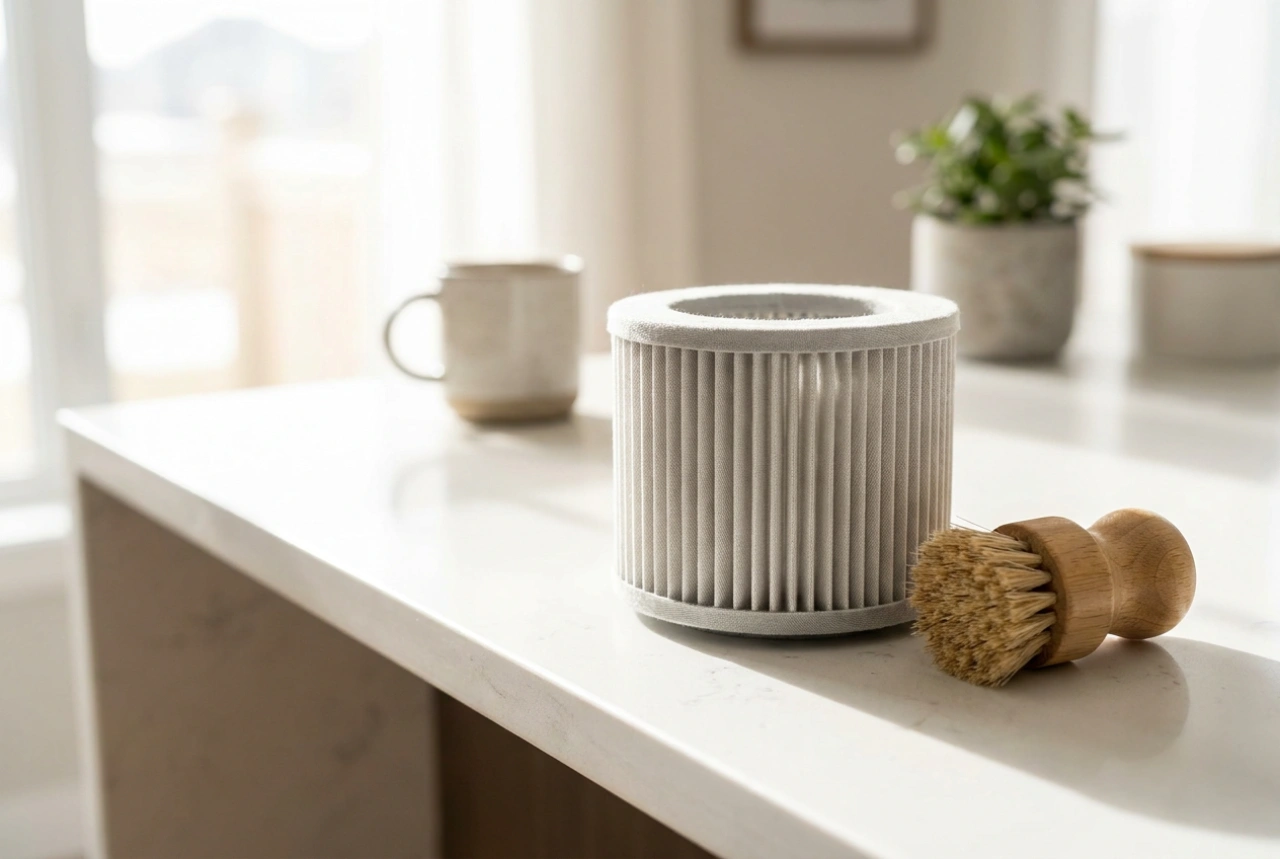


HEPA (High-Efficiency Particulate Air) filters are highly engineered matrices of randomly arranged synthetic or glass fibers designed to capture at least 99.97% of microscopic particles. Maintaining these filters correctly prevents micro-tears in the fiber web, preserves airflow, and ensures your vacuum continues to trap sub-micron allergens instead of exhausting them back into your living space.
The Physics of Microscopic Dust Trapping
Understanding how a HEPA filter works is essential for preserving its integrity. Unlike simple screens that act as sieves, HEPA filters rely on three distinct physical mechanisms to capture particles: inertial impaction, interception, and diffusion. Large particles (above 1.0 micron) travel in a straight line and impact directly into the fibers. Medium-sized particles (0.1 to 1.0 micron) follow the air stream but brush against the fibers and stick to them (interception). The smallest particles (under 0.1 micron) undergo Brownian motion, zig-zagging erratically until they collide with a fiber (diffusion).
Mechanical cleaning methods can easily disrupt this delicate fiber network. Aggressive scrubbing or using high-pressure compressed air can expand the microscopic spaces between the fibers, creating pathways for fine dust to escape. Therefore, any maintenance must prioritize preserving the physical density and arrangement of these pleated fibers.
Distinguishing Washable from Non-Washable Filters
Before applying any liquid to a HEPA filter, you must determine its material composition. Non-washable filters are typically made of tightly packed fiberglass paper. Exposing these to water dissolves the structural binders holding the glass fibers together, causing the pleats to collapse and permanently ruining the filter's efficiency. These must only be dry-cleaned.
Washable HEPA filters are usually constructed from durable synthetic polymers like polyester or PTFE (polytetrafluoroethylene). These materials resist water degradation, but they are still vulnerable to high water pressure and harsh chemicals. Always check the manufacturer markings for a "washable" symbol or designation before proceeding with wet cleaning.
Safe Dry-Cleaning Techniques for Fiberglass Filters
For non-washable fiberglass filters, the goal is to remove surface cake-dust without disturbing the deep-seated fibers. Begin by tapping the filter frame gently against the inside of a trash bin. Avoid striking the delicate pleated surface directly. This gentle impact dislodges larger clumps of dust held by inertial impaction.
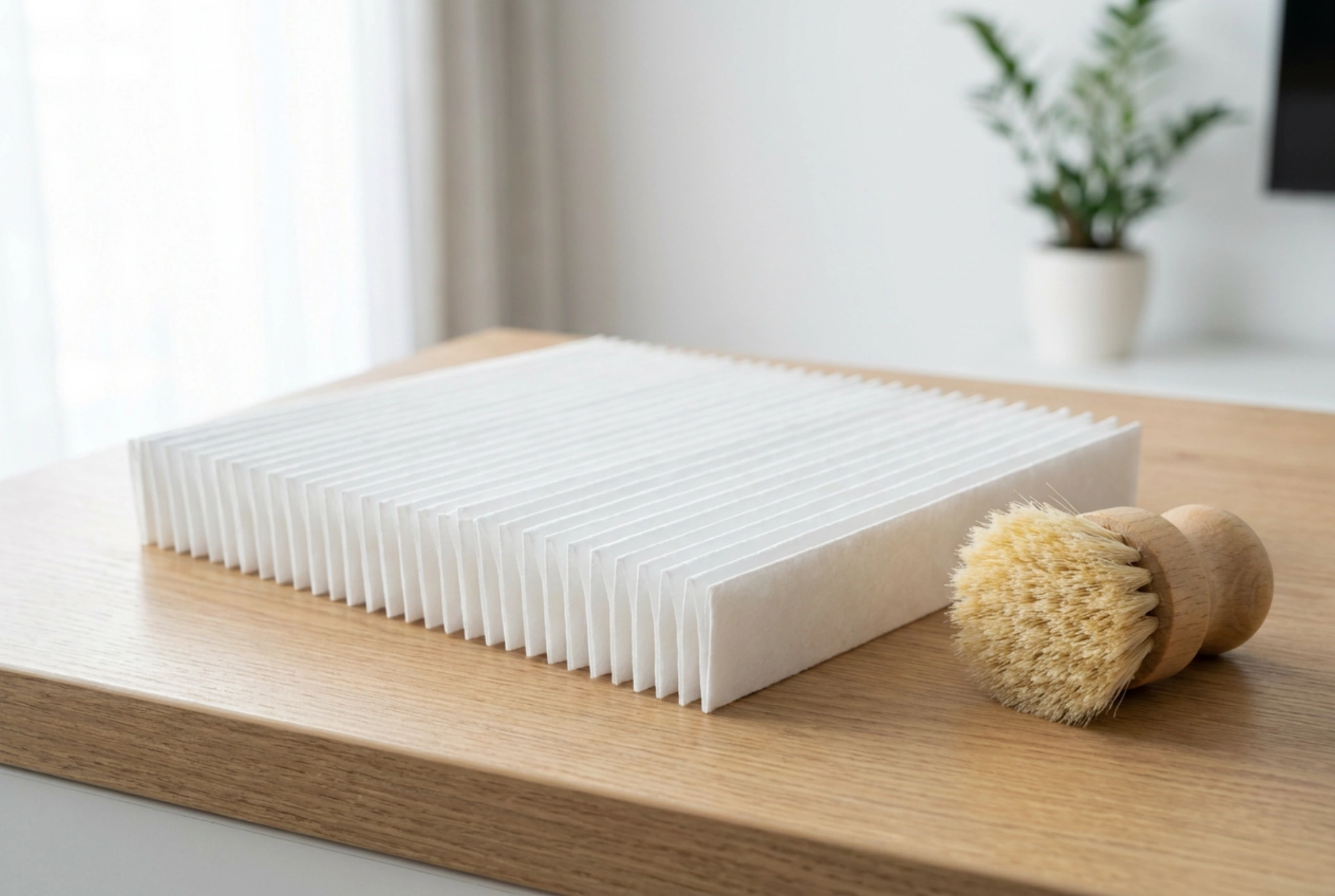
To clear the shallower layers of the pleats, use a soft-bristled utility brush. Brush parallel to the pleats with minimal downward pressure to sweep away loose particles. Never use stiff wire brushes or sharp tools, which can puncture the membrane. If you have access to a secondary vacuum cleaner, you can use its soft brush attachment to gently draw out loose dust from the dirty side of the HEPA filter.
The Wet Cleaning Protocol for Synthetic Filters
If your filter is certified washable, follow a strict low-energy washing protocol to prevent structural damage. Never use hot water, as heat can warp the synthetic pleat stabilizers and compromise the filter frame seal.
- Rinse with cold water: Hold the filter under a gentle stream of cold tap water. Direct the water flow from the clean side (typically the back of the filter) toward the dirty side. This back-flushing forces embedded dust out of the fiber matrix rather than pushing it deeper.
- Avoid chemical detergents: Do not use dish soap, laundry detergents, or solvents. Surfactants can strip away hydrophobic coatings and leave behind a residue that attracts more dust, clogging the filter faster in future uses.
- Air dry thoroughly: Gently shake off excess water. Place the filter in a well-ventilated area to dry completely for at least 24 to 48 hours. Reinstalling a damp filter leads to immediate mold growth inside the vacuum, which releases harmful spores into your indoor air.
When Dry Cleaning and Washing Are No Longer Enough
No filter lasts indefinitely. Over time, the finest sub-micron particles become permanently lodged within the depth of the fiber matrix through diffusion. This deep-seated clogging increases air resistance, forcing the vacuum motor to work harder, which can lead to overheating and reduced suction power. If you notice a persistent musty odor, grey discoloration that does not fade after cleaning, or visible micro-tears in the pleated paper, it is time to replace the HEPA filter entirely to safeguard your appliance and indoor air quality.