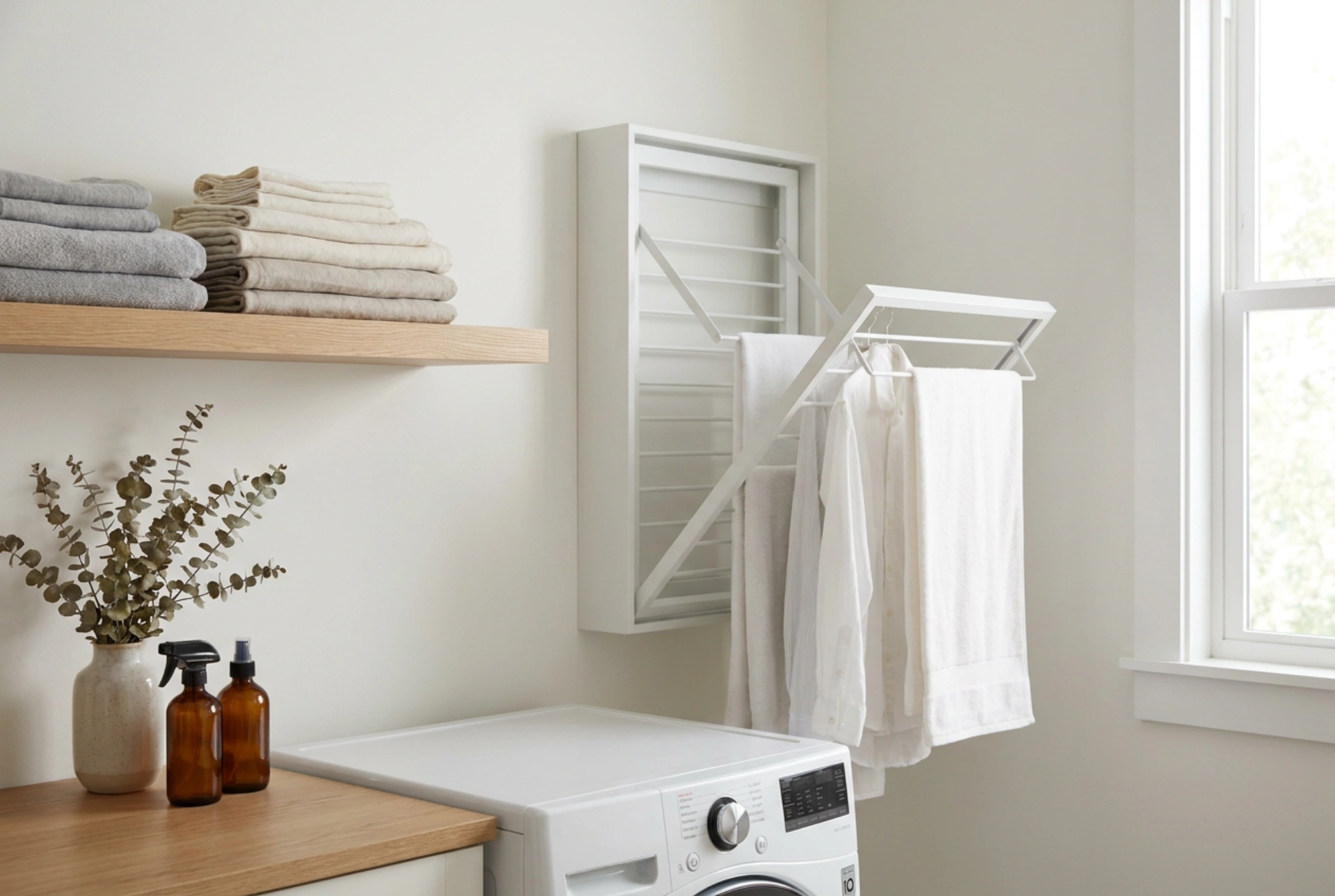


Installing a wall-mounted drying rack in a compact room requires a precise balance of structural physics, airflow mechanics, and ergonomic positioning. By understanding how air circulates and how walls distribute load, you can create an efficient laundry drying zone without sacrificing valuable floor space.
Assessing Structural Load and Wall Mechanics
Before selecting or mounting a wall rack, you must calculate the potential weight load to prevent structural failure. Wet laundry holds a significant volume of water; a standard washing load can double or triple in weight when wet. For instance, a 5 kg load of dry cotton laundry can retain up to 5 to 7 litres of water, bringing the total weight to over 10 kg. This dynamic weight exerts a continuous downward and outward cantilever force on the wall mounting points.
Mounting on solid masonry or concrete walls provides the highest shear and pull-out resistance, allowing for simple heavy-duty nylon wall plugs. However, mounting on drywall (gypsum plasterboard) requires locating the wooden studs or metal tracks behind the board using a stud finder. If stud alignment is not possible, specialized toggle bolts or heavy-duty hollow-wall anchors must be used to distribute the load across a wider surface area of the plasterboard. Never rely on standard plastic plugs in drywall for load-bearing drying racks.
The Thermodynamics of Indoor Drying: Airflow and Placement
The speed at which clothes dry depends directly on the relative humidity, temperature, and boundary-layer air movement around the fabric. When planning the position of your wall-mounted rack, leverage natural convective currents. Warm air rises because it is less dense than cold air. Positioning the rack high on a wall, particularly above a radiator or in the path of natural warm airflow, accelerates the evaporation rate.
However, trapping moist air in a confined space will quickly saturate the surrounding atmosphere, halting the drying process and risking mould growth. Ensure the drying rack is placed in a zone with active air circulation—ideally between an inlet (such as a door gap or window trickle vent) and an extraction point (like a bathroom mechanical ventilation grille). Avoid placing racks deep within dead-air zones, such as tight corners or enclosed wardrobes, where boundary-layer humidity cannot escape.
Material Selection: Corrosion Resistance and Fabric Protection
High relative humidity and direct contact with wet textiles subject the drying rack to constant oxidative stress. Choosing the correct material is vital to prevent structural degradation and stains on your garments. Below are the key characteristics of the most common materials used:
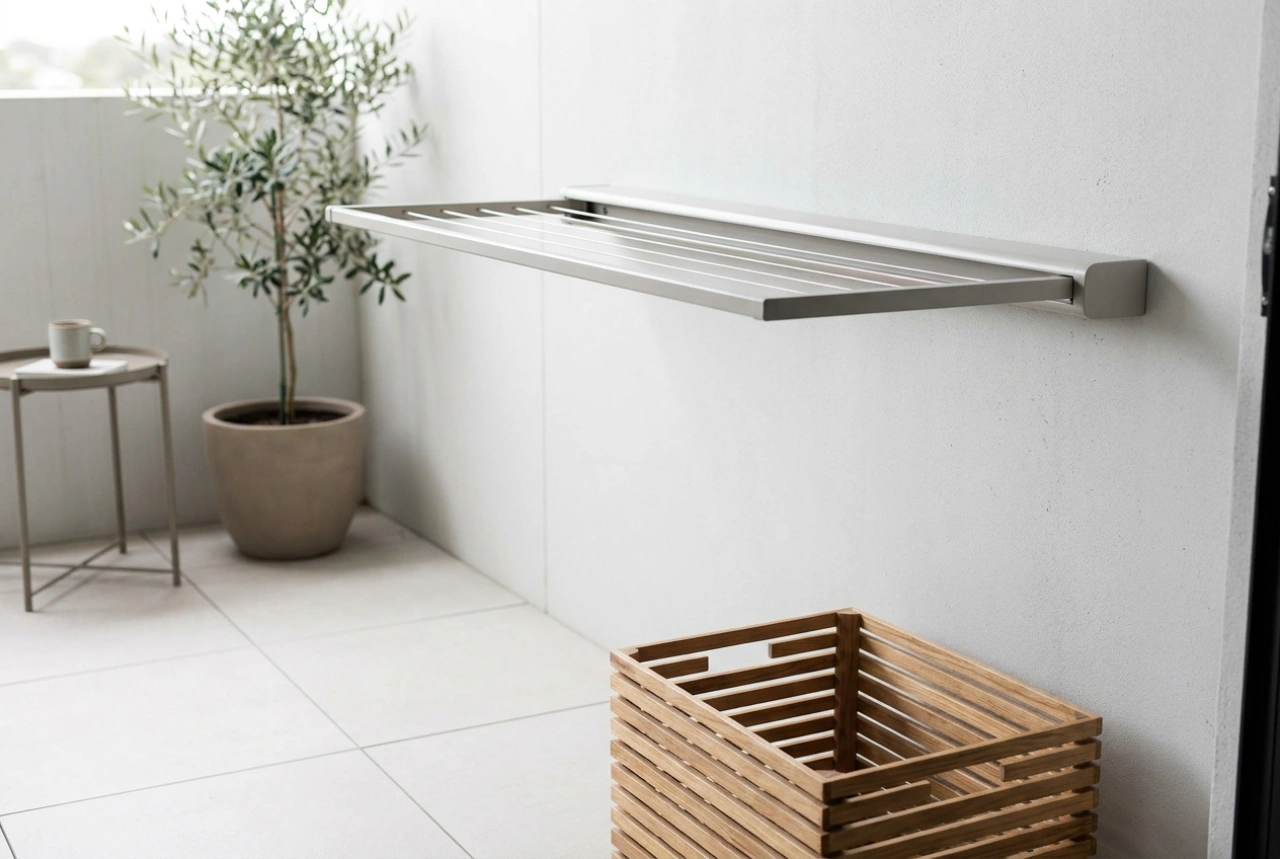
- Anodised Aluminium: Lightweight and highly resistant to corrosion due to its natural oxide layer. It does not rust or transfer stains to clothing, making it ideal for high-humidity environments.
- Stainless Steel: Offers superior mechanical strength and resistance to bending under heavy loads. Ensure it is grade 304 or higher to guarantee resistance to chlorine compounds often found in household laundry detergents.
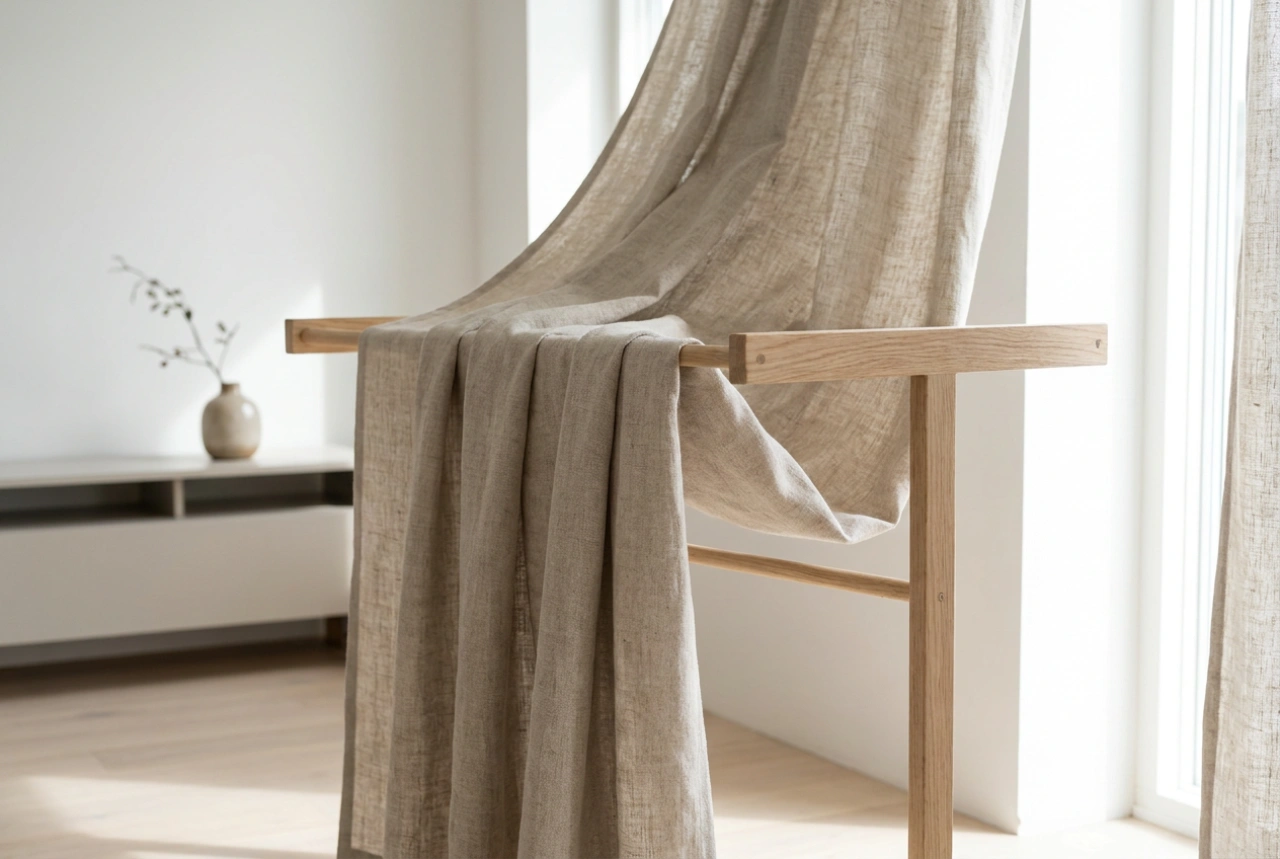
- Sealed Hardwood: Provides a warm aesthetic but requires a highly durable, water-resistant polyurethane or oil sealant. Unsealed wood absorbs moisture, leading to fiber swelling, warping, and the growth of staining moulds that can ruin light fabrics.
Ergonomics and Folding Mechanisms for Tight Spaces
To maintain usability in tight spaces, the physical footprint of the rack when both extended and retracted must be carefully mapped. The optimal mounting height should align with the user's natural reach—typically between chest and eye level (130 cm to 160 cm from the floor). This allows for comfortable hanging without excessive shoulder strain, while still leaving clear clearance beneath the rack for baskets or floor-standing appliances.
Consider the mechanical movement of the rack. Accordion-style horizontal extension racks project directly outward, which requires clear physical clearance in front of the wall. Drop-down or fold-up vertical racks utilize vertical wall space and fold completely flat when not in use, making them highly suitable for narrow utility corridors or behind-the-door installations. Measure the maximum projection angle to ensure it does not obstruct doorways, cabinet openings, or walking paths when fully loaded.