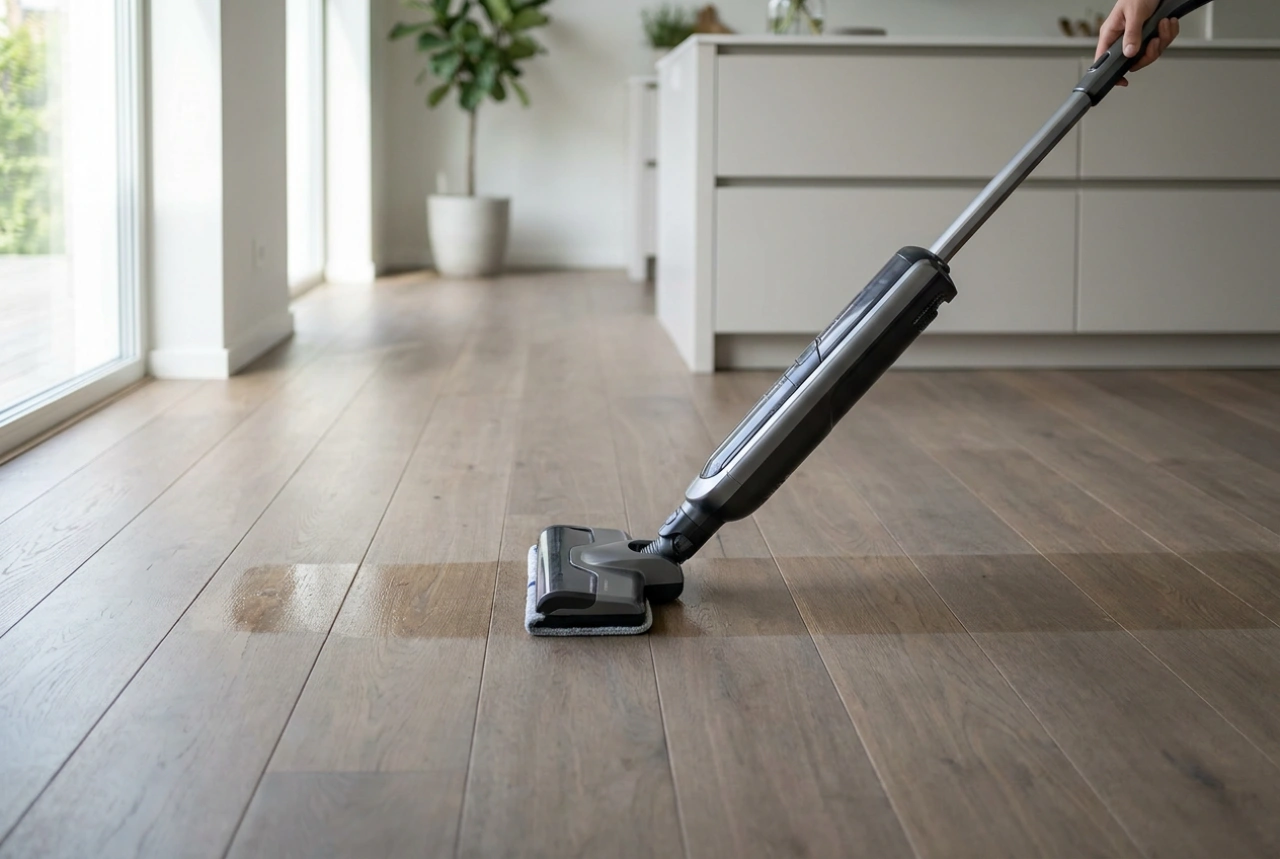


Mopping vacuum cleaners offer a convenient dual-action cleaning process, but they frequently leave unsightly streaks on polished floors. Achieving a flawless, streak-free finish relies on understanding the physical and chemical principles of surface tension, detergent dilution, and microfibre absorption.
The Role of Water Quality and Mineral Residue
When water evaporates from a floor surface, any dissolved solids remain behind. In regions with hard tap water, high concentrations of calcium and magnesium ions form microscopic mineral deposits as the moisture dries, resulting in dull streaks.
To mitigate this, always use demineralised or distilled water in your mopping vacuum. These treated waters lack the inorganic compounds that crystallise upon drying. If you must use tap water, lowering the water temperature can slightly reduce the rate of rapid evaporation, allowing the machine's suction mechanism more time to reclaim the liquid before it dries in situ.
Surfactant Overload and Surface Tension
Many users assume that more detergent equates to a cleaner floor. In reality, an excess of cleaning agents is the primary cause of sticky, streaky residues. Detergents contain surfactants—molecules with hydrophilic (water-attracting) and lipophilic (fat-attracting) ends. When diluted correctly, surfactants lower the surface tension of water, allowing it to wet the floor evenly and encapsulate grease.
However, when the concentration is too high, the excess surfactant molecules do not rinse away. Instead, they remain on the floor finish, forming a microscopic film that scatters light and actively attracts walking dust. Always adhere to strict dilution ratios, often requiring only a few drops of a neutral, low-foaming agent per tank, or rely solely on the thermal power of hot demineralised water.
Microfibre Saturation and Capillary Action
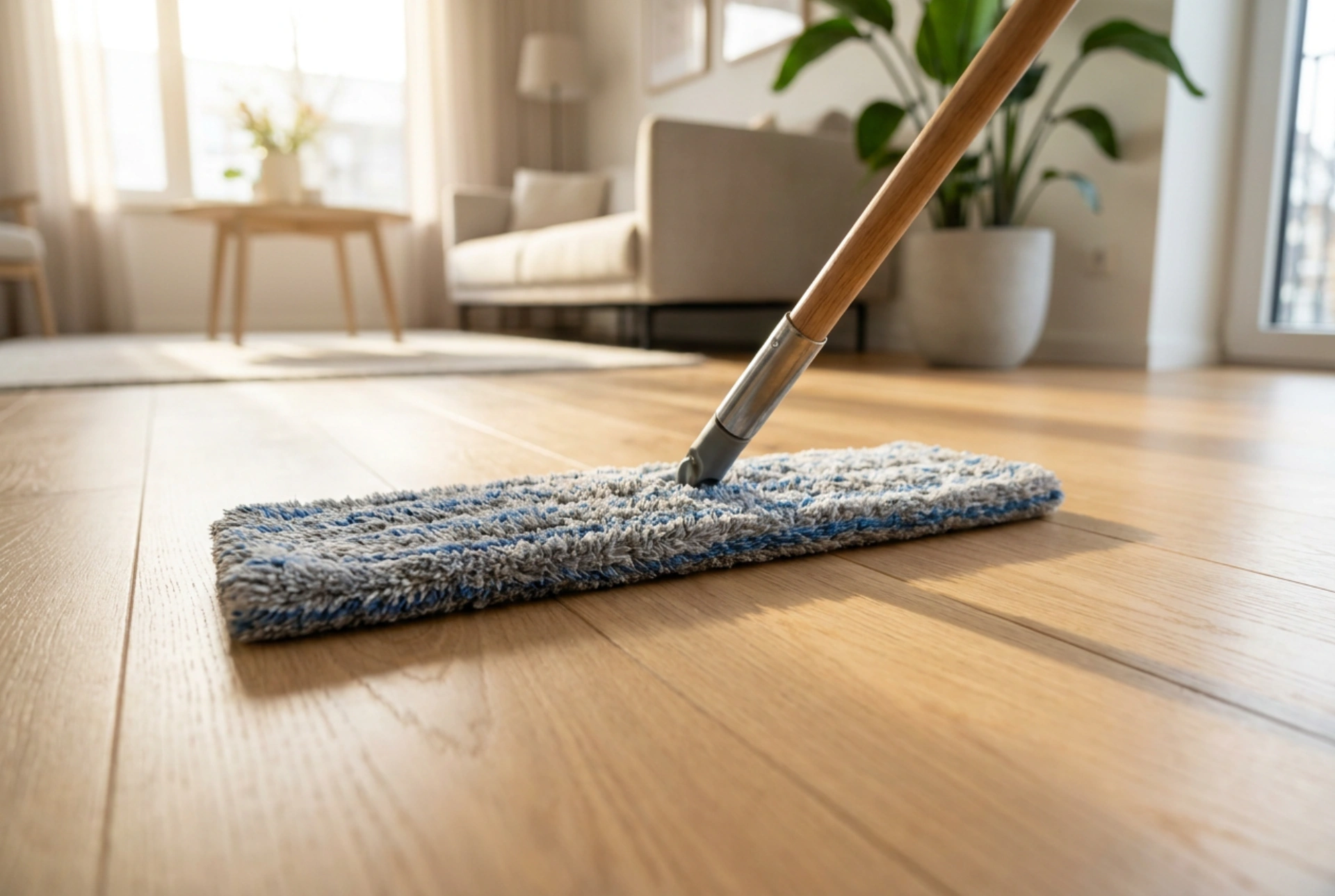
The mopping pad attached to your vacuum relies on microfibre technology. These synthetic fibres, typically a blend of polyester and polyamide, are split to create a vast network of microscopic channels. These channels lift and trap dirt through capillary action and electrostatic charge.
Once these channels are saturated with dirty water and particulate matter, their capillary capacity drops to zero. Instead of absorbing, the pad begins to redistribute the dirty water across the floor surface. To prevent this, prime the pad by dampening it slightly with clean water before starting, and replace or thoroughly rinse the microfibre pad every 15 to 20 square metres. Operating with a saturated or soiled pad guarantees streaking.
Velocity, Suction, and Movement Patterns
A mopping vacuum functions by depositing water, agitating the surface with a pad, and immediately vacuuming up the suspended slurry. If you push the machine too quickly, you disrupt this sequence. The vacuum's suction inlet passes over the wet area before the water has had time to loosen the dirt, or conversely, it leaves behind too much moisture which then air-dries into streaks.
Maintain a slow, steady walking pace. Work in structured, overlapping lanes—ideally overlapping each pass by about 50 percent. This ensures that any residual moisture left at the edge of the damp pad is drawn up by the suction channel of the adjacent pass. Always work backwards toward an uncleaned area to avoid walking on the damp, drying floor.
Preventive Maintenance for Flawless Results
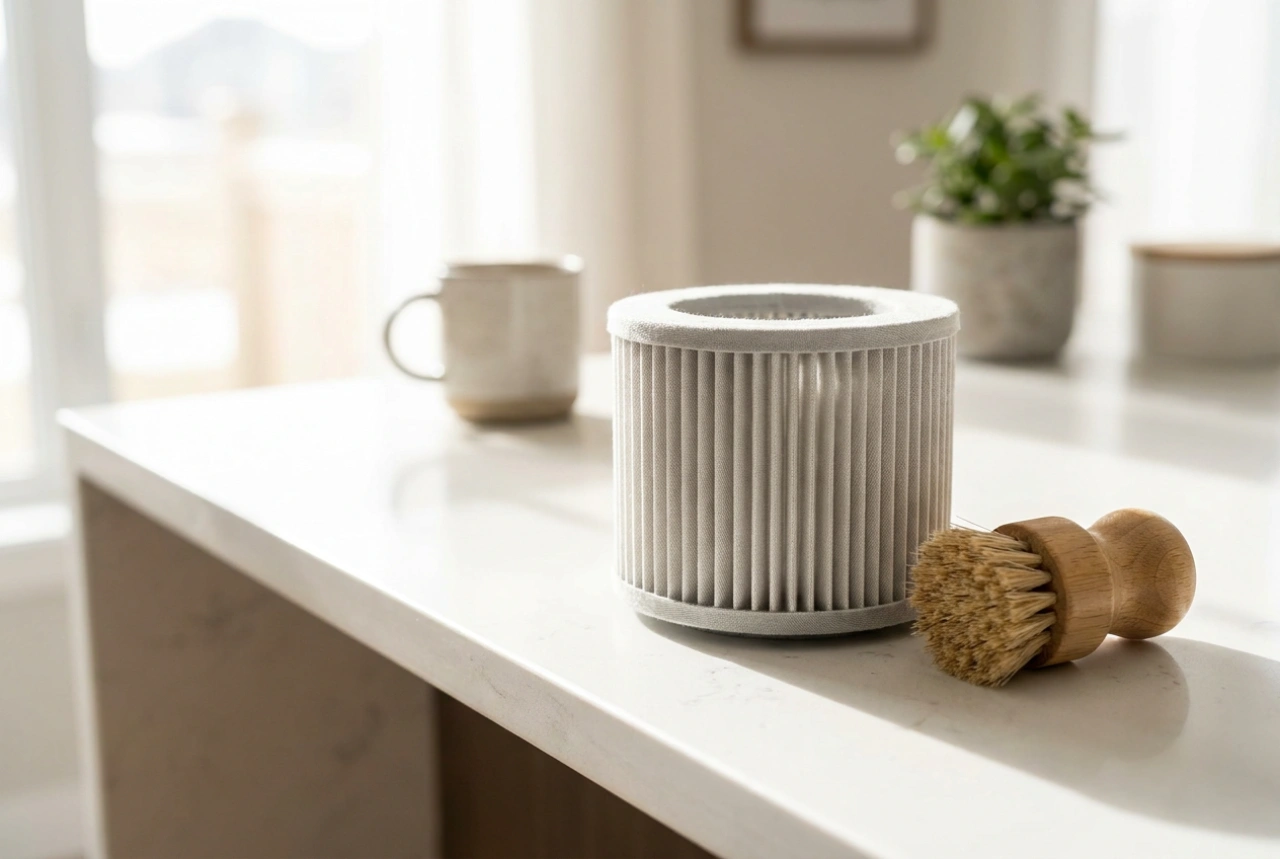
A clean machine is essential for a streak-free shine. Residual oils, limescale, and lint inside the vacuum's water channels or on the suction squeegee can contaminate the fresh water path.
- Wash microfibre pads in a washing machine at 60 degrees Celsius without fabric softener, as softeners coat the fibres with silicone, destroying their absorbent properties.
- Clean the vacuum's squeegee blades and suction nozzles after every use to ensure even contact with the floor.
- Empty and rinse the dirty water tank immediately after cleaning to prevent bacterial biofilm from building up and contaminating future cleaning cycles.