

Hanging laundry outside or near an open window uses natural thermodynamic processes to evaporate moisture, but without the correct technique, it risks damaging fabrics and introducing excess humidity into the living space. Understanding the interaction between air movement, relative humidity, and fiber physics allows you to dry clothes rapidly while maintaining structural safety.
The Physics of Outdoor Drying: Vapor Pressure and Airflow
Evaporation is a phase transition where liquid water molecules in fabric absorb thermal energy and escape as water vapor. For this process to continue efficiently, the air immediately surrounding the fabric must not become saturated. Wet clothes naturally create a thin, stagnant boundary layer of highly humid air around themselves. If this boundary layer remains undisturbed, the rate of evaporation drops to near zero.
Wind acts as a mechanical force that strips away this boundary layer, replacing it with drier ambient air. This maintains a steep vapor pressure gradient between the wet fibers and the atmosphere, accelerating drying times. Consequently, wind speed is often more critical than heat. Even on cold, dry winter days, strong air currents can dry clothes quickly through sublimation and rapid evaporation, provided the ambient relative humidity is low.
Preventing Moisture Accumulation and Condensation Indoors
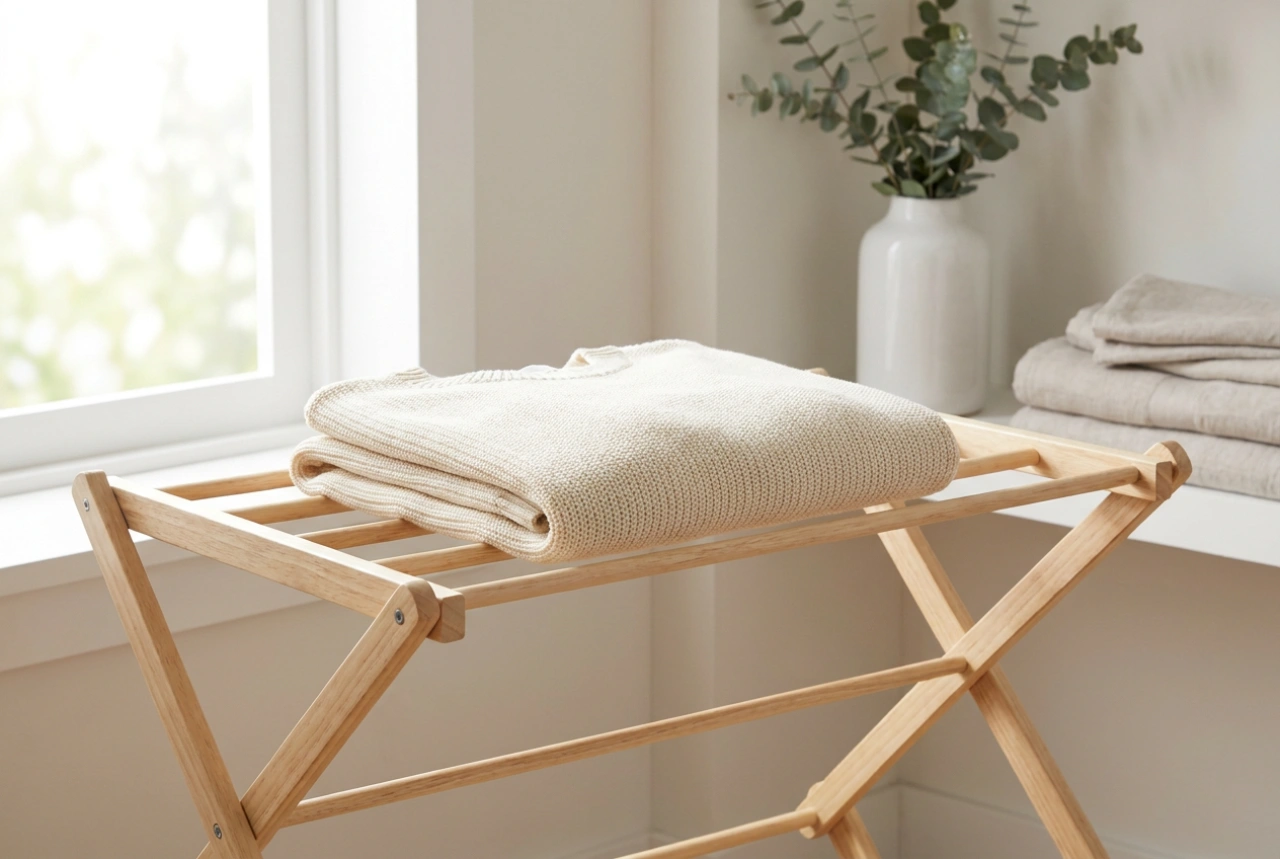
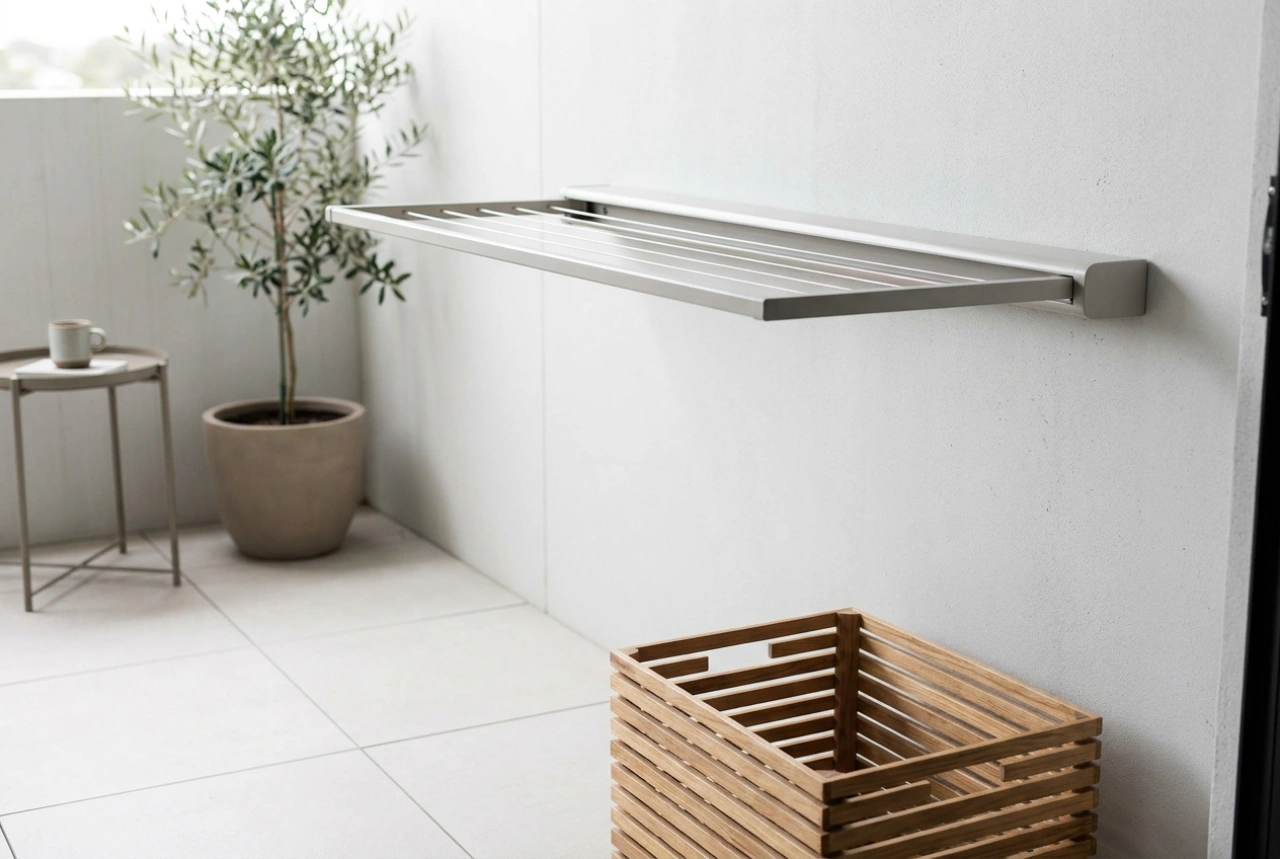
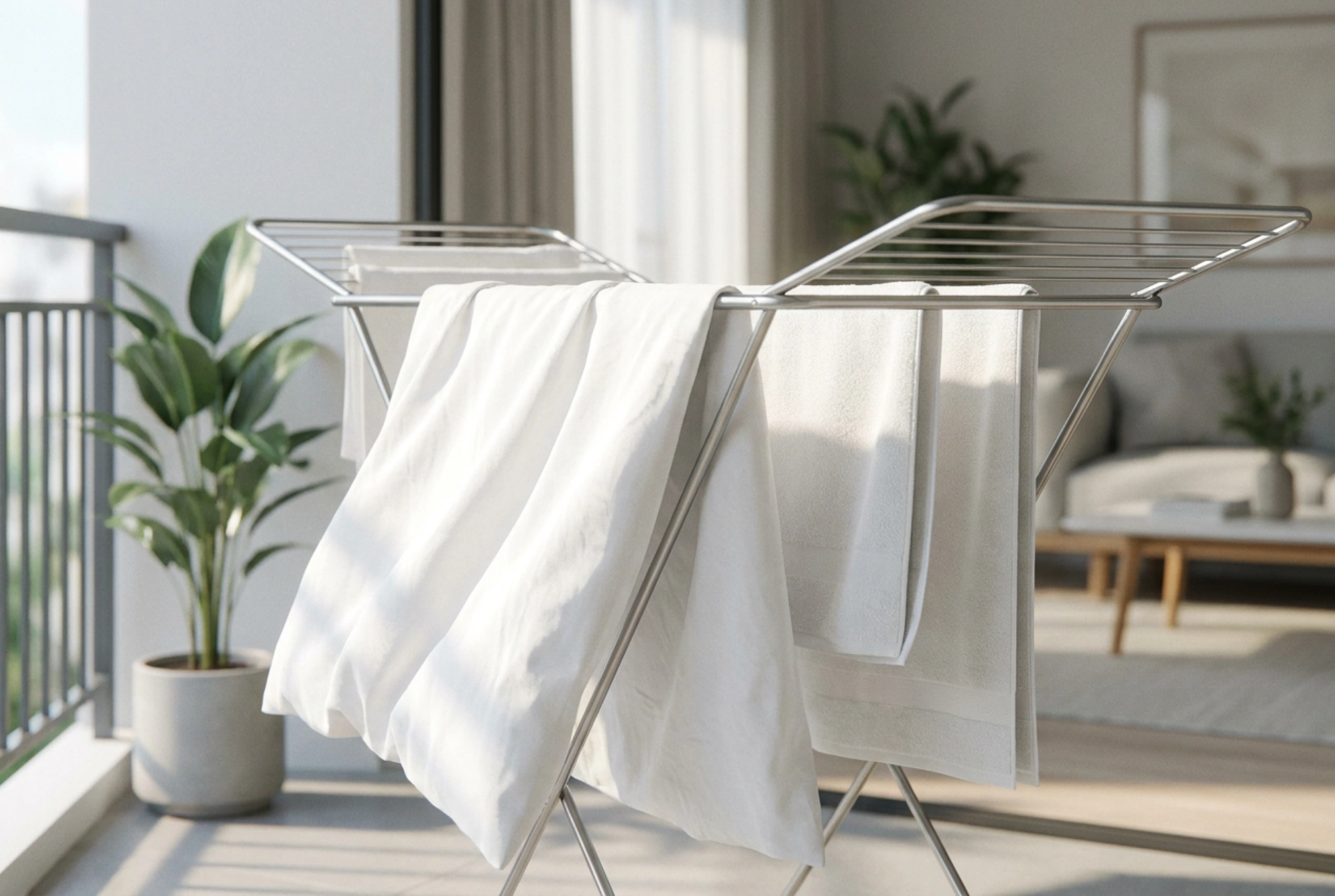
When drying clothes on a rack placed near a window or on a covered balcony, the evaporated water must go somewhere. If the room lacks sufficient air exchange, this moisture raises the indoor relative humidity. When warm, moisture-laden air encounters cold surfaces—such as window panes or external walls—it cools rapidly. If the surface temperature falls below the dew point, the water vapor condenses into liquid water, creating an ideal breeding ground for mold spores.
To prevent this, you must establish effective cross-ventilation. Opening a single window is rarely sufficient because it does not create a continuous current. Instead, open a second window or door on the opposite side of the dwelling to establish a pressure differential. This forces the humid air out of the building envelope before it can settle on structural surfaces. Always position the drying rack directly in the path of this airflow path rather than in stagnant corners.
Hanging Techniques and Tension Distribution
Water within wet fabric is subject to both capillary action and gravity. As water evaporates from the upper sections of a hanging garment, capillary forces pull water upward from the damper lower sections. At the same time, gravity pulls water downward. This results in a high concentration of moisture at the lowest hem of the garment, making it the slowest part to dry.
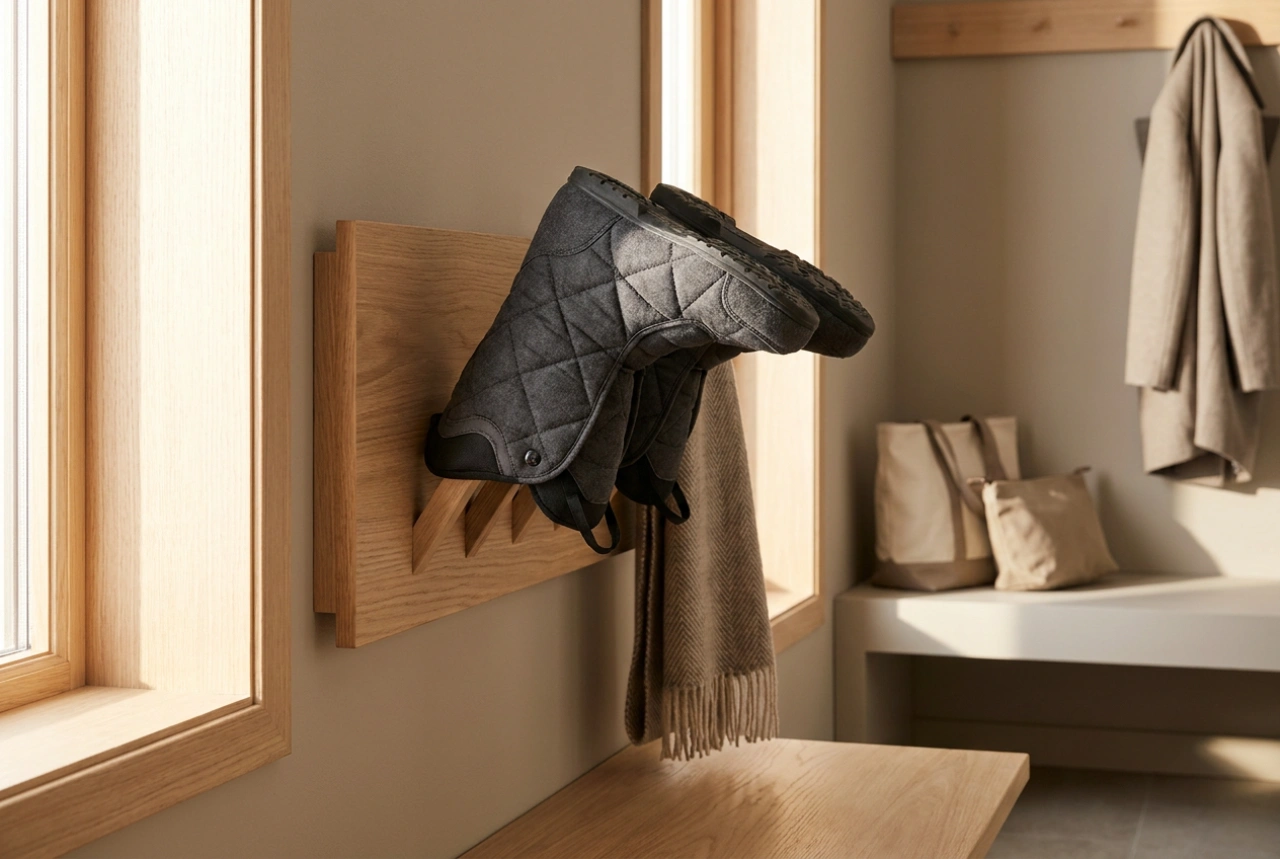
- Hang items upside down: Attach trousers by their cuffs and shirts by their bottom hems. The heaviest, thickest parts of the garment (the waistband or collar) will hang downward, allowing gravity to assist in drawing water out of the densest fabric zones.
- Spread the surface area: Avoid folding clothes over the line. Use two parallel lines or a wide rack to drape items flat, maximizing the surface area exposed to moving air.
- Peg placement: Always place pegs on seams or reinforced fabric areas. Wet fibers are highly susceptible to mechanical deformation; pegging thin, delicate fabrics directly can permanently stretch and warp the weave.
Solar Radiation and Fiber Integrity
Direct sunlight offers a distinct chemical advantage: ultraviolet (UV) radiation acts as a natural disinfectant. It breaks down the organic compounds that feed odor-causing bacteria, sanitizing the fabric. However, prolonged exposure to UV light also initiates photodegradation. The high-energy photons break the molecular bonds within cotton, linen, and synthetic polymers, leading to weakened fibers, loss of elasticity, and color fading.
To balance sanitization with fiber preservation, turn colored and dark garments inside out before hanging them. This ensures that any UV-induced fading occurs on the interior surfaces. Additionally, monitor the drying progress closely. Remove clothes from the line the moment they are dry; leaving bone-dry fabrics baking in direct sunlight accelerates fiber brittleness and structural degradation.