

Cordless vacuum cleaners with integrated mopping functions promise simultaneous sweeping and washing, yet they often leave behind frustrating streaks and water marks on hard floors. Achieving a flawless, streak-free finish relies on understanding the chemistry of hard water, the behaviour of surfactants, and the mechanical limits of microfiber rollers.
The Science Behind Streak Formation
Streaks on hard floors are not simply wet patches; they are concentrated deposits of dissolved minerals, suspended soil, or surfactant residues left behind as water evaporates. When a mopping vacuum passes over a surface, it dispenses a thin film of water. If this water contains high levels of calcium and magnesium (hard water), these minerals crystallise during evaporation, leaving white or greyish tracks. Furthermore, if the microfiber roller becomes saturated with fine dust, it loses its ability to capillary-wick moisture away from the floor, resulting in dirty water being smeared rather than lifted. The key to prevention is ensuring that the liquid applied is pure and that the mechanical extraction of the dirty water is maximised.
Water Chemistry and the Role of Surfactants
The choice of cleaning fluid directly dictates the optical clarity of the floor once dry. Tap water with a high mineral content is the primary culprit for dull finishes. Using demineralised or distilled water in the clean water tank eliminates mineral spotting entirely. If you choose to use a cleaning agent, it must be formulated specifically for rapid-evaporation and low-foaming properties. Traditional floor detergents contain high concentrations of surfactants, which lower the surface tension of water to lift dirt. However, when these surfactants dry, they form a sticky, microscopic film that catches light and reveals footprints. A minute dose of a neutral, non-ionic surfactant or a splash of isopropyl alcohol (which accelerates drying time without leaving residues) is often sufficient to break surface tension and dissolve grease.
Perfecting Your Sweeping Technique and Speed
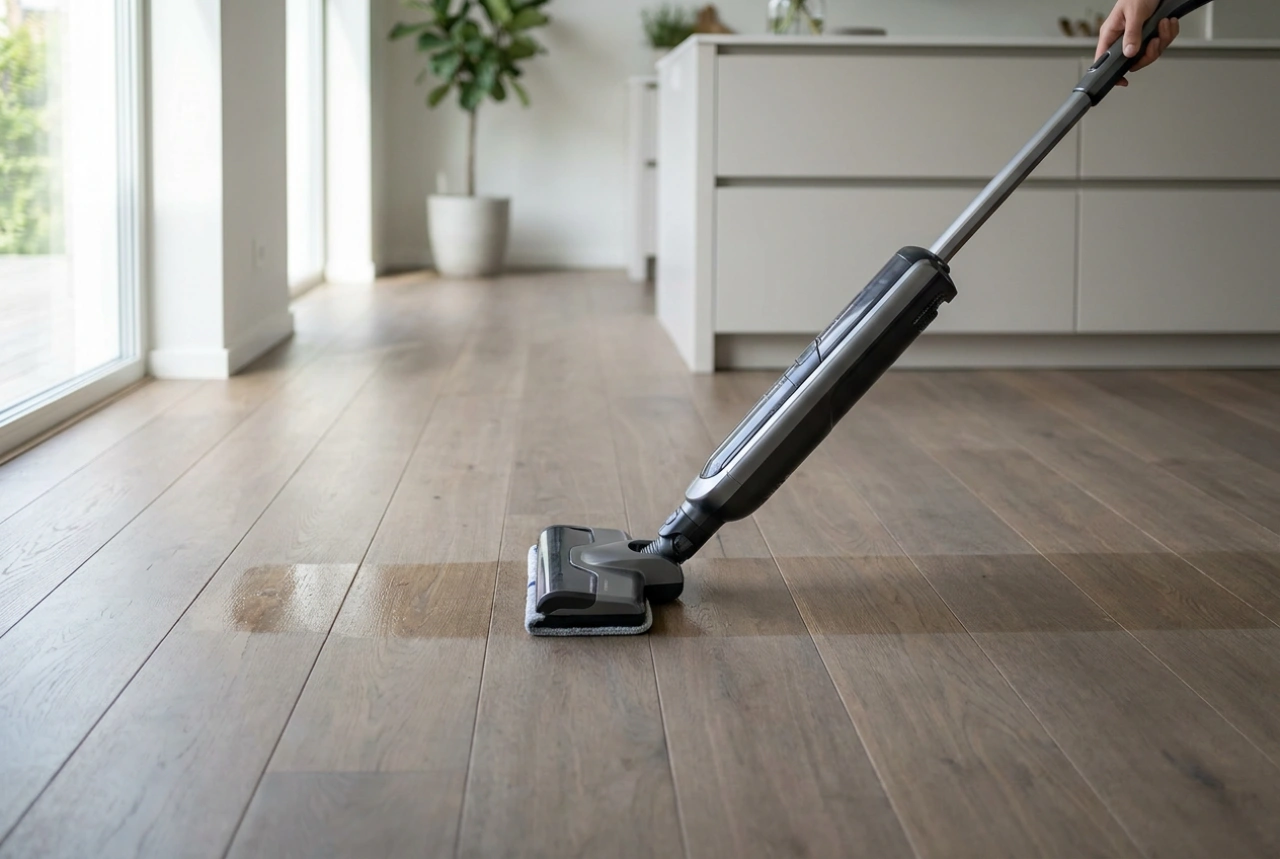
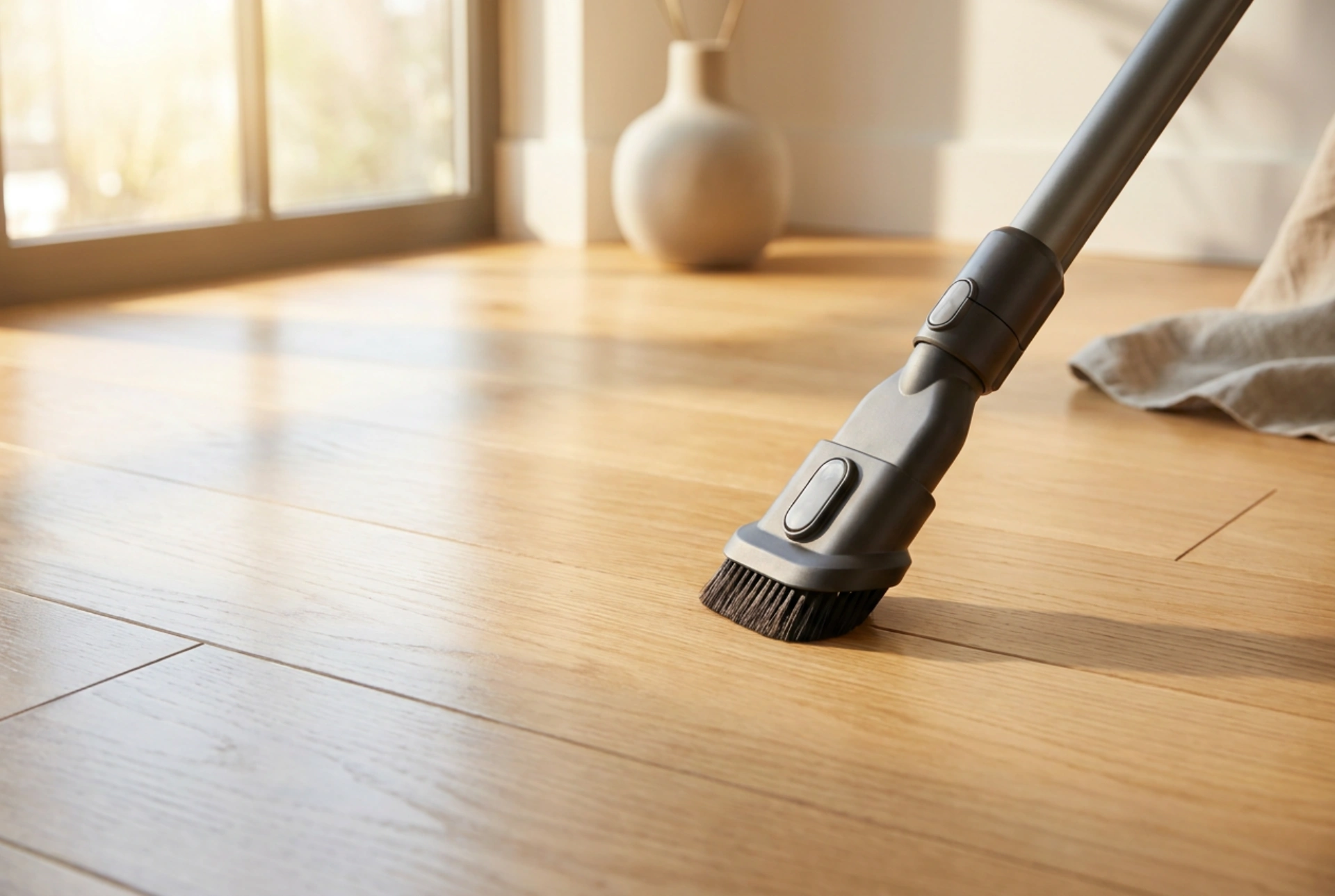
The speed and path of your clean determine how effectively the vacuum's suction can reclaim moisture. Moving the appliance too quickly prevents the suction port from drawing the dirty water up into the waste tank, leaving excess liquid to pool and dry naturally. For a streak-free finish, utilise slow, deliberate passes. Push the device forward to dispense the liquid and scrub, and pull it backward along the exact same path to allow the squeegee and suction channel to draw the moisture up. Always work in overlapping parallel lanes, slightly covering the edge of the previous pass to prevent dry boundary lines where dust can collect at the margins of the damp path.
Microfiber Maintenance and Moisture Management
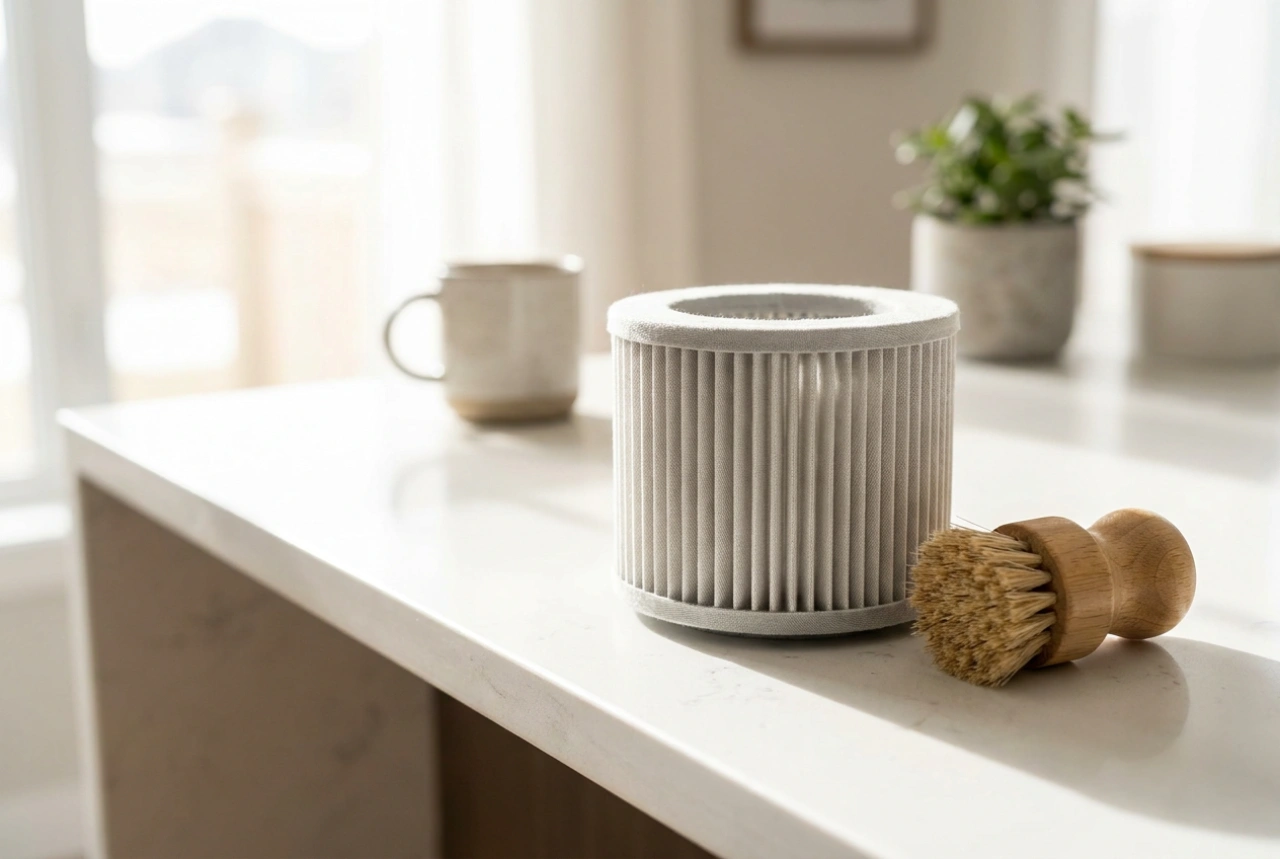
A dirty roller cannot clean a floor; it merely redistributes fine particulates. Over time, the microfiber threads of the roller brush become clogged with oily residue and micro-dust, reducing their hydrophilicity. After every cleaning session, the dirty water tank must be emptied and rinsed to prevent bacterial growth and odour. The roller itself must be detached, thoroughly washed with warm water to flush out trapped particles, and allowed to dry completely in a well-ventilated area. If the roller remains damp in a sealed dock, it will develop a mildew layer that leaves greasy, smelly smears on your next clean.
A Quick Checklist for Streak-Free Success
- Use distilled or soft water to eliminate mineral deposits.
- Avoid heavy, foaming soap concentrations that leave sticky surfactant residues.
- Move at a slow, steady pace to allow maximum vacuum suction to reclaim water.
- Clean and dry the microfiber roller after every use to maintain its capillary absorption power.