

Wet footwear is more than an inconvenience; water trapped inside shoe fibers compromises material integrity and fosters rapid microbial growth. Utilizing a shoe moisture absorber correctly after rainfall accelerates drying through scientific adsorption, preserving the shape and hygiene of your shoes without the destructive effects of direct heat.
Understanding the Impact of Water on Shoe Materials
When rain saturates footwear, water penetrates the microscopic pores of leather, canvas, or synthetic membranes via capillary action. In leather, water binds with the collagen fibers, temporarily displacing the natural oils that keep the material supple. If left wet, the organic compounds in the shoe provide an ideal breeding ground for bacteria and fungi, which thrive in dark, humid environments. Conversely, applying direct heat from radiators or hair dryers causes the water to evaporate too quickly, leading to shrinkage, warping, and cracking of the leather or adhesive failure in synthetic components. Gentle, passive moisture extraction is the only scientifically sound method to restore shoes safely.
How Desiccants and Moisture Absorbers Function
Modern shoe moisture absorbers rely on highly porous materials with immense internal surface areas. Understanding these materials helps you choose and use them effectively:
- Silica Gel: A synthetic, amorphous form of silicon dioxide. It contains millions of microscopic pores that trap water molecules through physical adsorption. Silica gel can hold up to 40% of its weight in water, making it highly efficient for rapid moisture extraction.
- Activated Carbon: Derived from organic substances like coconut shells, activated carbon features a vast network of submicroscopic pores. While it adsorbs moisture, its primary strength lies in trapping volatile organic compounds (VOCs) and odor molecules, making it ideal for deodorizing wet footwear.
- Bentonite Clay: A natural, chemically inert aluminosilicate clay. It works via adsorption, pulling moisture into its layered crystalline structure. It is highly sustainable and performs exceptionally well at standard indoor temperatures.
Step-by-Step Protocol for Post-Rain Footwear Recovery
To maximize the efficiency of your moisture absorbers and protect your shoes, follow this systematic procedure immediately after coming indoors:
1. Surface Preparation and Dismantling
Never insert absorbers into muddy shoes. First, use a soft, damp cloth to wipe away external dirt, as mud can clog the breathable outer fabric of your shoe, trapping moisture inside. Next, loosen all laces completely and pull the shoe tongue forward. If the insoles are removable, take them out entirely. This opens up the internal volume, maximizing natural air convection and allowing you to dry the insoles separately.
2. Correct Positioning of the Absorber
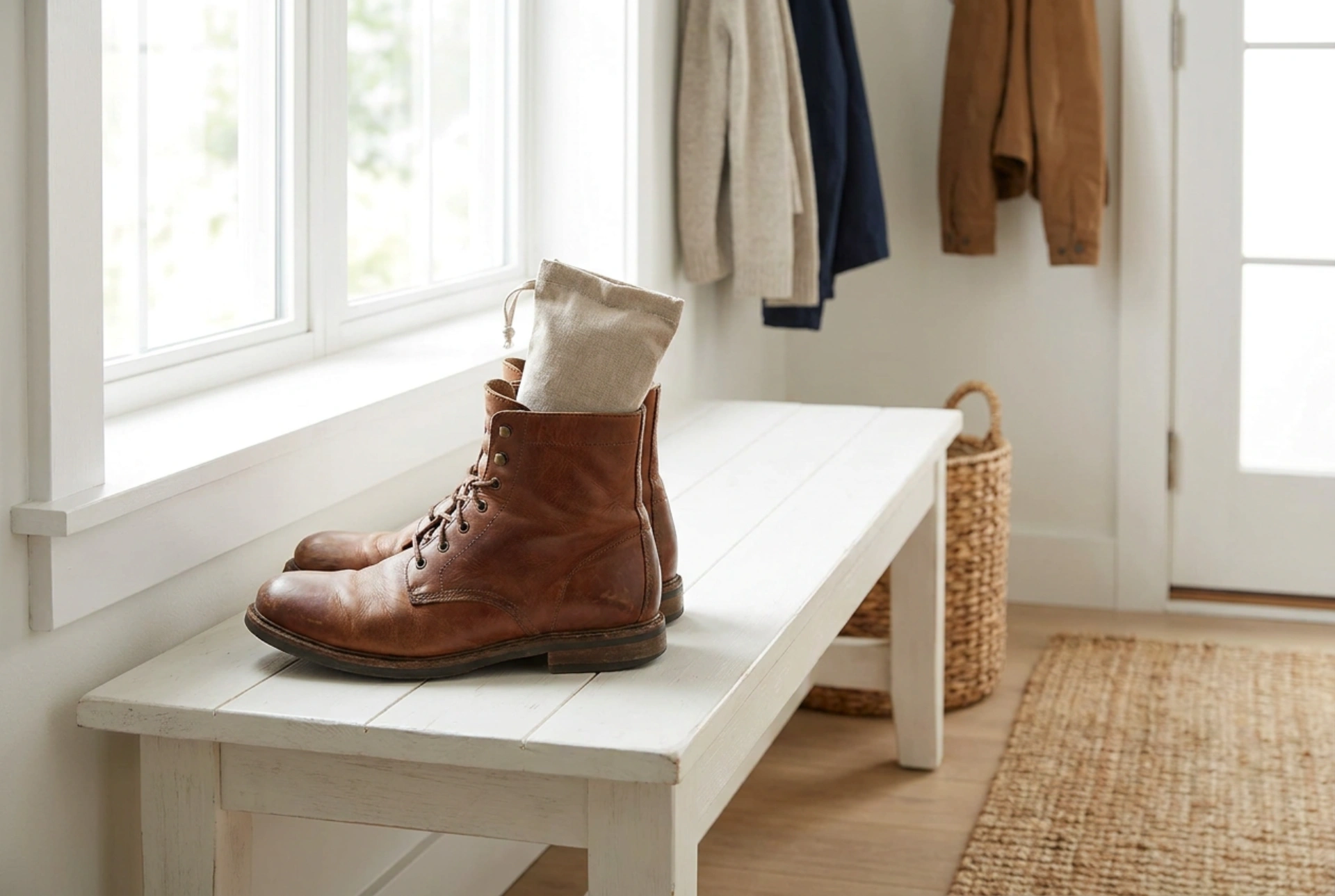
Insert the moisture-absorbing pouches deep into the toe box of each shoe. Gravity and capillary action cause water to pool in the lowest and outermost parts of the footwear, typically the toe region. Ensure the pouch makes direct contact with the inner lining. If the shoes are thoroughly soaked, wrap the exterior of the shoes in plain, unprinted absorbent paper to draw moisture outward simultaneously.
3. Monitoring and Saturation Points
Passive absorbers have a finite capacity. For lightly damp shoes, leaving the pouches inside overnight (8 to 12 hours) is sufficient. However, if your shoes were completely submerged or saturated by heavy rain, the desiccant inside the pouch may reach its saturation point within 2 to 4 hours. Feel the pouches periodically; if they feel heavy, cold, or damp, replace them with fresh, dry absorbers to maintain a high concentration gradient and keep the drying process moving forward.
Maximizing Airflow and Environment Dynamics
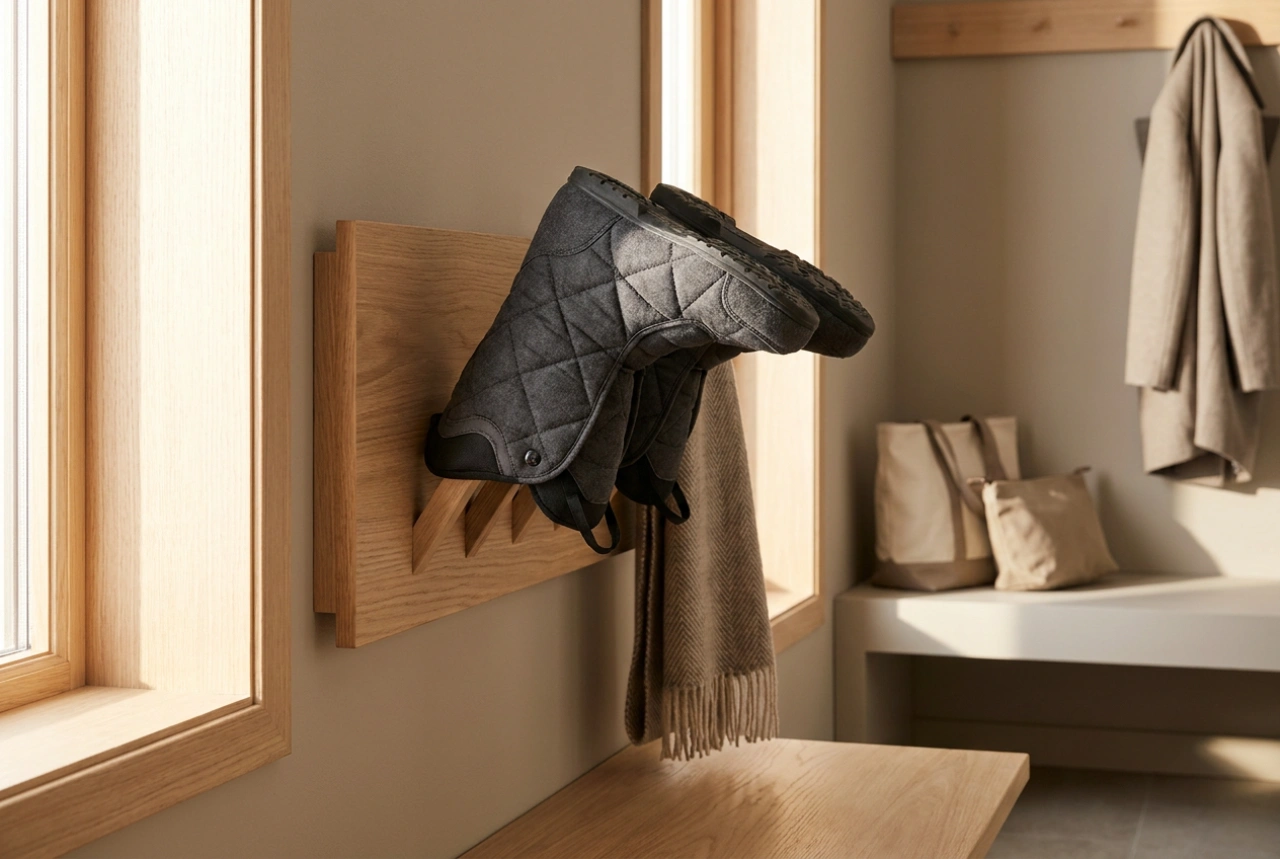
The efficiency of any moisture absorber depends on the ambient environment. Place your drying shoes in a room with active air circulation and low relative humidity, such as a well-ventilated hallway or near an open window. Avoid closed closets or damp entryways. Additionally, elevate the shoes on a wire drying rack or tilt them against a wall. Elevating the shoes allows air to circulate underneath the sole, facilitating even drying and preventing moisture from pooling in the footbed.
Regenerating and Storing Your Moisture Absorbers
To maintain the efficacy of reusable absorbers, they must be periodically regenerated. For silica gel or bentonite clay pouches, this involves releasing the trapped water molecules. This can typically be achieved by placing the pouches in a low-temperature oven (around 100°C) for a few hours, or placing activated carbon pouches in direct, intense sunlight for several hours to break the weak physical bonds of the adsorbed moisture. Always store regenerated absorbers in an airtight container when not in use to prevent them from absorbing ambient humidity from the air.