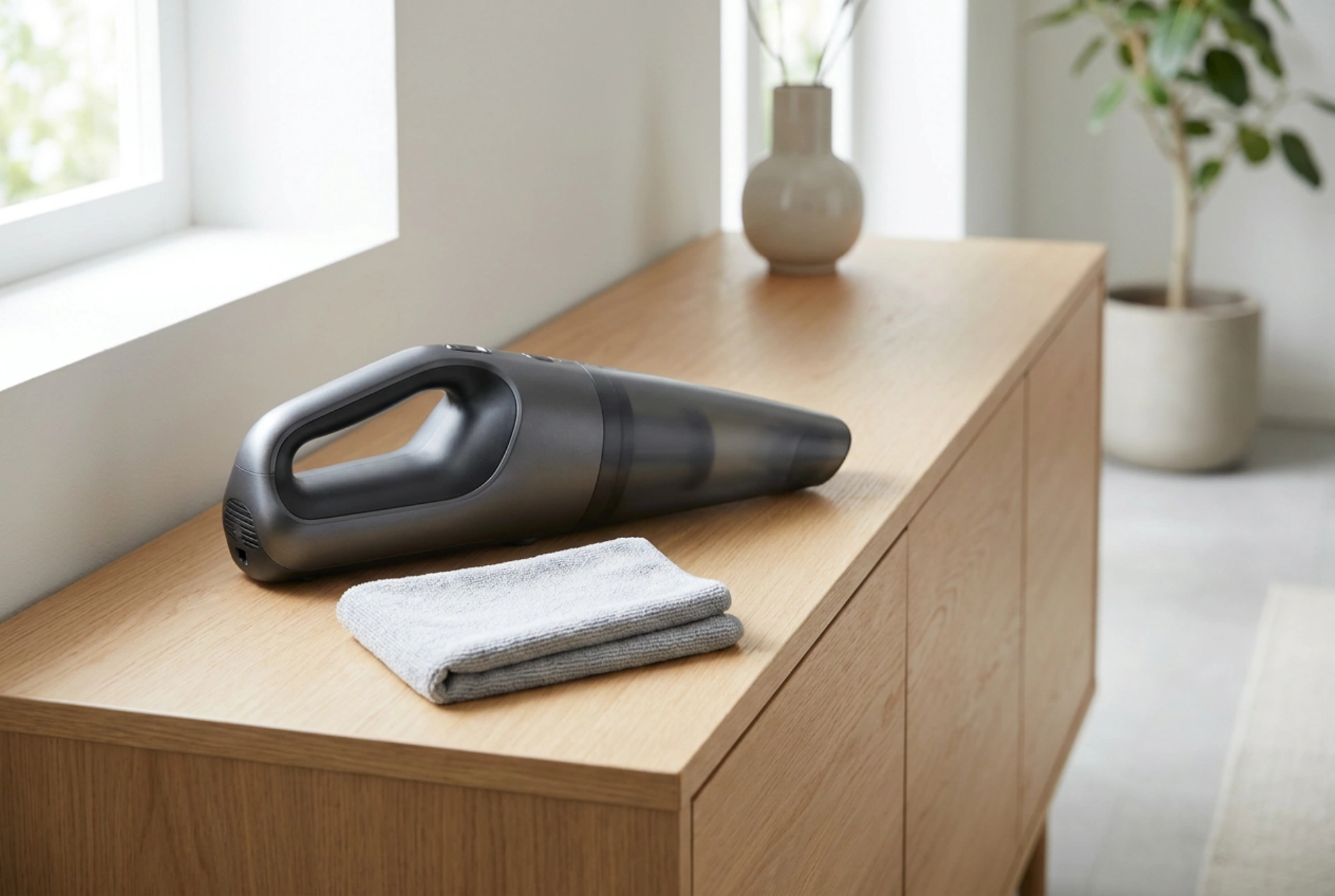


A cordless handheld vacuum is more than a quick spot-cleaning tool; it is a compact powerhouse of airflow dynamics designed to capture debris where standard vacuums cannot reach. Maximising its efficiency in your car and home requires understanding how nozzle velocity, filtration resistance, and mechanical agitation work together to lift embedded dirt.
The Physics of Suction: Airflow vs. Static Pressure
To get the most out of a handheld vacuum, you must understand the relationship between airflow (measured in cubic feet per minute) and static pressure (suction lift). Standard vacuums rely on high volume to pull debris through large hoses, whereas handheld units rely heavily on high static pressure generated by sealed, compact motors. This pressure is concentrated through narrow attachments.
Using the correct attachment changes the velocity of the air entering the unit. A narrow crevice tool restricts the intake area, dramatically increasing the air speed at the tip via the Venturi effect. This high-velocity air is essential for dislodging heavy particles like dry sand or small stones from deep car footwells. Conversely, a wide upholstery nozzle distributes the suction over a larger surface area, reducing velocity but increasing the volume of air processed, which is ideal for collecting lightweight surface dust, pet hair, and lint from sofa cushions.
Automotive Detailing: Defeating Friction and Gravity
Car interiors present a unique challenge: debris is often embedded in dense, low-pile carpeting or trapped in tight seams under high friction. Simply running a vacuum nozzle over these surfaces is rarely enough because electrostatic charge and the woven structure of carpet fibres hold onto particles.
To clear car seats and mats effectively, employ a two-step technique of mechanical agitation and targeted suction:
- Agitate first: Use a stiff-bristled brush attachment to disturb the carpet fibres. Brushing breaks the mechanical lock of dirt and lifts hair to the surface. For woven fabrics, brush in a cross-hatch pattern (alternating vertical and horizontal strokes) to open the weave.
- Seal the seam: When cleaning seat seams, stretch the fabric apart with one hand to expose the bottom of the crevice. Place the crevice tool directly against the seam to create a partial seal, which spikes the static pressure and draws out deep-seated grit that would otherwise wear down the upholstery seams over time.
- Gravity assist: Always work from the top down. Start with the dashboard, console, and seats before moving to the footwells. This ensures that any disturbed particles that fall during cleaning are captured in the final pass over the floor mats.
Precision Home Cleaning: Fabric Care and Hard-to-Reach Areas
In the home, a cordless handheld vacuum excels in high-elevation cleaning and tight structural gaps where a full-sized vacuum is too cumbersome to lift or guide safely.
For window tracks, sliding door rails, and skirting boards, dust accumulates alongside moisture, forming a sticky layer. Standard suction alone cannot lift this. Use a soft-duster brush attachment to loosen the grime while the vacuum instantly captures the particles before they can become airborne. This prevents the redistribution of allergens into the room.
When cleaning home upholstery and mattresses, the focus shifts to microscopic allergens, dead skin cells, and dust mites. Because these particles are microscopic, maintaining maximum airtightness between the nozzle and the fabric is vital. Move the nozzle slowly in steady, overlapping parallel lines. Rushing the motion breaks the seal and allows air to bypass the fabric, leaving deeper layers untouched. For mattresses, pay close attention to the tufts and quilted piping, where dust mites concentrate due to warmth and moisture.
Maintaining Airflow and Battery Longevity
A cordless vacuum's performance is entirely dependent on its internal air pathway and battery health. When a filter becomes clogged with fine dust, the motor must work harder to pull air through the system. This restriction not only drops suction power drastically but also increases thermal stress on the motor and battery, shortening runtime.
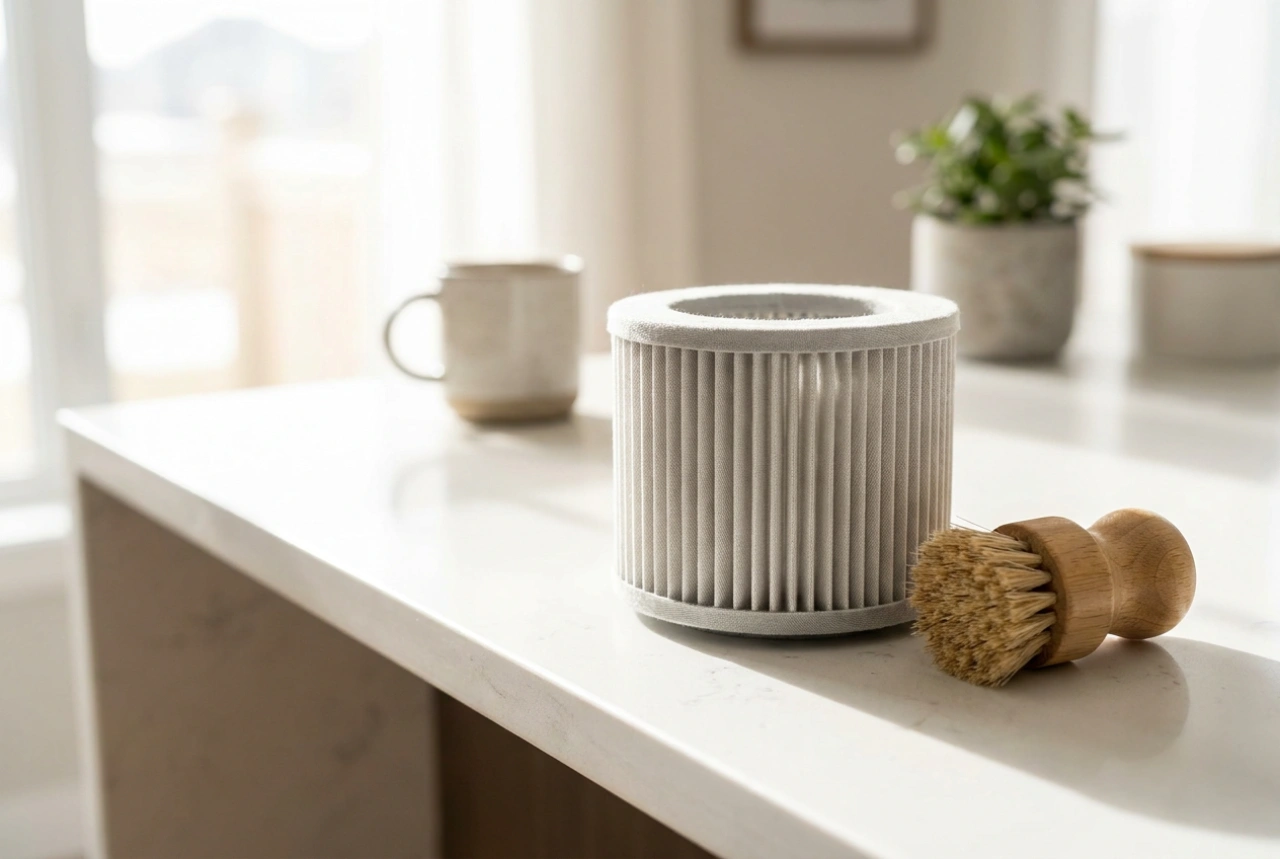
To maintain peak performance, empty the dust bin when it reaches two-thirds capacity to prevent swirling debris from blocking the intake cyclone. Wash or tap out the filters regularly according to the material specifications. For fabric or foam filters, rinse with cold water without soap and allow them to air dry completely for at least 24 hours; damp filters will choke airflow and can encourage mould growth within the motor housing.
To preserve the lithium-ion battery, avoid running the vacuum until it is completely drained. Charging a hot battery immediately after a heavy cleaning session can accelerate chemical degradation. Allow the unit to cool down for ten minutes before plugging it in to ensure a longer overall battery lifespan.