

Using a vacuum cleaner equipped with a UV-C lamp is an effective, chemical-free way to maintain hygiene in your bed, but its success depends entirely on understanding the physics of light exposure and suction.
The Science of UV-C Light on Bedding Pathogens
To get the most out of a UV vacuum, it is essential to understand how ultraviolet light interacts with organic matter. The device utilizes UV-C radiation, typically at a wavelength of approximately 253.7 nanometers. This specific wavelength is germicidal because it penetrates the cellular walls of microorganisms, including dust mites, bacteria, and mold spores. Once inside, the radiation disrupts their DNA and RNA molecular structures, breaking the hydrogen bonds between base pairs. This process renders the organisms sterile or destroys them completely.
However, this biological neutralization is not instantaneous. A common mistake is sweeping the vacuum rapidly across the mattress. For UV-C light to effectively disrupt pathogen DNA, it requires a specific duration of exposure, known as the lethal dose. Depending on the intensity of the built-in lamp, the vacuum must remain over each specific area for several seconds. Passing the light too quickly over the fabric merely illuminates the surface without delivering enough energy to damage the cellular structure of microscopic pests.
Why Suction and HEPA Filtration are Crucial Partners
While the UV light neutralizes live microorganisms, it does not remove them or their highly allergenic waste products. Dust mite droppings and dead bodies contain proteins (such as Der p 1) that trigger respiratory reactions and skin irritation. This is where mechanical suction and filtration become critical. The UV light disinfects, but the vacuum's motor must pull these microscopic particles out of the deep fiber structures of the mattress.
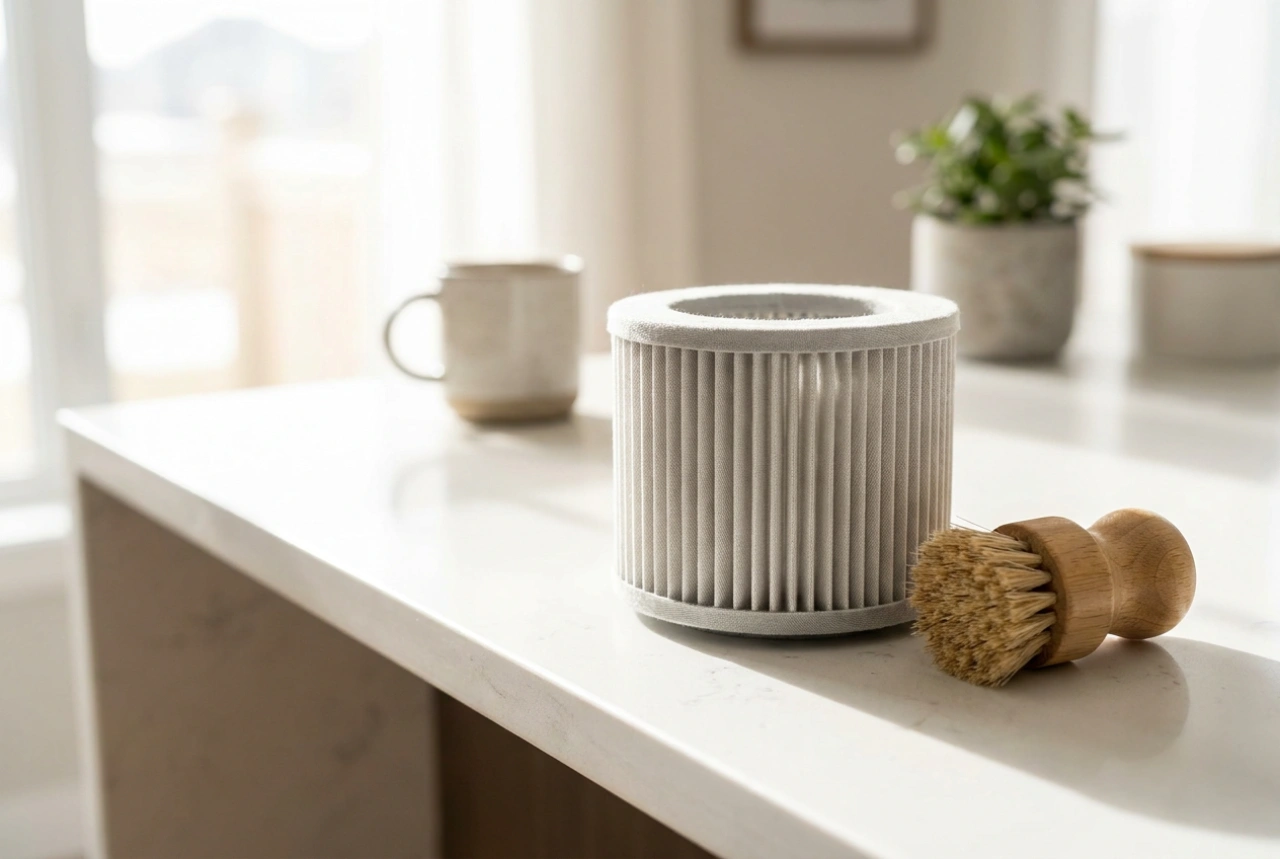
For this process to be safe and effective, the vacuum must be equipped with a High-Efficiency Particulate Air (HEPA) filter. A standard filter will simply exhaust the microscopic allergens back into your bedroom air. A HEPA filter, operating on the principles of interception, impaction, and diffusion, captures 99.97% of particles down to 0.3 microns. When operating the vacuum, ensure the suction pathway is completely clear and the collection chamber is emptied regularly to maintain optimal airflow velocity, which is necessary to lift particles embedded deep within the textile weave.
Step-by-Step Technique for Effective Mattress Sanitization
Maximizing the efficiency of a UV mattress vacuum requires a systematic approach based on physical contact and controlled movement. Follow this method for optimal results:
- Strip and dry: Remove all bedding and allow the mattress to air out for at least thirty minutes. This reduces moisture, which can shield microorganisms from UV penetration.
- Adopt a grid pattern: Work in overlapping horizontal and vertical lines. This ensures every square inch receives the necessary cumulative dose of UV light and consistent suction.
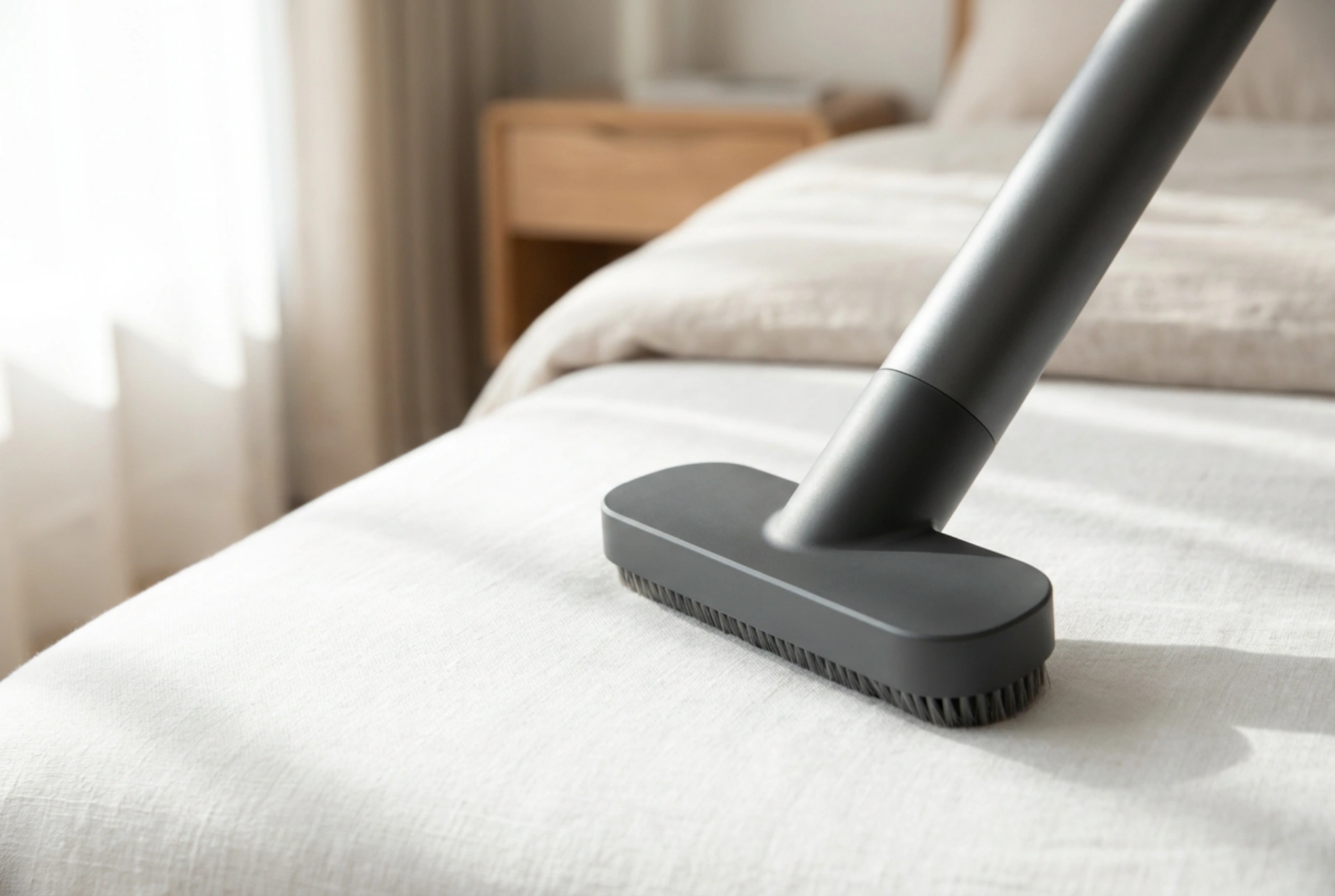
- Control your speed: Move the vacuum head at a steady pace of about five to ten centimeters per second. Do not rush; let the radiation do its work.
- Apply gentle downward pressure: This compresses the mattress fibers slightly, bringing the UV lamp closer to the deeper layers and improving the seal for maximum suction power.
Safety and Maintenance of the UV System
UV-C light is highly effective at destroying pathogens, but it is equally hazardous to human skin and eyes. Modern mattress vacuums are equipped with safety sensors—often pressure-sensitive wheels—that automatically deactivate the lamp when the device is lifted. Never attempt to bypass these sensors or look directly at the underside of the vacuum while it is running.
Additionally, physical maintenance of the lamp is vital. Over time, a fine layer of dust will accumulate on the quartz sleeve protecting the UV bulb. Because dust blocks UV-C radiation, even a thin film can reduce the germicidal output of the lamp by more than half. Every few uses, unplug the device and wipe the quartz sleeve with a soft, dry microfiber cloth. Avoid touching the bulb with bare hands, as skin oils can create hotspots that reduce the lifespan of the glass.