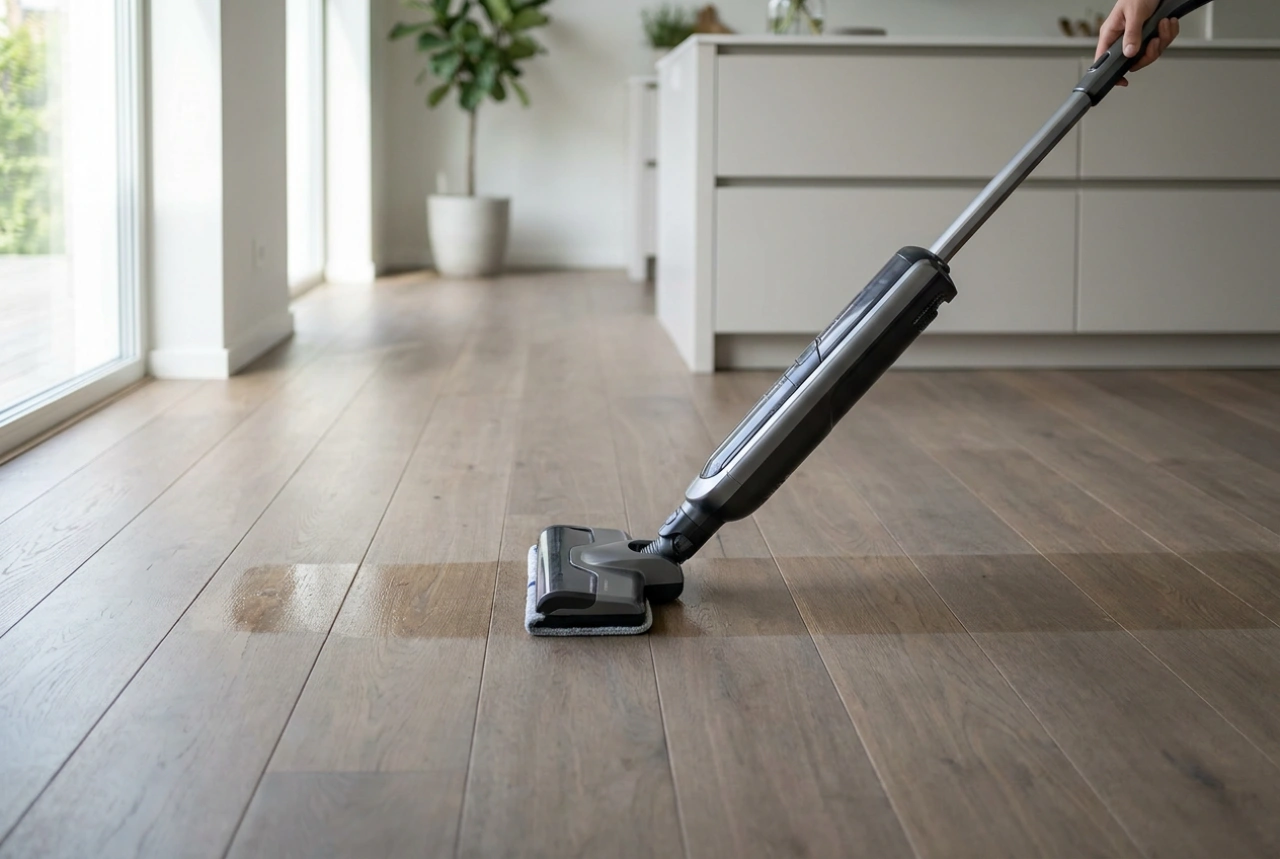


Achieving a streak-free, thoroughly clean hard floor with a wet-dry vacuum cleaner relies on understanding the physics of surface tension, moisture evaporation, and deliberate physical movement. Rather than treating the machine like a traditional dry vacuum, mastering a wet-dry cleaner requires a systematic approach to fluid dynamics and surface contact.
The Physics of Extraction: Why Speed Matters
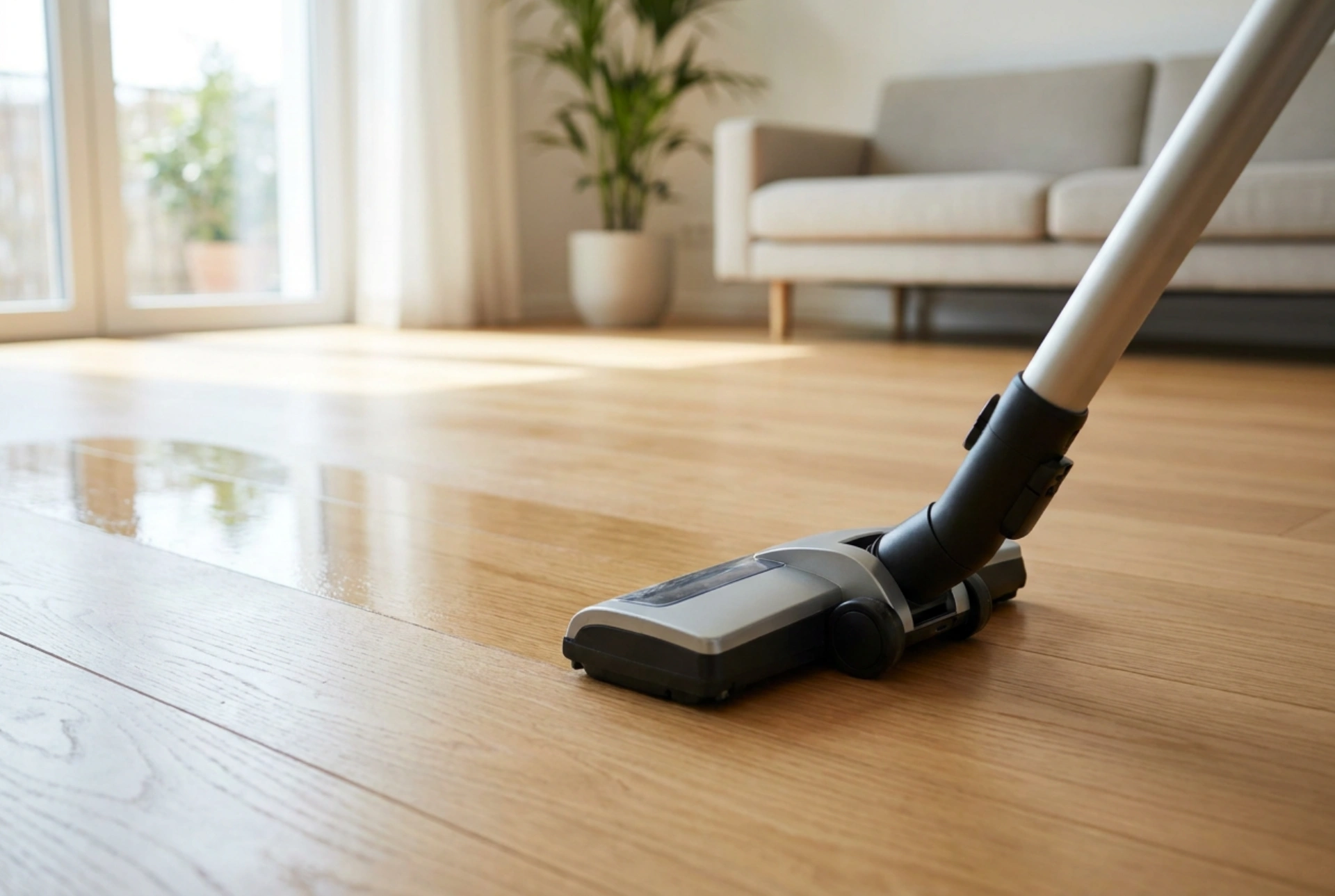
Unlike standard vacuum cleaners that rely solely on airflow to lift dry dust, a wet-dry vacuum must deposit liquid, dissolve surface grime, and immediately extract the dirty solution. Rushing this process is the primary cause of unsightly streaks and residual dampness. When you move the machine too quickly, the suction nozzle passes over the wet zone before the squeegee blades can pool and channel the liquid into the extraction port. This leaves a thin film of dirty water to dry naturally, depositing suspended dirt particles back onto the floor.
To prevent this, maintain a slow, deliberate pace of approximately twenty to thirty centimetres per second. This speed allows the rotating brush roll to mechanically agitate the surface, loosening stubborn dirt, while giving the vacuum motor sufficient time to draw the liquid phase up into the recovery tank. By slowing down, you utilise the mechanical force of the squeegee blades, which act as a physical barrier to sweep and gather water molecules, ensuring the surface behind the machine is nearly dry to the touch.
The Double-Pass Technique: Forward and Reverse Mechanics
To clean effectively without leaving damp borders, you must master the forward and reverse stroke. The machine behaves differently depending on the direction of travel due to the placement of the water jets, brush rolls, and squeegees.
- The Forward Stroke: During the forward movement, the machine pre-wets the floor and the rotating brush scrubs the surface. Clean water and a mild surfactant solution are sprayed ahead of or directly onto the roller, lowering the surface tension of grease and dirt. Keep this stroke smooth to distribute the liquid evenly.
- The Reverse Stroke: The real extraction happens as you pull the machine backward. During the reverse pass, the rear squeegee makes firm contact with the hard floor, sealing the vacuum chamber. This seal concentrates the airflow, pulling the pooled dirty water off the floor. Therefore, your backward stroke should be slightly slower than your forward stroke to maximise fluid recovery.
Grid Patterns and Overlapping for Streak-Free Results
Random, chaotic movements disrupt the fluid dynamics of the cleaning head, leaving dry patches interspersed with puddles. To achieve an immaculate finish, plan your pathing using a strict grid system. Start in the furthest corner of the room and work backwards towards the exit, ensuring you never step on the freshly damp floor.
Overlap each parallel pass by approximately five to ten centimetres. This overlap is crucial because the suction power naturally decreases slightly at the outermost edges of the vacuum head. By overlapping, you ensure that the edge zones—where water is most likely to escape the squeegee—are fully captured by the high-velocity suction area of the subsequent pass. Avoid turning the machine sharply while the water spray is active, as this breaks the squeegee seal and flings droplets sideways.
Temperature, Chemistry, and Surface Tension
The physical properties of the water you use play a critical role in how the vacuum glides and extracts. Warm water (between thirty and forty degrees Celsius) decreases the viscosity of greasy residues, making them easier to emulsify. However, avoid excessively hot water, as it causes rapid, premature evaporation. If the water evaporates before the vacuum can suction it, the dissolved soil will dry instantly onto the floor surface, forming a sticky film.
To lower the surface tension of water further, a minimal amount of a low-foaming, neutral-pH floor cleaner is recommended. High-foaming detergents are counterproductive; excess foam fills the recovery tank quickly, triggering the float valve to shut off suction prematurely. Furthermore, microscopic foam bubbles on the floor break the vacuum seal, leaving wet spots. A lean dilution of surfactant ensures the water sheets off the hard floor uniformly, facilitating complete extraction.