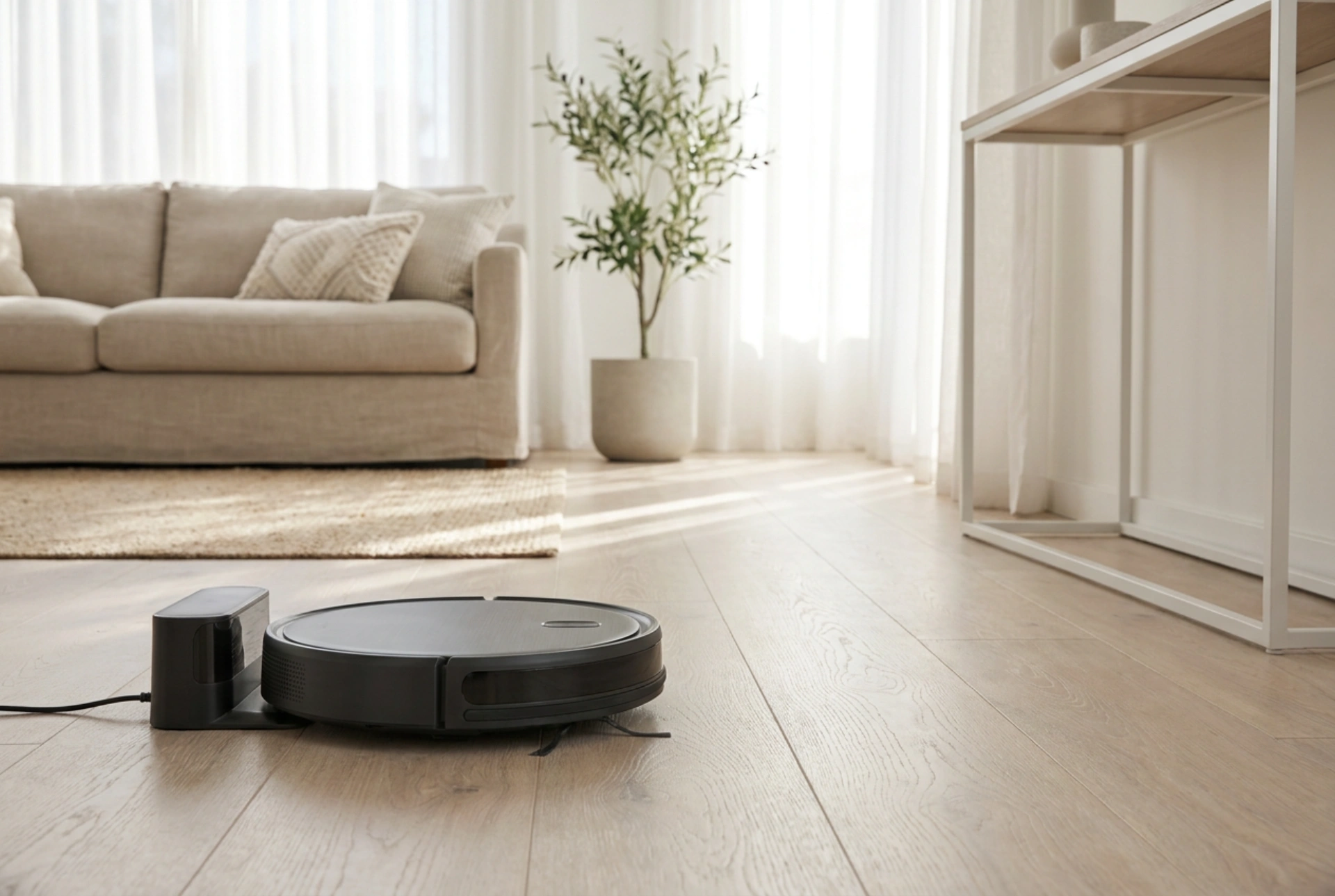


To truly unlock the potential of a robotic vacuum and mop, you must move beyond random cleaning cycles and establish a structured plan based on floor materials, foot traffic, and physics. A scientifically sequenced schedule ensures maximum dust extraction and streak-free surfaces without wasting battery power or wear on the device.
The Physics of Sequencing: Why Order of Operations Prevents Smearing
A common error is running a combined vacuum-and-mop cycle simultaneously in high-traffic zones. When a robot encounters loose debris and moisture at the same time, the friction between the rotating brush roll and the wet floor creates a paste of dust and dander. To avoid this, always program a dry-vacuuming pass before initiating a wet mop cycle.
This separation of phases mimics classic manual cleaning physics. The dry run removes larger particulate matter, hair, and grit, which can act as abrasives under a damp microfibre pad. Once the surface is clear of loose particles, the mop pad can perform its actual function: dissolving dried-on stains through capillary action and gentle friction. For optimal results, schedule the dry vacuuming run thirty minutes prior to the mopping cycle to allow airborne dust disturbed by the exhaust fan to settle back onto the floor.
Zoning the Home: Customising Schedules by Room Dynamics
Every room in a home possesses a unique microenvironment dictated by usage patterns, humidity levels, and floor types. A one-size-fits-all daily run is highly inefficient. Instead, divide your home into distinct zones with tailored frequencies:
- The Kitchen (Daily Evening Cycle): This area accumulates organic debris, grease droplets, and food crumbs. Schedule a dry vacuum run every evening at 8:00 PM, followed immediately by a damp mop run. This prevents organic matter from being tracked into living areas and stops grease from bonding to the tile or laminate surface overnight.
- High-Traffic Living Areas (Every Two Days): Living rooms and hallways accumulate fibrous dust, pet dander, and outdoor grit. A dry vacuum cycle every other day during late morning hours (when natural humidity is lower and dust settles more readily) keeps these particles under control.
- The Bathroom (Twice Weekly, Dry-Only and Manual Mop): Bathrooms present a challenge due to high humidity and long hair. Run a dry vacuum cycle during the day when the room is completely dry. Avoid robotic mopping in small bathrooms; the tight turns and moisture can trap damp hair in the wheels, and the small floor area is better suited to targeted manual disinfection.
- Bedrooms (Twice Weekly, Morning): Bedrooms contain high levels of textile fibres and skin flakes. Schedule a dry vacuum cycle at 10:00 AM, after the bed has been made and any disturbed dust has settled.
Optimising Surface Physics: Tile, Hardwood, and Carpet
Different flooring materials react uniquely to moisture and mechanical action. Modern robotic mops must be programmed with these physical properties in mind to prevent structural damage:
Hardwood and Engineered Wood
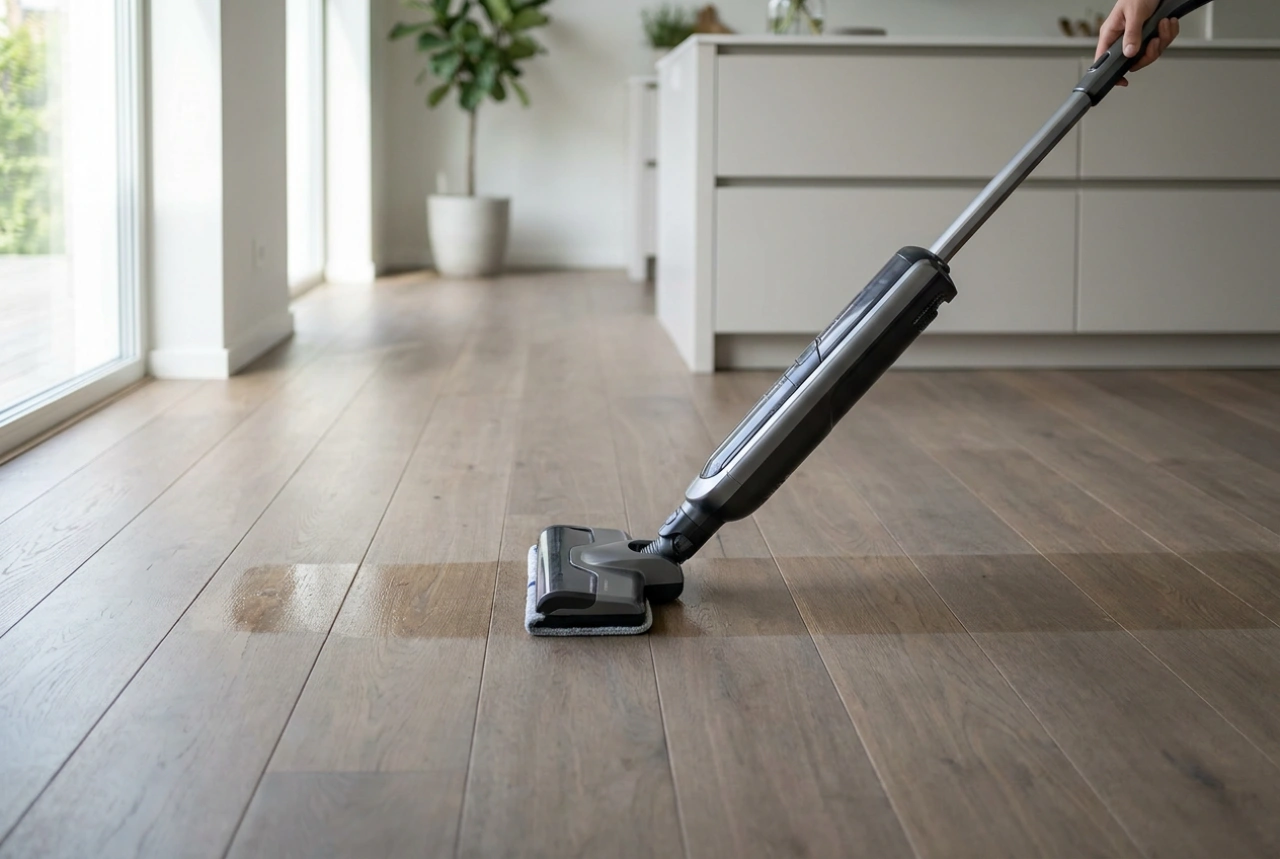
Wood is highly hygroscopic; it absorbs moisture from its environment, which can lead to warping or joint swelling. When scheduling the mopping phase for hardwood, set the water flow to the absolute minimum. The microfibre pad should be merely damp, drying within ninety seconds of the robot’s passage. Never allow a damp robot to sit idle on a wooden floor at the end of a cycle; ensure it returns to a dock equipped with a protective plastic moisture pad.
Ceramic and Porcelain Tiles
Tiles are non-porous and can withstand higher water volumes and mechanical agitation. You can safely increase the water flow rate to loosen dried liquids on kitchen tiles. However, keep in mind that grout lines sit lower than the tile surface; the robot’s pad must rely on sufficient dampness and capillary attraction to draw dirt out of these shallow recesses.
Preventative Maintenance: Ensuring Mechanical and Chemical Efficiency
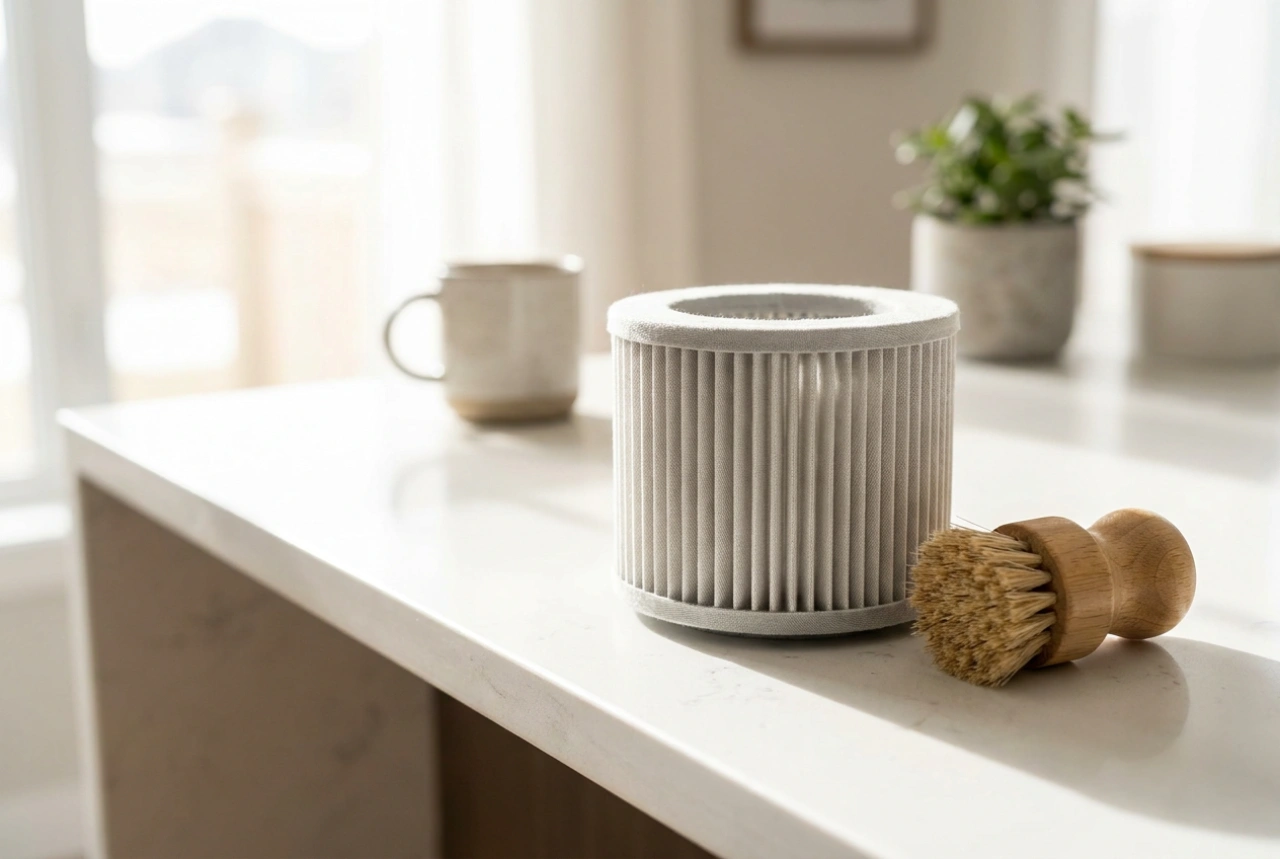
A robotic cleaner is only as effective as its contact points. Over time, mineral deposits from hard water can clog the internal dampening valves of the mop reservoir. To prevent this, use demineralised or distilled water in the tank. This eliminates calcium and magnesium buildup, ensuring an even water distribution across the microfibre pad.
Furthermore, microfibre pads must be laundered correctly to maintain their electrostatic properties. Wash them at 60°C to dissolve accumulated oils, but never use fabric softener. Softeners coat the synthetic polyesters and polyamides with a hydrophobic layer, destroying the pad's ability to absorb dirty water and leaving unsightly streaks on your polished floors.