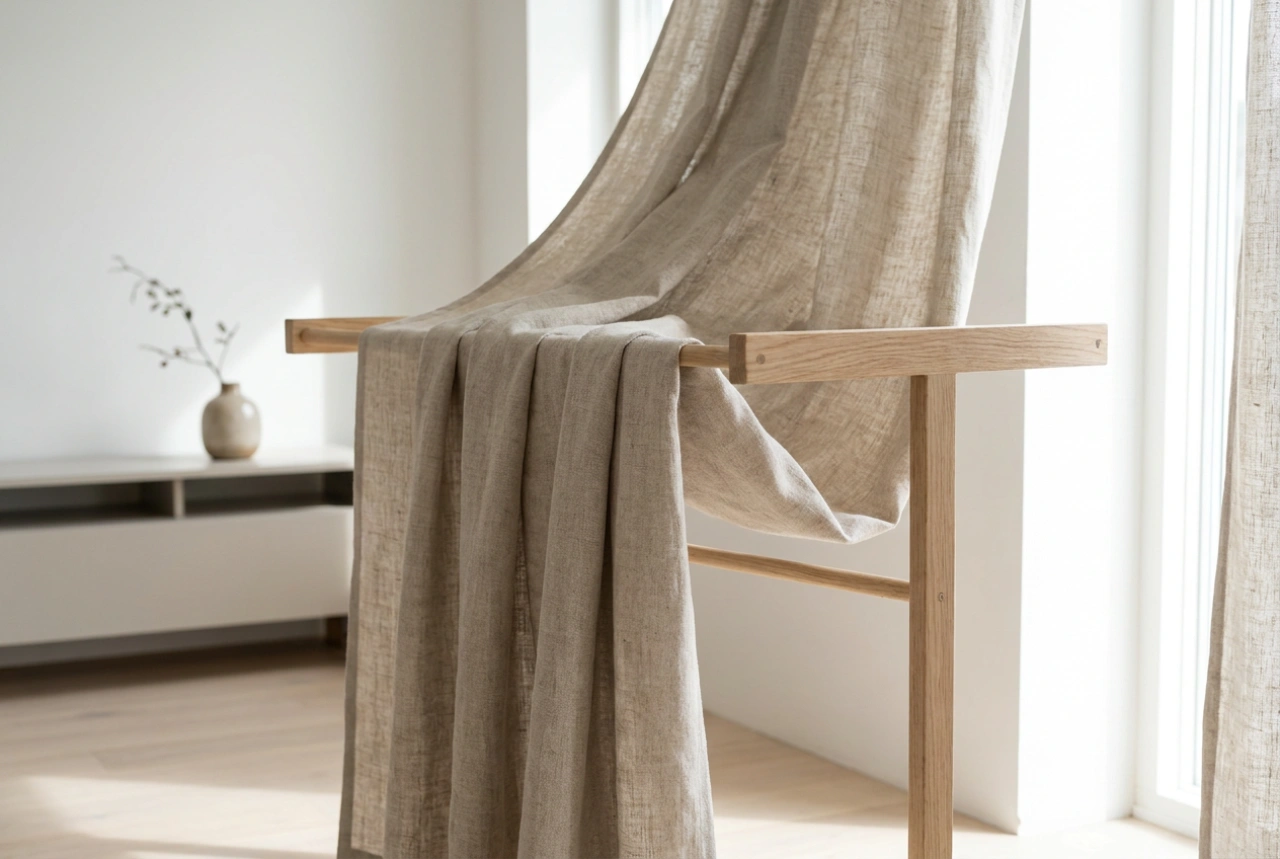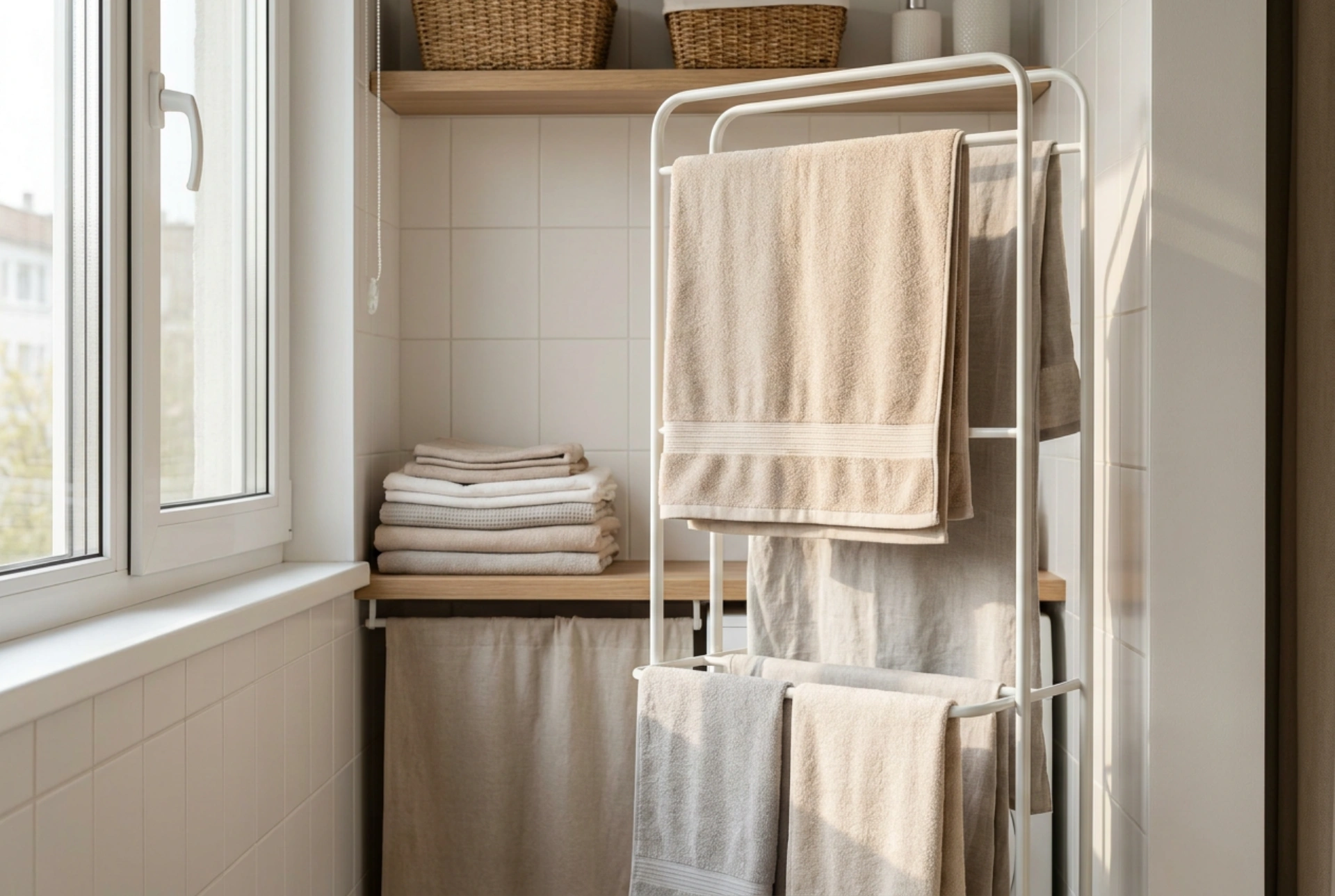


Drying laundry in a confined apartment often leads to high humidity, cluttered pathways, and slow-drying clothes. Utilizing vertical space with a tower-style drying rack is the most efficient physical solution to maximize floor space while optimizing natural indoor airflow.
The Physics of Vertical Drying: Convection and Airflow
Traditional horizontal drying racks expand outwards, consuming significant floor space and creating a barrier that traps moisture underneath. Vertical drying racks, or tower dryers, utilize the natural law of thermodynamics: warm air rises. As indoor air circulates, it moves upward through the layers of hanging clothes, carrying moisture away. This process of natural convection is significantly more efficient when textiles are arranged vertically rather than stretched across a flat, wide plane.
To maximize this effect, the spacing between the drying grids is critical. When clothes are packed too closely, they create a high-humidity microclimate that stalls evaporation. By utilizing a vertical rack with adjustable shelves, you can create open chimneys of air. Placing lighter, quick-drying synthetic fabrics on the lower levels and heavier cotton items on the upper tiers ensures that rising air absorbs moisture sequentially without getting trapped at the base.
Material Science: Selecting the Right Frame
In a small apartment, a drying rack must be both lightweight for easy deployment and structurally stable to prevent tipping. The choice of material directly affects durability and safety:
- Powder-Coated Steel: Provides the highest structural weight, which lowers the center of gravity. This is crucial when hanging heavy, wet textiles like denim or wool. The powder coating prevents rust, which can permanently stain wet fabrics.
- Anodized Aluminum: Extremely lightweight and naturally corrosion-resistant. While highly portable, aluminum racks require careful weight distribution to prevent tipping.
- Impact-Resistant Polymers: Used primarily for joints, wheels, and shelf connectors. High-quality polyamides or ABS plastics ensure the folding mechanisms do not degrade or crack under the physical stress of repeated folding and weight bearing.
Optimizing the Hanging Order for Maximum Efficiency
Efficient drying is not just about hanging clothes; it is about managing the surface area exposed to moving air. To reduce drying time and prevent musty odors, follow a strict arrangement protocol:
Start by shaking out each garment to release fibers and eliminate wrinkles, which increases the exposed surface area. Hang heavier items, such as sweaters and trousers, on the outermost rods of the top tiers. This allows them access to the unrestricted airflow at the top of the room where temperatures are slightly warmer. Use the lower grids for smaller items like socks and undergarments, ensuring they do not block the air pathways to the items above. If the rack features dedicated hanger slots on the corners, use them for shirts and dresses; hanging garments on hangers keeps them fully expanded, reducing ironing time and speeding up evaporation.
Strategic Placement in Compact Floor Plans
Where you place your vertical drying rack determines how quickly moisture is evacuated from your living space. Avoid tucking the rack into dead corners with stagnant air. Instead, position it near natural draft zones—such as adjacent to a window opened in a tilt position, or near a radiator during colder months. Ensure there is at least 30 centimeters of clearance on all sides of the rack to allow air to enter from the bottom and escape from the top.
If drying in a multi-functional room, pair the vertical rack with a simple mechanical fan placed on the floor, angled upwards. This active airflow mimics natural wind, accelerating the boundary layer evaporation from the fabric surface and cutting drying times in half without the energy consumption of a tumble dryer.
A Quick Checklist for Vertical Drying Success
- Balance the load: Always place heavier items toward the center axis or on the lower-outer edges to maintain a low center of gravity.
- Create air channels: Leave at least one empty rod between thick garments to prevent moisture transfer.
- Rotate the rack: Turn the rack 180 degrees halfway through the drying cycle to ensure even exposure to light and draft sources.
- Maintain ventilation: Keep a window cracked or mechanical ventilation active to exhaust the airborne moisture.