

Harnessing sub-zero winter temperatures to dry your laundry outdoors relies on a fascinating thermodynamic phenomenon known as sublimation. By understanding the physical laws behind freeze-drying, you can achieve incredibly fresh, naturally sanitised textiles while protecting the integrity of your fabrics.
The Physics of Sublimation in Cold Air
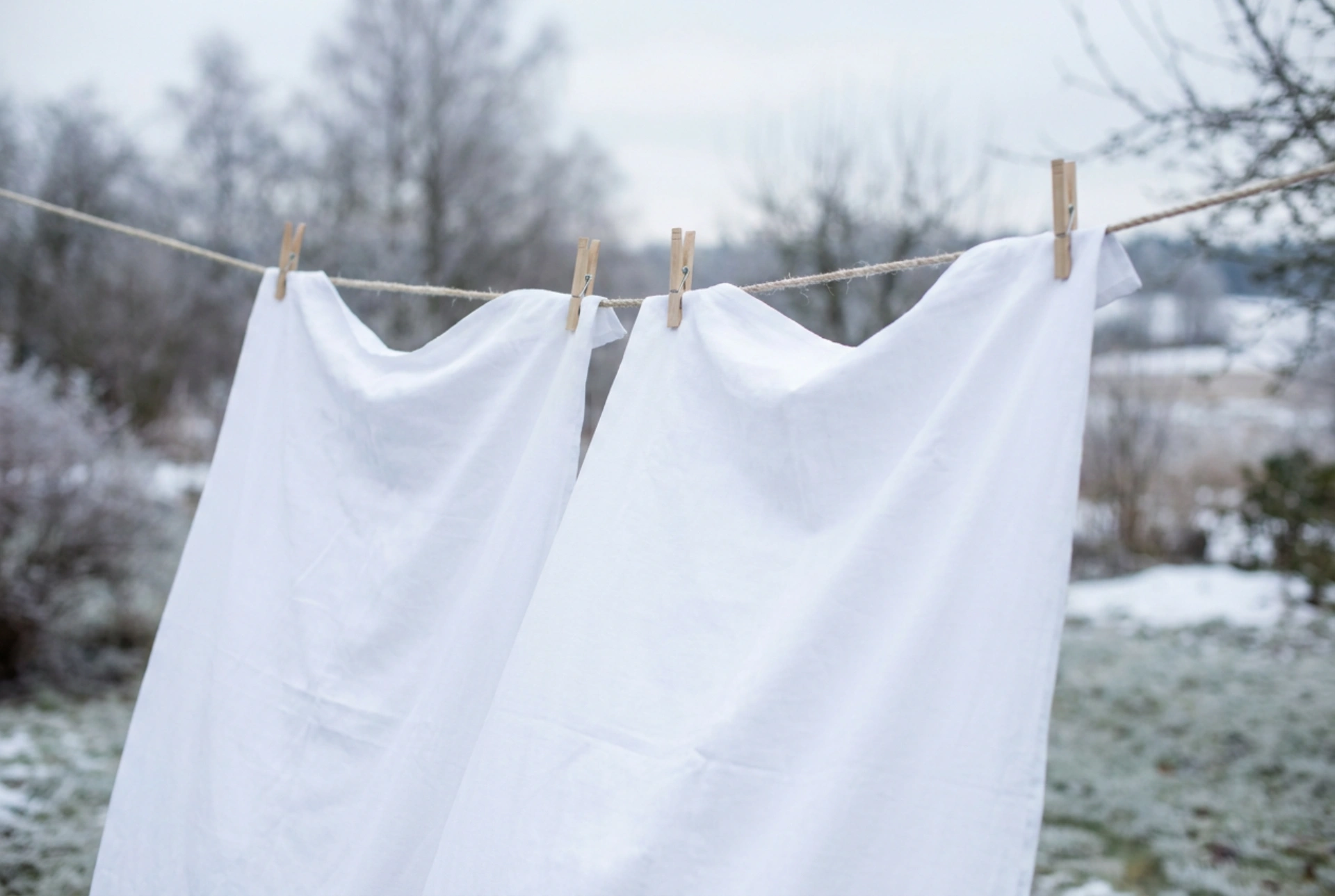
When you hang wet laundry in temperatures below freezing, the water within the fabric fibres quickly turns to ice. In dry, cold winter air, this ice does not melt back into liquid; instead, it transitions directly from a solid state into water vapour. This process is called sublimation. It occurs because cold winter air often has a very low relative humidity, acting like a dry sponge that eagerly absorbs water molecules directly from the frozen textile matrix. The rate of sublimation is accelerated by gentle wind, which continuously sweeps away the boundary layer of humid air surrounding the fabric, maintaining a steep vapor pressure gradient between the wet cloth and the atmosphere.
The Structural Benefits of Frost-Drying
Beyond the simple removal of water, freeze-drying offers significant material and hygienic advantages. First, sub-zero temperatures serve as a natural sanitising agent. High levels of cold inhibit the reproduction of bacteria and successfully eliminate household allergens such as dust mites, which cannot survive freezing conditions. Second, as water sublimes, it leaves the fabric fibres exceptionally soft and fluffy without the need for chemical fabric softeners. Chemical softeners leave a hydrophobic residue that reduces the absorbency of towels and cotton sheets; cold-air drying preserves the natural capillary action of the fibres, keeping them highly absorbent. Additionally, drying outdoors in winter prevents high levels of evaporated moisture from accumulating inside the home, which drastically reduces the risk of indoor condensation and mould growth.
Critical Rules to Protect Frozen Fibres
While frost-drying is highly beneficial, frozen textiles are in a physically vulnerable state. When water freezes, it expands by approximately nine percent, locking the fabric fibres into a rigid crystalline grid. To prevent structural damage, specific handling rules must be followed.
Never Bend or Fold Frozen Laundry
The most crucial rule of winter drying is to treat frozen textiles with extreme care. Because the fibres are rigid and brittle, bending, folding, or forcefully shaking frozen fabric can cause microscopic fractures in the cotton, linen, or wool polymer chains. This mechanical stress leads to premature tearing, fraying, and loss of tensile strength. Always handle frozen sheets and garments gently, keeping them flat or in their suspended shape until they have fully thawed.
Optimise the Spin Cycle
Before hanging clothes in the cold, utilise a high-speed spin cycle in your washing machine. Removing as much liquid water as possible beforehand ensures a thinner layer of ice forms within the weave. A lighter ice load speeds up the sublimation process and prevents heavy, water-logged fabrics from stretching out of shape under their own frozen weight on the clothesline.
Select the Right Hanging Hardware
Use sturdy, non-reactive plastic or wooden pegs. Avoid metal pegs or hangers, as they conduct cold rapidly and can freeze directly to the wet fabric, causing tears when removed. Furthermore, metal components can leave rust spots on damp fabrics due to condensation. Space the garments widely on the line to maximise cold air circulation and wind exposure, which are the primary drivers of sublimation.
Bringing the Laundry Indoors: The Defrosting Phase
Once the sublimation process has removed the bulk of the water, the laundry will feel stiff but dry to the touch. When you bring the items indoors, they will undergo a rapid temperature transition. Any residual micro-crystals of ice will melt instantly in the warm indoor air, making the fabric feel slightly damp for a brief period. Hang the clothes on an indoor drying rack in a well-ventilated room for a short time to allow this remaining moisture to evaporate naturally. Never place frozen or newly thawed fabrics directly onto hot radiators, as extreme thermal shock can shrink synthetic fibres and degrade natural elastic elements.