

Proper preparation of your upholstery cleaning equipment is the defining factor between a deep, residue-free clean and permanent fabric water-spotting or fiber damage. Taking the time to calibrate your tools ensures optimal pressure, correct moisture delivery, and maximum extraction power.
Inspecting and Calibrating the Spray Extraction Machine
Before any fluid enters the system, a mechanical check of your spray extraction machine prevents uneven wetting. Begin by inspecting the extraction nozzle. Calcium carbonate deposits from hard water often clog the microscopic apertures of spray tips, leading to a distorted spray pattern or heavy droplets that over-saturate the fabric. Soak the brass or plastic nozzle tips in a mild acidic solution, like diluted citric acid, to dissolve mineral scale without degrading the component materials.
Next, examine the vacuum seals and gaskets. The physics of soil extraction rely entirely on maintaining a high-differential pressure vacuum. A dry, cracked, or misaligned rubber gasket on the recovery tank lid allows air to bypass the tank, reducing lift capacity. Wipe all seals with a damp, lint-free cloth and apply a thin layer of silicone lubricant if specified by the equipment guidelines to ensure an airtight seal during operation.
Thermal Dynamics: Preparing the Water and Solutions
Water temperature plays a critical chemical role in breaking down binding lipids and soils embedded in upholstery fibers. High temperatures reduce the surface tension of water, allowing it to penetrate tightly woven textile matrices more efficiently. However, excessive heat can warp synthetic fibers like polyester or melt the latex backings holding upholstery together. Aim for a controlled temperature between 40°C and 50°C for synthetic fabrics, and use cool or lukewarm water for natural fibers like wool or cotton to prevent shrinking and browning.
When mixing your extraction solution, always dissolve powder-based cleaning agents completely in a separate vessel before pouring them into the solution tank. Undissolved granules can clog the internal pump valves or lodge themselves inside the spray wand. Additionally, adhere strictly to the manufacturer's dilution ratios. Over-concentrating the solution does not increase cleaning efficiency; instead, it leaves a sticky surfactant residue that attracts rapid re-soiling through capillary action once the fabric dries.
Selecting and Preparing Agitation Tools
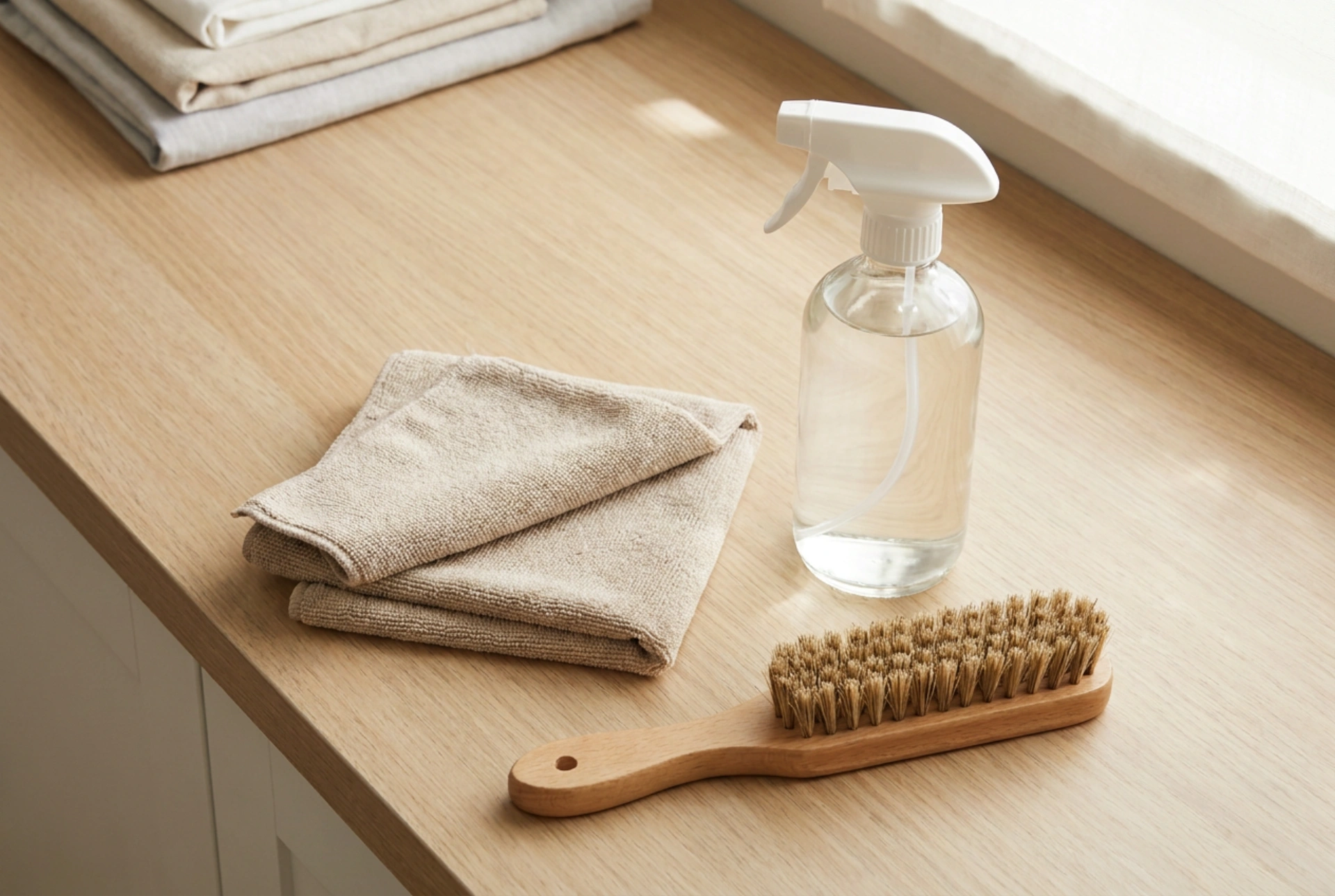
Mechanical agitation is necessary to loosen bound soils, but the choice of tool must match the fabric's structural limits. For delicate woven fabrics, chenille, or velvet, prepare a soft horsehair brush. Synthetic fibers like nylon or microfiber can withstand sturdier nylon-bristled brushes. Inspect the bristles for any embedded debris or old cleaning residues from previous sessions, which could transfer stains or scratch delicate fibers.
Clean your microfiber cloths and brush heads thoroughly before beginning. Microfiber works via capillary action, pulling liquefied soil into its microscopic wedge-shaped polyester and polyamide fibers. If the cloth contains residual fabric softener from prior washes, its absorption capacity will be severely compromised. Run microfiber cloths through a hot water wash cycle without detergent or softeners to restore their natural electrostatic charge and absorption profile.
Setting Up the Workspace and Safe Fluid Management
Before powering on the equipment, perform a dry run of your hose layout to prevent physical strain on the machine's connections. Ensure the solution and vacuum hoses run parallel without kinks or sharp bends, which can restrict water flow or create air pockets in the pump. Always prime the pump by spraying the tool into a bucket until a steady, unbroken cone of mist is achieved. This purging process removes air trapped in the lines, preventing erratic pressure drops during the actual extraction phase.