

Line-drying laundry outdoors offers unparalleled freshness, but it often leaves fabrics feeling stiff, board-like, and rough against the skin. Understanding the molecular physics of textiles allows you to harness the benefits of outdoor drying while maintaining exceptional fabric softness without chemical softeners.
The Chemistry of Stiffness: Why Outdoor Drying Hardens Fibres
The primary culprit behind stiff line-dried laundry is a chemical phenomenon known as "bound water." When cotton, linen, or bamboo fabrics are washed, their cellulose fibres swell and absorb water. As the water evaporates during line-drying in still air, the drying process occurs too slowly and statically. This allows hydrogen bonds to form between adjacent cellulose chains. These micro-bonds lock the fibres into a rigid, crystalline structure, resulting in a stiff texture. In contrast, tumble dryers use continuous mechanical agitation to break these hydrogen bonds before they can solidify. To achieve soft line-dried laundry, you must replicate this mechanical disruption or prevent the bonds from forming in the first place.
The Power of Wind and Mechanical Agitation
Wind is the natural equivalent of a tumble dryer's drum. Gentle air movement physically agitates the fabric while it dries, constantly flexing the fibres and preventing hydrogen bonds from locking into place. If you hang clothes on a completely calm day, they are far more likely to dry stiff. To counteract this, always shake each garment vigorously three to four times before pinning it to the line. This snaps the fibres open and aligns them. If the day is dead calm, consider bringing the damp clothes inside for a brief, five-minute tumble on a no-heat setting, or snap them again once they are semi-dry to break any early-stage crystallisation.
Managing Hard Water and Mineral Build-Up
Dissolved minerals in your wash water—primarily calcium and magnesium carbonates—exacerbate fabric stiffness when dried outdoors. As water evaporates from the line-hung fabric, these minerals are left behind, depositing microscopic, abrasive crystals within the fibre weave. While tumble drying knocks some of these deposits loose, line-drying allows them to cure onto the threads. To prevent this, add a mild acid like white vinegar (acetic acid) to the final rinse cycle. Acetic acid neutralises alkaline mineral residues and dissolves soap scum, preventing them from binding to the fibres. This natural decalcifying process keeps the textile weave open and pliable.
UV Light and Over-Drying Control
While solar ultraviolet (UV) radiation is an excellent natural sanitiser and bleaching agent for whites, excessive exposure degrades textile fibres and strips them of moisture. Over-drying is a major contributor to stiffness. When fibres lose their natural equilibrium moisture content (around 8% for cotton), they become brittle and harsh. Hang coloured and dark garments inside out or in partial shade to protect them from UV fading, and monitor the drying progress closely. Remove items from the line when they are dry to the touch but still retain a microscopic level of ambient moisture. A final shake after taking them down will loosen the weave further.
Optimal Hanging Techniques for Airflow
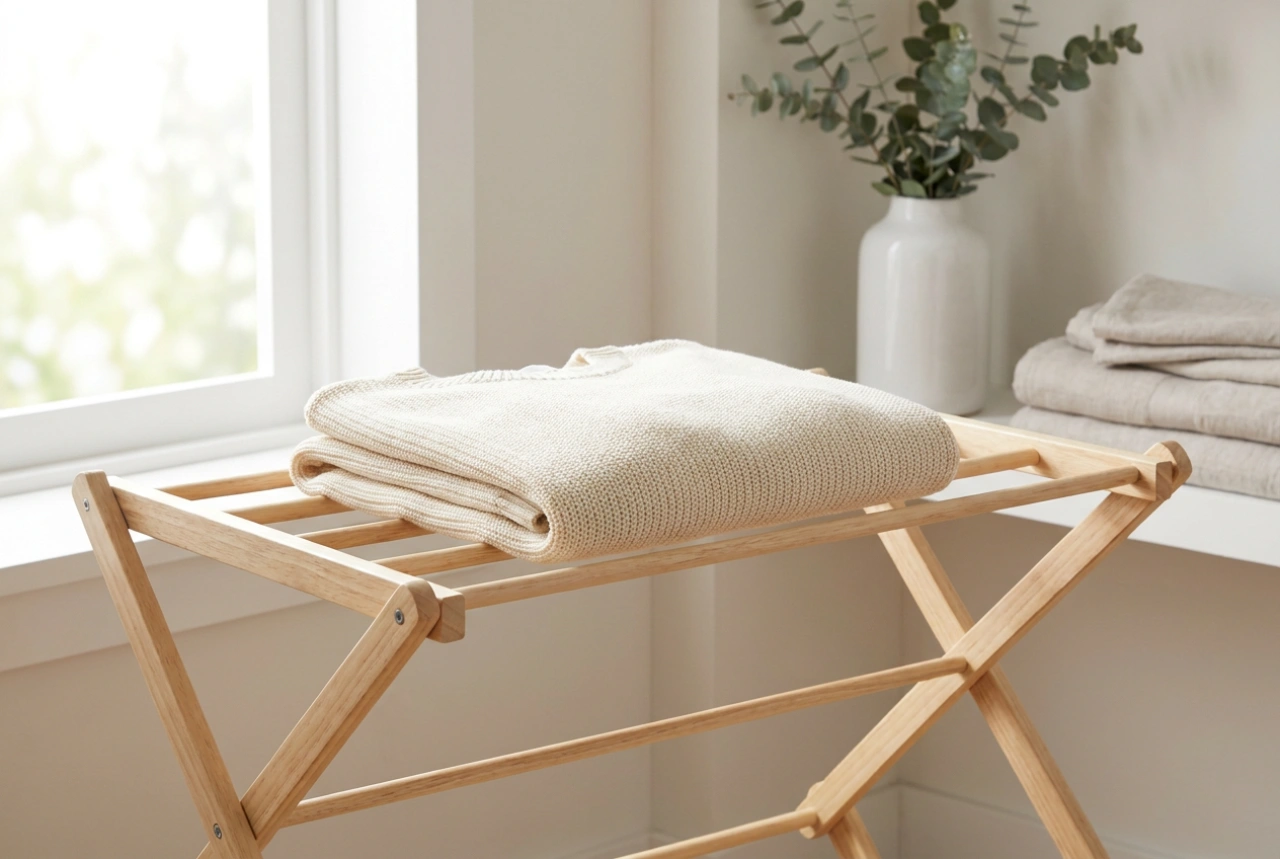
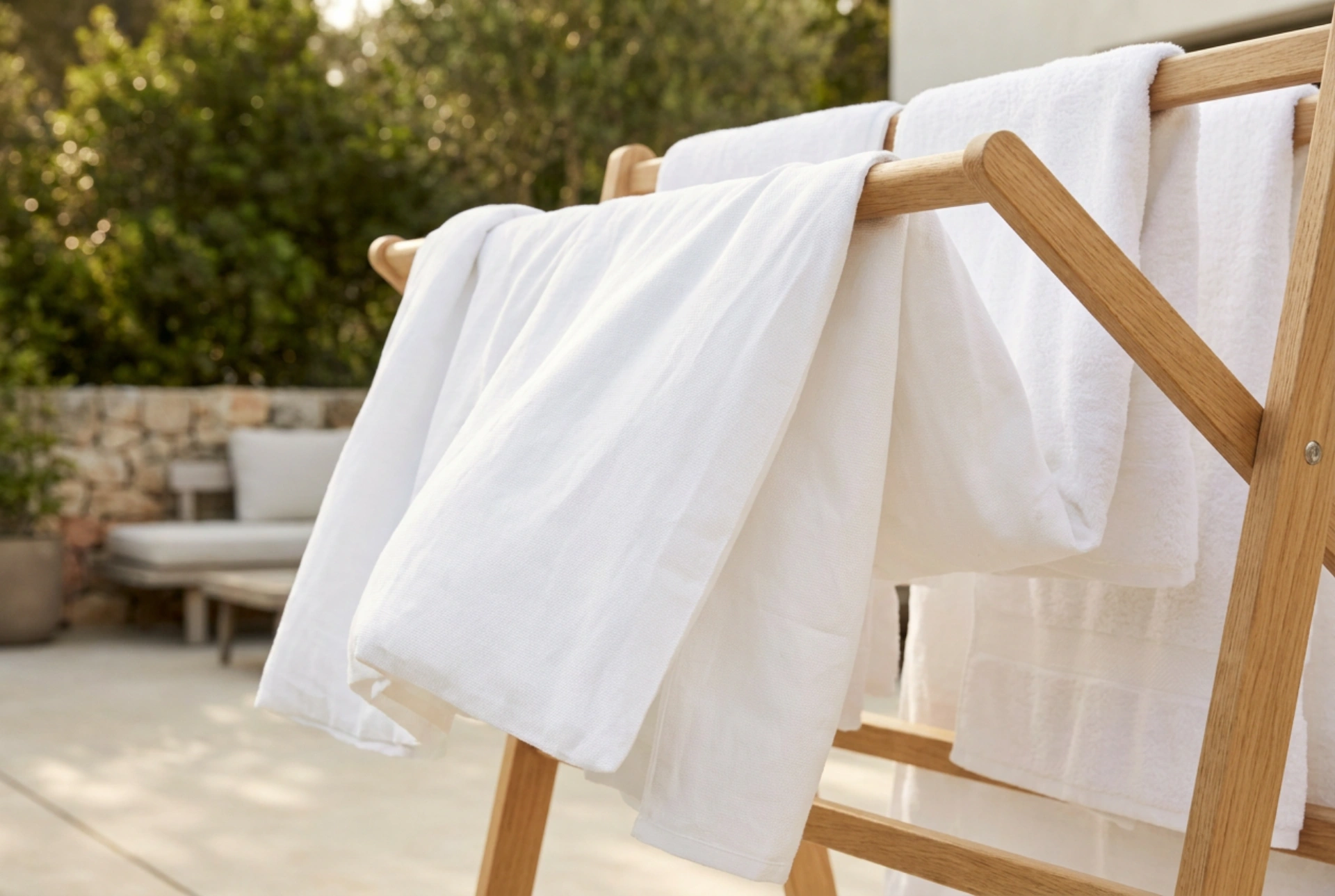
The physical orientation of garments on the line directly affects drying speed and fabric softness. Hang heavy items, like jeans or bath towels, by their strongest seams using high-tension pegs to maximise gravitational pull, which naturally stretches and relaxes the fibres. Ensure ample spacing between items to promote laminar airflow. When air passes freely through and around the garments, evaporation occurs evenly, preventing localised damp spots that can stiffen as they slowly dry. For delicate knits, dry them flat on a mesh rack in the shade to prevent gravitational stretching while maintaining airflow.