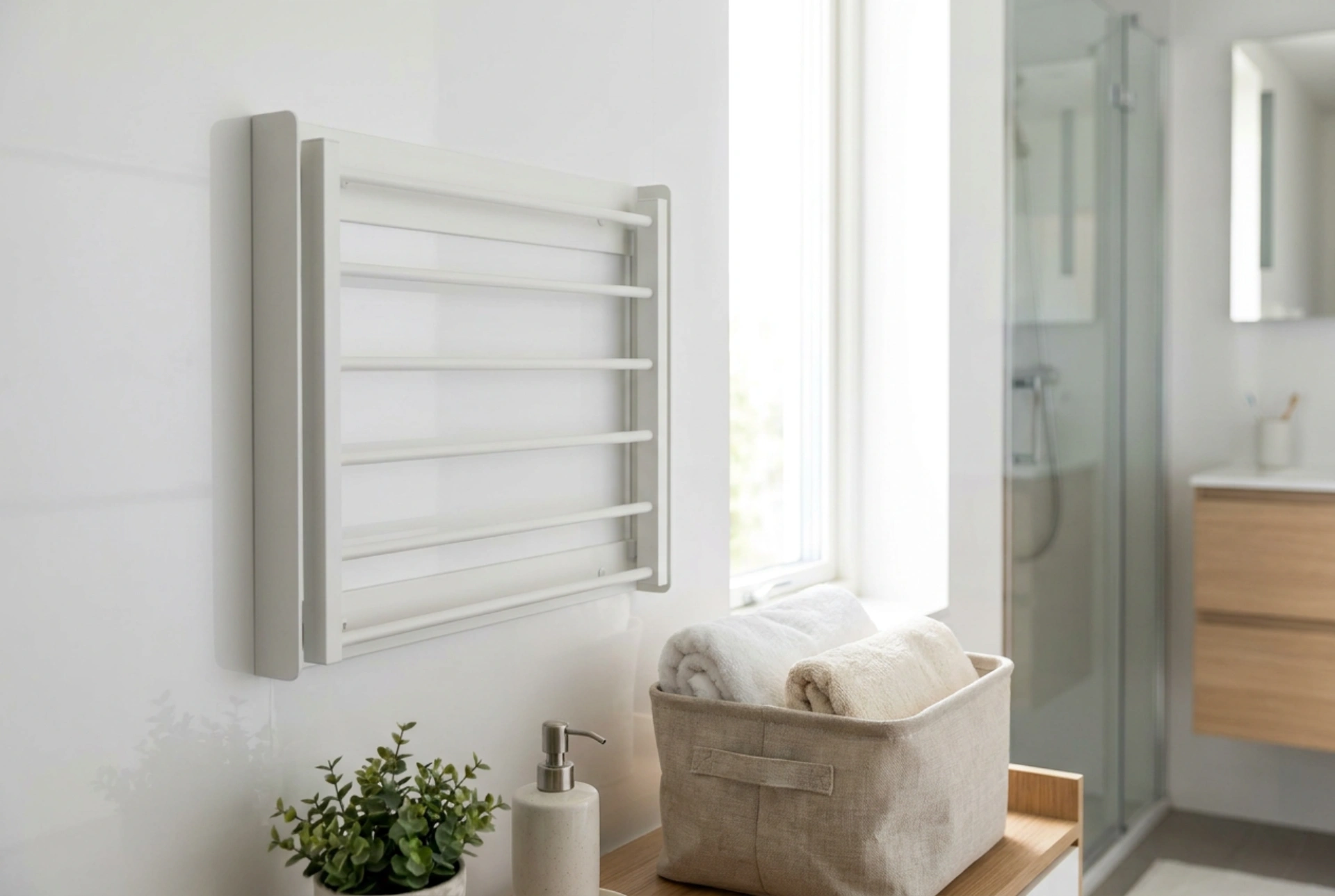


Optimising a bathroom for both drying laundry and maintaining a clutter-free aesthetic requires a deep understanding of spatial dynamics and indoor thermodynamics. A wall-mounted folding drying rack offers an elegant solution to this challenge, utilising vertical space while facilitating efficient moisture evaporation.
The Thermodynamics of Indoor Drying
Drying clothes indoors is not merely a matter of hanging garments; it is a thermodynamic process governed by evaporation rate, ambient temperature, relative humidity, and airflow. When wet laundry is suspended, water molecules transition from a liquid to a gaseous state. This process requires latent heat of vaporisation, which is drawn from the surrounding air, cooling the immediate microclimate around the wet fabric.
To accelerate this process without consuming electrical energy, you must manage the boundary layer—the thin layer of stagnant, saturated air that wraps around damp fibres. A wall-mounted rack positioned near a source of natural convection (such as a radiator or a high-level ventilation grille) utilises rising warm air to displace this saturated boundary layer. Because warm air is less dense and rises, placing a folding rack at a mid-to-high level on a bathroom wall maximises exposure to these upward thermal currents, significantly reducing drying times.
Material Science: Resisting Bathroom Humidity
Bathrooms are high-humidity zones subject to frequent temperature fluctuations, making material selection critical for longevity and hygiene. Standard steel or poorly coated metals will succumb to galvanic corrosion when exposed to moisture and laundry detergents, which often contain ionic surfactants that accelerate oxidation.
- Anodised Aluminium: Highly resistant to corrosion due to a controlled oxide layer. It is lightweight, reducing the dead load on wall anchors.
- Stainless Steel: Contains chromium and nickel, creating a self-healing passive layer that prevents rust even in saturated steam environments.
- Powder-Coated Finishes: Electrostatically applied polymer resins provide a non-porous barrier against moisture, preventing direct contact between water molecules and the structural metal core.
Structural Mechanics and Secure Installation
When a drying rack is fully extended and loaded with wet textiles, it acts as a cantilever beam, exerting significant leverage on its wall fixings. A single load of wet laundry can weigh three times its dry weight due to water retention within the capillary structures of cotton and linen fibres.
To ensure structural stability, the pull-out force exerted on the top wall anchors must be carefully calculated and countered. Standard drywall anchors are insufficient; mounting should ideally target solid masonry, concrete, or internal timber studs. Using high-quality nylon expansion plugs ensures that the shear force (the downward pull) and the tensile force (the outward pull) are distributed safely into the wall substrate without causing structural degradation or surface cracking.
Optimising Space and Ergonomics
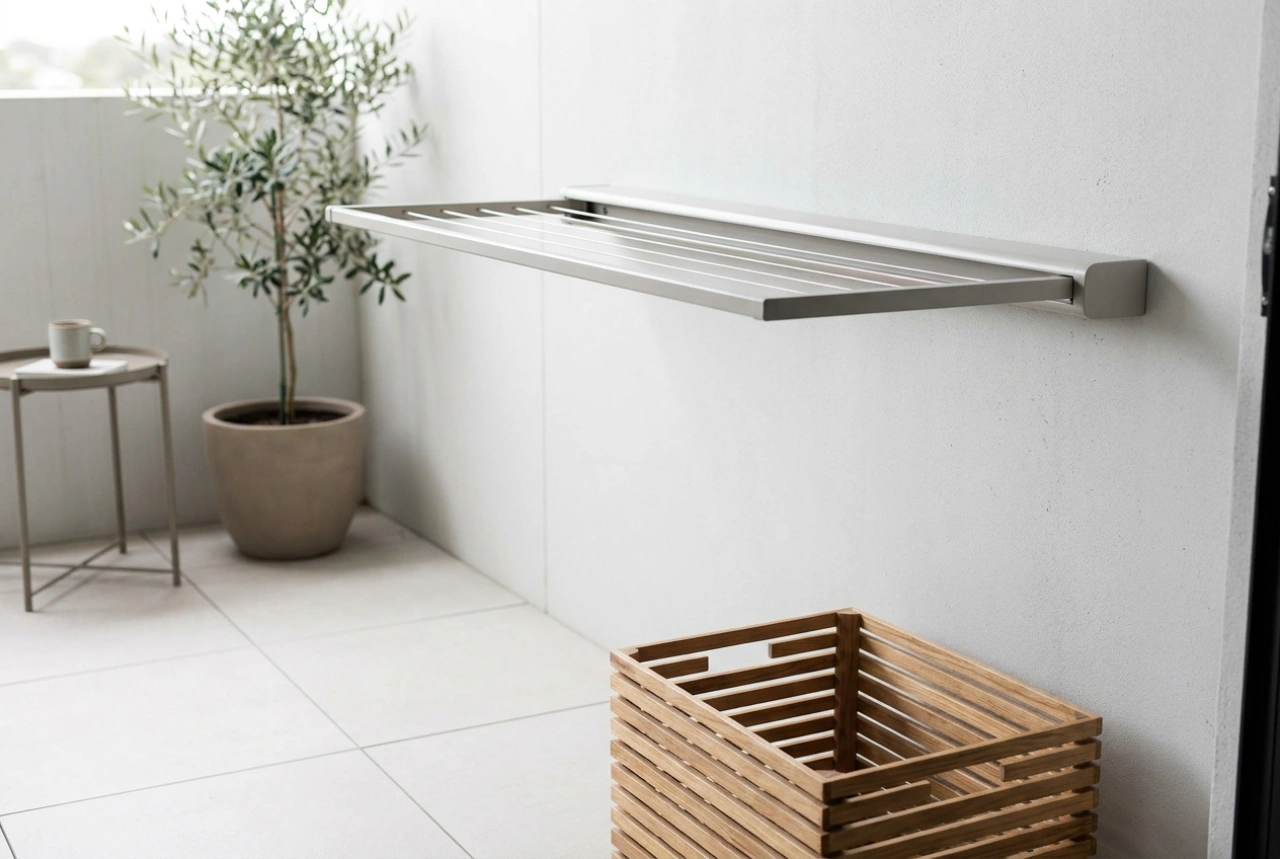
The primary advantage of a folding wall rack is its transformational footprint. When collapsed, a high-quality rack protrudes mere centimetres from the wall, preserving the visual and physical volume of the bathroom. Accordion-style mechanisms compress horizontally, while drop-down designs pivot vertically flush against the surface.
To maintain ergonomic harmony, position the rack at a height where the lowest hanging garments do not obstruct high-traffic pathways or clean-linen storage areas. This vertical zoning keeps the wet laundry zone separate from daily hygiene areas, maintaining a clean, orderly environment.
Smart Loading Techniques for Faster Evaporation
The arrangement of garments on a wall rack directly influences drying efficiency. Overloading restricts airflow, creating pockets of stagnant humidity that can lead to musty odours caused by microbial growth. To prevent this, hang heavier, denser fabrics like denim and heavy cotton on the outer rails of the rack, where air circulation is greatest. Lighter synthetics, which release moisture rapidly due to low fibre absorption, should be placed on the inner rails. Maintaining a minimum gap of two to three centimetres between garments ensures adequate air pathways, enabling continuous convective drying.