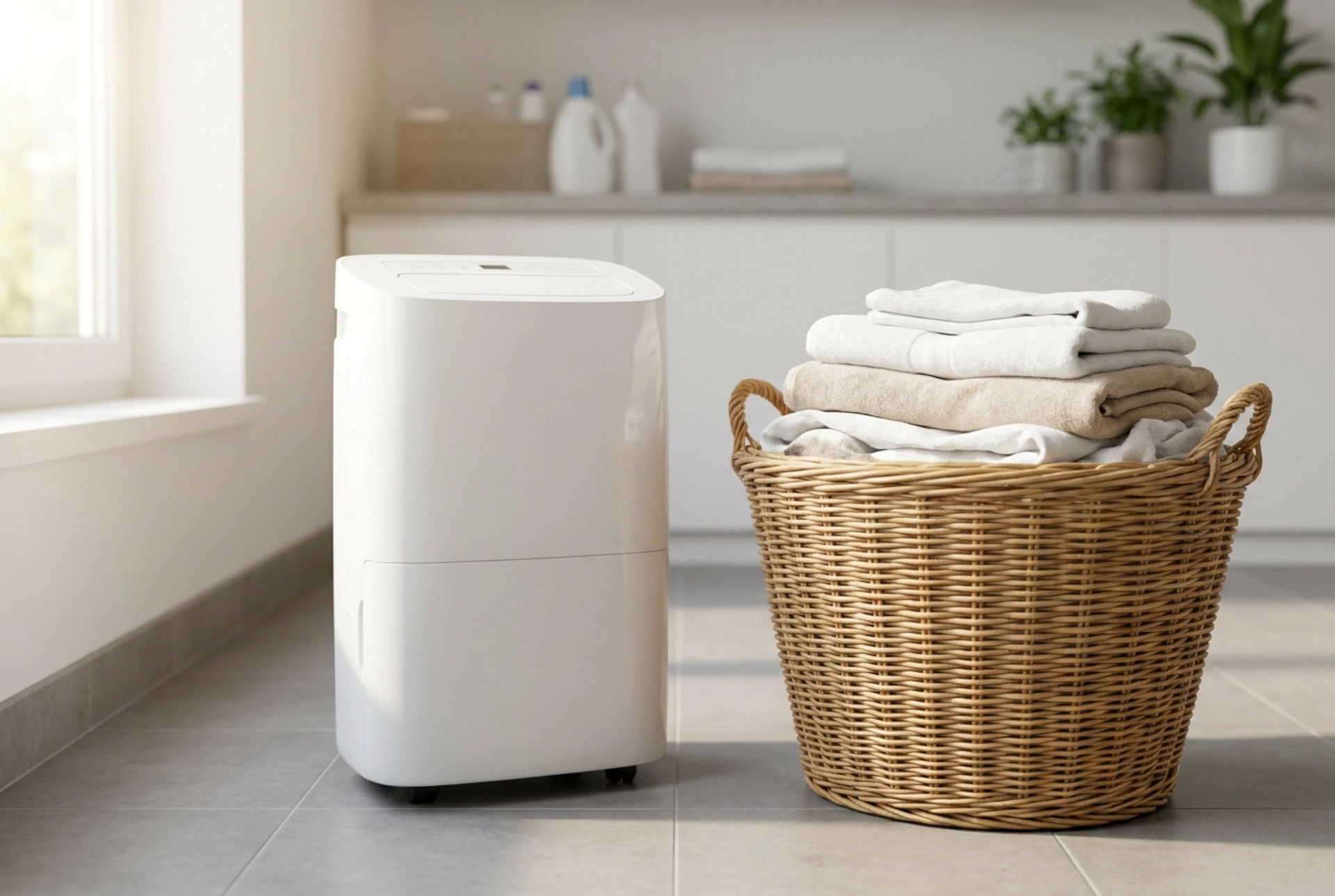


Drying laundry indoors during colder seasons often leads to elevated indoor humidity, which slows down evaporation and risks structural mould growth. Using a dehumidifier accelerates this process by actively removing moisture from the air, maintaining a low relative humidity that coaxes water out of wet fabrics faster.
The Physics of Evaporation and Relative Humidity
To understand why clothes dry slowly in a closed room, we must examine the boundary layer of air surrounding wet fabric. Evaporation is a thermodynamic process where liquid water molecules gain enough kinetic energy to transition into a gaseous state (water vapour). The rate of this transition depends heavily on the vapour pressure gradient—the difference between the moisture pressure at the surface of the wet cloth and the moisture pressure of the surrounding air.
When laundry is hung in a confined space, the surrounding air quickly reaches its saturation point (high relative humidity). As the relative humidity approaches 100%, the vapour pressure gradient drops to zero, halting evaporation entirely. By constantly drawing in humid air, extracting the water, and releasing dry air, a dehumidifier keeps the relative humidity low. This maintains a steep pressure gradient, forcing water molecules out of the fabric fibres at an accelerated rate.
Compressor vs. Desiccant Dehumidifiers
Choosing the right type of dehumidifier depends on the ambient temperature of your drying space, as the two primary technologies operate on different thermodynamic principles:
- Compressor Dehumidifiers: These units draw humid air over an internal evaporator coil cooled by a refrigerant loop. As the warm, moist air hits the cold coil, it drops below its dew point, causing the water vapour to condense into liquid droplets that drain into a collection tank. The dry air is then slightly reheated by the condenser before being expelled. These are highly efficient in heated living spaces above 15 degrees Celsius.
- Desiccant Dehumidifiers: Instead of cooling coils, these systems use a rotating wheel coated with a moisture-absorbing chemical, such as silica gel. Moist air passes through the wheel, which adsorbs water molecules directly into its porous structure. A small heater then regenerates the desiccant by vaporising the trapped water and condensing it into the collection tank. Desiccant units perform exceptionally well in unheated environments, such as cold garages or utility rooms.
Optimising the Drying Environment for Maximum Efficiency
Simply turning on a dehumidifier in a large, open house is inefficient. To maximise the drying rate and conserve electrical energy, you must manage the physical boundary layer surrounding the garments:
First, restrict the drying volume. Close the windows and doors of the utility room to prevent the dehumidifier from attempting to dry the air of the entire house. This concentrates the drying power within a smaller cubic volume, accelerating the rate at which the relative humidity drops.
Second, facilitate air movement. Some dehumidifiers feature a dedicated drying mode with an oscillating louvre that directs dry air directly onto the wet clothes. If your machine lacks this feature, positioning a low-energy circulation fan near the drying rack helps break the boundary layer of saturated air that clings to wet fabrics, replacing it with the dry air generated by the dehumidifier.
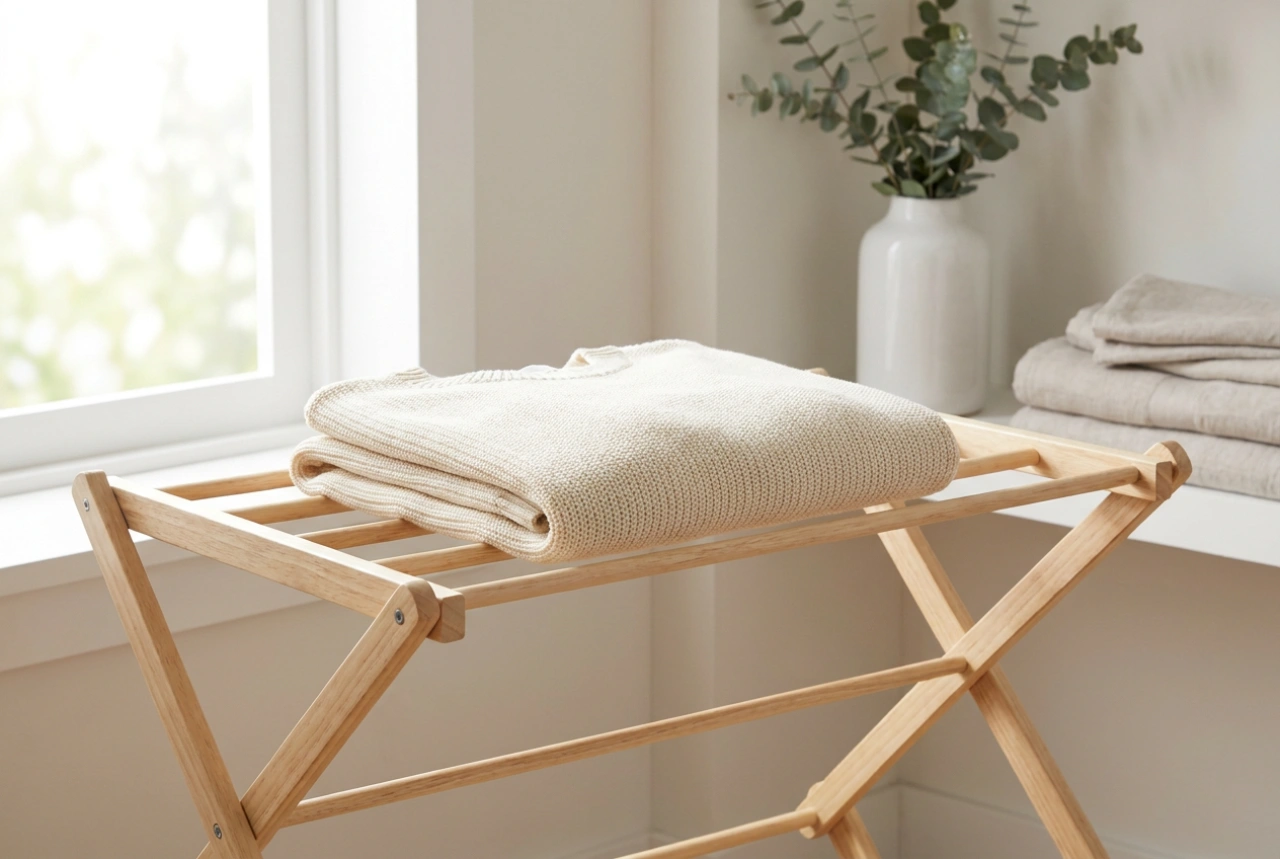
Third, manage hanging density. Overcrowding a clothes airer prevents air from circulating freely between layers. Space the garments out, leaving several centimetres of clear air between each item to allow the dry, moving air to envelop the fibres completely.
Moisture Control and Mould Prevention
Uncontrolled indoor drying can release up to five litres of water into the home per laundry load. Without active removal, this moisture settles on cold exterior walls, window frames, and corners, leading to condensation. Prolonged relative humidity levels above 60% create the ideal microclimate for the germination of mould spores.
By utilising a dehumidifier, you can maintain the indoor relative humidity within the optimal range of 40% to 50%. This not only dries your clothes in a fraction of the time but also protects the structural integrity of your home, preventing wood rot, paint peeling, and the degradation of gypsum-based plasterboards.