

Drying laundry outdoors utilizes natural thermodynamic forces and ambient airflow to remove moisture efficiently, but maximizing this process requires understanding how wind speed, relative humidity, and ultraviolet radiation interact with different textile fibres.
The Thermodynamics of Open-Air Drying: Wind and Evaporation
The speed at which wet clothes dry outdoors is governed by the rate of evaporation, which depends heavily on the boundary layer of air surrounding the wet fabric. When water evaporates from the textile, it creates a localized micro-climate of high relative humidity directly adjacent to the fibres. If the air is stagnant, this saturated boundary layer remains in place, significantly slowing down further evaporation.
Air movement is the most critical factor in disrupting this boundary layer. Even a gentle breeze continuously replaces the moist air surrounding the fabrics with drier ambient air, maintaining a steep concentration gradient of water vapour. Consequently, placing your garden dryer in an open area with unrestricted airflow is far more effective than positioning it in a hot but enclosed courtyard. Temperature accelerates the kinetic energy of water molecules, but without air movement to carry the vapour away, drying times remain prolonged.
The Dual Nature of Ultraviolet Radiation on Fabrics
Ultraviolet (UV) radiation from sunlight acts as both a natural sanitiser and a powerful chemical agent. Understanding its effects on a molecular level allows you to protect your wardrobe while exploiting its benefits.
- Sanitisation through Photo-oxidation: UV light, particularly UV-A and UV-B rays, penetrates the cellular walls of bacteria, moulds, and fungal spores remaining on washed fabrics. It disrupts their DNA, rendering them inactive and eliminating musty odours. This makes outdoor drying highly beneficial for white bed linens, towels, and cotton underwear.
- Photodegradation of Dyes: The same UV radiation breaks down the chemical bonds within synthetic and natural dye molecules (chromophores) in a process called photolysis. This leads to fading. To prevent this, dark and highly saturated colours should always be turned inside out or dried in partial shade, where they still benefit from ambient airflow without direct solar degradation.
Managing Tensile Stress and Fibre Distortion
When textile fibres absorb water, their physical properties change. For example, cotton and linen fibres swell and become heavier, which temporarily alters their tensile strength and elasticity. Hanging wet, heavy garments incorrectly can lead to permanent structural distortion.
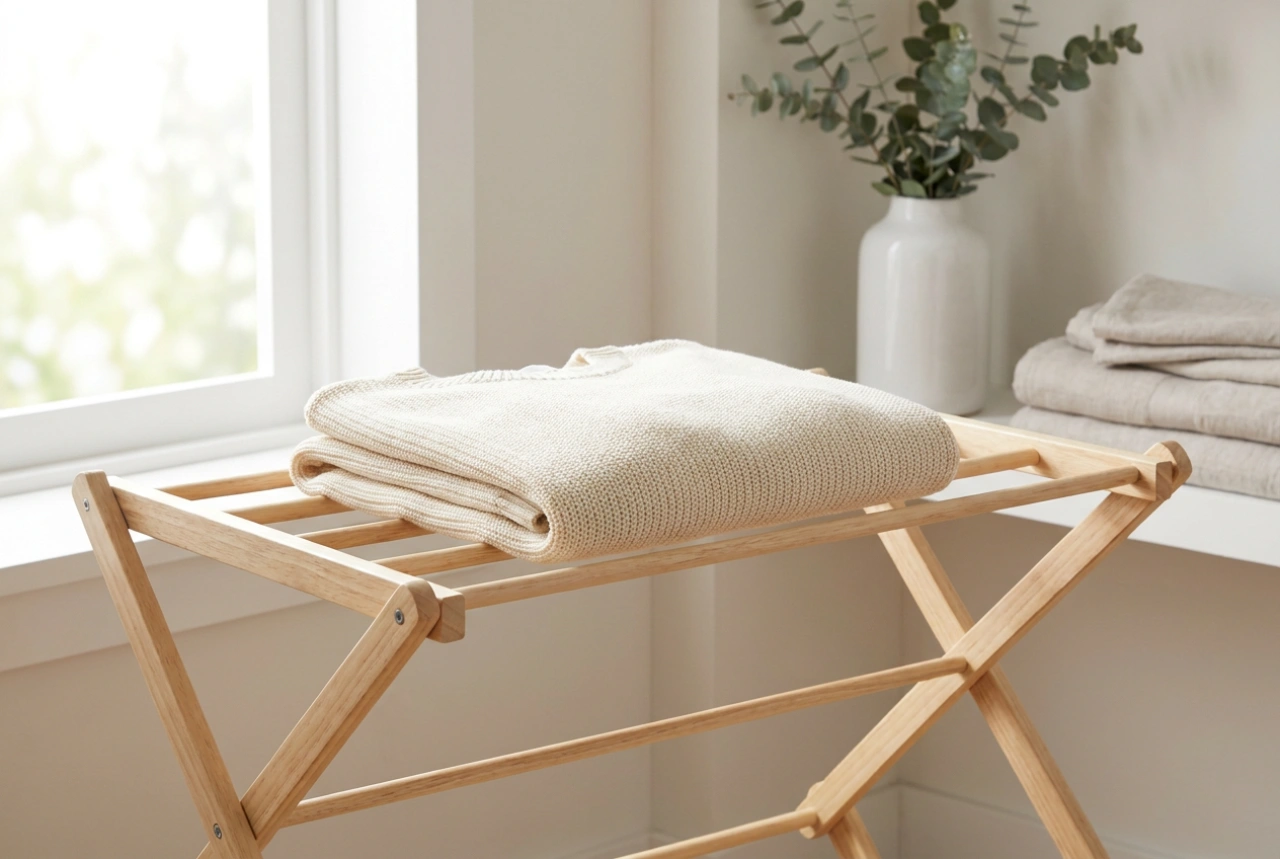
To preserve the shape of your garments, gravity and tension must be managed carefully. Always hang heavy items, like trousers or wet knits, across multiple lines of the dryer to distribute the weight evenly. Secure shirts by their sturdiest points—typically the bottom hem or at the shoulder seams—using wide, smooth pegs that distribute clamping pressure. This prevents localised stress concentration, which can deform the knit or weave. Delicate woollens, which lose their structural integrity when wet, should be laid flat on a horizontal drying mesh rather than suspended.
Optimising Dryer Placement and Pegging Techniques
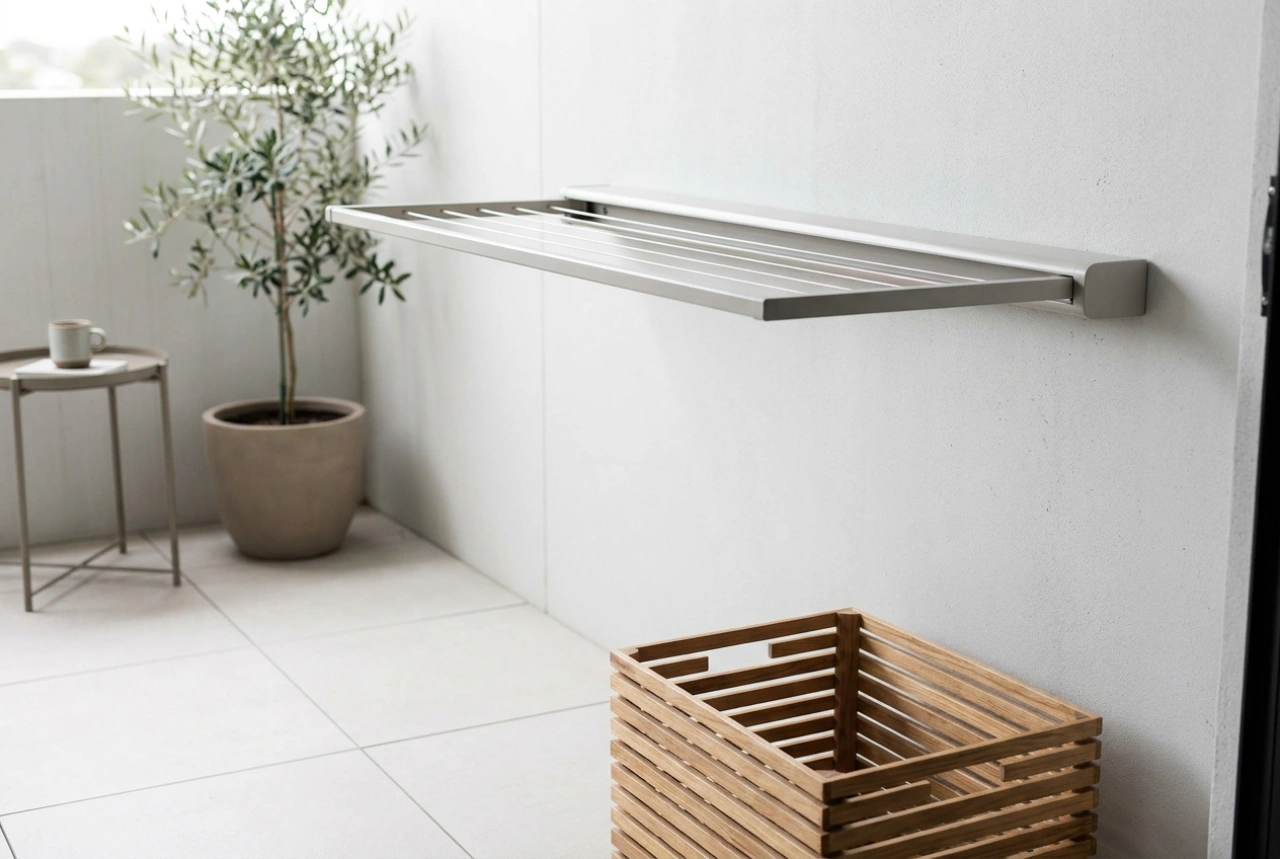
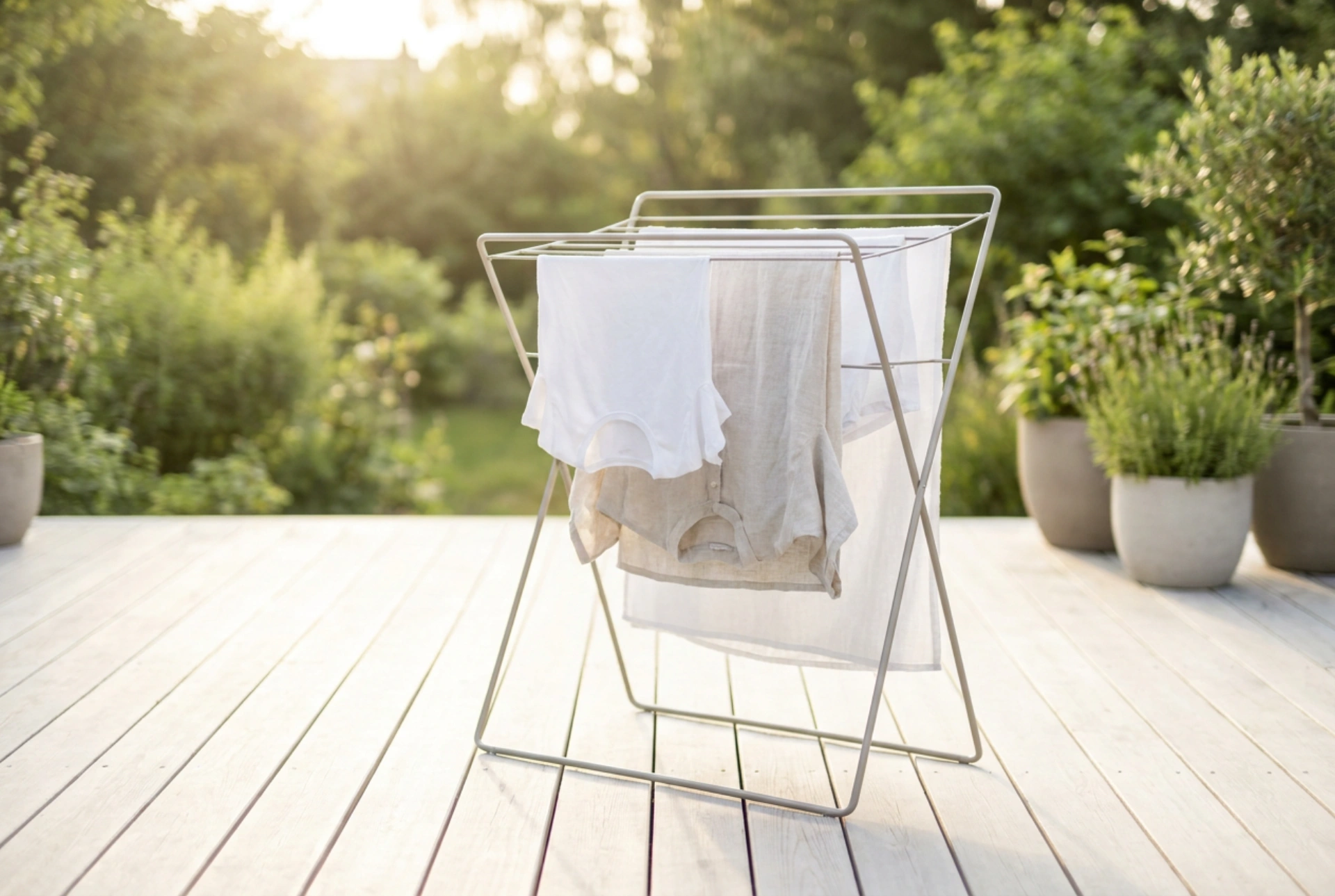
For maximum efficiency, position your rotary or fold-out garden dryer to align with the dominant wind direction of your outdoor space. This ensures the air flows through the layers of suspended laundry rather than hitting only the outermost garments. When hanging items, leave sufficient spatial gaps between pieces; packing garments too closely creates a collective barrier that traps moisture and slows down the drying process.
Additionally, pay attention to the material of your pegs. Avoid wooden pegs in highly humid environments, as they can retain moisture and harbour mould spores, transferring them directly onto clean fabrics. High-quality, UV-stabilised plastic or stainless steel pegs are ideal, as they resist degradation and do not transfer chemical residues or physical stains onto wet textiles.