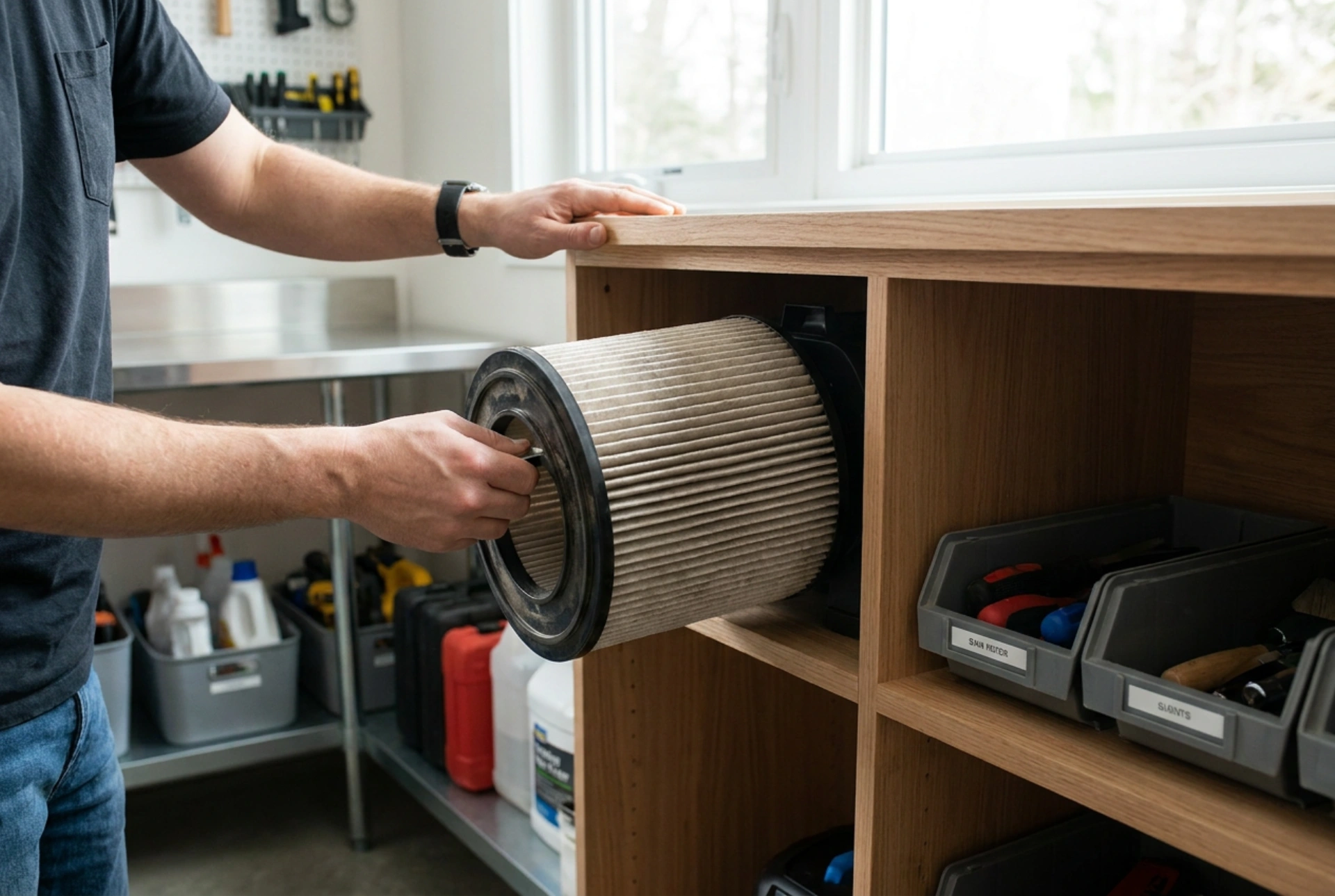


Managing heavy dust, such as concrete, plaster, or drywall residue, requires more than just high suction power; it demands a deep understanding of filtration dynamics. Selecting and installing the correct industrial vacuum bag is critical to maintaining airflow, protecting the motor from catastrophic failure, and ensuring a safe, dust-free working environment.
The Physics of Fine Dust and Filtration Failure
When vacuuming heavy construction dust, the primary challenge is not the volume of debris, but the particle size. Fine particles like crystalline silica or gypsum measure under 10 micrometers. Standard vacuum bags rely on surface filtration, where dust forms a thin layer on the inside of the bag. With fine dust, these tiny particles quickly clog the microscopic pores of paper media, a phenomenon known as blinding. Once blinding occurs, airflow drops rapidly, causing the motor to overheat due to lack of cooling air.
To combat this, industrial applications require depth filtration. Instead of stopping dust at the surface, depth filtration traps particles within the intricate, multi-layered matrix of the bag material. This maintains open passages for air to flow, preserving suction even as the bag fills with several kilograms of heavy material.
Material Science: Why Synthetic Fleece Outperforms Paper
For heavy dust extraction, the material of the vacuum bag is non-negotiable. Paper bags are highly susceptible to tearing under the weight of masonry dust and lose their filtration efficiency when exposed to even minor moisture. Synthetic fleece, typically made of spunbond polyester or polypropylene, offers three distinct advantages:
- Mechanical Strength: Non-woven synthetic fibers stretch without tearing, accommodating the extreme weight of dense mineral dust without bursting.
- Multi-Layer Structure: Typically consisting of three to five layers, the inner layers trap larger debris, while the electrostatic outer layers capture the finest respirable particles.
- Moisture Resistance: Synthetic fibers do not absorb water, preventing the bag from weakening if damp plaster or concrete slurry residue is drawn in.
Optimizing Bag Installation to Prevent Bypass and Tears
The efficiency of an industrial vacuum bag is entirely dependent on its seal. Even a microscopic gap between the bag collar and the inlet tube allows fine dust to bypass the bag, instantly clogging the expensive main pleated filter or entering the motor housing.
Step-by-Step Seating Technique
- Clean the Inlet Area: Before inserting a new bag, wipe the internal inlet pipe and the surrounding housing with a damp microfiber cloth to remove residual grit that could compromise the seal.
- Align and Press: Align the cardboard or plastic collar of the bag with the inlet nozzle. Push it firmly until the rubber gasket sits flush against the housing wall. You should feel a distinct resistance as the rubber seal grips the pipe.
- Pre-Expand the Bag: Gently unfold and expand the bag inside the canister. A crumpled bag cannot fill evenly, creating localized high-pressure zones where the material is forced against the canister walls, potentially causing friction tears during operation.
Safe Operation and Heavy Bag Extraction
Heavy mineral dust is exceptionally dense. A fully loaded 30-liter bag can easily weigh over 15 kilograms. To prevent injury and bag rupture during removal, monitor your airflow. Do not wait for the vacuum to lose all suction before changing the bag; instead, replace it when it reaches approximately two-thirds of its physical capacity. Most high-quality industrial bags feature a sliding plastic gate or adhesive flap on the collar. Always close this seal before lifting the bag out of the canister to prevent a cloud of toxic fine dust from escaping into your breathing zone. Finally, support the weight of the bag from underneath as you lift it out to minimize stress on the synthetic seams.