

Fine dust particles can quickly choke the airflow of any high-performance vacuum, reducing suction power and putting unnecessary strain on the motor. Understanding how an industrial vacuum filter shaker works allows you to maintain optimal extraction efficiency during demanding tasks like sanding, grinding, or drywall preparation.
The Mechanics of Filter Clogging and Suction Loss
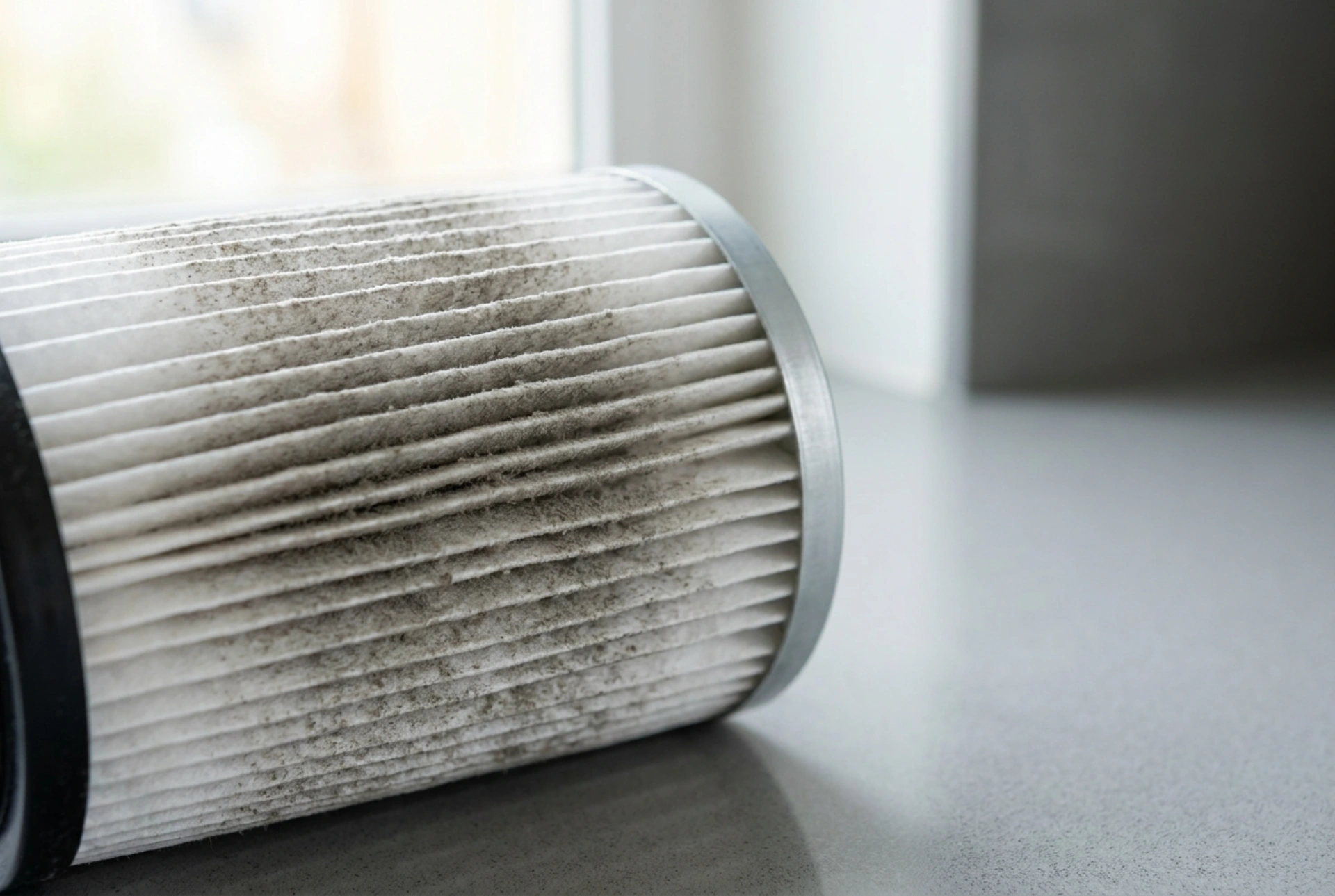
When vacuuming fine materials such as concrete dust, plaster, or wood flour, the physical behavior of the particles changes how the filtration system operates. Unlike large debris, which falls directly to the bottom of the collection container due to gravity, micro-particles remain suspended in the moving airstream. As this air is pulled through the pleated cartridge filter, the particles are trapped on the outer surface of the filter membrane.
Over time, these fine particles build up to form what material scientists call a "filter cake." This layer of packed dust restricts the microscopic air pathways within the filter material. According to fluid dynamics, as the open surface area of the filter decreases, the resistance to airflow increases. This causes a sharp drop in static pressure, resulting in lost suction power. Without a mechanism to disrupt this dust layer, the motor works harder against higher resistance, heating up and eventually leading to thermal overload or premature motor failure.
How Filter Shakers Restore Airflow: The Science Behind the Action
A filter shaker is designed to dislodge the accumulated dust cake from the filter pleats without requiring you to open the canister and clean the filter manually. This is achieved through three primary mechanical and physical methods:
- Manual Mechanical Shaking: This system uses a physical lever or plunger connected to a rod inside the canister. When pressed, it physically strikes or deforms the filter frame. The rapid deceleration forces the dust cake to detach from the outer pleats and fall into the collection bin.
- Semi-Automatic Reverse Air Pulse: In this configuration, pressing a button momentarily redirects the vacuum’s exhaust air. By blocking the main inlet and reversing the airflow, a brief, high-velocity blast of air passes through the filter from the inside out. This sudden reverse pressure wave expands the filter pleats and blows the dust off the exterior surface.
- Fully Automatic Electromagnetic Shaking: Highly advanced systems use electronic sensors to monitor pressure differentials across the filter. When the system detects a critical drop in airflow, an electromagnetically driven mechanism automatically vibrates the filter at a high frequency during operation, keeping the pores open continuously.
When Does a Filter Shaker Become Essential?
Standard vacuum cleaners lack the mechanisms to handle high-volume, fine-particulate debris. A filter shaker becomes absolutely necessary in specific scenarios where material properties demand continuous filtration maintenance:
- Drywall and Plaster Sanding: Gypsum dust is extremely fine and hygroscopic. It easily absorbs ambient moisture, causing it to stick aggressively to filter fibers. Regular shaking prevents this dust from setting into a permanent crust.
- Masonry and Concrete Working: Silica dust generated from cutting or grinding concrete is not only hazardous to health but also highly abrasive. Continuous cleaning of the filter keeps the airflow high enough to capture these dangerous particles directly at the tool shroud.
- Woodworking Fine Dust: While wood shavings are easily caught, the fine dust from sanding hardwoods behaves like a dense barrier on filters. Shaking maintains the high air speed needed to clear the workspace.
Crucial Guidelines for Operating Shaker Systems
To ensure the longevity of both the filter and the vacuum motor, specific operational rules must be observed. First, never activate a filter shaker when vacuuming wet materials or liquids. Wet dust forms a paste; shaking or applying a reverse air pulse to a wet filter will force this slurry deeper into the filter medium fibers, permanently ruining the filter's permeability. If you transition from wet to dry vacuuming, ensure the filter is completely dry before using the shaker feature.
Second, when operating manual or semi-automatic systems, always follow the manufacturer's suggested cadence. Typically, blocking the hose inlet for three to five seconds while activating the manual shaker or reverse pulse button three times allows the pressure wave to reach maximum velocity, ensuring a thorough clean. Consistent, brief maintenance cycles are far more effective than waiting for the suction to stop completely before taking action.