

Steam cleaning uses thermal energy and minimal moisture to sanitize and lift dirt, but incorrect application can permanently damage sensitive flooring materials. Understanding the physical limits of your hard surfaces ensures effective cleaning without risking warping, delamination, or cracking.
The Physics of Steam and Surface Vulnerability
A steam cleaner works by heating water under pressure inside a boiler to temperatures exceeding 120°C, converting it into what is known as "dry steam"—a vapour containing very low moisture content (typically less than 6% liquid water). When this vapour is released through the nozzle, it rapidly transfers thermal energy to the surface. This sudden heat liquefies grease, softens adhesive residues, and denatures proteins in organic dirt, making them easy to wipe away.
However, this rapid transfer of heat and moisture presents distinct physical risks to different materials. Porous structures absorb moisture through capillary action, while materials with different coefficients of thermal expansion can warp or crack when subjected to sudden temperature differentials. Therefore, the key to safe steam cleaning lies in controlling contact time, moisture levels, and temperature delivery to match the specific tolerance of each floor type.
Tile and Grout: Preventing Thermal Shock and Moisture Retention
Ceramic and porcelain tiles are highly resilient materials that easily withstand the high temperatures of steam. However, the weak link in tiled floors is often the grout. Standard cementitious grout is highly porous and absorbs water readily. Under high-pressure steam, water can be forced deep into the grout lines. If the grout is unsealed, this moisture can become trapped beneath the tiles, weakening the adhesive bond over time and promoting subsurface mould growth.
Additionally, natural stone tiles such as marble, granite, or slate are susceptible to thermal shock. Applying high-temperature steam to a cold stone slab can cause micro-fracturing along natural veins. To mitigate these risks, always use a microfiber cloth attachment to diffuse the steam, keep the cleaning head in constant motion, and ensure the grout has been properly sealed with a penetrating sealer before steam cleaning.
Wood and Laminate: Managing the Limits of Heat and Adhesives
Timber and laminate floors require extreme caution. Wood is a hygroscopic material, meaning it naturally absorbs and releases moisture to equilibrate with its environment. When exposed to hot steam, the wood fibres expand rapidly. Once the heat dissipates and the moisture evaporates, the wood contracts. This rapid expansion and contraction cycle can lead to cupping, crowning, and structural warping.
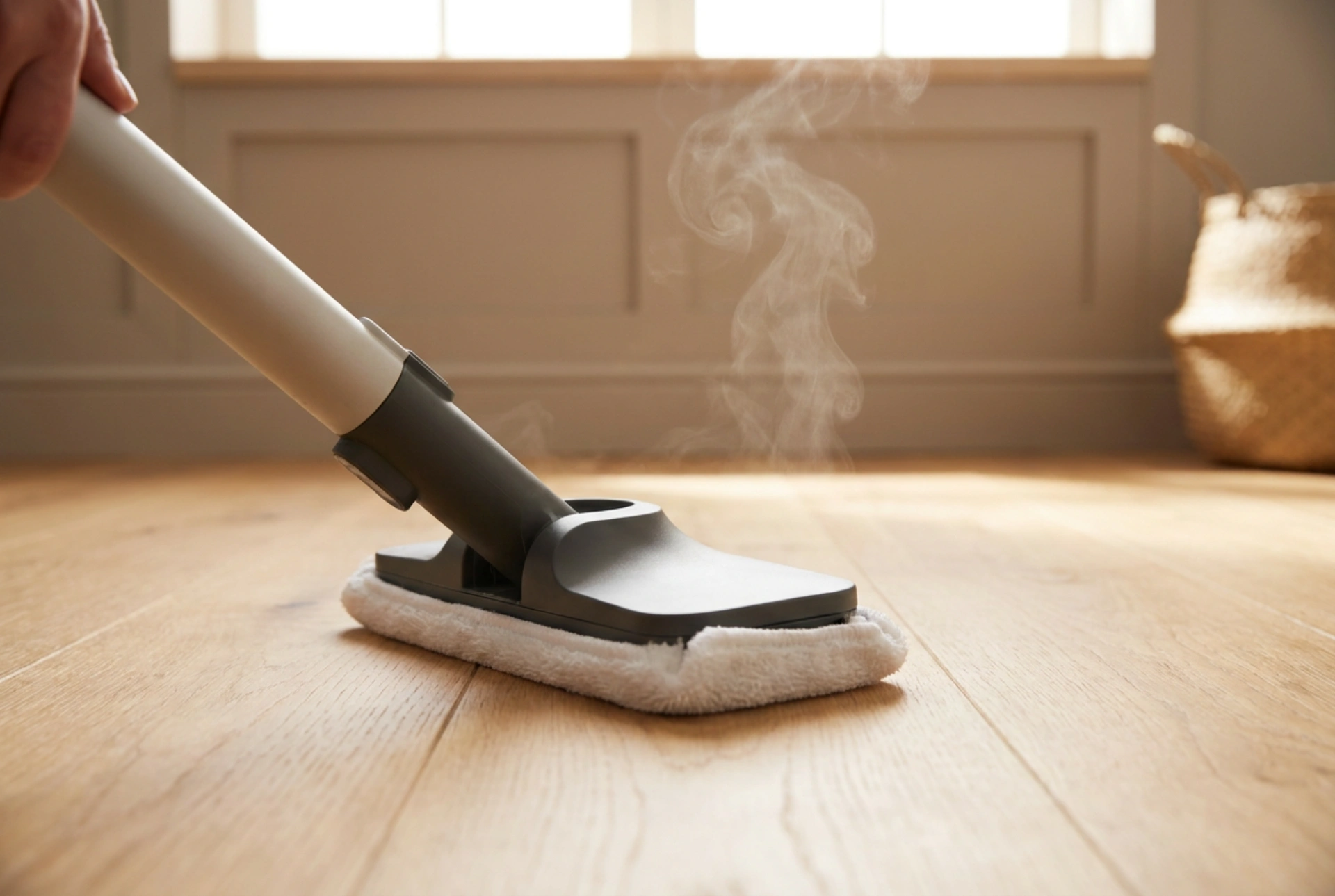
Laminate flooring is even more vulnerable. While the top wear layer is plastic-based and water-resistant, the core of the plank consists of high-density fibreboard (HDF), which is highly susceptible to water damage. The joints between laminate planks are rarely sealed. Steam can easily penetrate these microscopic gaps, causing the HDF core to swell irreversibly and the top decorative layer to delaminate. If you choose to steam clean engineered wood or sealed hardwood, use the lowest steam setting, wrap the nozzle in a thick microfiber pad to absorb excess moisture instantly, and work strictly parallel to the direction of the joints to prevent forcing steam directly into the seams.
A Step-by-Step Protocol for Safe Application
To achieve a hygienic finish without compromising the integrity of your hard floors, follow this precise operational sequence:
- Debris Removal: Thoroughly vacuum or sweep the floor first. Particulate soil, sand, and grit can act as abrasives under the pressure of a steam pad, scratching the floor finish.
- Bleed the System: Before touching the floor, trigger the steam wand over a sink or bucket for a few seconds. This expels any condensed liquid water that has pooled in the hose, ensuring only dry vapour reaches the surface.
- Continuous Motion: Never allow the steam nozzle to rest in one spot while the trigger is engaged. Maintain a steady, sweeping pace of approximately 30 centimetres per second.
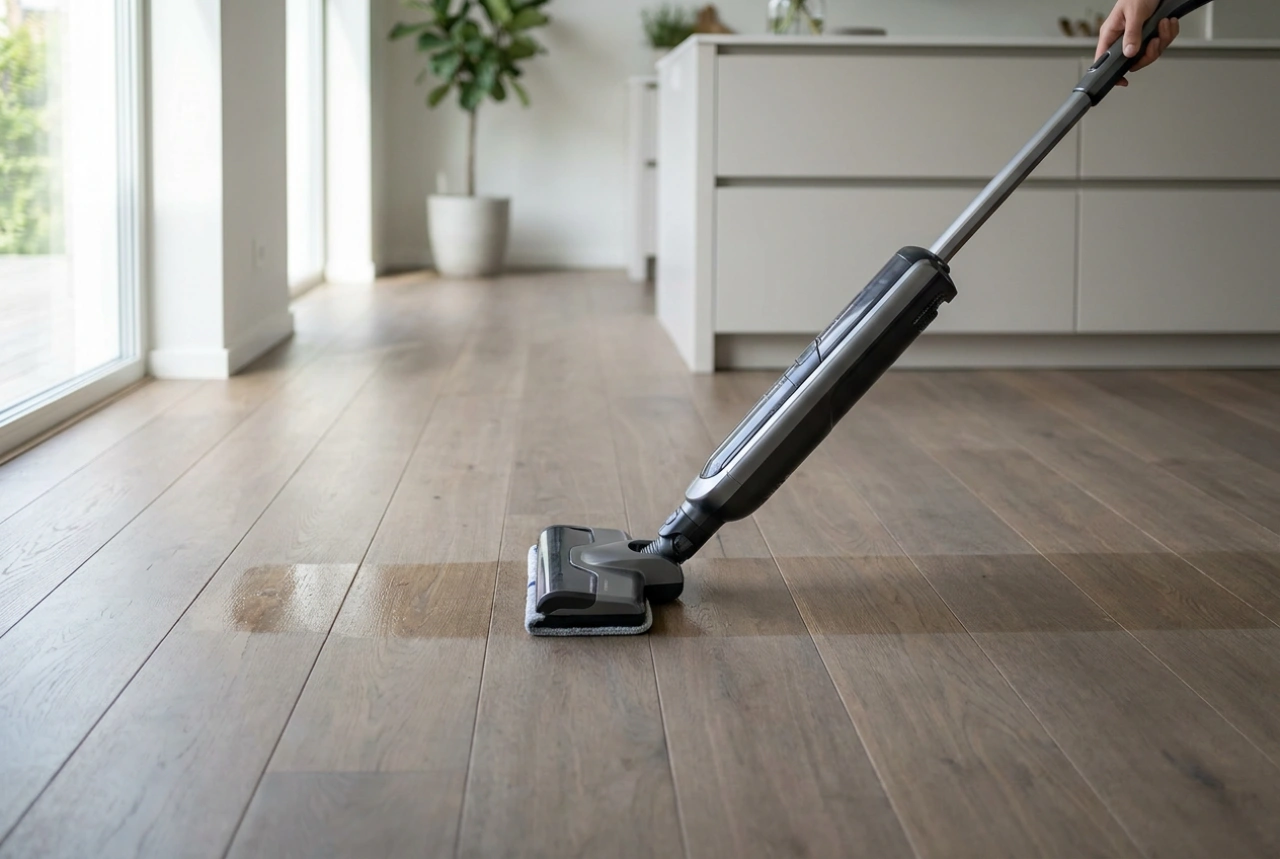
- Moisture Monitoring: The surface behind the cleaner should dry within 30 to 60 seconds. If visible puddles or wet streaks remain, the steam flow is too high or the microfiber pad is saturated and must be replaced.