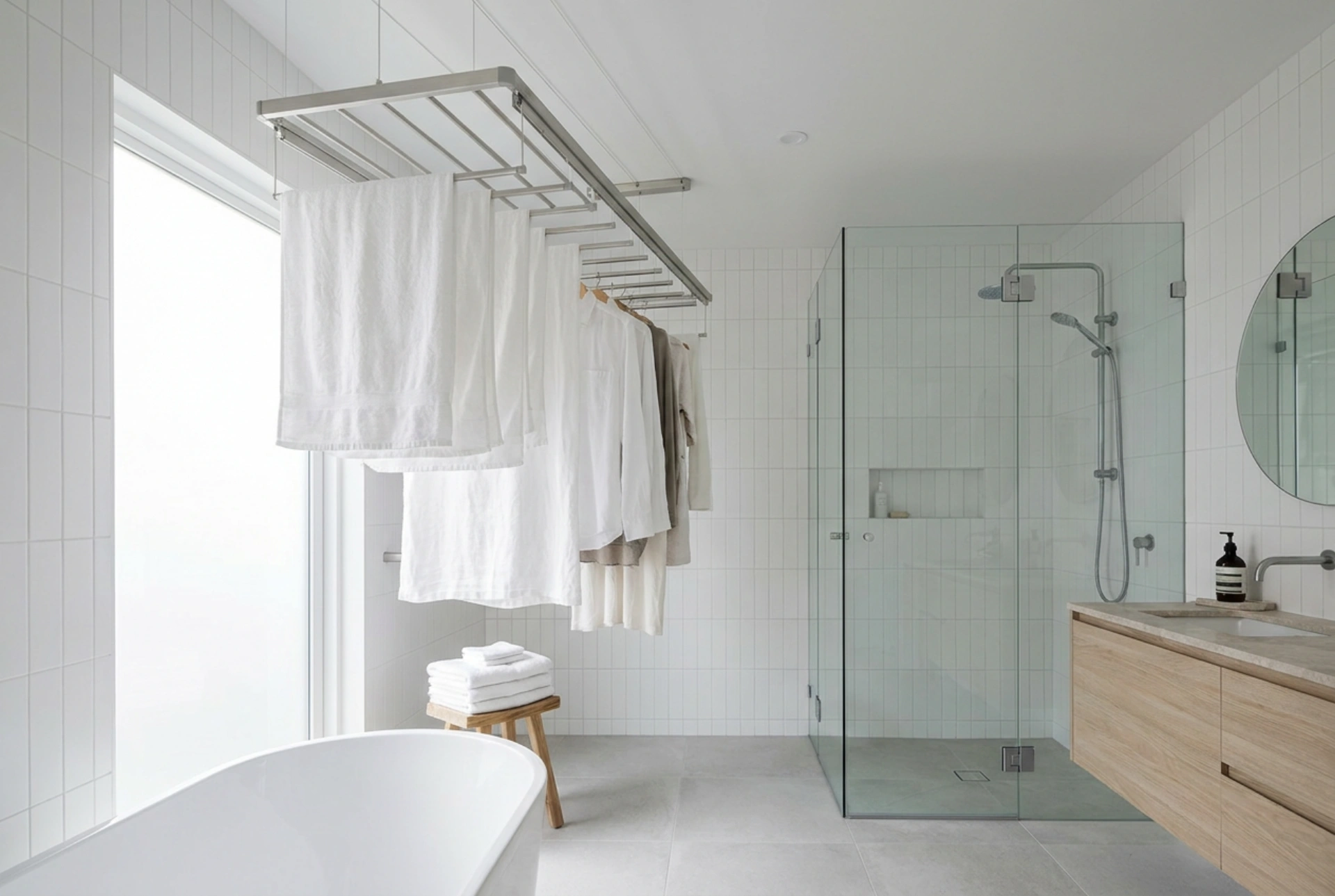


Utilising the vertical space near your bathroom ceiling for drying laundry is not just a spatial hack; it leverages fundamental thermodynamic principles to accelerate moisture evaporation while keeping living areas clear.
The Thermodynamics of Ceiling-Level Drying
The primary advantage of a ceiling-mounted drying rack lies in the physical behaviour of indoor air. In any heated or naturally ventilated room, warm air rises while cooler, denser air sinks—a process known as natural convection. The ambient temperature near a bathroom ceiling is typically 2 to 4 degrees Celsius higher than at floor level. Because warmer air has a higher moisture-holding capacity (known as saturation vapour pressure), the rate of water evaporation from wet fabrics is significantly accelerated when suspended in this upper thermal zone.
Furthermore, bathrooms are generally equipped with mechanical extraction fans or high-level ventilation grates. Placing wet garments directly in the path of rising warm air and near extraction zones ensures that moisture-laden air is quickly evacuated from the room, preventing the localised relative humidity from reaching 100%, which would otherwise halt the drying process.
Strategic Positioning for Maximum Efficiency
To optimise evaporation rates and prevent moisture issues like condensation or mould growth, the placement of the ceiling rack must be carefully calculated. Ideally, the rack should be installed perpendicular to the main airflow path—typically between the bathroom door gap (where fresh air enters) and the ventilation duct (where damp air escapes). This creates a continuous cross-draft that sweeps over the wet fibres.
Avoid positioning the rack directly over a bathtub or shower enclosure if those fixtures are frequently in use, as the rising steam from hot baths will temporarily saturate the surrounding air, reversing the drying process and introducing excess moisture into dry fabrics. Maintain a minimum distance of 30 centimetres from adjacent walls to allow unobstructed lateral air circulation around the outermost hanging garments.
Material Science of Clothes Airers
The damp environment of a bathroom requires careful consideration of the materials used in the drying rack's construction. Cheap metal rods coated with low-grade plastics are prone to micro-cracking due to thermal expansion and contraction. Once the protective coating is compromised, the underlying iron oxidises rapidly, leading to rust stains that can permanently ruin wet linen.
Metal and Coatings
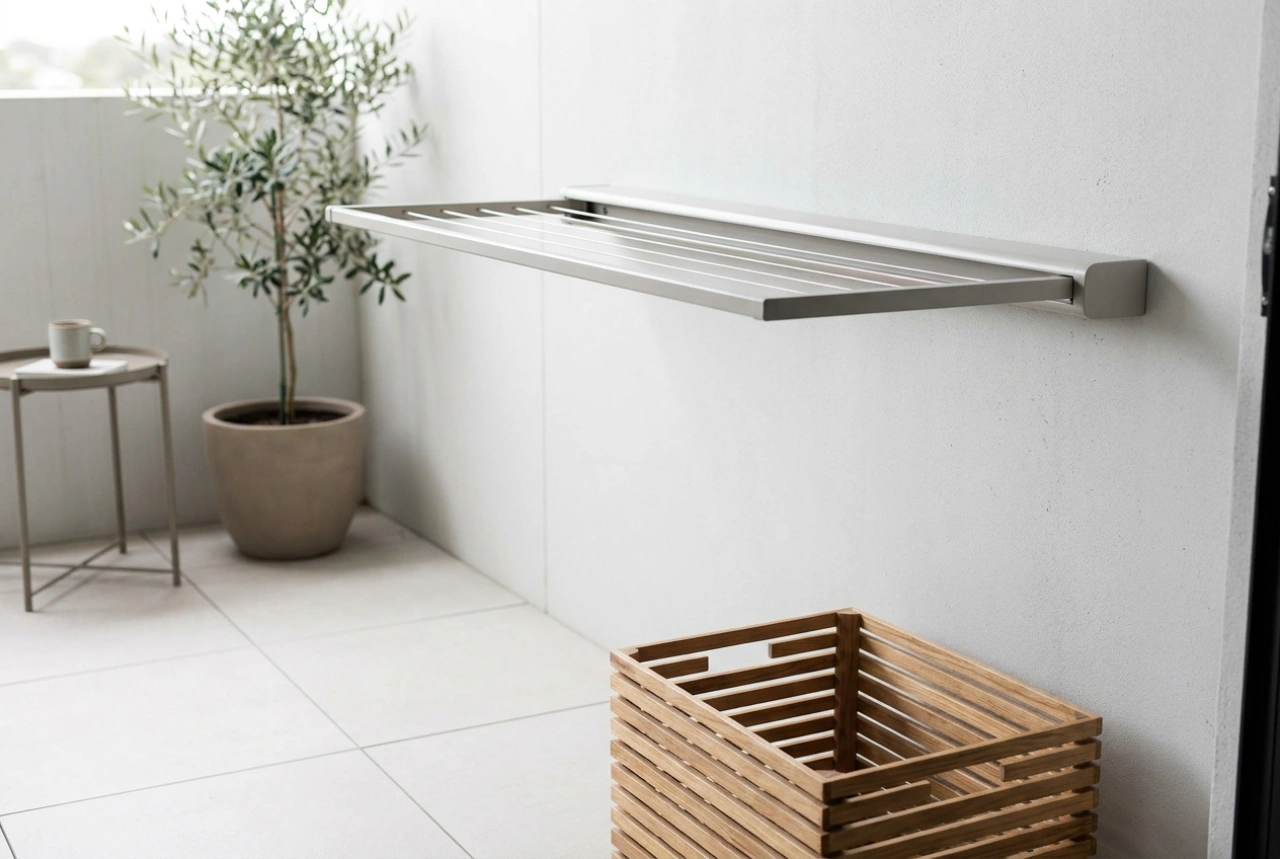
Anodised aluminium or stainless steel are the premier choices for bathroom drying rods. These materials form a self-passivating oxide layer that prevents deep corrosion, ensuring longevity and clean contact surfaces. Unlike powder-coated steel, which can chip, anodised metals resist the chemical action of residual laundry detergents still present in damp clothing.
Tension Cords and Pulley Mechanisms
High-tensile cords made of braided polyester or nylon are preferred over cotton cords. Synthetic fibres resist rotting, do not harbour mould spores, and maintain their structural integrity when subjected to repeated tension under heavy, wet loads. Individual rod control systems utilising smooth plastic or brass pulleys reduce friction, allowing the rods to be lowered and raised with minimal physical effort, while ensuring even weight distribution across the ceiling anchors.
The Science of Hanging: Airflow and Gravity
To maximise the efficiency of a ceiling dryer, the arrangement of clothing must follow fluid dynamics. Do not overload the rods. Wet fibres require space to allow the air molecules to collide with and carry away the water molecules.
Heavy items, such as thick cotton towels or denim, should be hung on the outermost rods where air movement is less restricted by surrounding garments. Lighter, synthetic fabrics that release moisture rapidly should occupy the centre. Leave a minimum of 5 to 8 centimetres of clear space between individual items. Hanging garments using the "gravity method"—where items are draped symmetrically over the rod—maximises the surface area exposed to rising warm air currents and utilises the natural weight of the water in the fabric to pull out wrinkles, reducing the need for subsequent ironing.