

Optimising laundry drying in confined, humid bathroom spaces requires more than just finding an empty wall. Selecting the right wall-mounted drying rack demands an understanding of material science, structural physics, and thermodynamics to ensure mechanical durability and rapid moisture evaporation.
Material Longevity: Preventing Corrosion in High-Humidity Environments
Bathrooms frequently experience relative humidity levels exceeding 80 percent, creating a highly corrosive environment for metals. When selecting a drying rack, the chemical composition of the material determines its lifespan. Standard steel will rapidly oxidise when exposed to moisture and oxygen, leading to rust that can ruin garments. To prevent this, focus on materials with inherent corrosion resistance.
Anodised aluminium is an excellent choice. The anodising process uses an electrochemical reaction to thicken the natural oxide layer on the metal's surface, making it extremely hard and impervious to moisture. Alternatively, look for high-grade stainless steel, specifically alloy 304, which contains chromium and nickel. These elements form an invisible, self-healing passive layer of chromium oxide that blocks oxygen from reaching the underlying iron.
If choosing powder-coated steel, inspect the joints and welds. Powder coating involves electrostatically applying a dry polymer powder and curing it under heat to create a hard finish. However, if the coating chips at pivot points or screw holes, water will penetrate, causing crevice corrosion underneath the paint layer. For maximum durability, components with polymer bushings between moving metal parts are ideal, as they prevent friction from wearing down protective coatings.
Physics of Load Distribution and Wall Anchoring
A loaded drying rack acts as a cantilever beam, which projects horizontally from a single vertical support. Wet textiles retain significant amounts of water, often weighing three times their dry weight. This weight exerts a strong bending moment on the wall mounts, creating distinct physical forces: tensile (pull-out) force at the top screws and compressive force at the bottom of the bracket.
The type of wall plug and anchoring system must match the substrate material:
- Solid Masonry or Concrete: These materials have high compressive strength. Standard nylon expansion plugs work by expanding against the borehole walls when the screw is inserted, relying on friction to resist tensile forces.
- Hollow Plasterboard (Drywall): Plasterboard has low shear and tensile strength. Standard expansion plugs will fail under leverage. Instead, use heavy-duty metal toggle bolts or spring-loaded cavity anchors. These transfer the tensile load to the back surface of the plasterboard, distributing the force over a much wider surface area.
When installing on tiled walls, always use a specialized diamond or carbide drill bit to bore through the ceramic tile without hammer action. The hole through the tile must be slightly larger than the screw diameter to prevent the tile from cracking under the compressive stress exerted as the screw is tightened.
Thermodynamic Principles of Drying and Airflow
Drying is a physical phase transition where liquid water evaporates into the surrounding air. This process is driven by the vapour pressure gradient—the difference between the moisture level at the fabric's surface and the moisture level of the surrounding air. If clothes are hung too close together, a stagnant, highly saturated boundary layer of air forms around them, slowing evaporation to a crawl.
To facilitate efficient convective airflow, choose a rack with a minimum distance of 6 to 8 centimetres between the drying rods. This spacing allows dry air to circulate upward between the garments, carrying moisture away. Positioning the drying rack high on the wall utilizes natural thermal convection, as warm air rises. Mounting the rack near a heat source or ventilation duct further accelerates this process by constantly replacing the saturated air with dry air.
Evaluating Kinematic Mechanisms
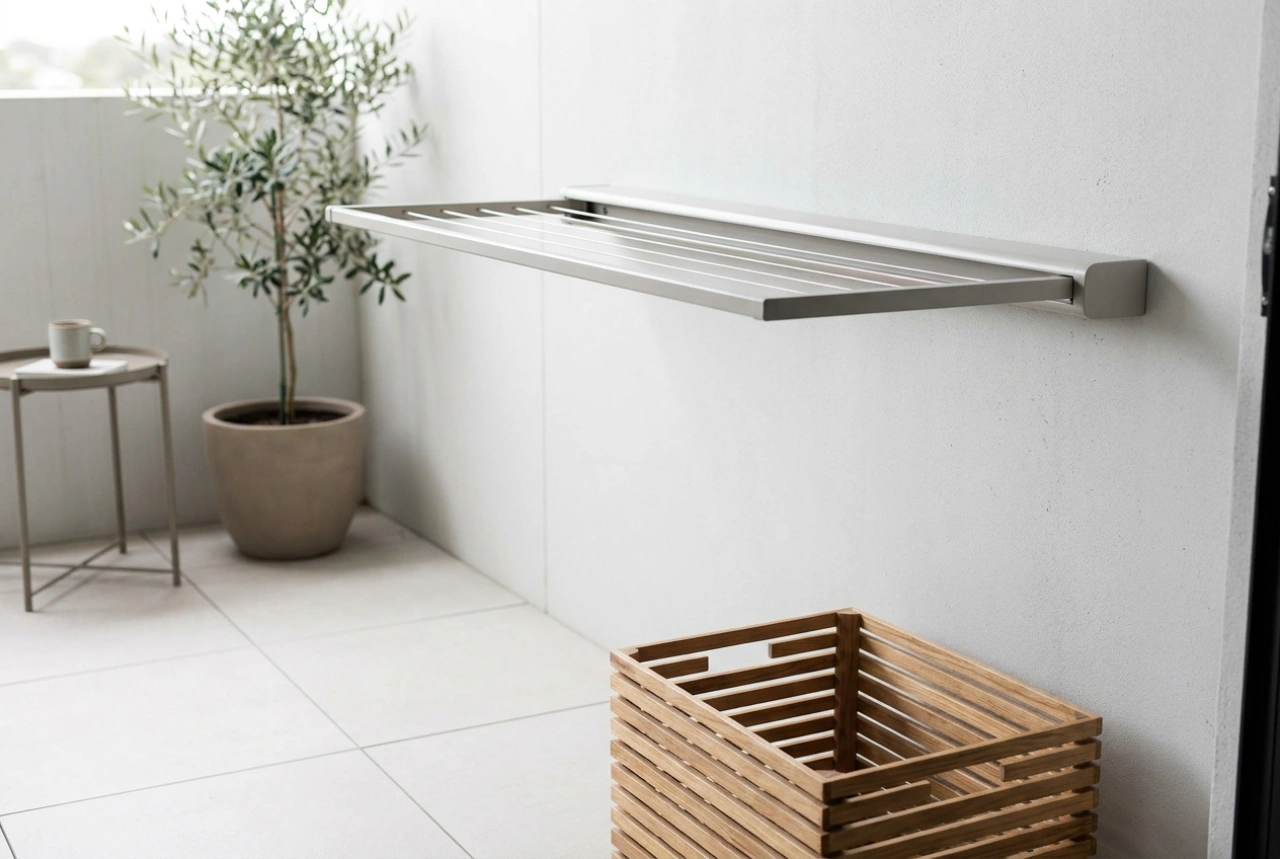
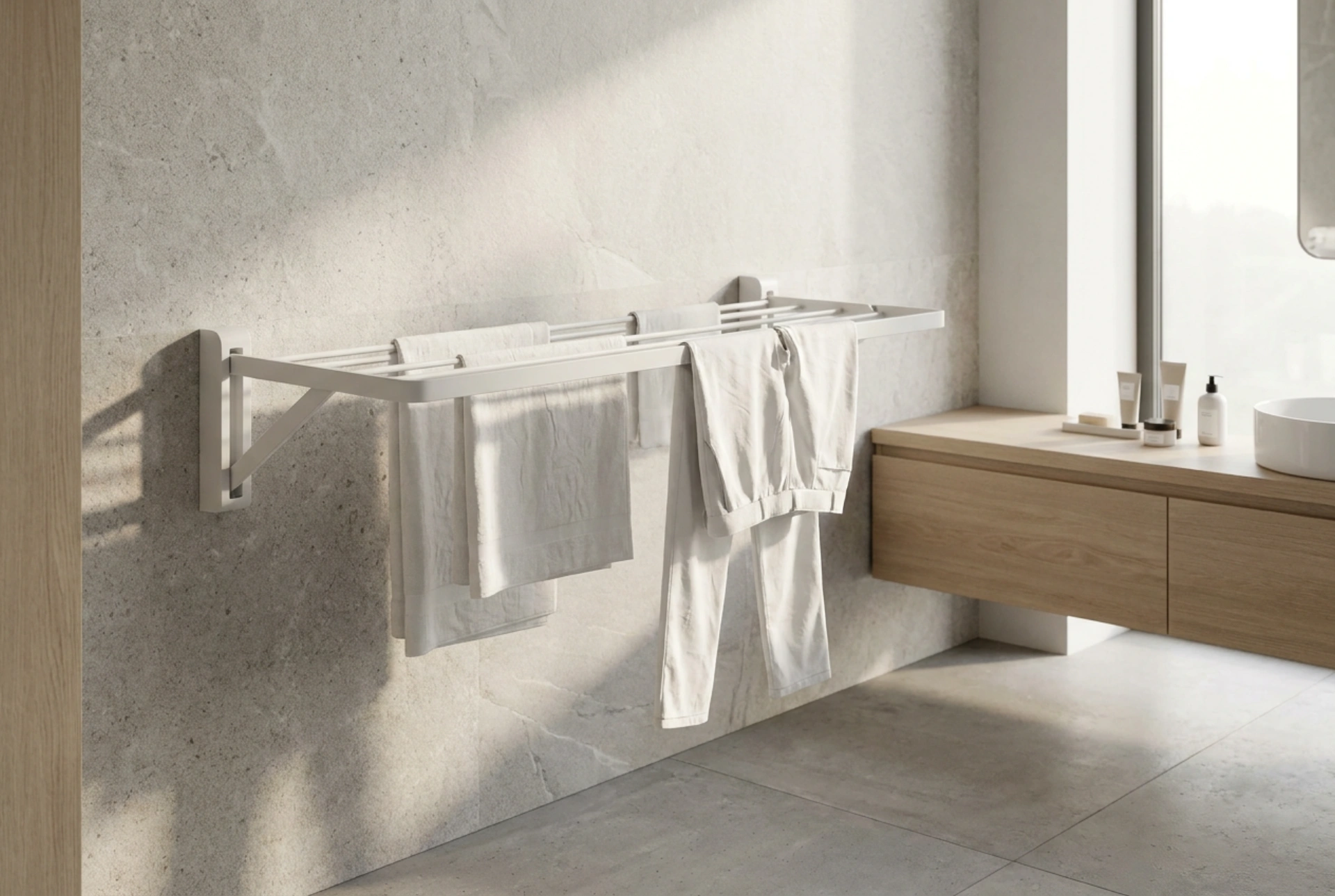
Wall-mounted racks utilize different mechanical configurations to fold away when not in use. Scissor-gate (accordion) models offer high extension lengths but feature numerous pivot joints, which are common mechanical failure points. Every joint increases play and wear over time. Roll-out or retractable lines rely on internal spring tensioners; these springs must be constructed from high-fatigue-resistant alloy steel to prevent sagging. Drop-down frame panels represent the simplest and most reliable kinematics, utilizing gravity-assisted hinges with minimal moving parts, which greatly reduces wear-and-tear.