

Gypsum dust from plasterboard repairs or renovation is exceptionally fine, meaning standard vacuuming methods often recirculate these microscopic particles into the air, coating every surface in your home. Safely capturing this dust requires an understanding of particulate physics and specific filtration techniques to prevent it from bypassing your vacuum's motor and exhaust system.
The Physics of Gypsum Dust and Why Standard Filtration Fails
Gypsum dust consists of calcium sulphate dihydrate. When sanded, it breaks down into particles ranging from 1 to 100 micrometres in size. For perspective, human hair is roughly 70 micrometres in diameter. Because a significant portion of gypsum dust is under 10 micrometres, it behaves less like heavy sand and more like an aerosol, remaining suspended in the air for hours under the slightest thermal currents.
Standard household vacuum cleaners rely on simple paper bags or coarse foam filters. The pore sizes in these materials are typically much larger than 10 micrometres. When fine gypsum dust enters these systems, the high-velocity airflow pushes the particles straight through the filter media and out of the exhaust, dispersing a fine white mist across your living space. Furthermore, gypsum is highly abrasive; it can quickly degrade vacuum motor bearings if allowed to bypass the primary filtration system, leading to mechanical failure.
The Role of HEPA and Fleece Filtration
To trap particles of this scale, your vacuum cleaner must utilise a true HEPA (High-Efficiency Particulate Air) filter. A certified HEPA filter is constructed from a dense web of randomly arranged fiberglass fibres. It captures particles through three primary mechanical processes: inertial impaction, interception, and diffusion. This allows the filter to trap 99.97% of particles as small as 0.3 micrometres, effectively retaining gypsum dust.
However, a HEPA filter alone is not enough. Because the dust is so fine, it will rapidly clog the microscopic pores of a HEPA filter, reducing airflow and causing the vacuum motor to overheat. To prevent this, you must use a multi-stage filtration system:
- Synthetic Fleece Dust Bags: Unlike traditional paper bags, multi-layered synthetic fleece bags act as an excellent pre-filter. They distribute the dust evenly across the inner walls without tearing under the pressure of abrasive plaster particles.
- Pre-Motor Foam Filter: This layer captures medium-sized particles that escape the bag, protecting the motor housing.
- Post-Motor HEPA Filter: The final line of defence, ensuring the exhaust air returned to your room is completely clean.
Execution: Step-by-Step Vacuuming Technique
The method and speed of your movements are just as critical as the equipment you use. Incorrect technique will disturb the dust before the vacuum nozzle can capture it.
1. Agglomeration via Micro-Misting
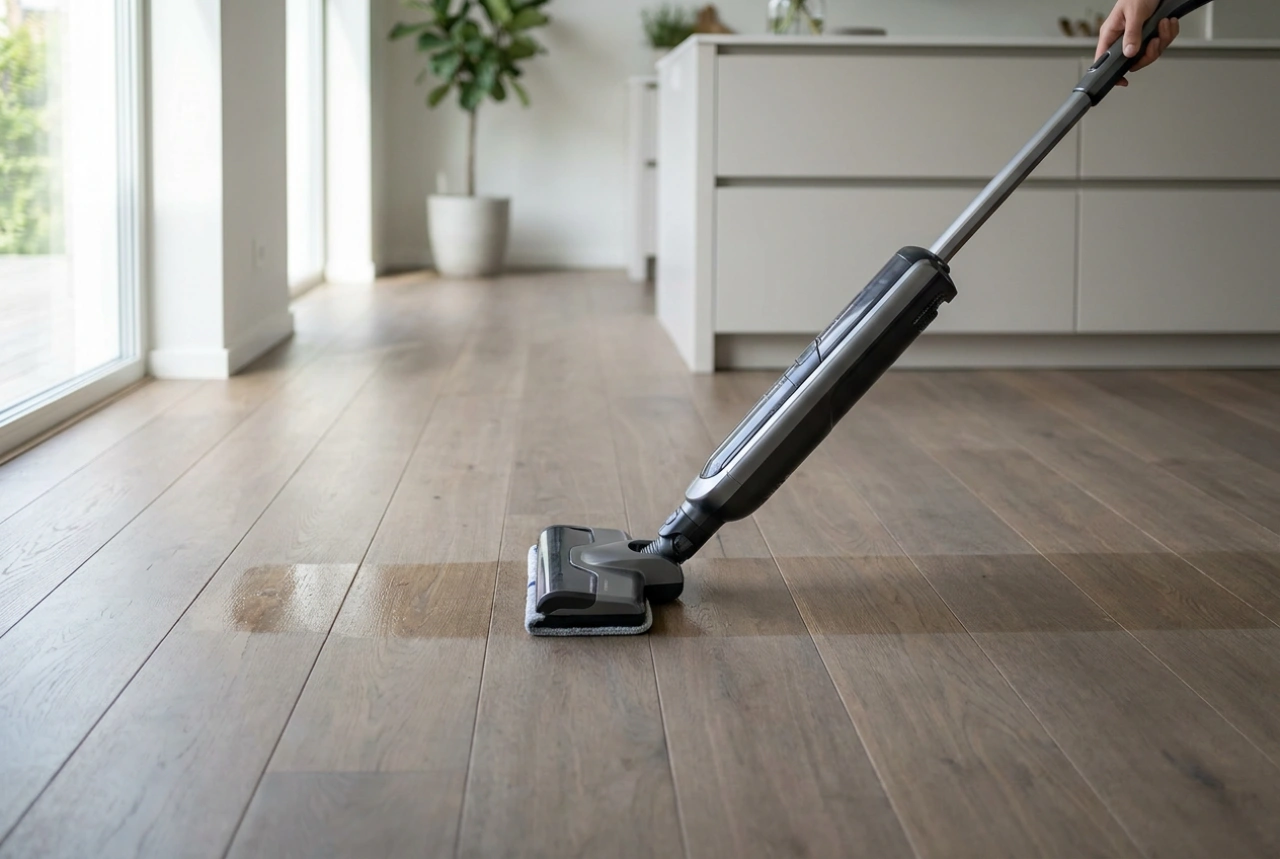
Before turning on the vacuum, use a fine misting spray bottle filled with plain water to lightly spray the air above the dusty area. Do not saturate the floor; excessive moisture will turn gypsum dust into a sticky paste that ruins flooring and clogs filters. A micro-mist binds to the airborne dust particles, increasing their mass and causing them to settle quickly onto the floor where they can be vacuumed safely.
2. Tool Selection and Low-Velocity Settings
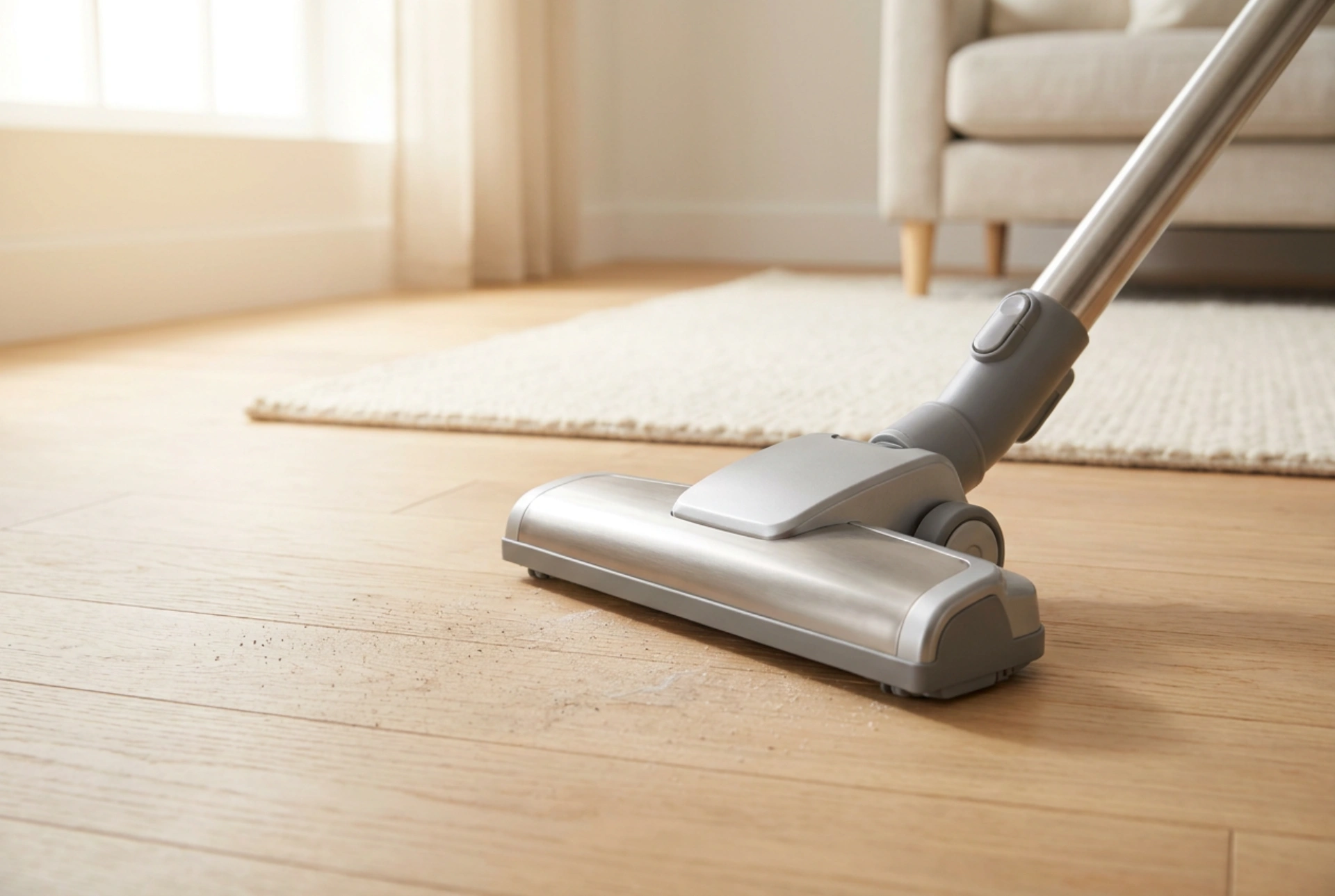
Never use a rotating brush bar attachment, as the spinning bristles will fling the fine dust into the air. Instead, use a hard-floor nozzle fitted with dense natural bristles or a rubber squeegee blade. Adjust your vacuum to a medium-low suction setting. High suction creates powerful air currents around the nozzle head, which can blow nearby dust away before it is drawn into the intake pipe.
3. Deliberate, Overlapping Strokes
Place the nozzle directly onto the dusty surface and move it slowly in straight, overlapping lines. Lift the tool as little as possible to maintain a consistent seal with the floor. Rushing the process creates air turbulence that defeats the purpose of the vacuum's suction field.
Post-Cleanup Vacuum Maintenance
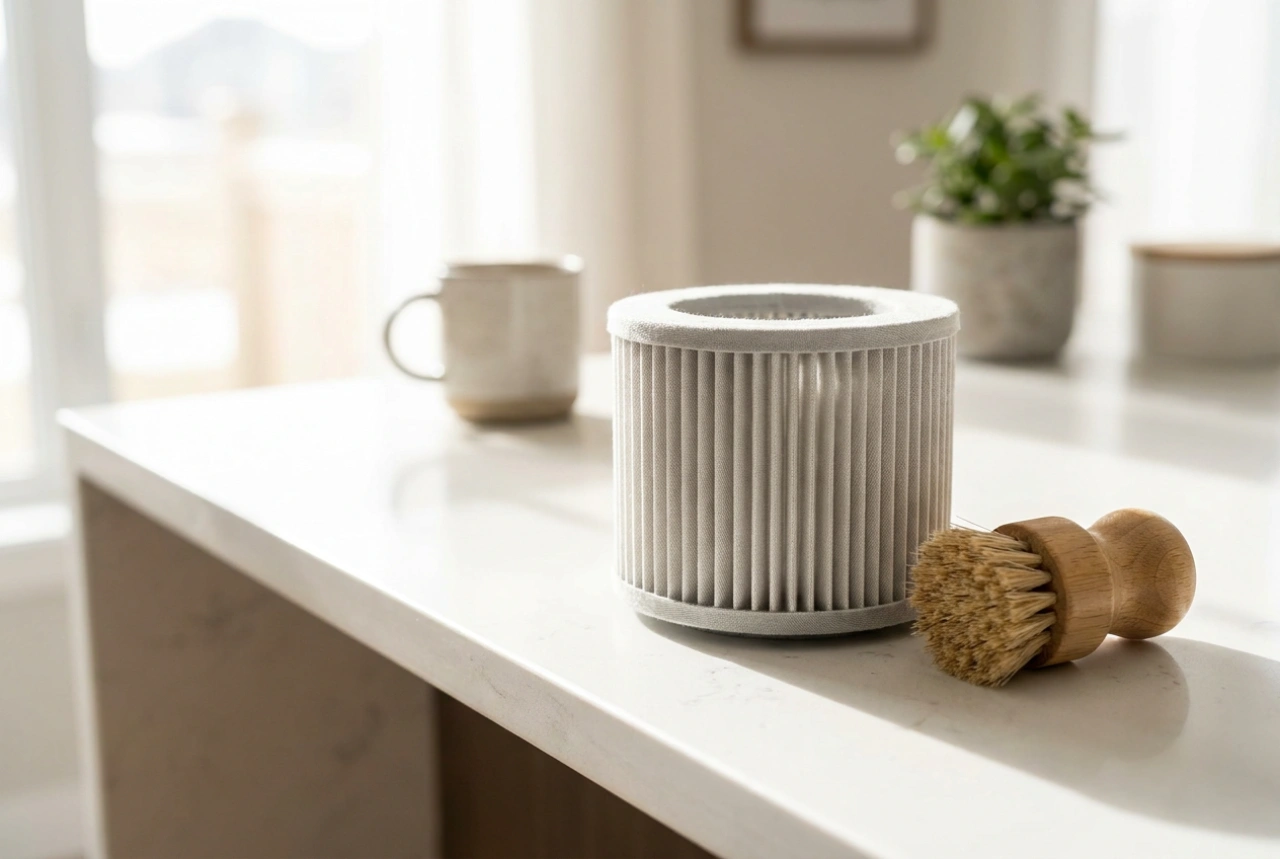
Once the dust is contained within the vacuum, the job is only half done. Opening a dust-filled vacuum indoors can instantly re-contaminate the room. Always take the vacuum cleaner outside, ideally to an open garage or garden, before opening the canister. Wear a particle mask, carefully seal the self-closing mechanism on the fleece bag, and dispose of it immediately. Gently tap the HEPA filter to remove loose dust, or wash it if the manufacturer specifications permit, ensuring it is entirely dry before the next use.