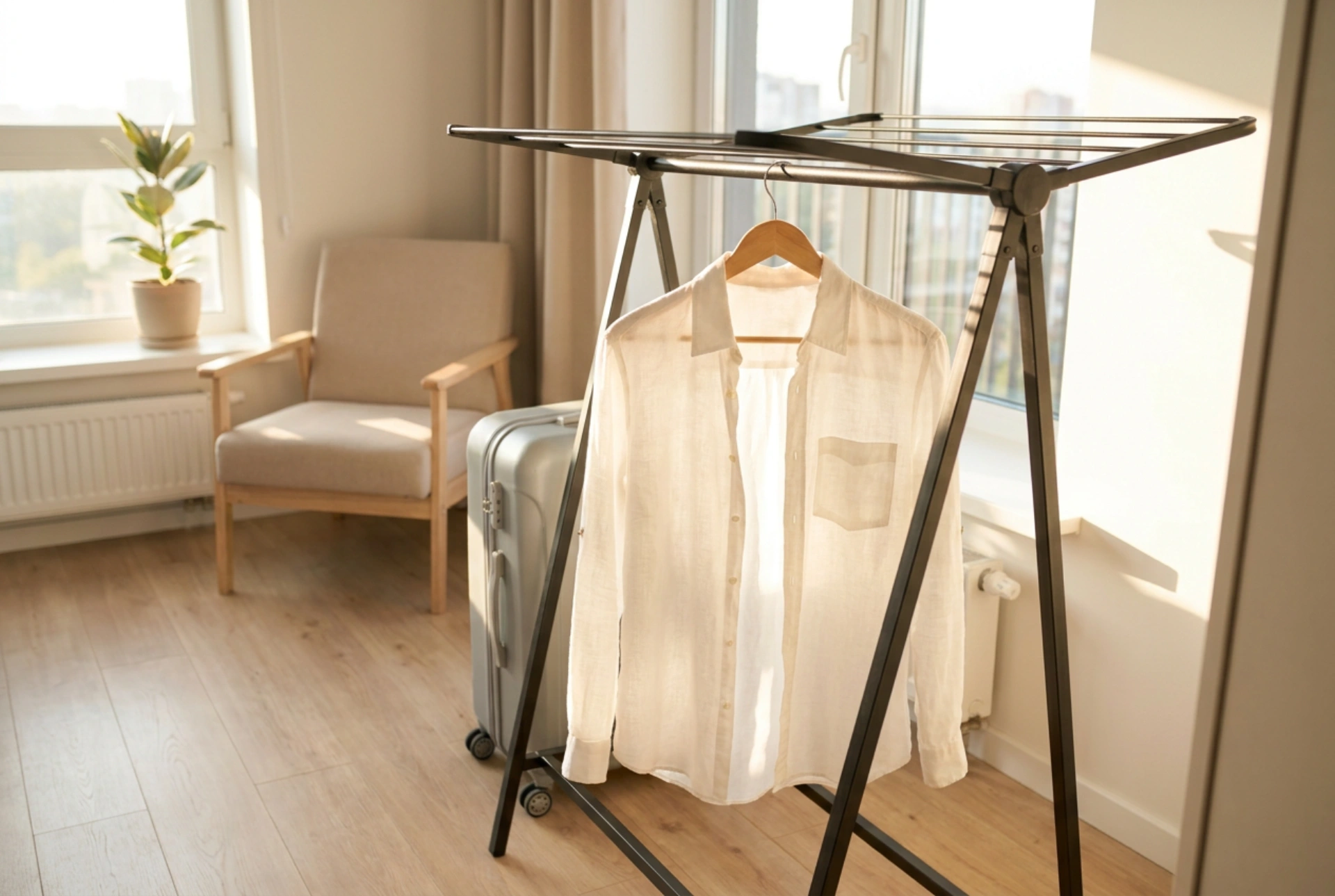


Drying laundry efficiently in a rented apartment or while traveling requires a firm understanding of thermodynamics and air dynamics to prevent musty odours and moisture build-up.
The Science of Evaporation: How Clothes Dry
Drying is not merely about waiting; it is a thermodynamic process where water transitions from a liquid state to a gaseous state. This phase change relies heavily on three variables: temperature, air movement, and relative humidity. When wet fabric is exposed to still air, a boundary layer of highly saturated air forms immediately around the fibres. This microclimate reaches 100% relative humidity, effectively halting further evaporation regardless of the room's temperature. To break this boundary layer, continuous air circulation is required. Introducing mechanical airflow, such as a small personal fan or natural draft from opposing windows, sweeps away this saturated layer, keeping the vapor pressure gradient steep and accelerating evaporation.
Fabric Science: Why Materials Dry Differently
Understanding the material composition of your wardrobe is essential for efficient drying. Hydrophilic fibres, such as cotton, wool, and linen, have molecular structures that readily bond with water molecules. Cotton can hold up to 25% of its weight in moisture before even feeling damp. These natural fibres require significantly more energy and air movement to release bound water. On the other hand, hydrophobic synthetic fibres like polyester, nylon, and elastane absorb very little water within their structure; instead, water is held mechanically in the spaces between the threads. Synthetic garments dry rapidly because the water only needs to evaporate from the surface, making them ideal choices for travel and quick-turnaround laundry scenarios.
Selecting the Right Portable Drying Gear
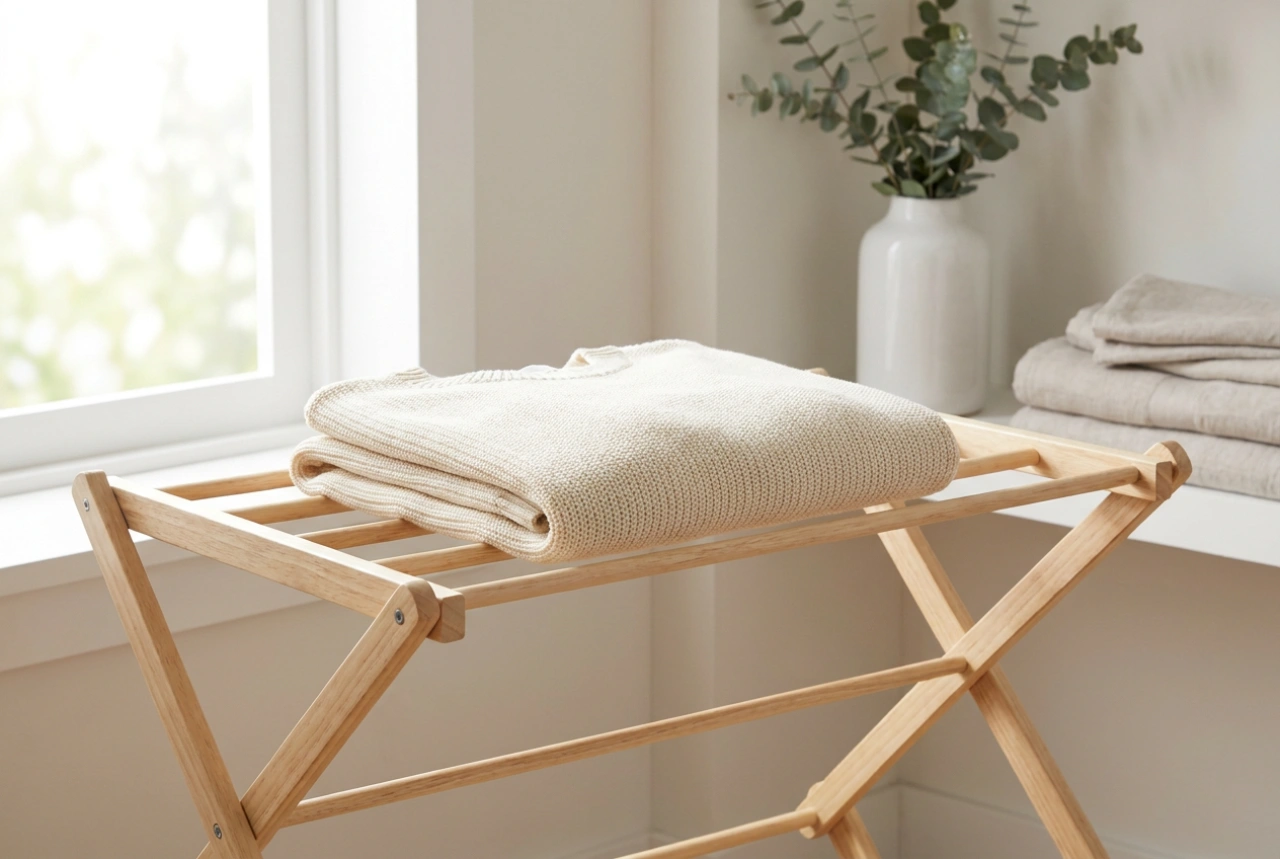
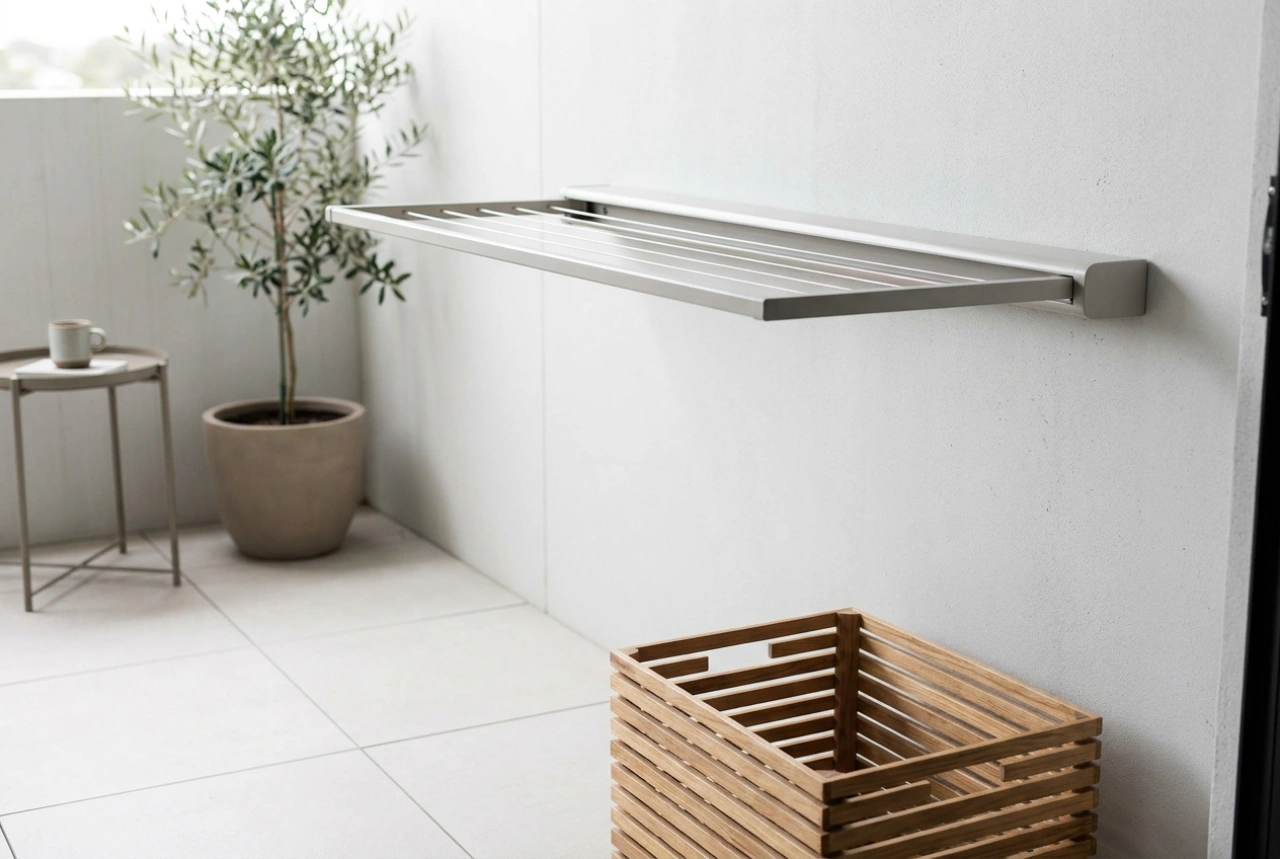
In rental apartments or temporary lodgings, permanent fixtures are rarely an option. High-quality portable drying solutions must balance structural integrity with materials that resist corrosion. When choosing portable racks, anodised aluminium or stainless steel are superior to painted carbon steel, which can chip and rust over time, staining delicate fabrics. For travellers, compact nylon drying bags that channel warm air from a standard hair dryer can be highly effective. These bags work on the principle of confined convection: they direct a concentrated flow of warm air through the damp fibres, drastically reducing drying times for lightweight garments while preventing heat damage through constant venting.
Physical Techniques to Accelerate Drying
Before hanging clothes, maximizing mechanical water extraction is vital. In rentals without high-efficiency washing machines, the towel roll method uses capillary action to extract deep moisture. Lay the wet garment flat on a dry, absorbent bath towel, roll it tightly into a cylinder, and apply firm pressure by pressing down with your hands or stepping on the roll. This transfers up to 50% of the residual water from the garment's fibres into the towel's loops. When hanging the semi-dry clothes, arrange them on hangers with thick shoulders to keep the front and back panels of the garment separated. This internal air gap doubles the exposed surface area, allowing air to circulate inside the item rather than just around it.
Managing Humidity and Airflow in Compact Spaces
Drying clothes indoors releases significant amounts of water vapor into the air, which can lead to condensation, window dampness, and eventually mould growth. To prevent this, always position your drying rack in a high-ventilation zone. If a bathroom with an active extraction fan is available, this is the ideal location; the fan continuously pulls moist air out of the building. If drying in a main room, utilize cross-ventilation by cracking open two windows on opposite sides of the space. This creates a pressure differential that draws fresh, dry air in and expels humid air, ensuring the indoor relative humidity remains below the critical threshold of 60%.