

Deep cleaning tight crevices and narrow corners requires an understanding of how airflow velocity, nozzle geometry, and particle physics interact to dislodge stubborn debris.
The Physics of Suction: Velocity vs. Volume
To maximize a compact vacuum's high motor wattage, you must understand the balance between airflow volume (measured in cubic feet per minute) and sealed suction (static lift). When using a small appliance, the diameter of the attachment dictates the velocity of the air moving through the hose. Narrowing the opening with a crevice tool restricts the volume but exponentially increases the velocity of the air right at the point of contact, utilizing the Venturi effect to pull heavy particles out of deep tracks.
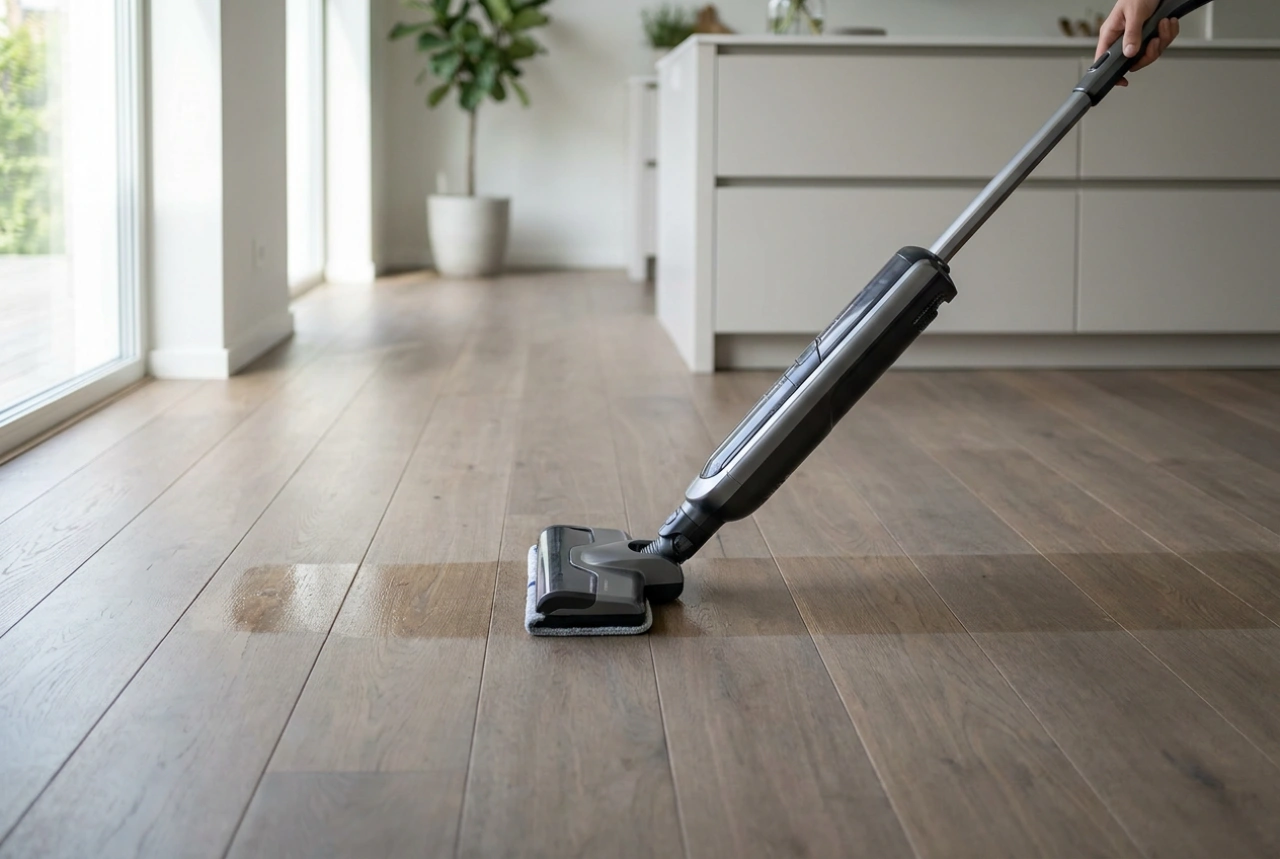
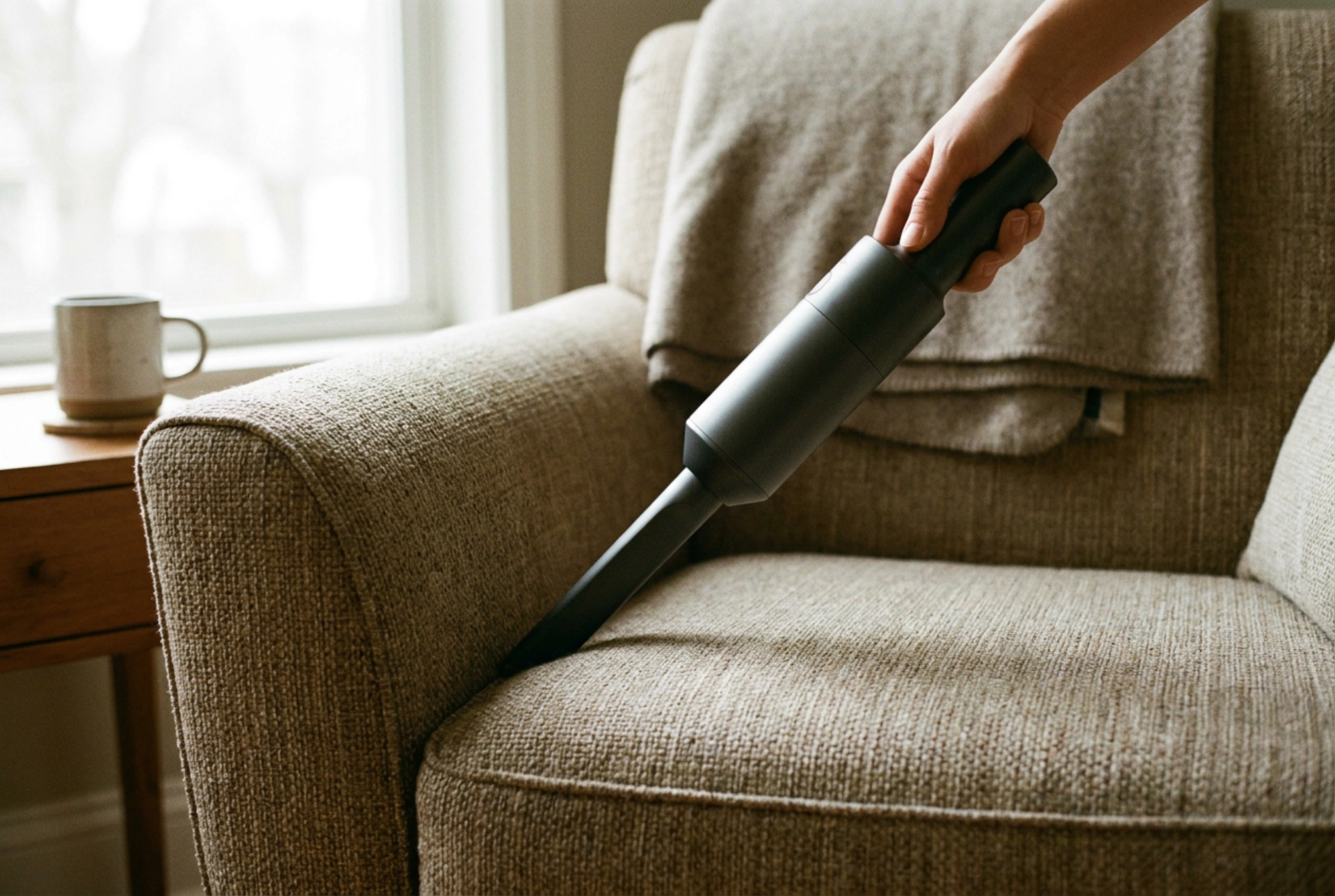
However, restricting airflow for too long can strain a compact motor, leading to rapid heat buildup. To prevent thermal cutoff, avoid sealing the nozzle completely against flat, non-porous surfaces. Angle the crevice tool at approximately 45 degrees rather than placing it flat against a surface; this maintains a high-velocity air stream while ensuring sufficient air passes through the motor housing for cooling.
Optimizing Upholstery and Crevice Cleaning Techniques
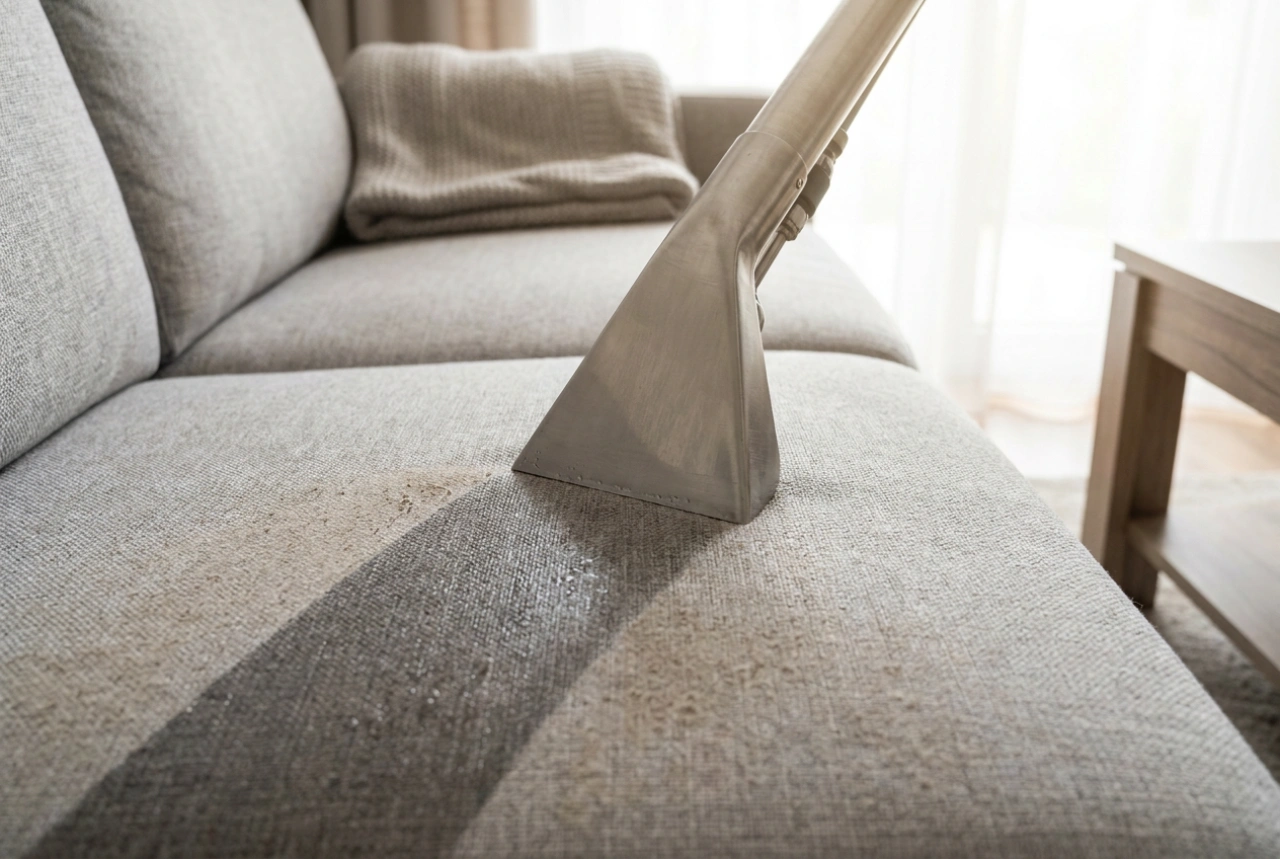
Upholstered furniture, particularly mid-century modern pieces with tight seams, acts as a trap for organic debris, hair, and dust. Simply running a nozzle over the fabric is insufficient because fibers hold particles via mechanical interlocking and static electricity. To deep-clean these zones effectively, follow this structured process:
- Mechanical Agitation: Before turning on the vacuum, use a stiff-bristled, non-synthetic brush to agitate the fabric. This loosens the mechanical bond between the textile fibers and fine dust.
- Seam Separation: Physically spread the seams of the cushions using one hand, exposing the hidden channel. Insert the crevice tool directly into the channel, maintaining a consistent downward angle.
- Parallel Passes: Work the nozzle parallel to the grain of the weave. For velvet or high-pile fabrics, vacuuming against the nap lifts the fibers, allowing suction to reach the base of the weave, while a final pass with the nap flattens and restores the textile's appearance.
Counteracting Static Charges in Hard-to-Reach Zones
Dust particles in tight corners—such as along baseboards, heating vents, and behind heavy appliances—often carry a slight electrostatic charge that bonds them to synthetic surfaces and plastics. This is known as the triboelectric effect. High-suction vacuums alone sometimes fail to pull these bonded particles away.
To break this electrostatic bond, utilize a soft dusting brush with carbon fiber or natural horsehair bristles. Synthetic nylon bristles can generate more static electricity, worsening the adhesion. The friction of natural bristles physically shears the dust particles from the surface, allowing the high-velocity air stream of the compact vacuum to immediately capture them before they drift and resettle.
Thermal Management and Filter Efficiency in Compact Devices
Compact, high-power vacuums pack dense motors into small housings, making them highly sensitive to airflow resistance. A partially clogged filter decreases static pressure dramatically, which reduces cleaning efficiency and increases the risk of thermal shutdown.
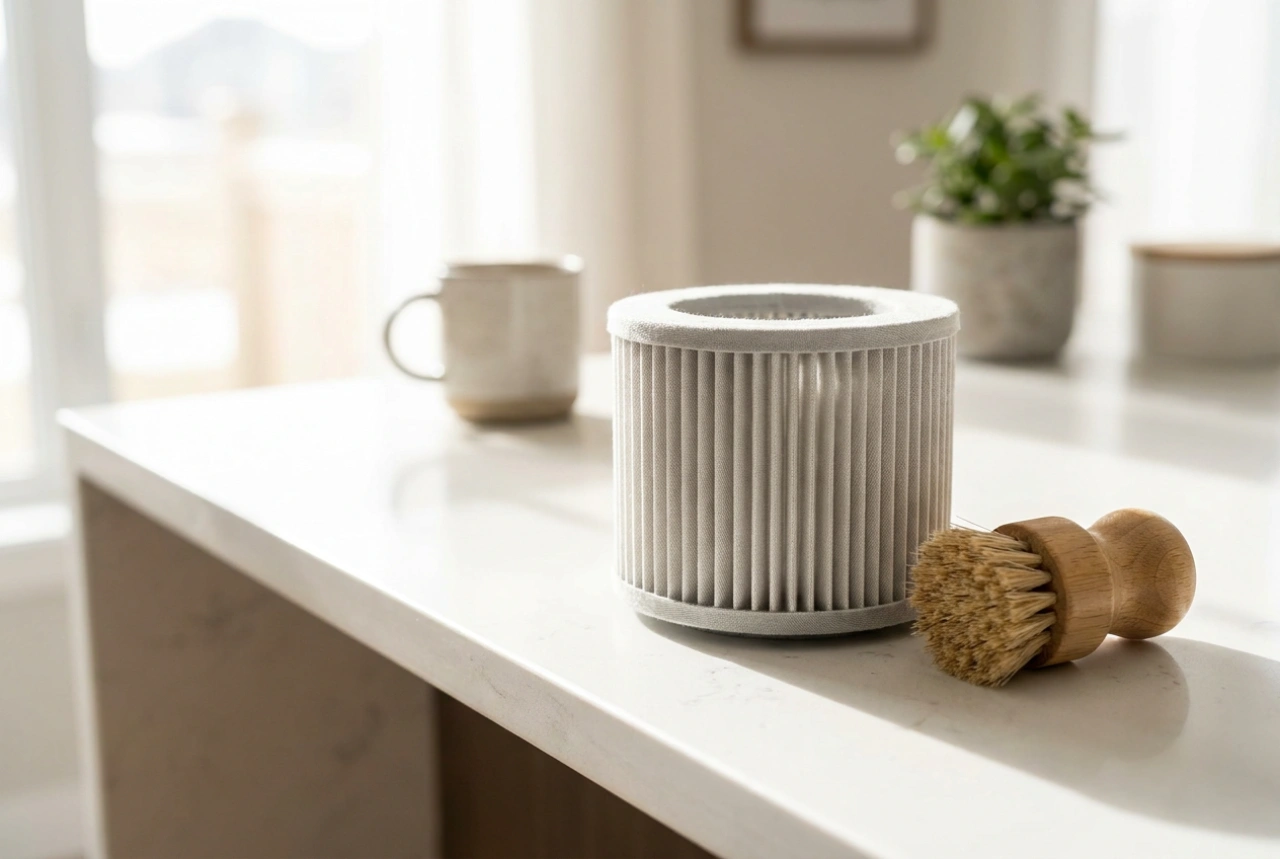
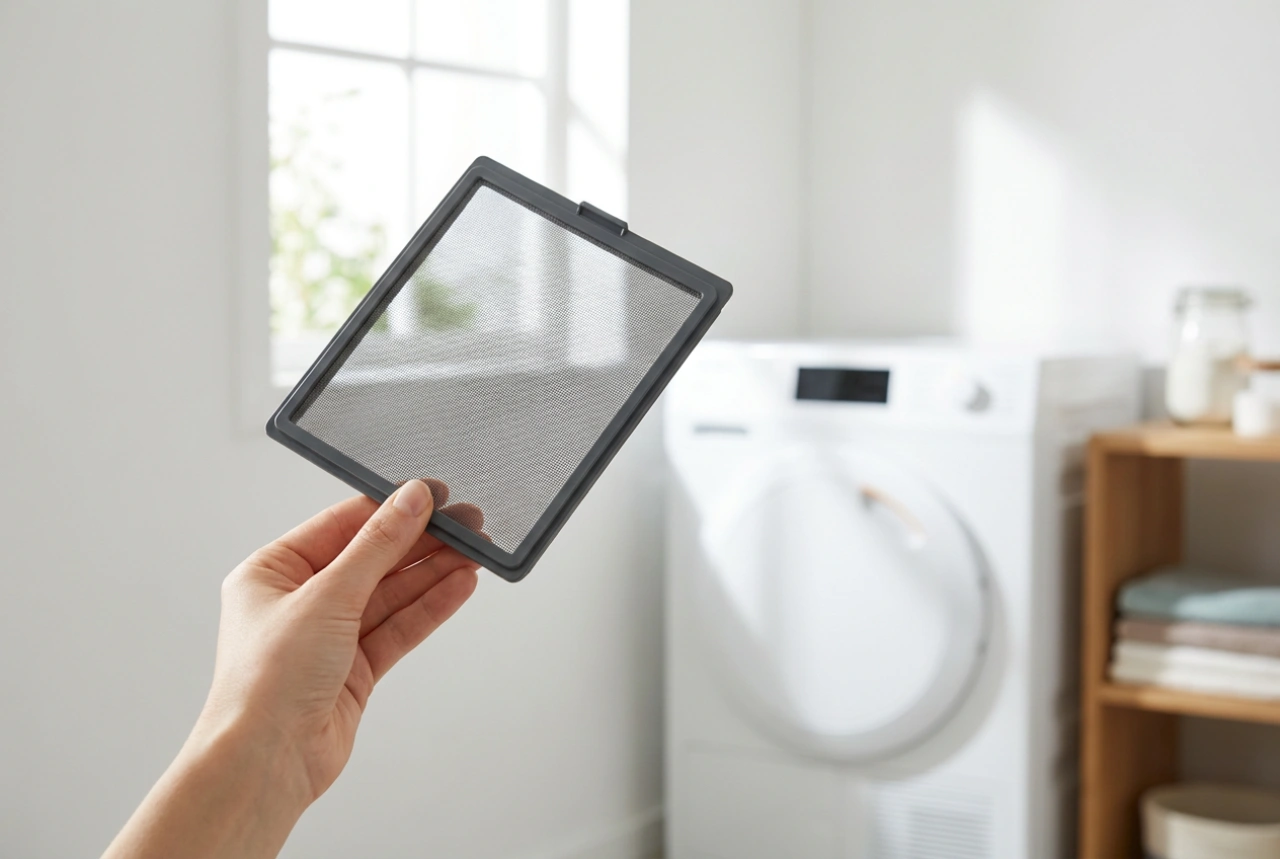
Regular maintenance of the filtration system is essential for maintaining optimal air velocity. If your unit utilizes a washable mesh or HEPA filter, rinse it under cold, running water without using harsh chemical detergents, which can degrade the microfibers. Always allow the filter to dry completely in a well-ventilated area for at least 24 hours. Placing a damp filter back into a high-velocity vacuum restricts airflow instantly and creates an environment where mold spores can rapidly colonize the filter media.
Quick Reference Checklist for High-Velocity Crevice Cleaning
- Always angle: Keep a 45-degree angle on flat surfaces to prevent motor choking.
- Use natural bristles: Prevent static buildup when vacuuming plastics or electronics.
- Pre-agitate seams: Loosen embedded debris manually before applying suction.
- Monitor airflow: Clean filters every three to four uses to maintain maximum static lift.