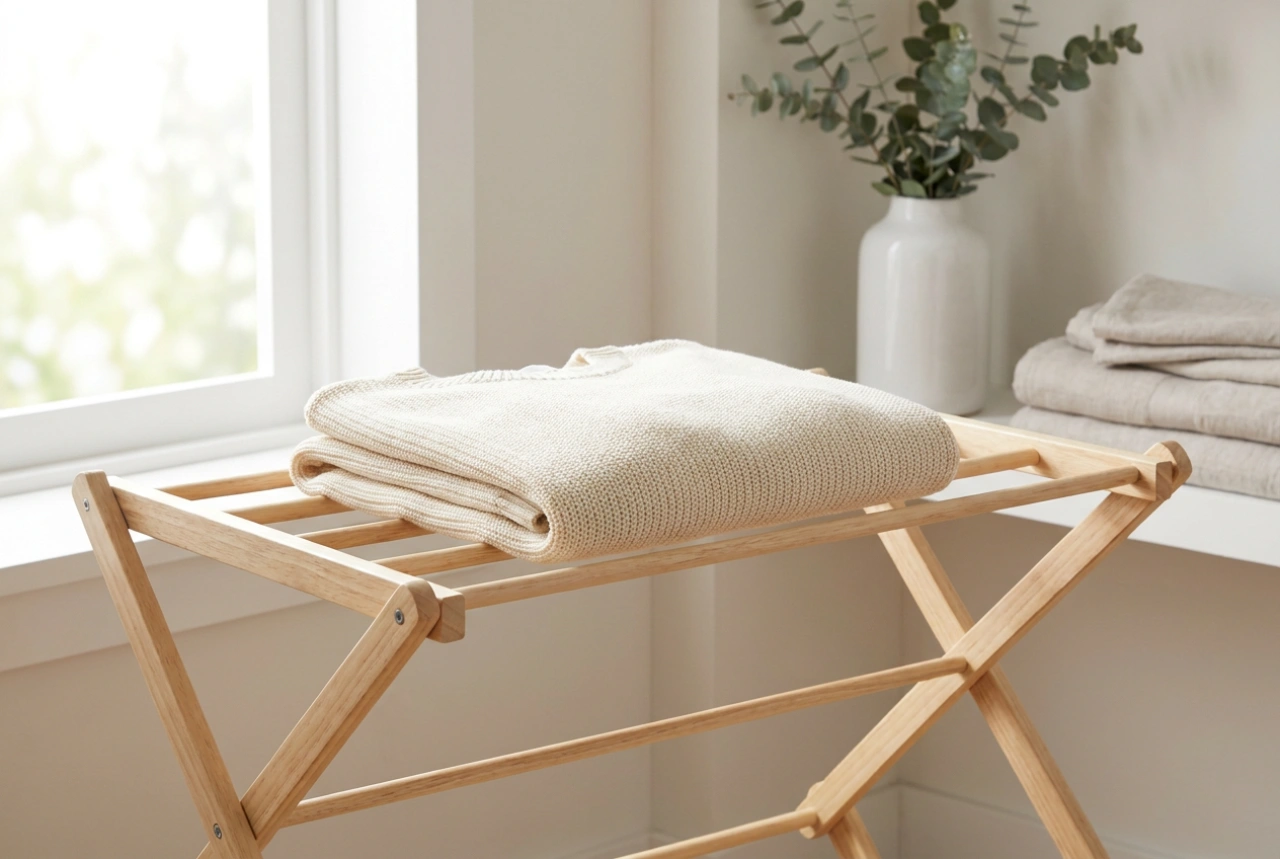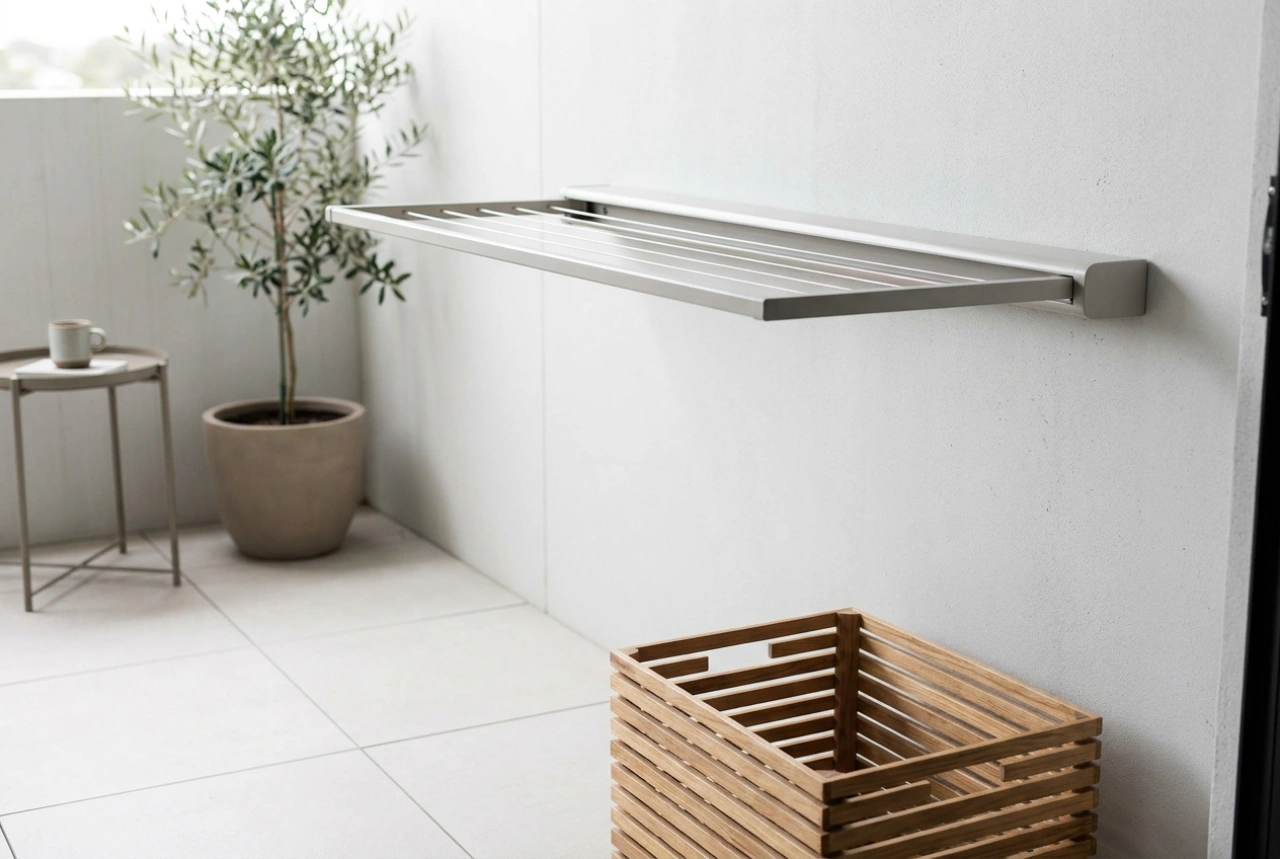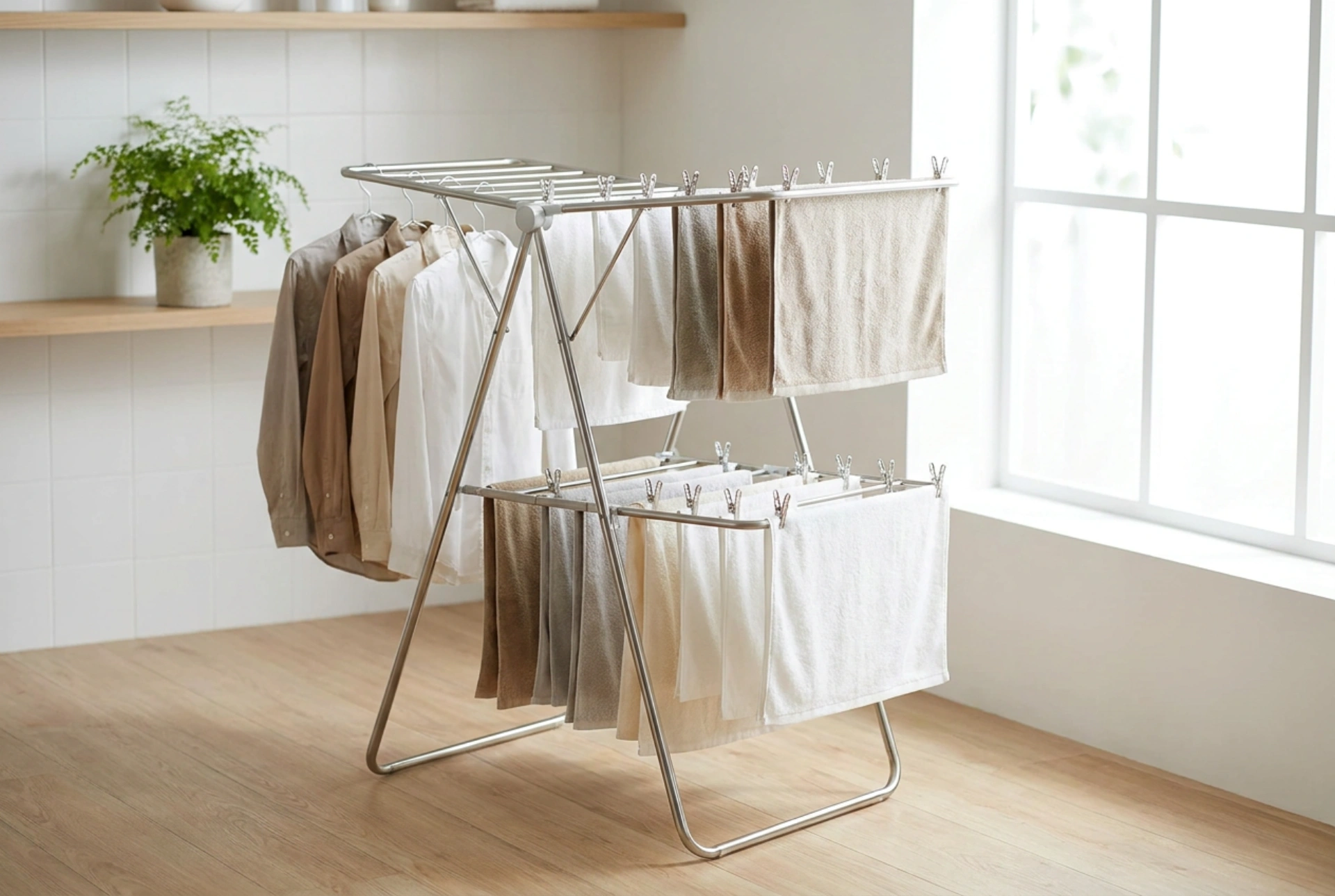


Efficient indoor laundry drying is not just a matter of space-saving; it is a thermodynamic process governed by air circulation, temperature gradients, and relative humidity. By understanding how moisture evaporates and travels through air currents, you can utilise a multi-tiered drying rack to cut drying times in half and prevent the development of musty odours.
The Physics of Evaporative Drying on Tiered Racks
Drying is essentially the phase transition of liquid water within fabric fibres into water vapour in the surrounding air. This process relies on two main factors: heat energy (to break the molecular bonds of water) and air movement (to sweep away the boundary layer of saturated air directly surrounding the wet fabric). On a multi-tiered drying rack, these principles manifest in distinct microclimates at different heights.
As water evaporates from wet garments, it absorbs latent heat from the surrounding environment. This causes the air immediately around the wet fabric to cool down and become denser. Consequently, cold, moisture-laden air naturally sinks toward the floor, while drier, warmer ambient room air rises. Understanding this natural convective cycle is key to structuring your drying rack efficiently.
Strategic Layering: Assigning Fabrics to the Right Tiers
To exploit these thermodynamic gradients, clothes must be distributed across the tiers according to their weight, density, and material composition:
- The Top Tier: This level occupies the warmest zone of the room with the lowest relative humidity. It is the ideal location for lightweight, synthetic materials (such as polyester and nylon sportswear) and delicate items. Because synthetics absorb very little water within their fibres, they dry rapidly here, allowing you to cycle them off the rack quickly to free up space.
- The Middle Tier: Position medium-weight fabrics like cotton t-shirts, linen shirts, and blended textiles here. Ensure there is adequate vertical space between this tier and the one above to prevent humid air from pooling.
- The Bottom Tier: Heavy, dense fabrics such as denim, thick cotton towels, and knitwear should be hung at the bottom. While this area has the highest relative humidity, placing heavy items here prevents their weight from destabilising the rack. Furthermore, gravity pulls the moisture downwards through the fabric fibres (a process aided by capillary action), making the lower hems of trousers and towels the last parts to dry.
The Chimney Effect: Optimising Air Circulation
A common mistake is packing a tiered rack as densely as possible. When wet garments touch or overlap, they create a high-humidity micro-environment where evaporation stalls, leading to prolonged drying times and bacterial growth (which causes sour smells).
To prevent this, employ the "chimney effect" by creating a central channel of empty space within the rack. Stagger your garments so that items on the middle tier do not sit directly beneath those on the top tier. This checkerboard hanging pattern allows rising air currents to pass freely between the layers, carrying moisture upward and out of the rack assembly. Always hang items flat and wide rather than bunched together, maximising the exposed surface area of the fabric.
Controlling the Room's Microclimate
No matter how perfectly you arrange your laundry, evaporation will cease if the ambient air becomes saturated with moisture (reaching 100% relative humidity). To maintain a continuous drying rate, you must actively manage room ventilation.
Position your tiered rack in a room with active cross-ventilation—such as between two open windows or near an extraction fan. This mechanical movement of air continuously replaces the humid boundary layer around your clothes with dry, unsaturated air. If natural ventilation is limited, placing a simple electric fan near the base of the rack can significantly accelerate the convective process, forcing air upward through the tiers and expediting evaporation without the need for high energy consumption.