

Drying laundry indoors efficiently relies on managing relative humidity, airflow, and textile surface area rather than simply relying on ambient heat. Understanding the physics of evaporation allows you to dry clothes rapidly while preventing musty odours and protecting your home from excess structural moisture.
The Science of Evaporation in Indoor Environments
To accelerate drying, you must understand how water transitions from a liquid state within textile fibres to a vapour state in the air. This process is driven by the vapour pressure differential between the wet fabric and the surrounding atmosphere. If the air surrounding the wet garment becomes saturated (reaching 100% relative humidity), evaporation ceases entirely, regardless of room temperature.
A critical barrier to rapid drying is the boundary layer of air. This is a thin, stagnant layer of highly saturated air that wraps around wet fabric. Without physical air movement, this layer remains trapped, severely slowing down the evaporation rate. Introducing even gentle air circulation disrupts this boundary layer, replacing it with drier ambient air and maintaining a high evaporation rate.
Strategic Positioning of the Drying Rack
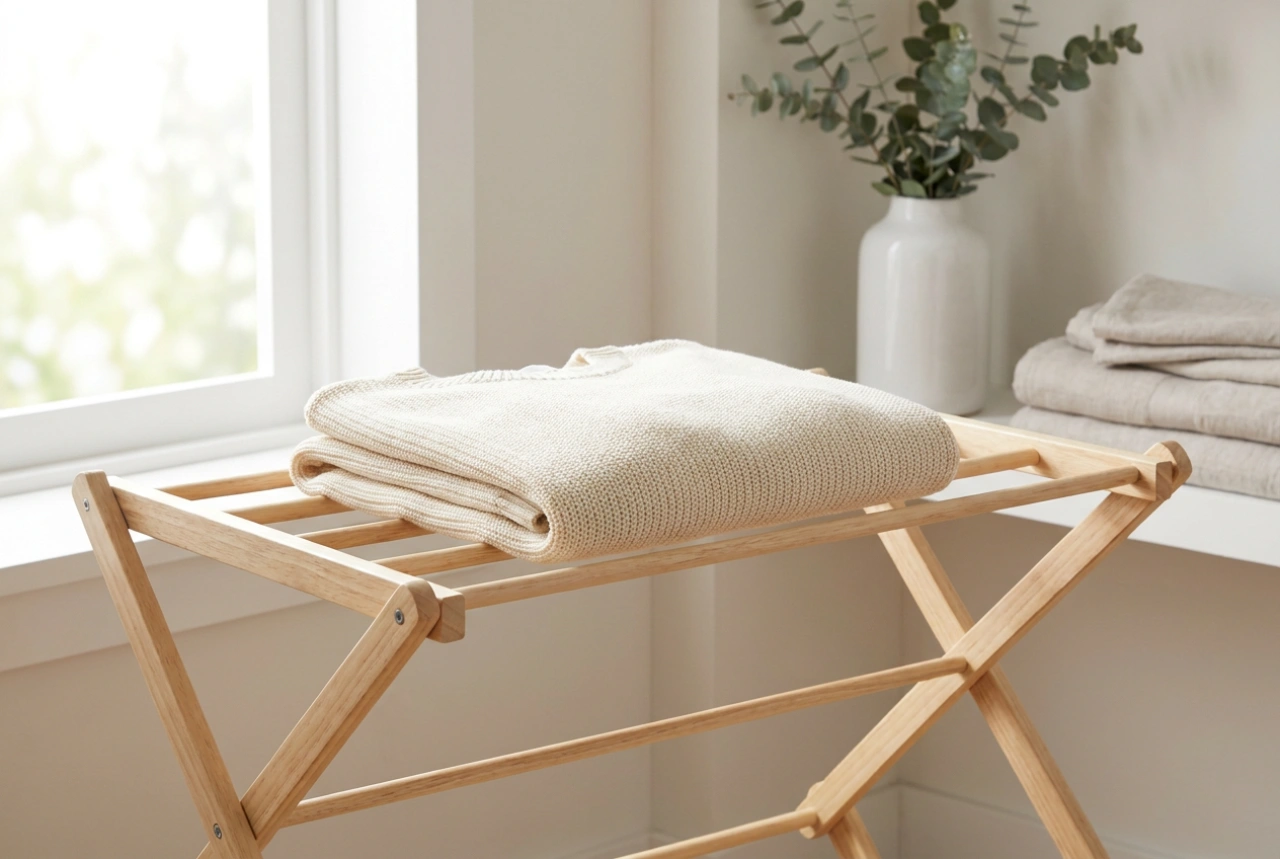
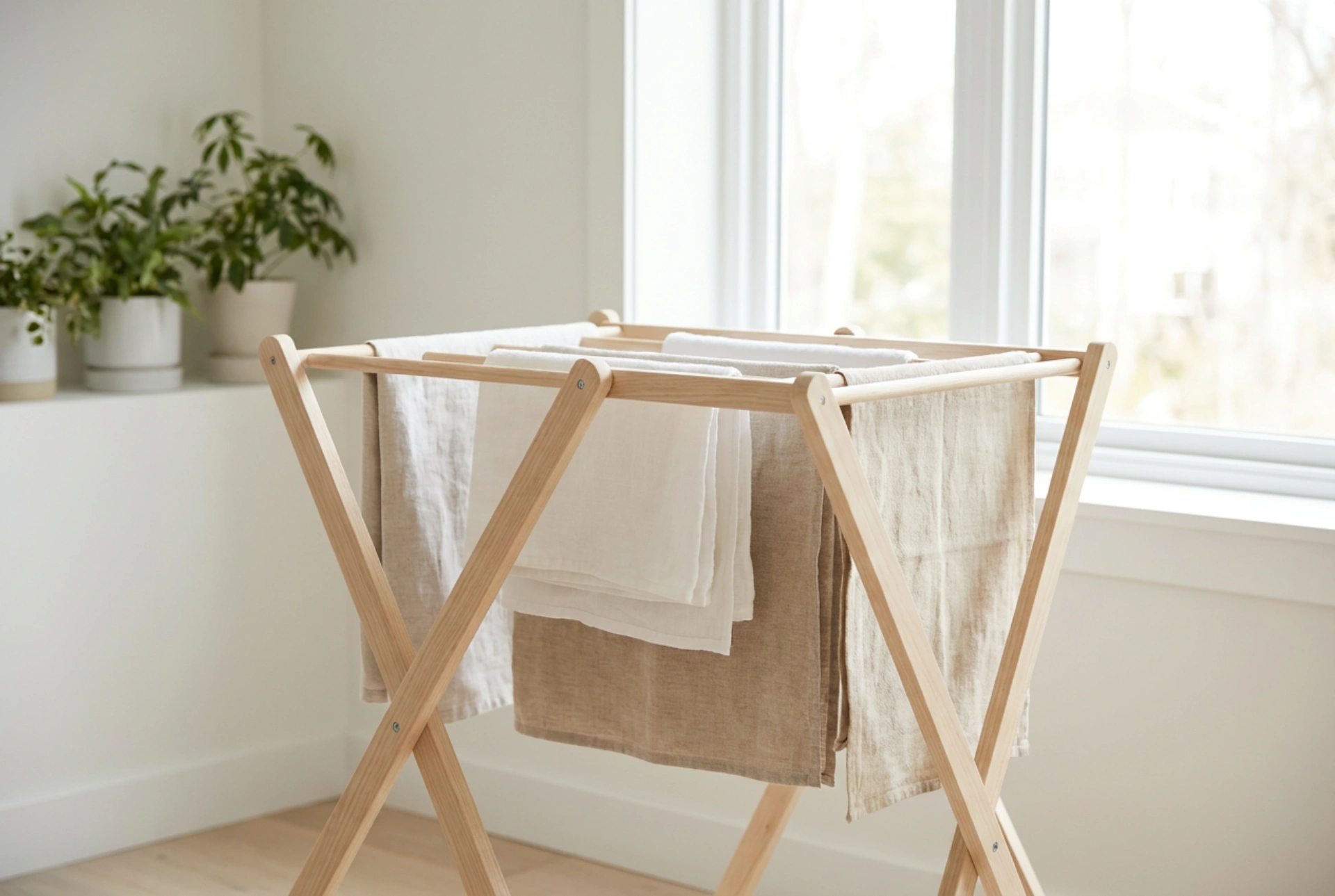
The physical arrangement of garments on an indoor drying rack directly dictates how quickly they dry. Correct spacing prevents local humidity pockets from forming between wet clothes.
- The Chimney Effect: Arrange garments on the rack by length. Hang shorter, lighter items in the centre and longer, heavier items on the outer wings. This creates an open channel beneath the rack, allowing warmer air to rise naturally through the damp fabrics—a phenomenon known as convective airflow.
- Optimised Spacing: Ensure a minimum gap of two to three centimetres between hung items. Double-hanging thick items (like heavy jeans or thick cotton sweaters) over two bars instead of one increases the surface area exposed to the air, cutting drying time in half.
- Location Dynamics: Position the rack in the path of natural air currents, such as a hallway or near an interior doorway, rather than tucked into a stagnant corner. Placing the rack near an active radiator is effective, but never drape wet clothes directly over radiators, as this spikes indoor humidity too rapidly and causes condensation on nearby walls.
Mechanical Dewatering and Fibre Preparation
The fastest way to dry clothes indoors is to remove as much liquid water as possible before hanging them. This relies on centrifugal force during the washing machine's spin cycle.
Adjusting your washing machine’s spin cycle is highly effective. Robust fabrics like cotton towels and denim can withstand spin speeds of 1200 to 1400 RPM (revolutions per minute), which mechanically extracts up to 50% of the water weight. Delicates and synthetics should be spun at lower speeds (800 RPM) to prevent fibre damage, but they inherently hold less water due to their non-porous polymer structures.
For heavy woollens or delicate garments that cannot tolerate high spin cycles, utilise the capillary action technique. Lay the wet garment flat on a dry, highly absorbent cotton towel, roll the towel up tightly with the garment inside, and apply firm, even pressure. The dry cotton fibres draw water out of the damp garment through capillary forces, significantly shortening the subsequent air-drying phase.
Controlling Room Humidity and Air Exchange
A standard load of wet laundry holds approximately two to three litres of water, all of which will evaporate into your indoor air. If this moisture is not managed, it will condense on cold surfaces, leading to mold growth and musty smells.
To combat this, implement short bursts of cross-ventilation. Opening two opposing windows for five to ten minutes creates a pressure differential that rapidly flushes out moisture-laden air without chilling the thermal mass of your walls. Additionally, keep the drying room door closed if you are ventilating, to prevent the humid air from spreading to colder zones of the house where condensation is more likely to occur.