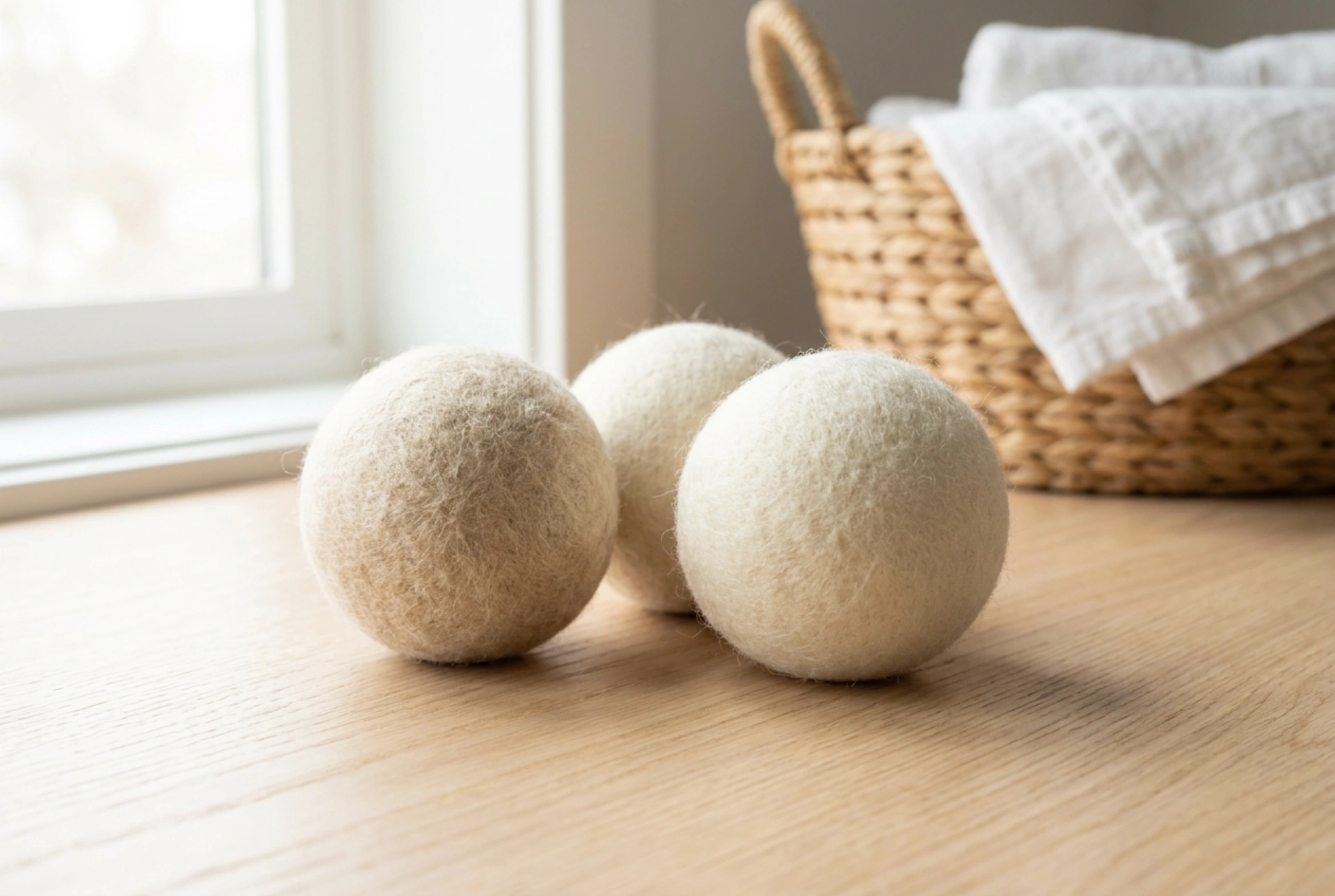


Wool dryer balls offer a highly efficient, mechanical alternative to chemical fabric softeners, significantly reducing drying times while naturally softening laundry. By leveraging the principles of thermodynamics and material science, these felted spheres optimize the environment inside your tumble dryer.
The Mechanical Physics of Separation and Airflow
In a standard drying cycle, wet laundry tends to clump together, forming a dense mass that traps moisture in its core. This structural clumping restricts the flow of heated air, forcing the dryer to run longer and consume more energy to evaporate the trapped water.
When wool dryer balls are added to the drum, they act as mechanical separators. As the drum rotates, the dense, spherical shape of the balls allows them to wedge between layers of fabric. This physical agitation breaks up clumps, lifts the garments, and keeps them tumbling individually. Consequently, the surface area of the laundry exposed to the circulating hot air is vastly increased. This accelerated exposure speeds up the heat transfer and the latent heat of vaporization, reducing overall drying time by up to 25 percent.
Hygroscopic Properties and Moisture Regulation
The choice of wool as a material is rooted in organic chemistry. Wool fibers are composed of keratin, a protein that is naturally hygroscopic. This means wool has the unique ability to absorb and desorb moisture from its surrounding environment without feeling wet to the touch.
During the initial phases of the drying cycle, the wool balls absorb excess moisture from the surrounding air, helping to maintain a balanced humidity gradient within the drum. As the cycle nears completion and the garments dry, the balls gradually release this stored moisture back into the drum. This micro-regulation of humidity prevents the fabrics from over-drying, which can damage fibers, cause shrinkage, and lead to stiff, brittle textiles.
How Wool Softens Fabrics Without Chemicals
Traditional liquid fabric softeners and dryer sheets work by depositing a thin, hydrophobic layer of synthetic lipids or silicone polymers onto the fabric fibers. While this smooths the surface, it also reduces the breathability and absorbency of materials, particularly towels and athletic wear.
Wool dryer balls soften textiles through gentle mechanical friction. As the wool spheres tumble amongst the laundry, they repeatedly make soft contact with the fabric surfaces. This action gently coaxes open the weave and raises the nap—the tiny, raised fibers on the surface of woven or knitted fabrics. The result is a natural, lofted softness that preserves the inherent absorbency of cotton towels and linen sheets without leaving any chemical residue behind.
Mitigating Static Charge in the Dryer
Static electricity in laundry is caused by triboelectric charging—the transfer of electrons that occurs when different materials repeatedly rub against each other in a dry environment. This is especially prevalent in synthetic fabrics like polyester and nylon.
Wool balls counteract this phenomenon in two ways. First, by physically keeping garments separated, they reduce the total surface-to-surface contact friction between different fabric types. Second, because wool retains a minute amount of moisture even at the end of a cycle, it helps maintain a threshold level of humidity inside the drum. Since moist air is a better conductor of electricity than dry air, any built-up static charges are safely dissipated rather than building up and causing clothes to cling to one another.
When and How to Deploy Wool Dryer Balls
To maximize the efficacy of wool dryer balls, follow these practical guidelines based on load size and fabric type:
- Load Size: For small to medium loads, three to four balls are sufficient. For large, heavy loads of bedding or towels, use five to six balls to ensure adequate separation.
- Avoid Overloading: The mechanical action of the balls relies entirely on gravity and movement. If the drum is packed too tightly, the balls will remain trapped in one spot, rendering them ineffective.
- Down-Filled Items: Wool balls are exceptionally effective for drying down jackets, sleeping bags, and pillows. The physical impact breaks up wet clumps of down feathers, restoring their loft and insulating properties.