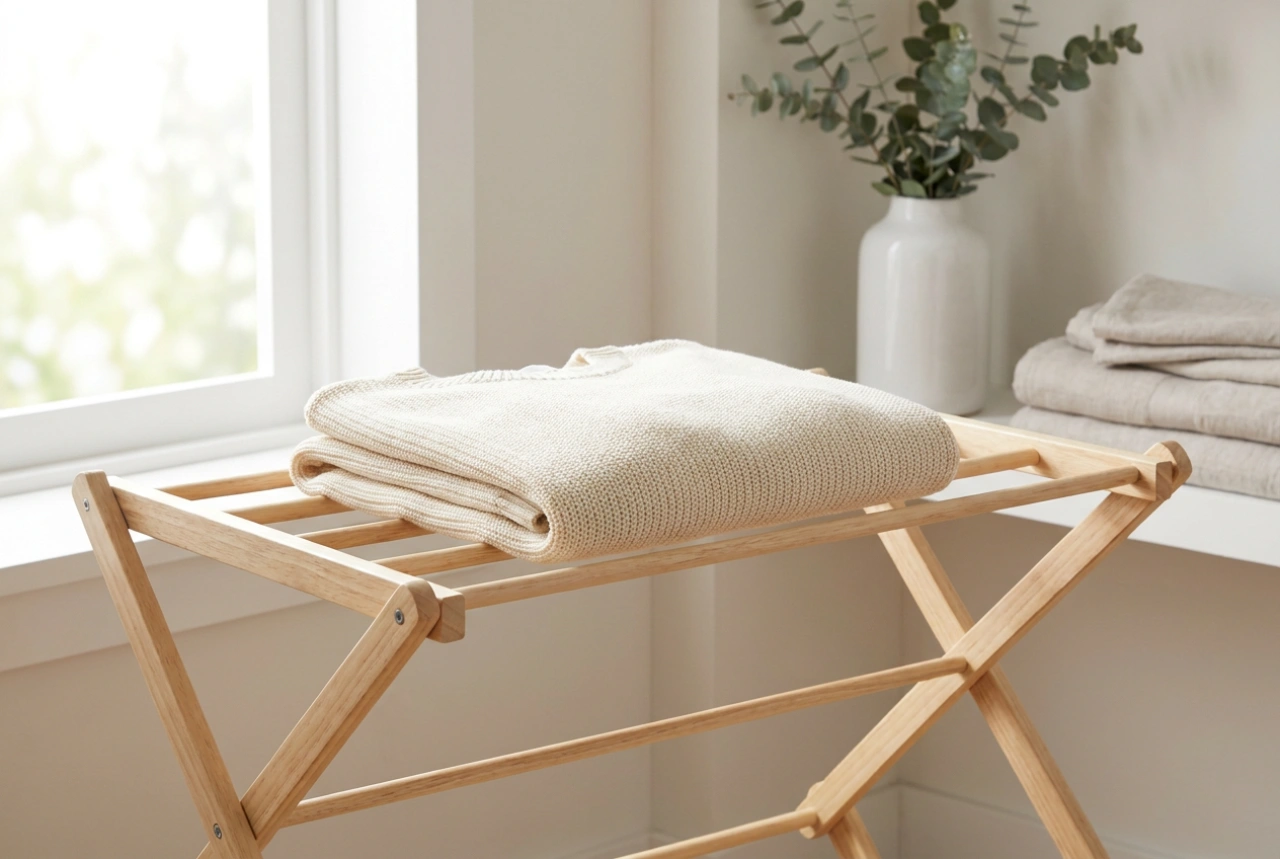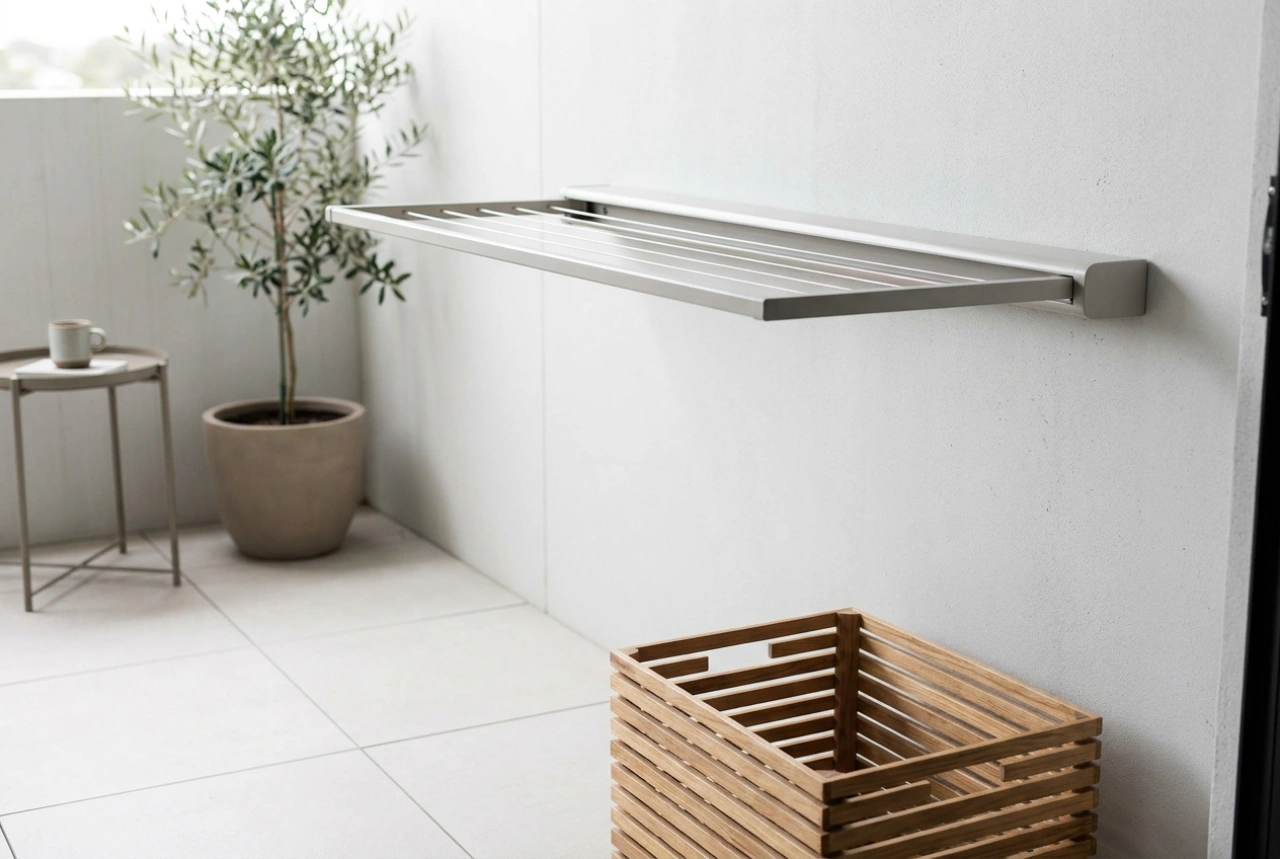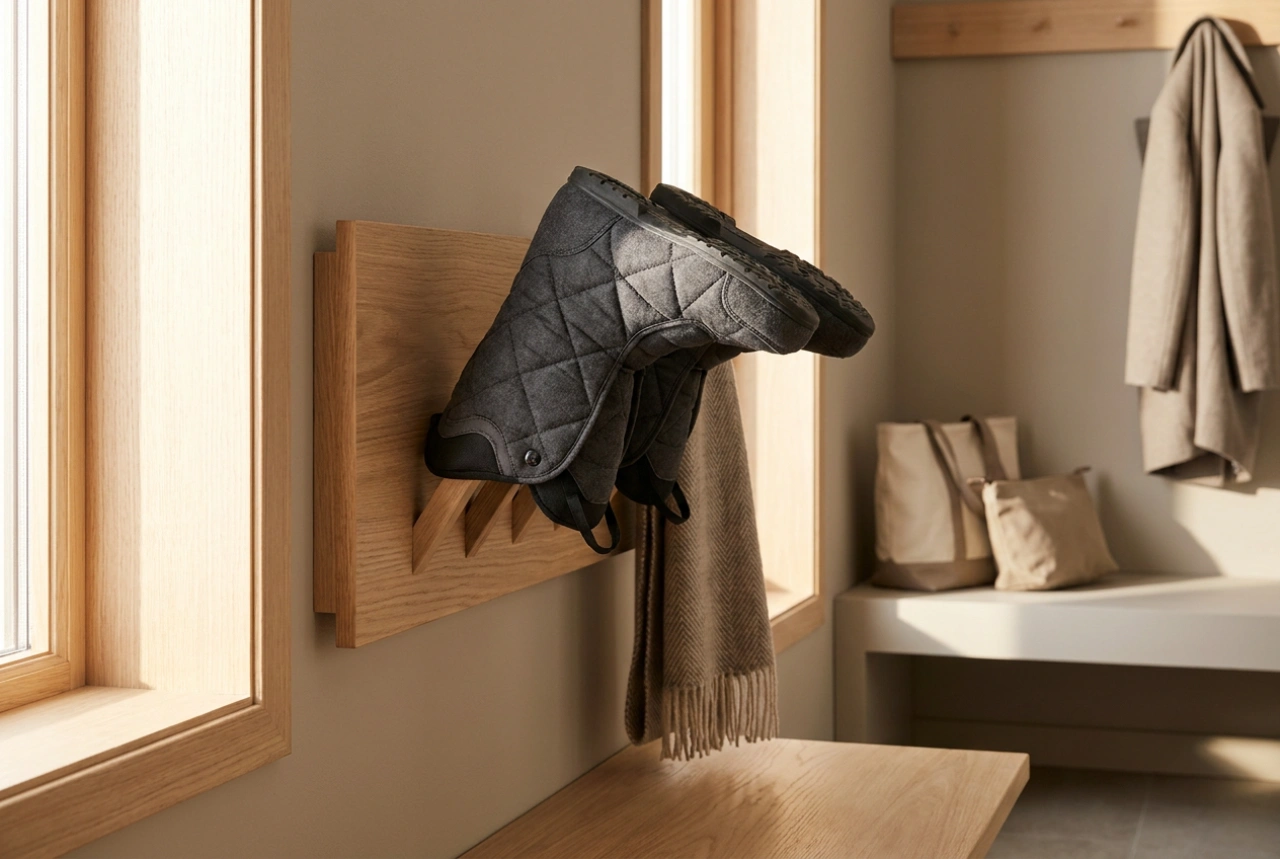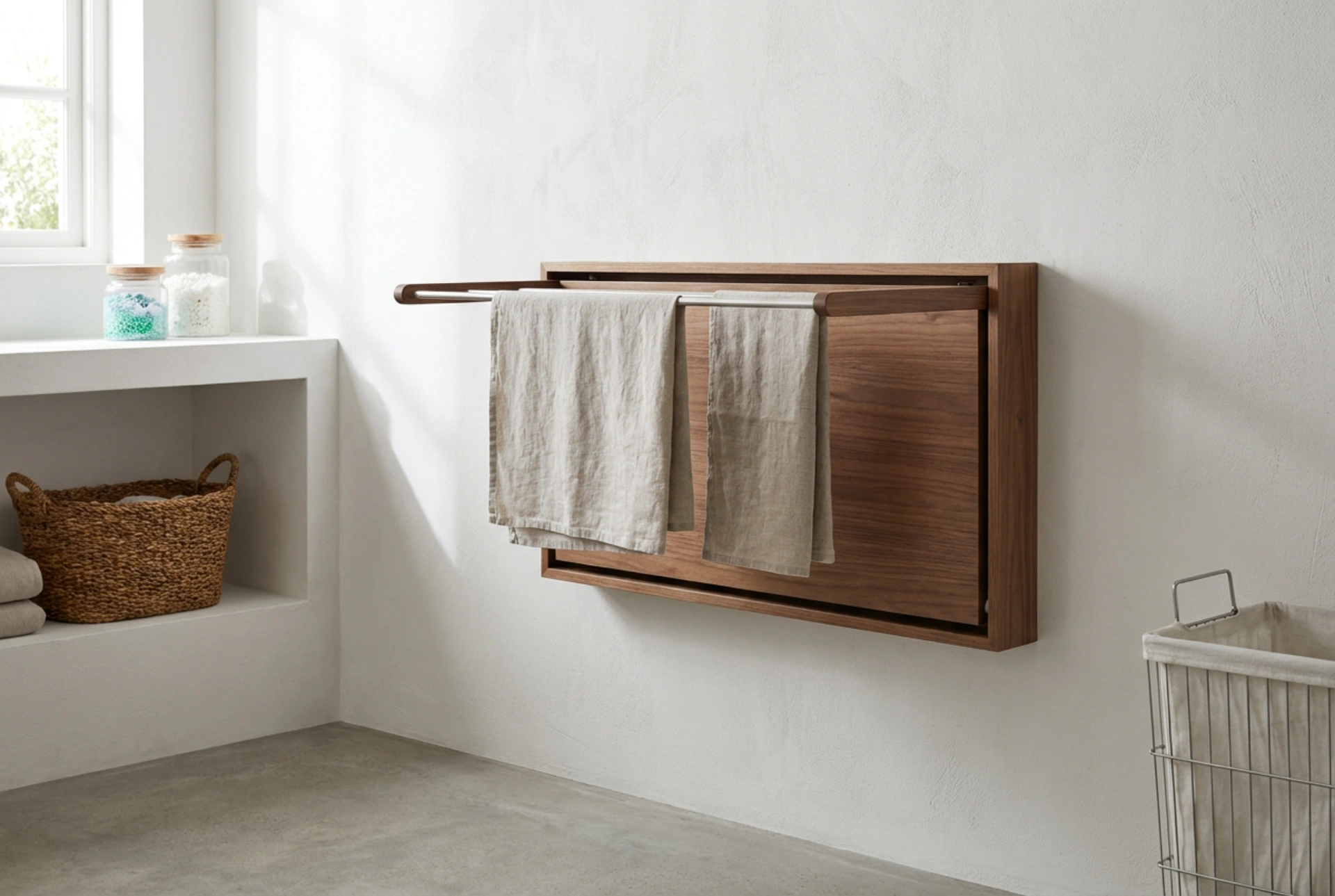


Wall-mounted drying racks offer an elegant, space-saving alternative to traditional freestanding airers, utilising vertical wall space and natural thermal currents to accelerate drying times. By shifting laundry off the floor, you not only reclaim valuable living space but also position garments to benefit from the optimal temperature zones within a room.
The Thermodynamics of Elevated Drying
Understanding how water transitions from liquid to vapour is key to optimising indoor drying. Evaporation is an endothermic process, requiring energy in the form of heat to break the intermolecular hydrogen bonds of water molecules trapped within textile fibres. Because warm air is less dense than cold air, it rises toward the ceiling through natural convection. Placing a drying rack higher on a wall positions your wet garments in these warmer air strata, accelerating the evaporation rate.
Additionally, evaporation relies heavily on air movement. As water evaporates from wet fabric, it creates a highly humid boundary layer of air immediately surrounding the garment. If this air remains stagnant, evaporation slows to a crawl. Elevating the drying rack away from the floor level allows natural ambient drafts—caused by temperature differentials or ventilation—to constantly sweep away this humid boundary layer, maintaining a high vapour pressure gradient between the wet fabric and the surrounding atmosphere.
Structural Considerations and Material Science
Transitioning to a wall-mounted system requires careful consideration of mechanical load and material chemistry. Wet laundry holds significant weight; a standard wash load can double or triple in mass due to water retention. This places substantial shear and tension stress on wall anchors.
- Wall Substrates: Solid masonry, brick, or concrete walls offer the highest load-bearing capacity, requiring standard wall plugs. For plasterboard (drywall) partitions, fasteners must be anchored directly into timber studs, or heavy-duty hollow-wall anchors (such as toggle bolts) must be used to distribute the pulling forces across a wider surface area.
- Frame Durability: The high relative humidity in the immediate vicinity of drying clothes promotes rapid oxidation of metals. Opt for powder-coated aluminium, marine-grade stainless steel, or sealed hardwoods. These materials resist rust and chemical degradation from residual laundry detergents or fabric softeners.
Optimal Placement and Airflow Dynamics
To maximise efficiency, the drying rack should be positioned to work with your home's microclimate. Installing a rack above or adjacent to a radiator is highly effective, as the rising warm air flows directly through the wet textiles. However, direct contact with heat sources should be avoided to prevent thermal damage to delicate fibres.
Cross-ventilation zones—such as hallways or areas between windows and interior doors—are ideal. Avoid installing racks in stagnant, unventilated corners or below-grade spaces like basements without mechanical dehumidification, as this can lead to localised condensation, lingering musty odours, and eventual mould growth.
Sartorial Engineering: How to Hang for Speed
The physical arrangement of garments on the rack determines the efficiency of the drying cycle. To prevent air stagnation:
- Staggered Spacing: Hang heavier, denser fabrics like denim, heavy cotton, or wool on the outer rods where air circulation is greatest. Lighter synthetics, which release moisture quickly, can be placed on inner rods.
- Gravity and Tension: Hang shirts and trousers vertically using rust-proof hangers attached to the frame. This utilises gravity to pull moisture downward to the hems, while keeping the main body of the garment open to airflow.
- Air Channels: Maintain at least two to three inches of space between garments. When clothes touch, they create pockets of trapped, saturated air that halt the evaporation process.
Managing the Hydrological Load of Indoor Drying
An average wash load can release up to two litres of water vapour into the indoor environment. Without proper management, this moisture will condense on cold surfaces like windows and external walls. To maintain a healthy indoor climate, always pair your wall-mounted drying setup with controlled ventilation. Opening a window slightly to create a pressure differential, or operating a low-energy mechanical extraction fan during the peak drying hours, ensures that moist air is expelled before it can cause structural damp issues.