

Using a cordless spot cleaner to remove localized spills requires more than simply spraying water and vacuuming it up; it relies on the precise balance of chemical dwell time, physical agitation, and vacuum extraction. Understanding how moisture interacts with fabric fibers allows you to lift deep-seated soils without damaging delicate weaves or leaving permanent watermarks.
The Science of Extraction: Capillary Action and Vacuum Pressure
At the core of spot cleaning is the replacement of bound dirt with a liquid solvent, followed by the immediate extraction of that solvent. When a liquid spill lands on a fabric, it binds to the fibers through chemical adhesion or becomes trapped mechanically within the knit. A cordless spot cleaner works by injecting water mixed with surfactants into the fabric under low pressure. This lowers the surface tension of the water, allowing it to penetrate the fibers and encapsulate the dirt particles.
The vacuum component then uses high-velocity airflow to overcome the capillary forces holding the dirty liquid within the weave. Because cordless units have smaller motors than mains-powered extractors, maximizing suction is critical. You must maintain a tight seal between the nozzle and the fabric surface, ensuring the air path is entirely sealed so the atmospheric pressure difference can force the moisture out of the backing material and into the recovery tank.
The Chemistry of Pre-Treatment and Dwell Time
Applying mechanical suction too quickly is a common error that reduces cleaning efficiency. For the surfactant solution to break down organic proteins, fats, or synthetic pigments, it requires "dwell time"—typically between two and five minutes. During this period, the hydrophobic ends of the surfactant molecules attach to the grease and dirt, while the hydrophilic ends remain bonded to the water, lifting the soil away from the textile fibers.
- Protein-based stains (blood, dairy, mud): Use cool water and enzymatic pre-treatments. Warm water can coagulate the proteins, setting them permanently into the fiber matrix.
- Oil and grease stains: Use lukewarm water (around 40°C) combined with a mild surfactant to emulsify the lipids, making them soluble in water.
- Tannin and dye stains (coffee, tea, wine): Apply a mild acidic agent or oxygen-based bleach to chemically alter the chromophores (the color-producing parts of the molecules) without degrading the polymer chains of synthetic fibers like polyester or nylon.
Optimal Technique: The Outside-In Rule and Suction Angles
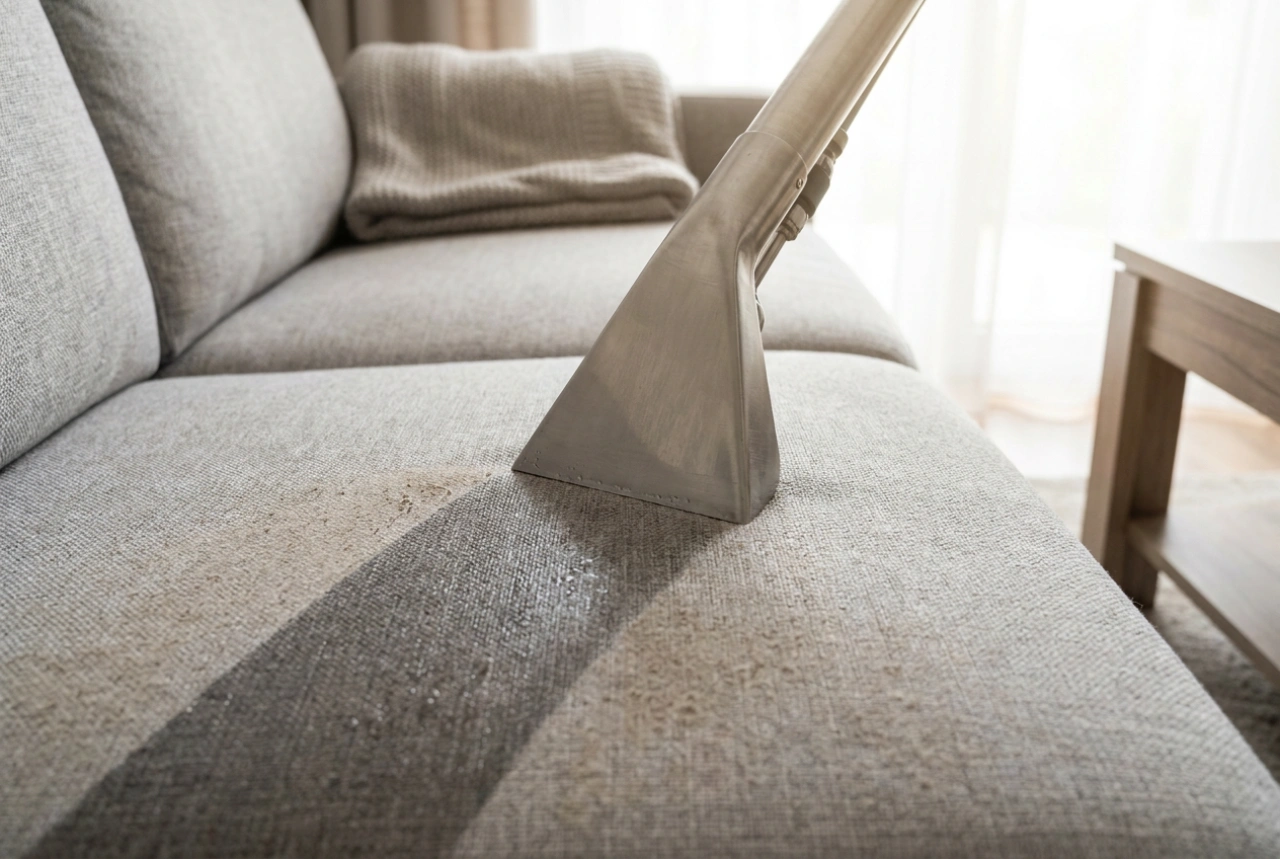
How you manipulate the cleaning nozzle directly determines whether a stain is lifted or spread further across the fabric. Always work from the perimeter of the spot toward its center. This prevents the liquid from migrating outward via capillary action into dry, clean areas of the upholstery, which creates unsightly ring marks upon drying.
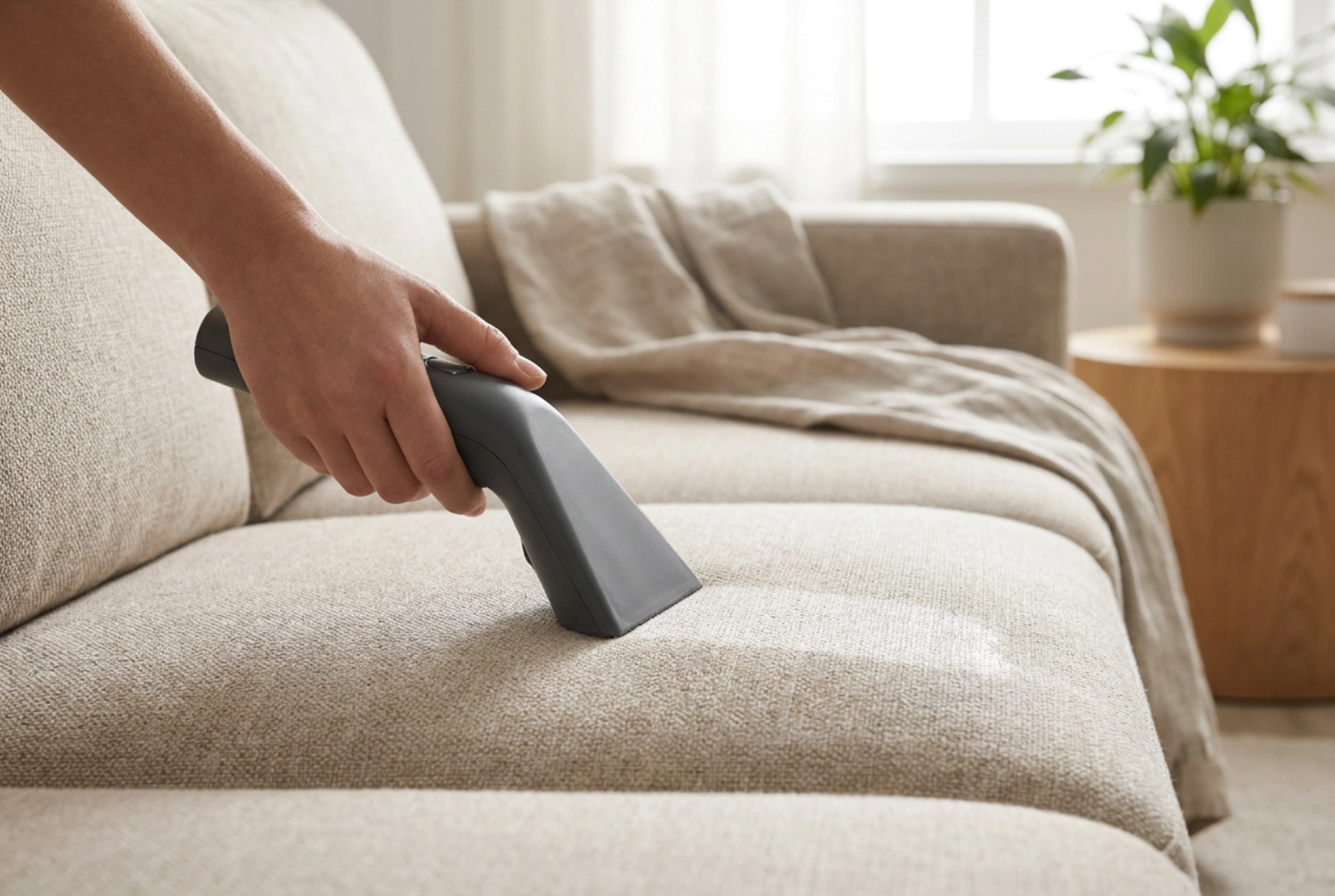
Hold the extraction nozzle at a 45-degree angle relative to the surface. Apply moderate downward pressure, ensuring the clear plastic intake is flat against the textile. Pull the tool toward you in slow, steady strokes—moving at a rate of approximately five centimeters per second. Fast, erratic movements break the vacuum seal, leaving excessive moisture behind and failing to lift the suspended soils.
Preventing Wicking and Ensuring Rapid Drying
The final phase of spot cleaning is the "dry pass." After extracting the soapy residue, perform several passes over the damp area without pulling the spray trigger. This utilizes the maximum suction of your cordless device to pull out residual moisture trapped in the deeper foam padding or fabric backing.
If too much moisture remains, capillary action will cause soil from the deeper layers to migrate upward to the surface as the top fibers dry—a phenomenon known as "wicking." To prevent this, press a clean, dry white microfiber cloth over the area after extraction to check for residual moisture, and ensure adequate ventilation to accelerate evaporation.