

Efficient laundry drying in a small apartment relies on understanding evaporation physics and maximizing vertical airflow rather than relying on sprawling horizontal setups. By selecting a slim, strategically designed drying rack and applying thermodynamic principles, you can dry clothes rapidly without risking dampness or musty odours.
The Thermodynamics of Evaporation in Confined Spaces
To dry clothes, liquid water in the fabric must transition into water vapour. This process is governed by temperature, surface area exposure, and relative humidity. In a small room, the air quickly becomes saturated with moisture, raising the relative humidity. Once the air surrounding the wet fibres reaches 100% saturation, evaporation stops.
To keep the process moving, you must disrupt this boundary layer of saturated air. Positioning your slim drying rack in a path of natural convection—such as between an open window and an interior door—uses the pressure differential to continuously sweep away humid air, allowing drier air to take its place and maintain a high evaporation rate.
Structural Physics: Why Slim and Vertical Designs Work
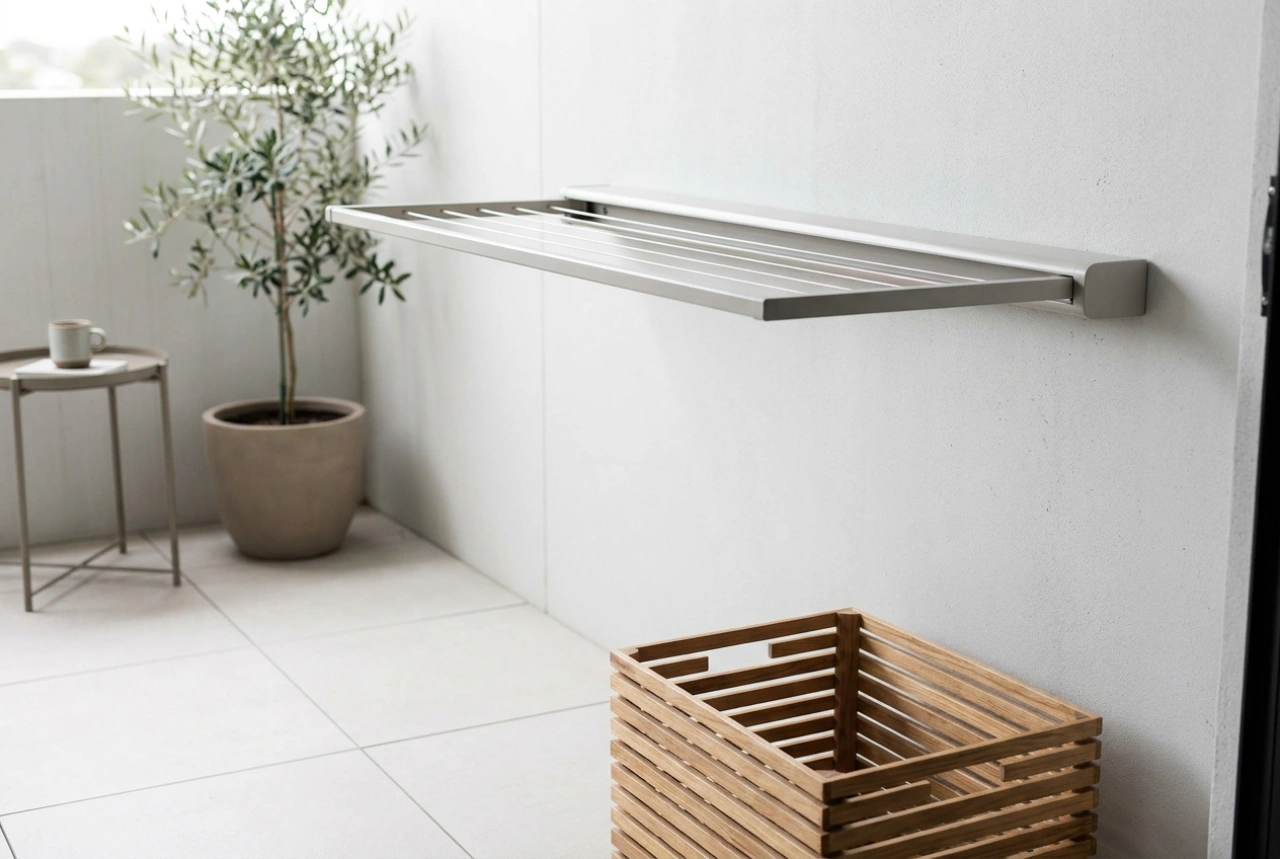
Traditional drying racks expand horizontally, consuming valuable floor space. Slim drying racks, particularly vertical tower models, utilize the Z-axis. This design leverages the natural upward movement of warm air. As air warms near floors or heating elements, it expands, becomes less dense, and rises.
When choosing a slim rack, material science matters. Coated steel or anodized aluminium racks are superior to wood. Metals have high thermal conductivity, meaning they quickly match the ambient room temperature, preventing cold spots where condensation could form. Furthermore, non-porous metal surfaces do not absorb organic residues or moisture, eliminating the micro-environments where mould spores and bacteria thrive.
The Geometry of Hanging: Maximizing Airflow
How you arrange garments on a narrow rack directly influences drying velocity. Tight packing creates microclimates of high humidity between clothes. Implementing the following techniques will optimize the process:
- The Chimney Effect: Leave at least two inches of space between thick garments. This gap acts as a mini-chimney, allowing warm air to rise freely between the fabrics, carrying moisture upward.
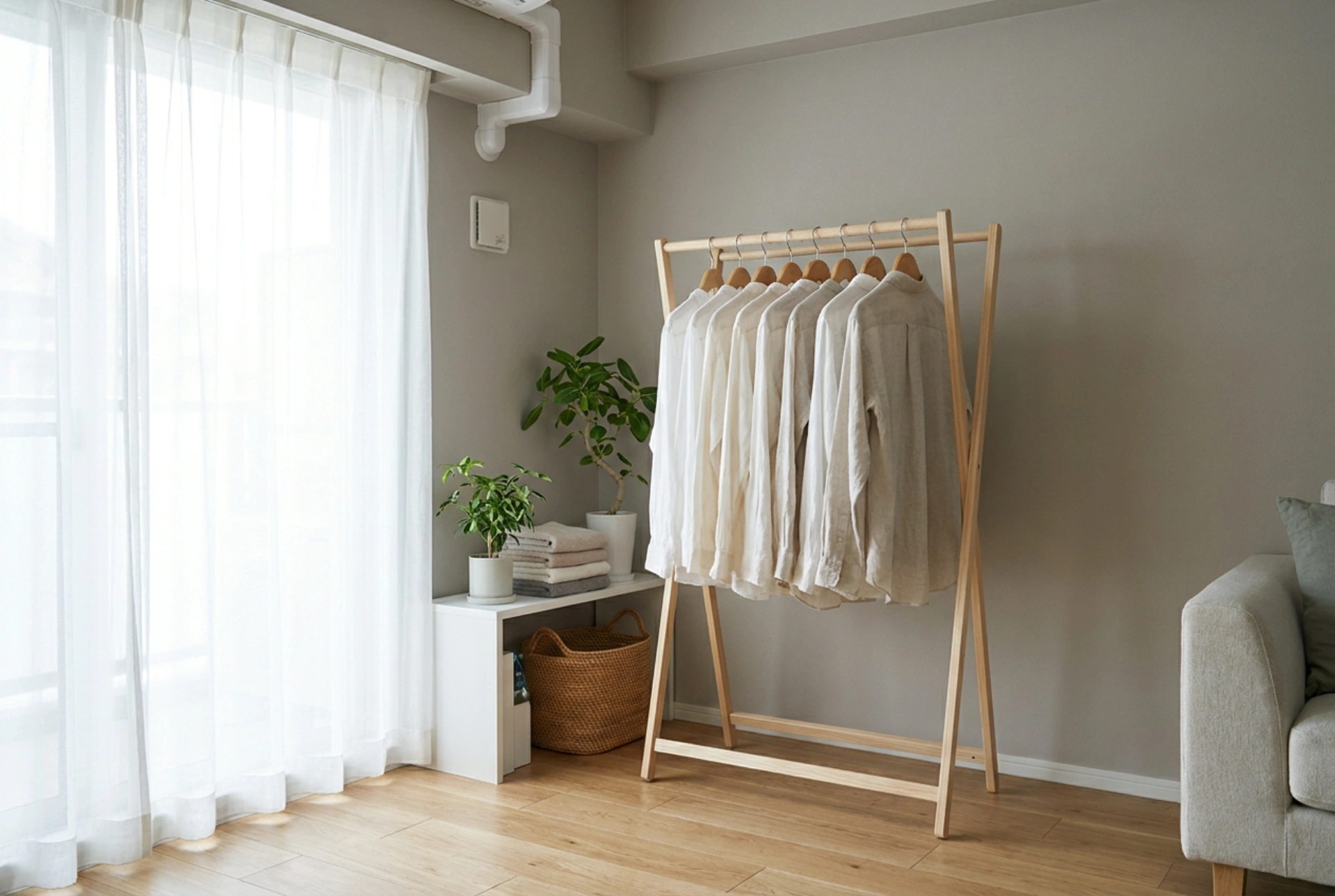
- Surface Area Optimization: Hang shirts on hangers suspended from the outer frame of the rack. This keeps the front and back panels of the garment separated, doubling the surface area exposed to moving air.
- Gravity and Fiber Density: Water molecules naturally migrate downward due to gravity. Hang heavier fabrics, like denim or thick cotton, on the upper tiers of a tower rack. This allows the rising warm air to hit the dampest parts of the garments first. Lightweight synthetic fabrics, which retain very little water due to their hydrophobic properties, can occupy the lower, cooler zones.
Managing Relative Humidity and Preventing Mold
Drying a single load of laundry releases approximately two to three litres of water into the indoor air. In a small space, this can quickly push the indoor environment toward the dew point, leading to condensation on cold walls and windows.
To manage this, synchronize your drying with brief, strategic ventilation. Opening windows at opposite ends of the living space for five minutes (known as cross-ventilation) replaces heavy, humid indoor air with dry outdoor air without significantly lowering the temperature of the walls and furniture. Additionally, placing a simple, low-energy mechanical fan near the base of the slim rack dramatically accelerates drying times by forcing air molecules through the tight spaces between hanging clothes.