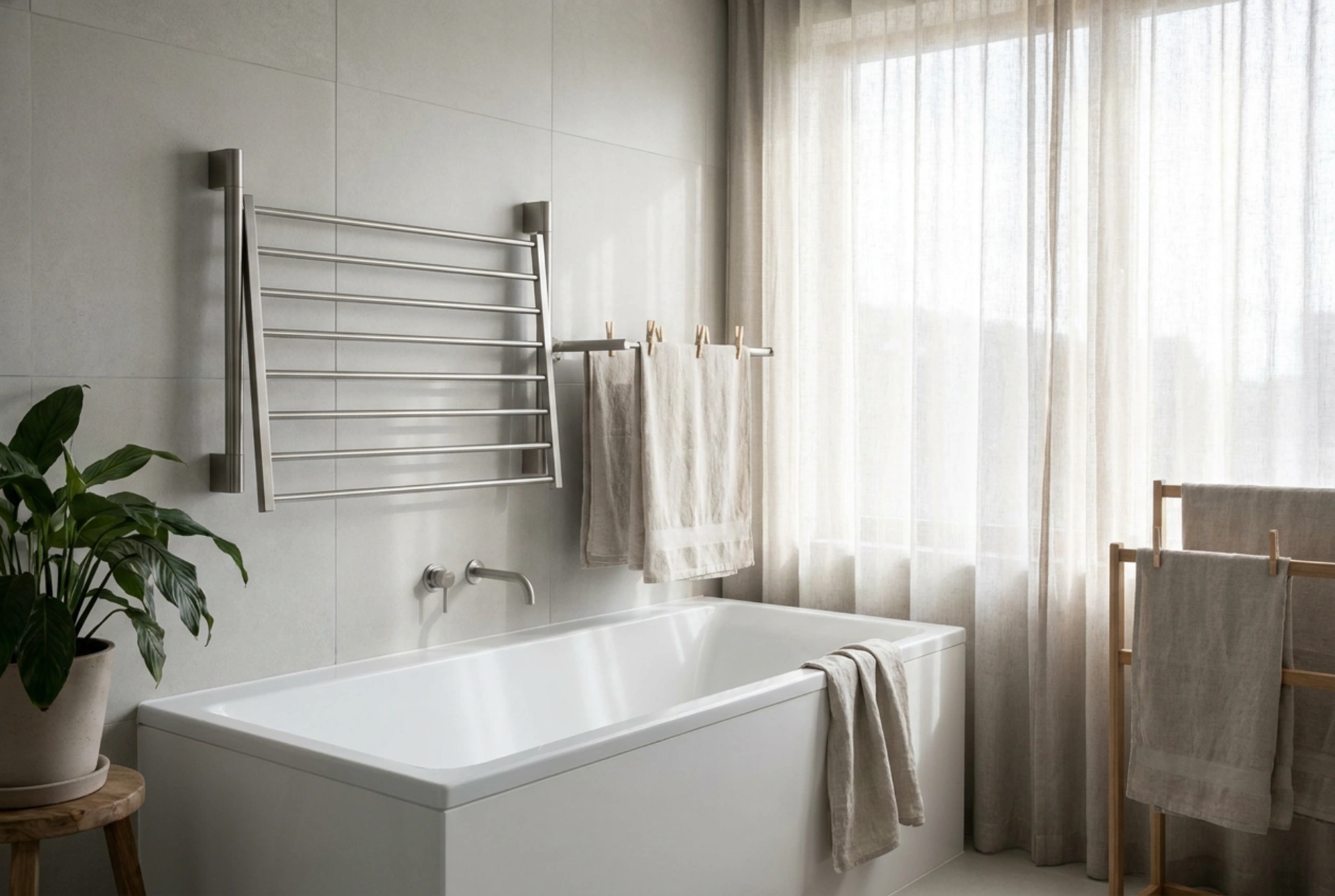


Hanging laundry to dry indoors requires a careful balance of space utilization, moisture control, and structural safety. Installing a wall-mounted drying rack directly over a bathtub is an exceptional architectural and functional solution that optimizes unused vertical space while safely managing water runoff and relative humidity.
The Physics of Evaporative Drying and Gravity
Drying textiles is fundamentally a process of phase transition, where liquid water absorbed by fabric fibers turns into water vapor. This process is governed by temperature, airflow, and relative humidity. When wet laundry is hung, gravity immediately pulls excess unbound water downward. Hanging clothes directly over a bathtub allows this water to drip harmlessly into an enameled or acrylic basin and flow straight into the drainage system, eliminating the risk of water damage to porous flooring materials like wood or laminate.
Furthermore, the physical boundaries of a bathtub create a localized moisture containment zone. Unlike plasterboard walls or carpeted areas, the surrounding tiled walls and bath surfaces are non-porous and chemically inert to moisture. This localized microclimate prevents damp air from immediately dispersing into adjacent rooms, making it easier to control and extract using targeted bathroom ventilation systems.
Mechanical Considerations for Wall-Mounted Systems
Choosing and installing a wall rack requires an understanding of mechanical leverage and material structural integrity. Wet laundry can weigh up to three times its dry weight due to the hygroscopic nature of natural fibers like cotton and linen. For instance, a typical load of 5 kilograms of dry laundry can easily exert a force equivalent to 15 kilograms when fully saturated.
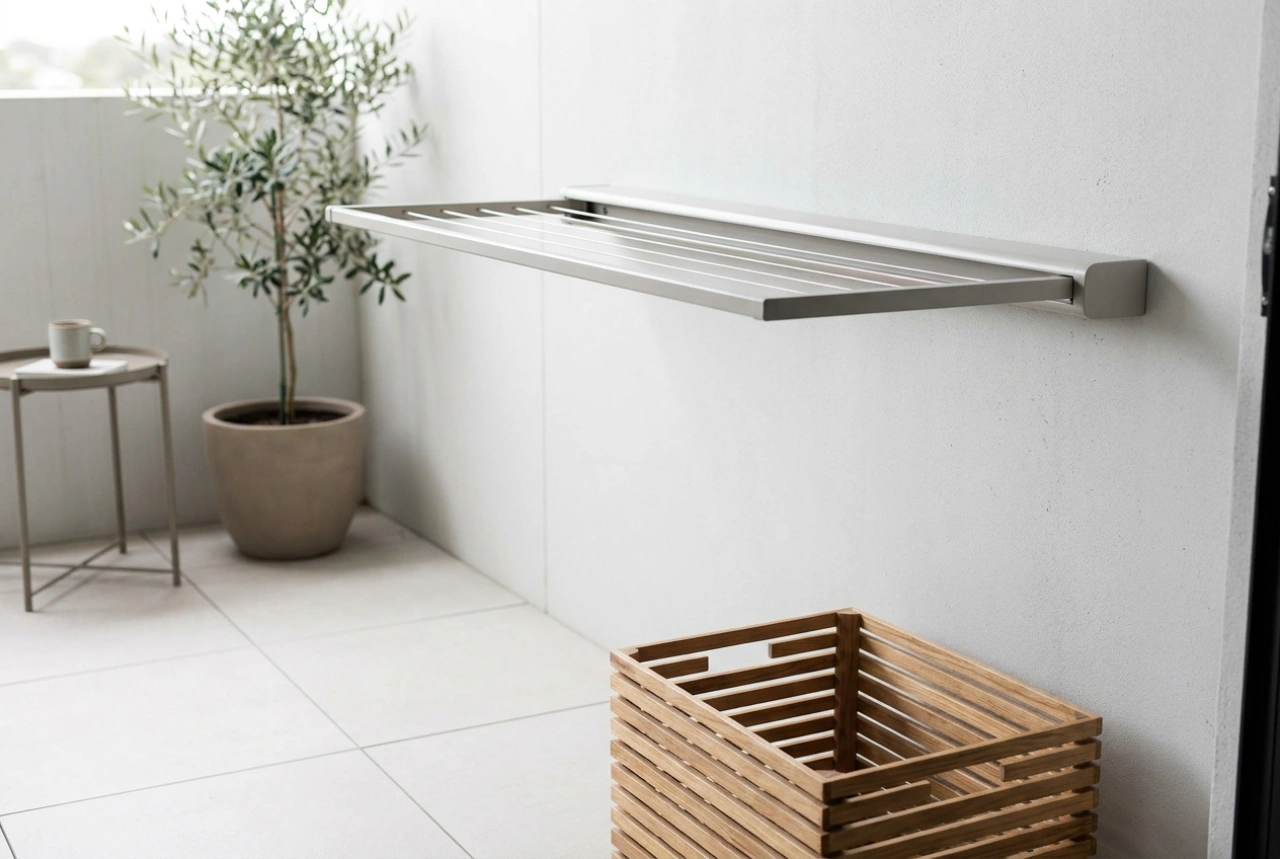
When selecting a mounting location above the bathtub, you must consider the wall substrate. Bathrooms typically feature tiled walls over cement backing boards or solid brick. Drilling into these surfaces to mount a heavy-duty folding or retractable accordion rack requires diamond-tipped drill bits to avoid cracking the ceramic glaze. Once the holes are drilled, it is critical to inject a neutral-cure silicone sealant into the cavity before inserting the wall anchors. This step preserves the integrity of the waterproofing membrane behind the tiles, preventing moisture from seeping into the wall cavity where it could cause structural rot or hidden mold growth.
Managing Humidity, Dew Point, and Airflow
As water evaporates from the wet fibers, the relative humidity in the immediate vicinity of the rack rises. If the air becomes saturated, reaching 100% relative humidity, evaporation ceases completely, and drying stalls. To maintain efficient drying, the saturated boundary layer of air surrounding the clothes must be continuously replaced with drier air.
This is where thermal convection and ventilation play a vital role. Warm air is less dense than cold air, causing it to rise naturally. If your bathroom utilizes underfloor heating or has a radiator nearby, the rising warm air will pass through the hanging garments, accelerating molecular movement and speeding up vaporization. To prevent the humid air from condensing on cold bathroom surfaces, which occurs when the surface temperature drops below the dew point, the room's mechanical exhaust ventilation must be kept active. Ensuring a constant intake of fresh, drier air from under the bathroom door gap maintains the vapor pressure deficit necessary for rapid drying.
Material Science: Preventing Corrosion and Detergent Damage
The high-humidity environment of a bathroom, combined with residual chemicals from laundry detergents and fabric softeners, creates a highly corrosive atmosphere for metal fixtures. Therefore, the material composition of the drying rack is paramount. Low-grade steel will rapidly oxidize, leading to rust stains that can permanently ruin clean textiles.
High-quality wall racks are constructed from either anodized aluminum or stainless steel, specifically grade 304 or 316. Stainless steel relies on a microscopic, self-healing chromium oxide passive layer to resist corrosion. Anodized aluminum features an electrochemical oxide layer that protects the underlying metal from environmental exposure. If you opt for a powder-coated steel model, ensure the polymer coating remains completely intact; even minor scratches can expose the underlying steel to moisture, leading to bubbling and structural failure over time. Periodically wiping down the rack with a soft microfiber cloth and mild warm water will remove alkaline detergent residues and mineral scale deposited by dripping water.