

Cleaning carpets with a spray-extraction vacuum is highly effective for removing deep-seated dirt, but leaving excess moisture in the fibres can lead to structural damage, musty odours, and mould growth within 24 to 48 hours. Mastering the physical principles of extraction, airflow, and drying techniques ensures a deep clean without compromising the integrity of your carpet or the floor underneath.
The Danger of Excess Moisture: What Happens Inside the Fibres
When water penetrates deep into a carpet, it does not just wet the surface pile; it reaches the primary and secondary backings, which are often made of jute, cotton, or synthetic latex. Natural fibres like wool swell when wet, losing their structural elasticity. More critically, stagnant water trapped in the backing creates an anaerobic environment. This promotes the rapid multiplication of fungal spores and bacteria, leading to the breakdown of carpet adhesives and a persistent musty smell. Preventing this requires limiting the volume of water introduced and maximising mechanical extraction power.
Pre-Extraction Preparation: Dry Vacuuming is Essential
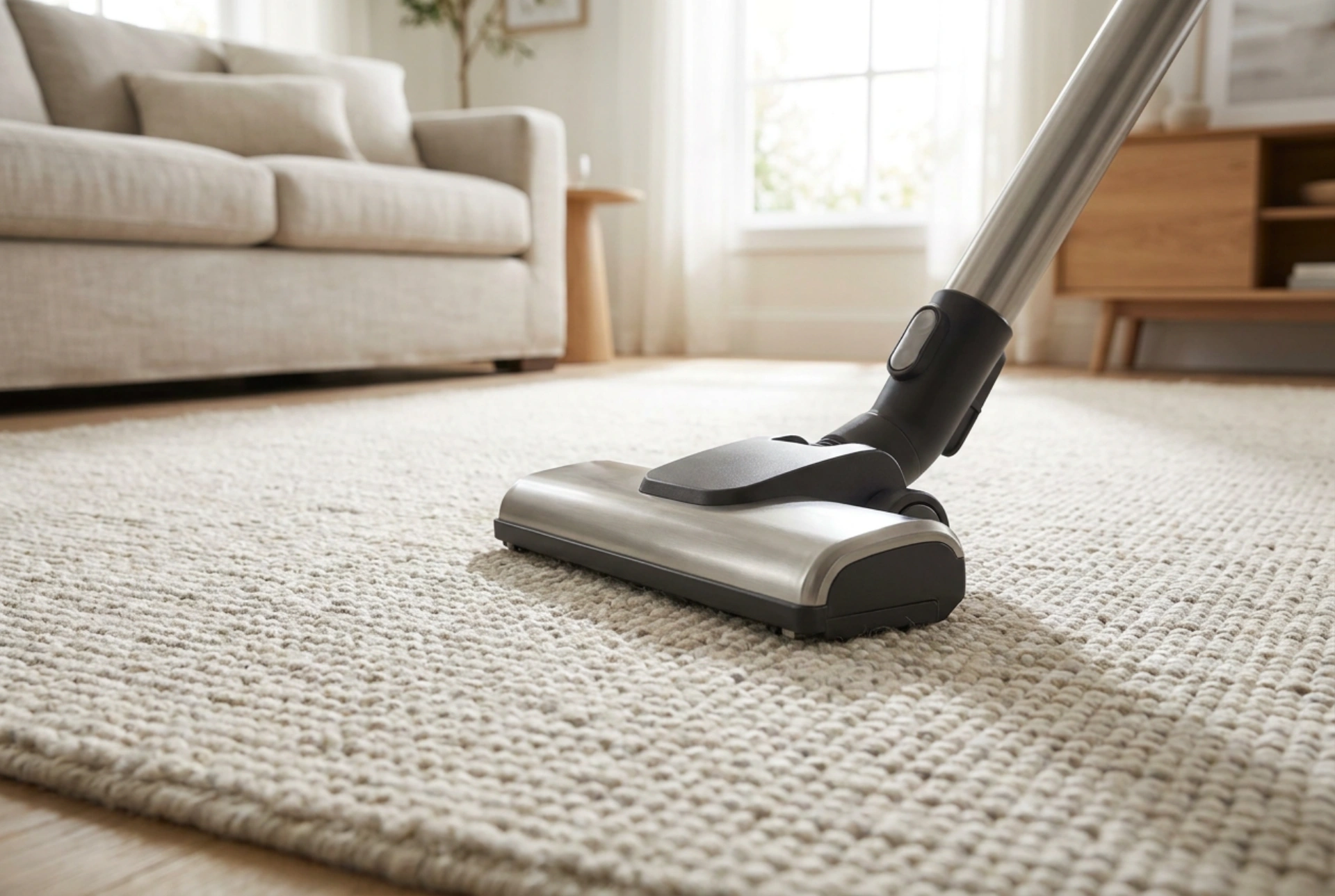
Before introducing any liquid, dry soil must be completely removed. Wetting a carpet that contains loose dust, hair, and sand turns these particulates into abrasive mud. This mud sinks deeper into the carpet base due to gravity and surface tension, making it incredibly difficult to extract. Use a high-efficiency dry vacuum with a rotating brush bar to lift and remove dry debris first. This ensures the extraction liquid only has to dissolve bound oils and surface grime rather than coping with loose dirt.
The Chemistry of Solution Application
The water used in spray-extraction should be warm—typically between 40°C and 50°C for synthetic fibres, and cooler for delicate wool—to lower the surface tension, allowing the cleaning agent to emulsify greasy binders easily. Always use a specialised, low-foaming surfactant. High foam cushions the extraction nozzle, drastically reducing the suction power of the vacuum motor. Apply the solution sparingly; the goal is to damp-clean the pile, not to saturate the backing material beneath.
The Extraction Technique: Speed, Angle, and Dry Passes
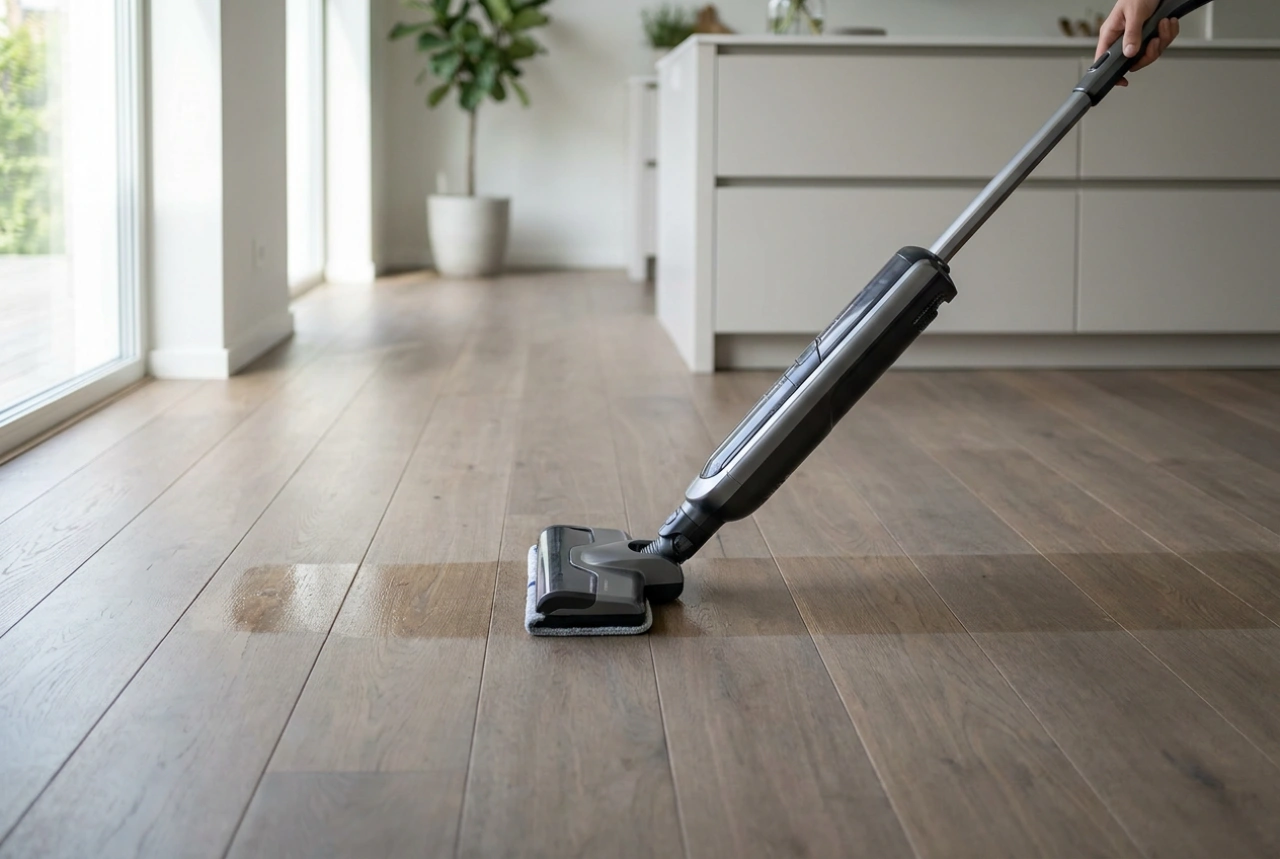
The mechanical operation of the extraction nozzle dictates the success of moisture removal. Hold the nozzle at a consistent 45-degree angle to the carpet surface, ensuring the transparent intake slit makes firm, flush contact with the pile. Pull the wand slowly toward you at a steady speed of about 5 to 10 centimetres per second. Moving too quickly does not allow the vacuum motor sufficient time to draw water out of the dense pile via capillary suction.
The golden rule of wet extraction is the dry pass. For every single pass where you spray the cleaning solution, you must perform at least two or three dry passes—vacuuming without pulling the spray trigger. Watch the transparent nozzle during these dry passes; only stop when you no longer see liquid droplets being pulled through the plastic intake. Work in small, overlapping sections to prevent the cleaning solution from sitting on the fibres for too long before extraction.
Optimising Post-Clean Evaporation
Once mechanical extraction is complete, ambient air conditions determine how quickly the remaining micro-droplets evaporate. To accelerate drying, focus on increasing air circulation rather than just heat. Use floor fans to blow air horizontally across the carpet surface, creating a low-pressure zone that pulls moisture out of the fibres through Bernoulli's principle. Keep windows cracked to allow the humid air to escape, keeping relative indoor humidity below 50% during the drying process.