

Using a combined vacuum steam mop optimizes your cleaning routine, but applying high-temperature moisture to sensitive floor materials requires a strict understanding of thermodynamics and material science to prevent permanent damage.
The Physics of Steam on Flooring Materials
Steam mops operate by heating water to temperatures exceeding 100°C, converting it into pressurized vapour. When this vapour hits a colder floor surface, it instantly condenses back into liquid water, releasing latent heat of vaporisation. This thermal energy breaks down non-polar bonds in grease and dirt, making them easy to wipe away. However, this high temperature can pose a threat to flooring. Natural wood and laminates are highly hygroscopic; they absorb moisture from the surrounding environment. When exposed to heat and moisture, wood fibres undergo thermal expansion and swelling. Similarly, the synthetic resins and adhesives holding laminate layers or luxury vinyl tiles (LVT) together can liquefy or degrade at temperatures above 60°C, leading to delamination and warping.
Why Vacuuming Must Precede Steaming
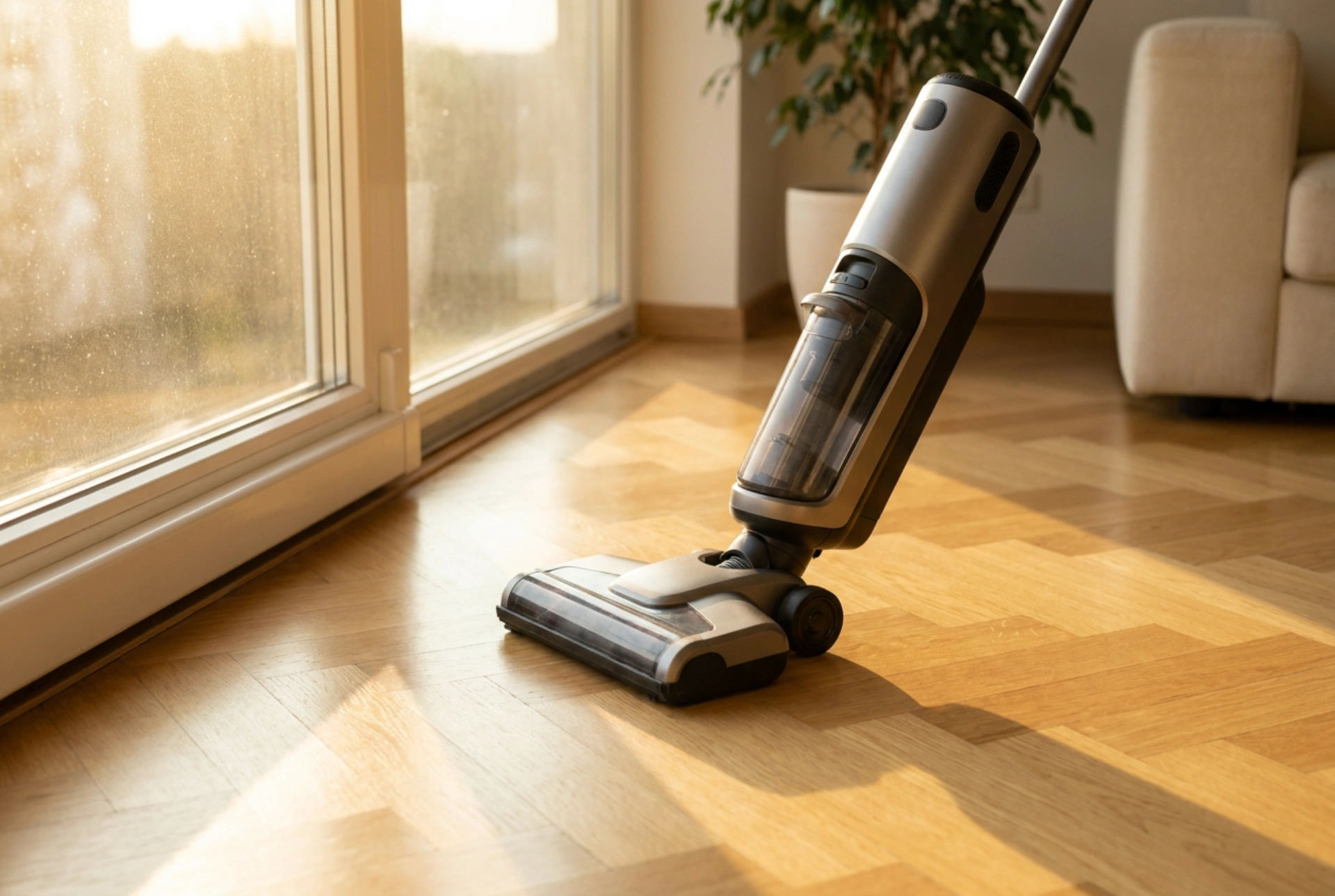
A dual-function device typically sweeps and steams in a single pass, but understanding the sequence is vital. Dry particulate matter—such as quartz-based sand and silica dust—acts as a heavy abrasive. If steamed directly without prior suction, these sharp microscopic particles become suspended in a hot, watery slurry. As the mop pad drags this slurry across the floor, the pressure creates micro-abrasions in the polyurethane or acrylic protective sealants. Always ensure the vacuum function of your device captures these loose abrasives on the dry path before the steam jet makes contact with the surface. This sequence preserves the structural integrity of your floor’s protective top coat.
Managing Heat Exposure and Motion
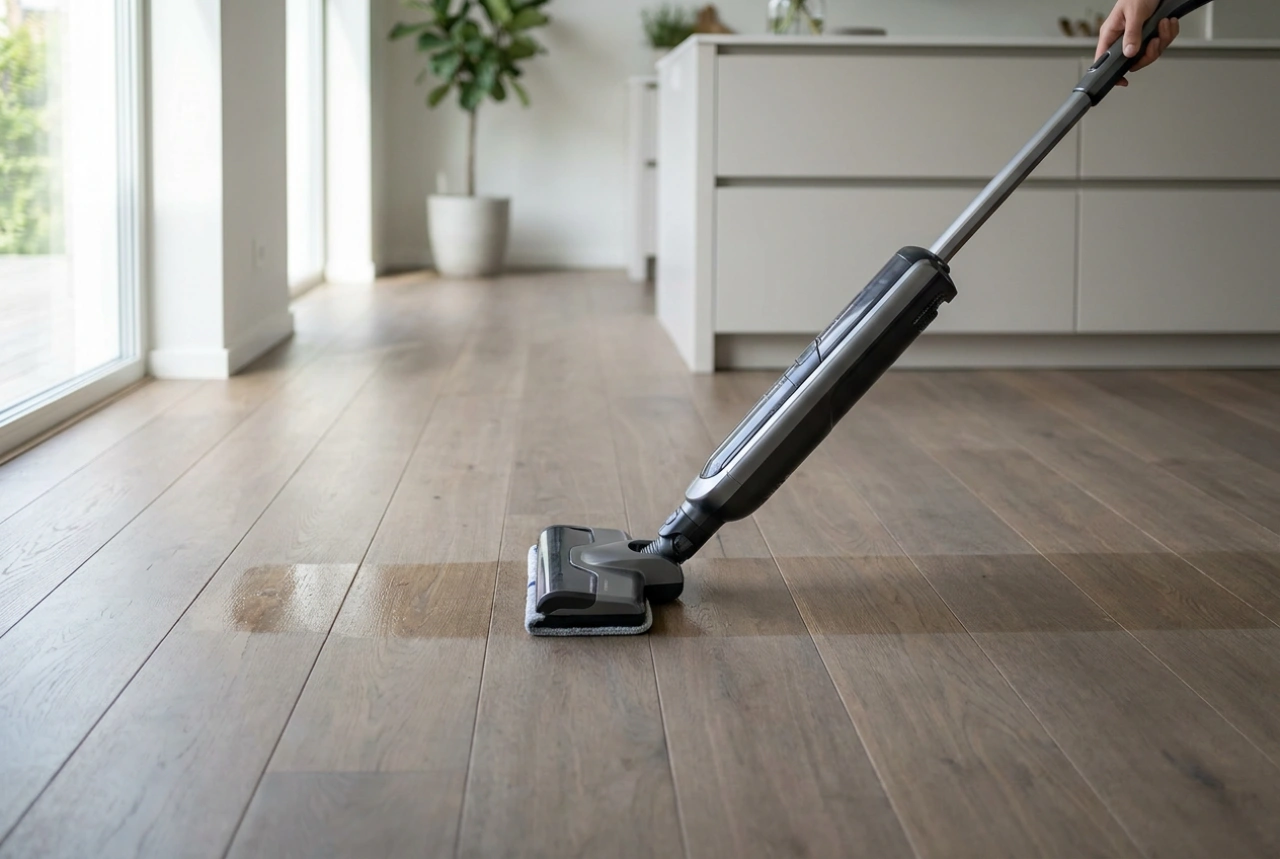
The primary cause of steam-related floor damage is heat accumulation from stationary operation. To prevent localized thermal shock and moisture pooling, you must keep the machine in constant, fluid motion. Never let a steaming mop sit idle on any hard floor, especially timber or laminate. If you need to pause, turn off the steam generator immediately. Additionally, manage the steam output volume based on the porosity of the material. For dense, non-porous surfaces like glazed ceramic tiles, a higher steam volume is acceptable because the water cannot penetrate the fired clay. For porous surfaces like natural stone or engineered wood, use the lowest steam setting to minimize the volume of liquid water entering micro-fissures.
Material-Specific Steam Protocols
- Solid and Engineered Hardwood: Use steam with extreme caution. Ensure the protective polyurethane sealant is completely intact. Apply a dry-steam setting where the moisture content is low, and ensure the surface dries within thirty seconds to prevent swelling.
- Laminate Flooring: Laminate consists of compressed wood fibres under a photographic layer. If steam penetrates the interlocking click joints, the core will swell permanently. Always use a highly absorbent microfiber pad to capture condensation instantly.
- Ceramic and Porcelain Tiles: Highly resilient to heat. However, cementitious grout is porous and can absorb moisture. Ensure grout lines are properly sealed to prevent deep moisture retention, which can lead to sub-floor dampness.
- Vinyl and LVT: These materials are sensitive to heat. High temperatures can soften the vinyl and weaken the pressure-sensitive adhesives underneath, causing the planks to lift at the edges. Use the lowest temperature setting or bypass steam entirely.
Optimizing Pad Dryness and Maintenance
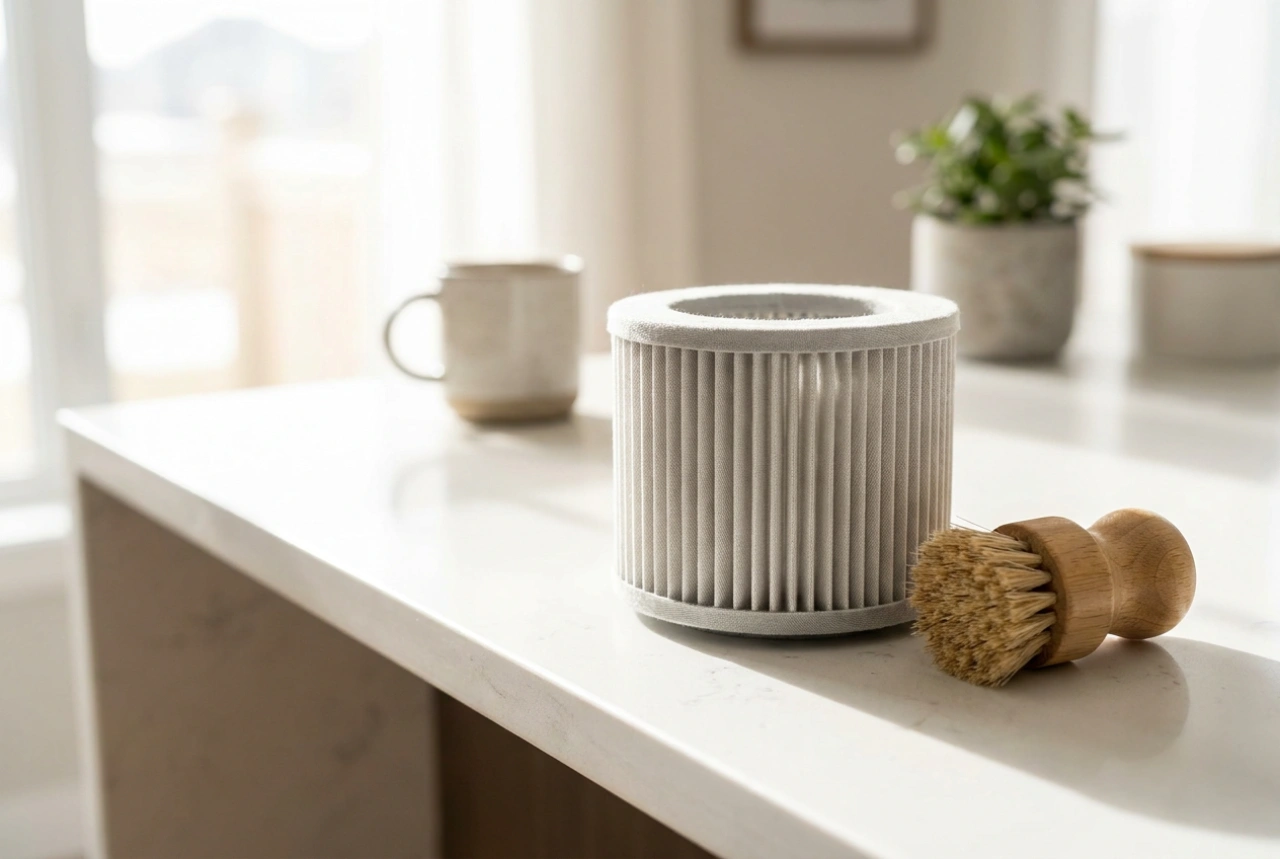
The microfiber pad attached to your vacuum steam mop is not just a cleaning tool; it is a thermal barrier and a drying agent. A saturated pad cannot absorb condensed steam, leaving standing water behind. Change the microfiber pads frequently during a single cleaning session. After cleaning, remove the damp pad immediately and empty the water reservoir to prevent residual heat from generating passive steam while the machine cools down on your flooring.