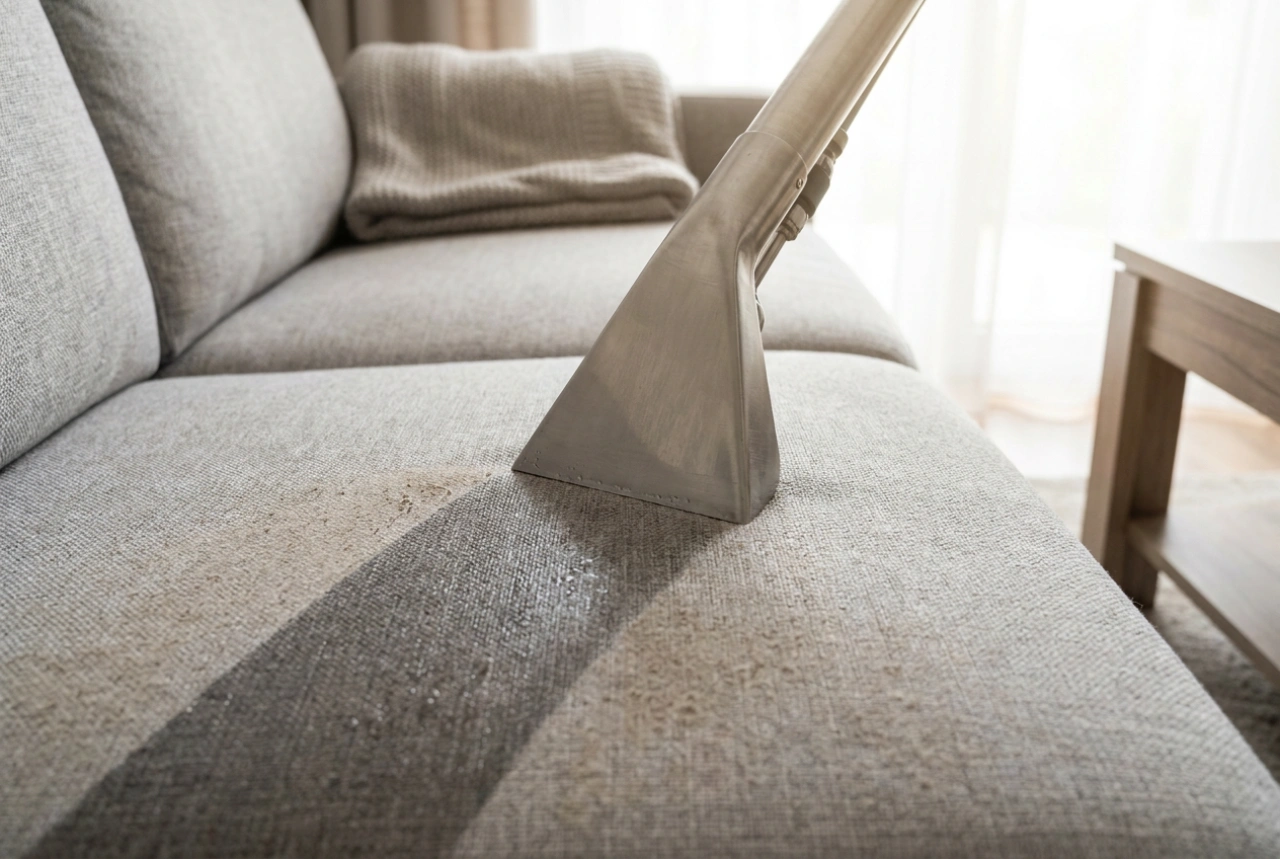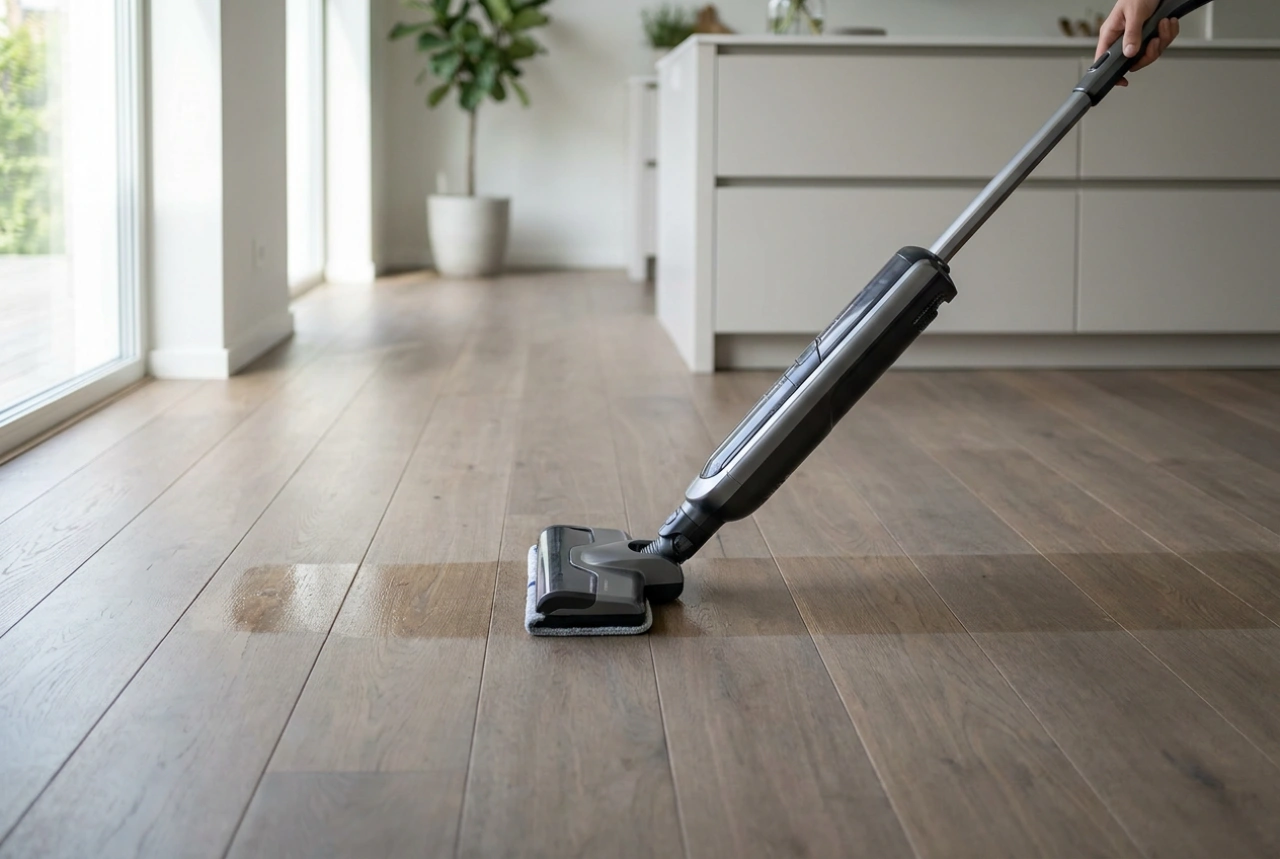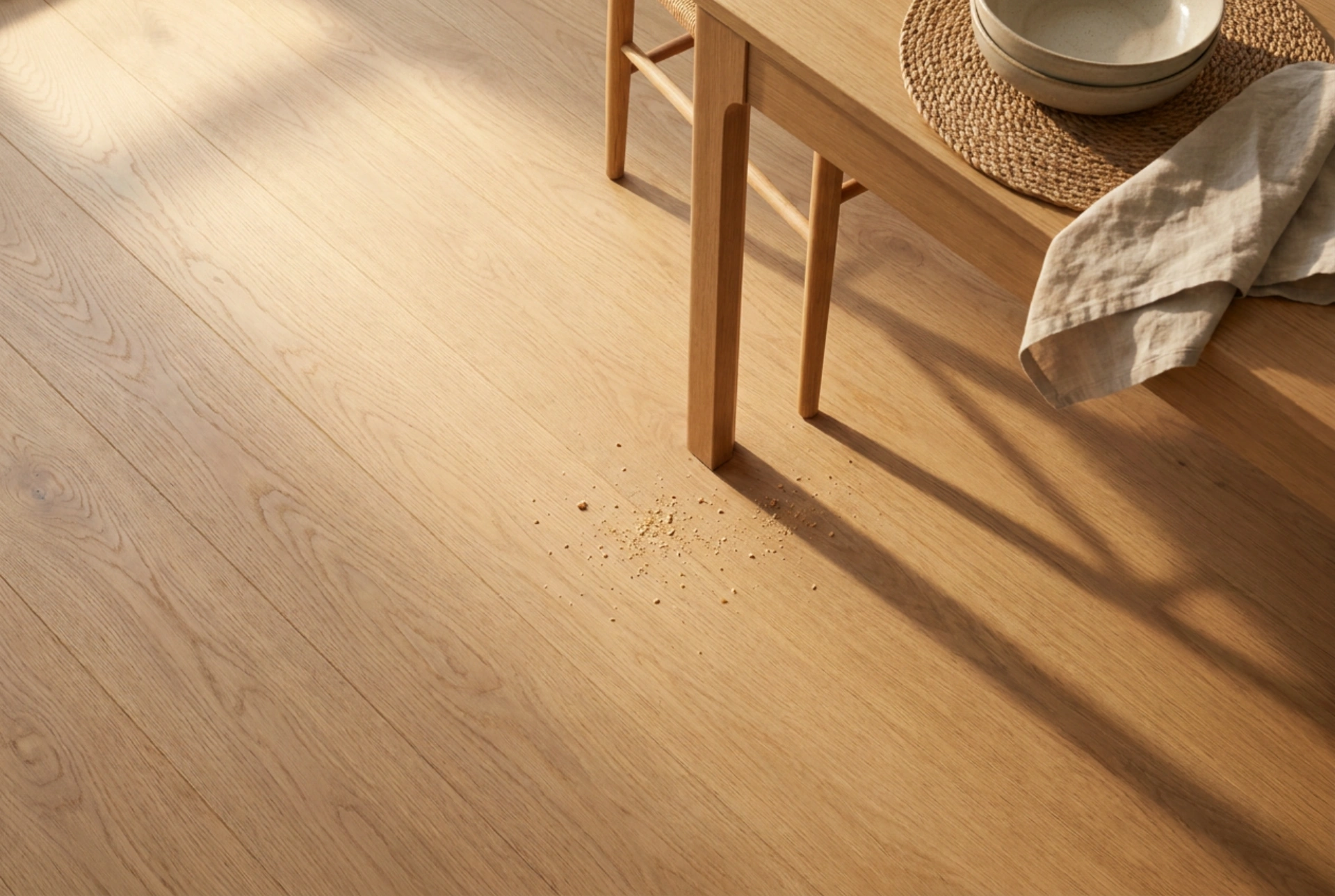


Post-meal cleanups often present a double challenge: dry crumbs scattered across the floor alongside sticky, wet spills from sauces or drinks. Using a cordless vacuum and mop hybrid allows you to address both physical debris and liquid residues in a single, efficient pass, eliminating the need for two separate cleaning steps.
The Science of Dual-Action Debris Removal
To understand why hybrid wet-dry vacuums are highly effective after dining, we must look at the physical interface between the floor and the cleaning head. A standard mop often smears fine particles across the surface, creating an abrasive slurry that can scratch delicate flooring. A hybrid device solves this by utilising directional airflow located just ahead of the wet roller.
As the machine moves forward, high-velocity suction lifts lightweight, dry debris—such as breadcrumbs, salt crystals, and dry pet food—before the moist roller passes over the area. This prevents dry solids from becoming saturated with water, which would otherwise turn them into sticky pastes that are far harder to remove from tile grout or hardwood seams.
Dissolving Grime: Surfactants and Thermal Energy
Post-meal residues typically consist of three substances: starches, lipids (fats), and simple sugars. Each responds differently to moisture and temperature, requiring a calculated approach to cleaning:
- Sugars and Starches: Highly water-soluble, but they require physical agitation and mild heat to dissolve quickly once dried. Lukewarm water (around 35°C to 40°C) is ideal; it accelerates the dissolution process without compromising the structural integrity of engineered wood floors or dissolving the sealants on luxury vinyl tiles.
- Lipids: Fats are hydrophobic and do not dissolve in water alone. To tackle greasy splatters, a minimal amount of a neutral pH surfactant is necessary. The surfactant molecules lower the surface tension of the water, allowing it to penetrate and emulsify the grease, lifting it away from the floor surface so the vacuum can draw it into the recovery tank.
Systematic Technique for Efficient Clearing
Achieving a streak-free, sanitary floor requires more than just pushing the machine back and forth at random. The speed and direction of your movements dictate the efficiency of the cleanup. First, adopt a slow, deliberate pace. Moving too quickly does not allow the rotating roller sufficient contact time to break the adhesive bonds of dried-on sauces, nor does it give the vacuum nozzle enough time to extract the dirty water. A speed of approximately one step per second is optimal.
Second, utilise a parallel lane pattern with a slight overlap of about 5 to 10 centimetres between passes. Always begin at the edges of the dining area and work your way backward toward the room’s exit. This prevents you from stepping on wet, freshly cleaned areas, which can transfer dirt from your shoes back onto the floor.
Preventing Odours and Bacterial Growth
The convenience of a quick post-meal clean can easily be undermined if the appliance itself becomes a breeding ground for bacteria. When food particles and dirty water sit in a sealed recovery tank, anaerobic bacteria multiply rapidly, leading to foul odours.
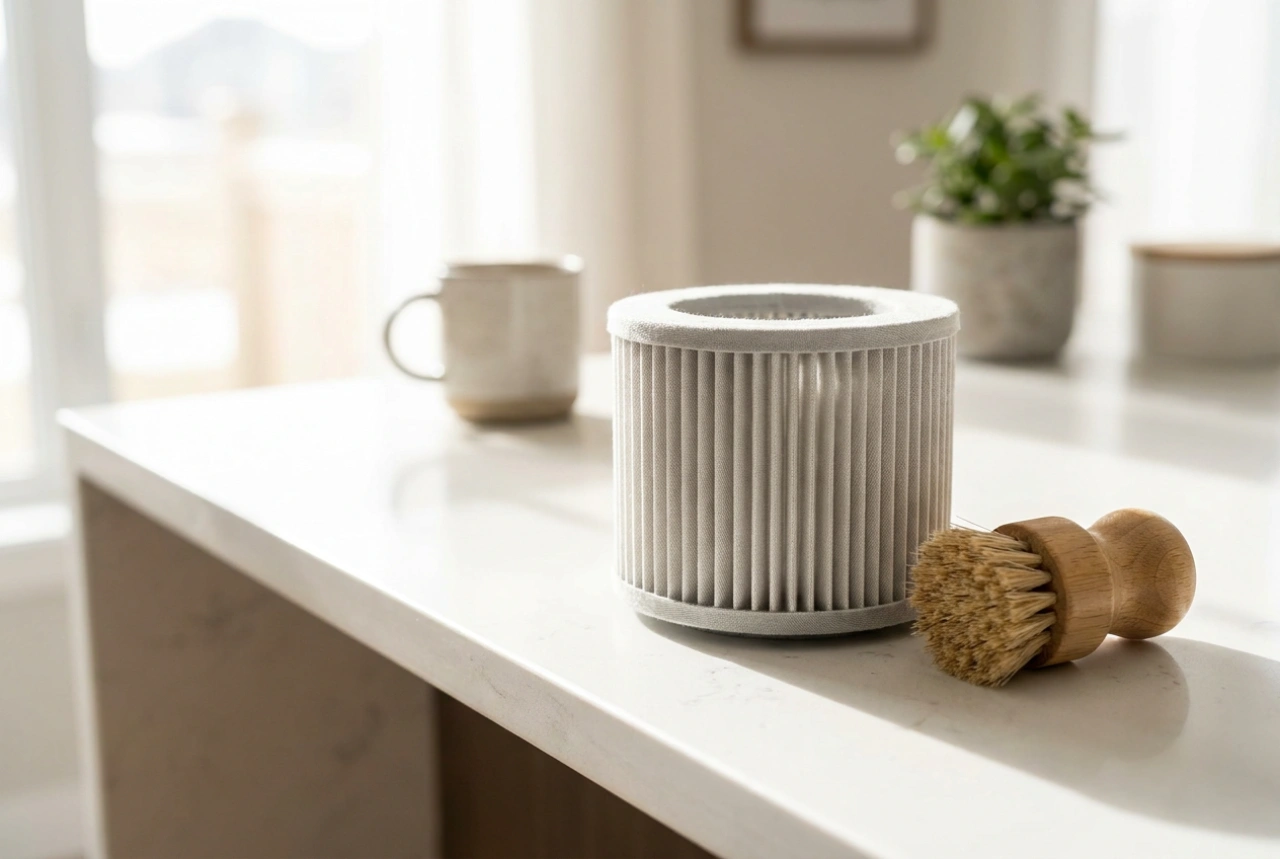
To maintain hygiene, empty the dirty water tank immediately after use. Rinse the chamber with clean water to remove any lingering organic matter. Additionally, remove the roller brush and allow it to air-dry in a well-ventilated space. This prevents the fibres from remaining damp, stopping mould spores and mildew from developing, and ensuring the machine is sanitary for the next mealtime cleanup.