

Preparing your living space for a robotic vacuum and mop is essential to maximize its efficiency, protect your flooring, and prevent mechanical stalling. By understanding how these devices navigate using physics and optical sensors, you can eliminate common obstacles that disrupt their cleaning cycles.
1. Managing Cable Hazards and Low-Profile Obstacles
Robotic cleaners rely on a combination of LiDAR (Light Detection and Ranging), infrared sensors, and physical bumper switches to map your home. Loose cables, thin rug fringes, and low-profile clutter present a unique hazard because they often fall below the detection threshold of optical sensors. When a spinning side brush encounters a loose USB cable, it wraps around the axle, increasing motor torque and triggering an automatic shutdown to prevent electrical strain.
To prepare your floors, secure all dangling cords at least fifteen centimeters above the floor level using hook-and-loop fasteners or cable routing channels. Pay close attention to the area behind television consoles and bedside tables. Additionally, check for small objects like toys, pet bowls, or shoes with dangling laces. Clearing these items ensures the robot can maintain a continuous velocity, which optimizes battery consumption and ensures uniform coverage.
2. Understanding Surface Friction and Liquid Boundaries
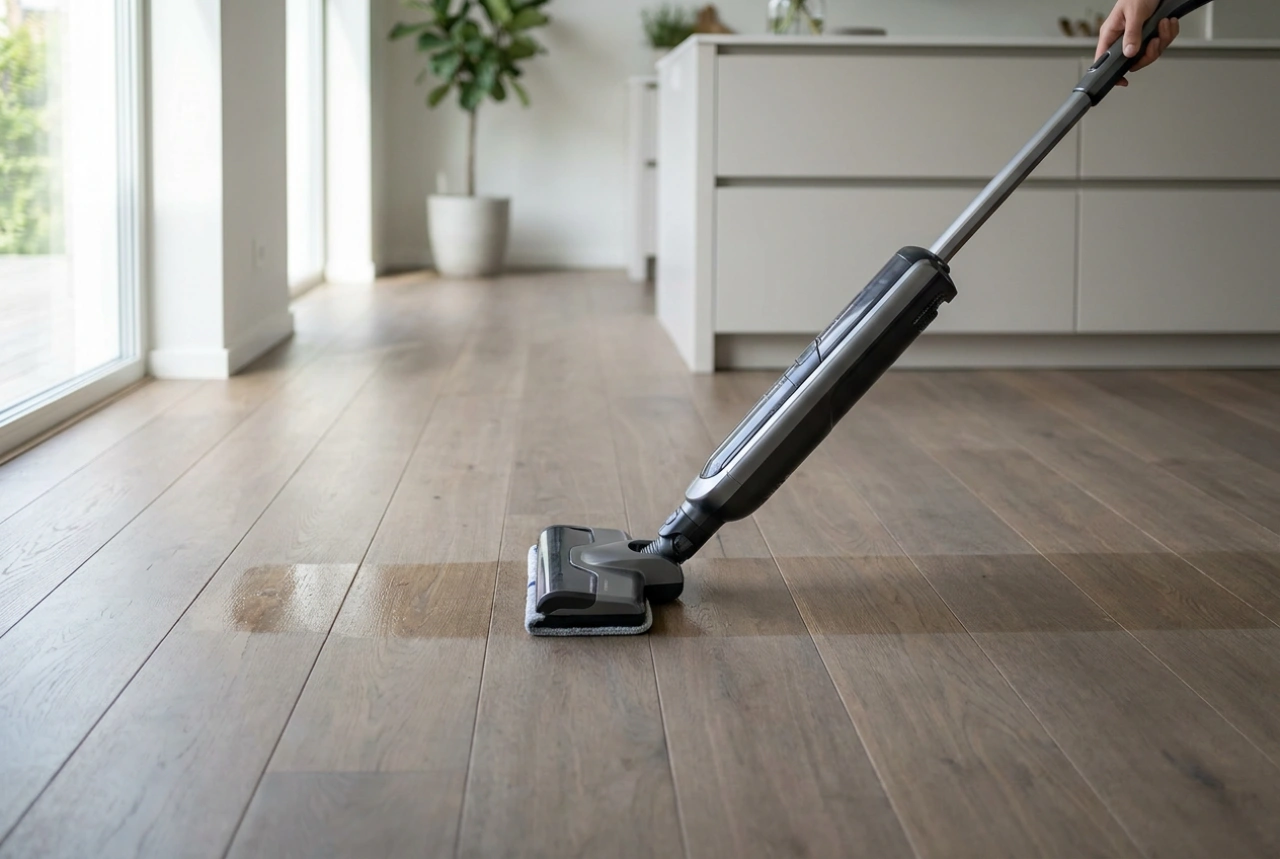
The mopping function of a robotic cleaner introduces moisture to your floor surfaces, which alters the coefficient of friction. On smooth tiles, excess water can cause the drive wheels to slip, leading to navigation errors and offset maps. Conversely, on natural hardwood or laminate floors, prolonged contact with damp microfiber pads can cause wood fibers to swell through capillary action, potentially warping the planks.
To mitigate these risks, always place a protective, waterproof plastic mat under the docking station. This prevents the damp mopping pad from resting directly on vulnerable wood flooring while the device charges. If your home has high-contrast floor transitions—such as a dark wood floor meeting light-colored tiles—be aware that infrared cliff sensors may misinterpret the dark line as a physical drop-off. You can smooth out these transitions by ensuring consistent, ambient lighting during the cleaning cycle to reduce harsh shadows that confuse optical sensors.
3. Optimizing the Docking Station Location
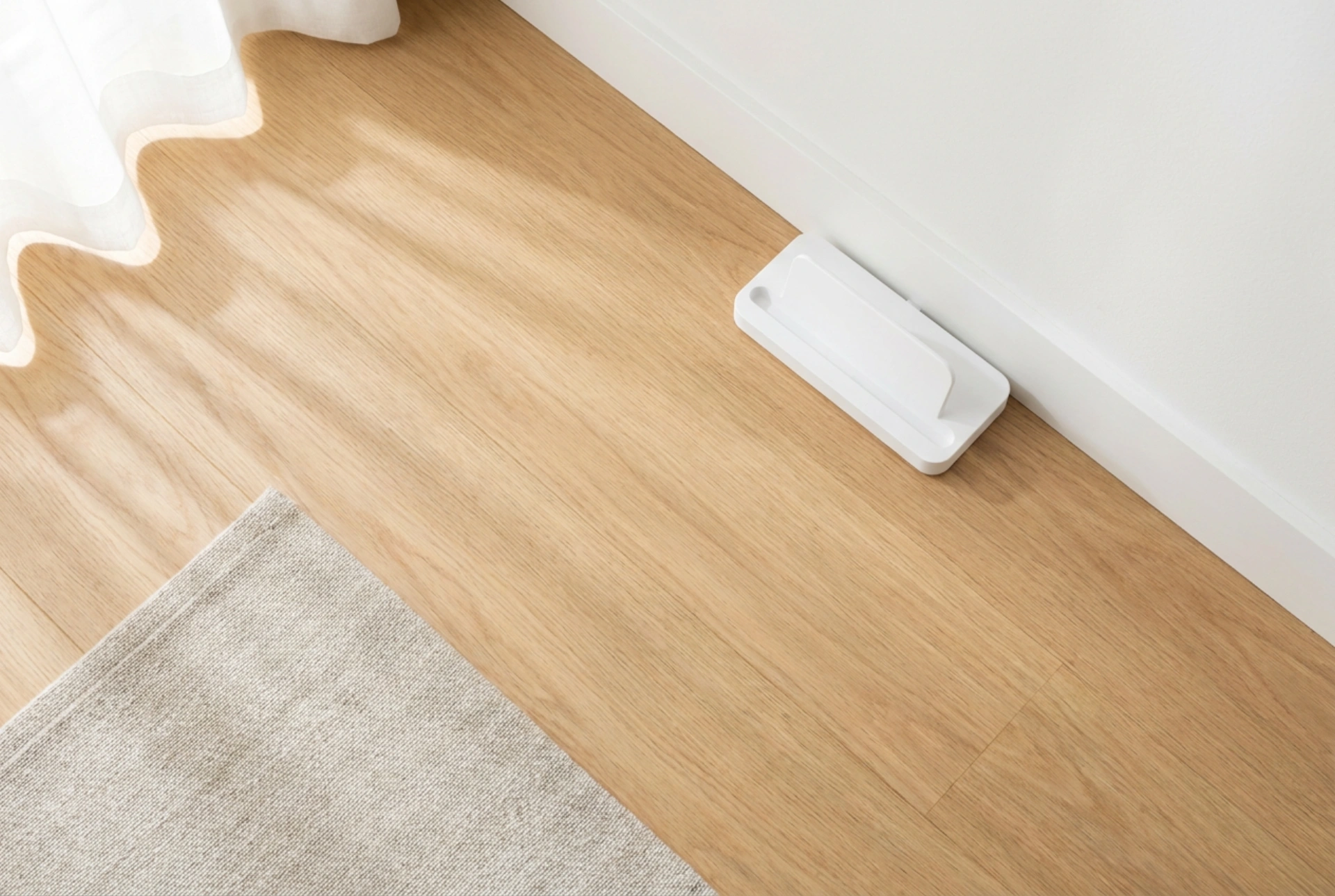
The base station is the navigational anchor of your robot. It emits an infrared beacon or utilizes visual markers to guide the robot home for recharging and self-emptying. For the robot to align its charging contacts successfully, the dock must be placed on a level, hard surface with sufficient clearance. As a rule of thumb, maintain a clear zone of at least 0.5 meters on either side of the dock and 1.2 meters directly in front.
Avoid placing the dock in narrow corridors or tight corners where signal reflection can cause navigational interference. Furthermore, ensure the dock is located within range of a strong wireless signal, as real-time map rendering and zone cleaning commands rely on stable local network data transmission.
4. Protecting Carpets and Managing Textile Transitions
Modern robotic mops use ultrasonic sensors to detect carpet fibers. When the device identifies a change in surface density, it either lifts the damp pad or avoids the carpet altogether. However, long-pile carpets (anything over two centimeters) or rugs with loose tassels can still pose a problem. The fibers can become entangled in the main roller brush, stalling the drive mechanism.
To prevent this, fold long tassels under the rug or use double-sided rug tape to secure the edges firmly to the subfloor. If your robot lacks an automatic mop-lifting feature, you must configure digital "no-mop zones" within the control application to prevent the wet microfiber cloth from dragging across delicate textile surfaces, which can transfer dirt and cause mildew growth in the carpet backing.