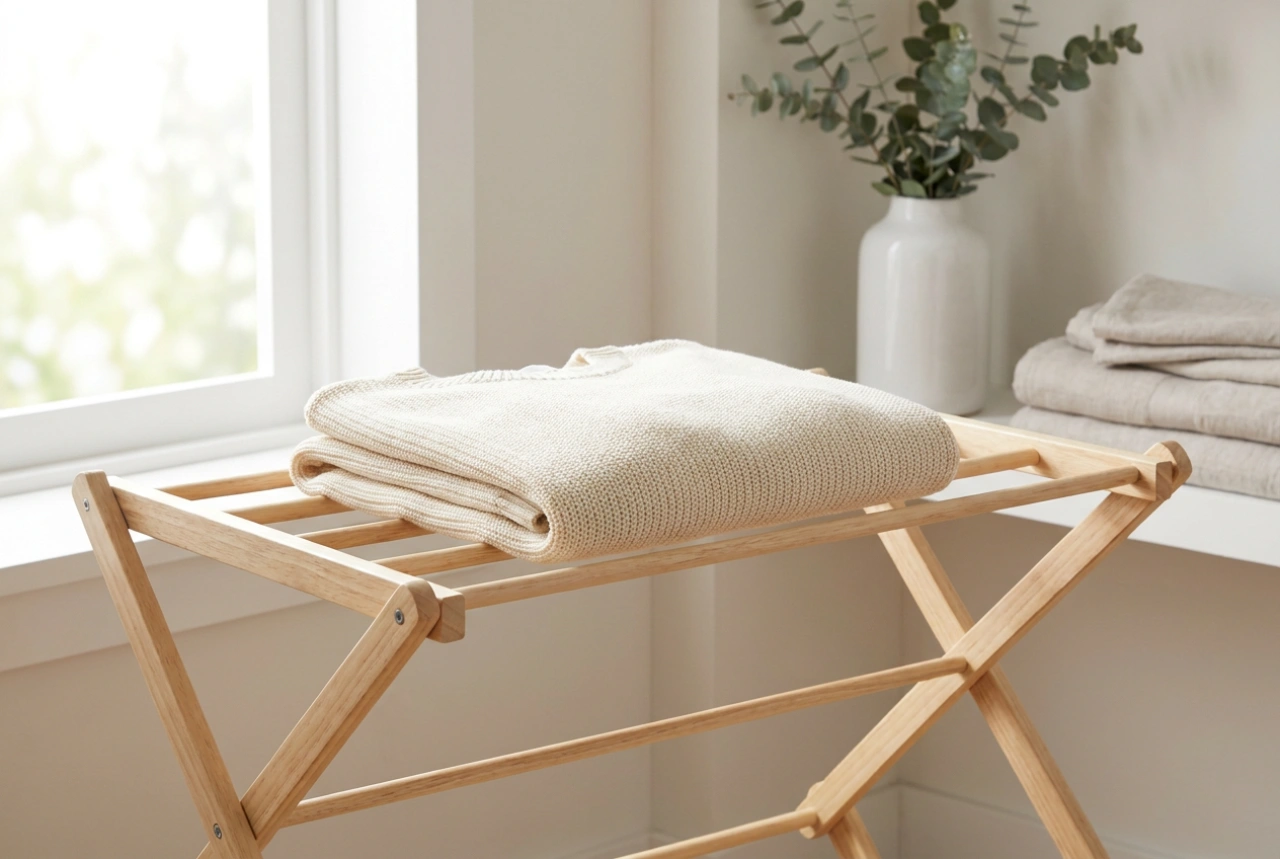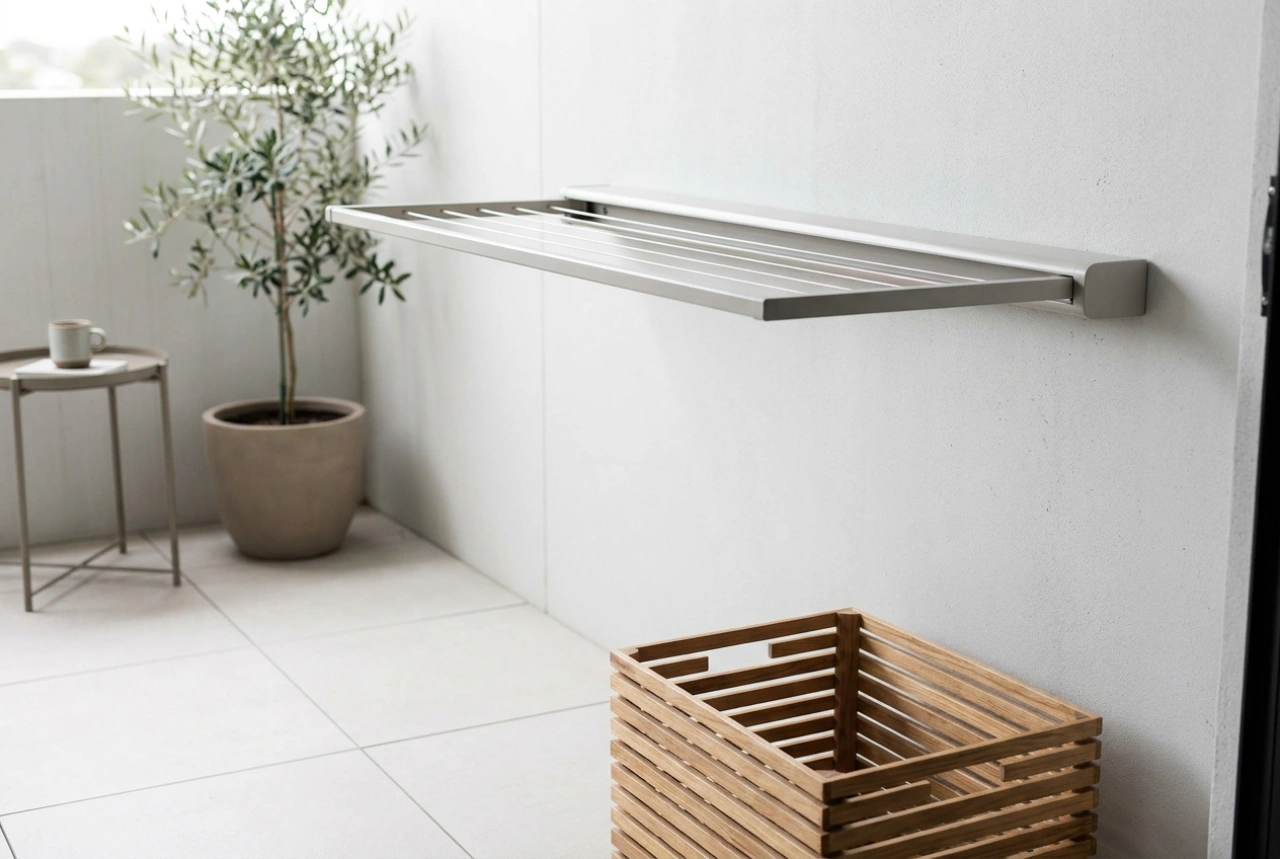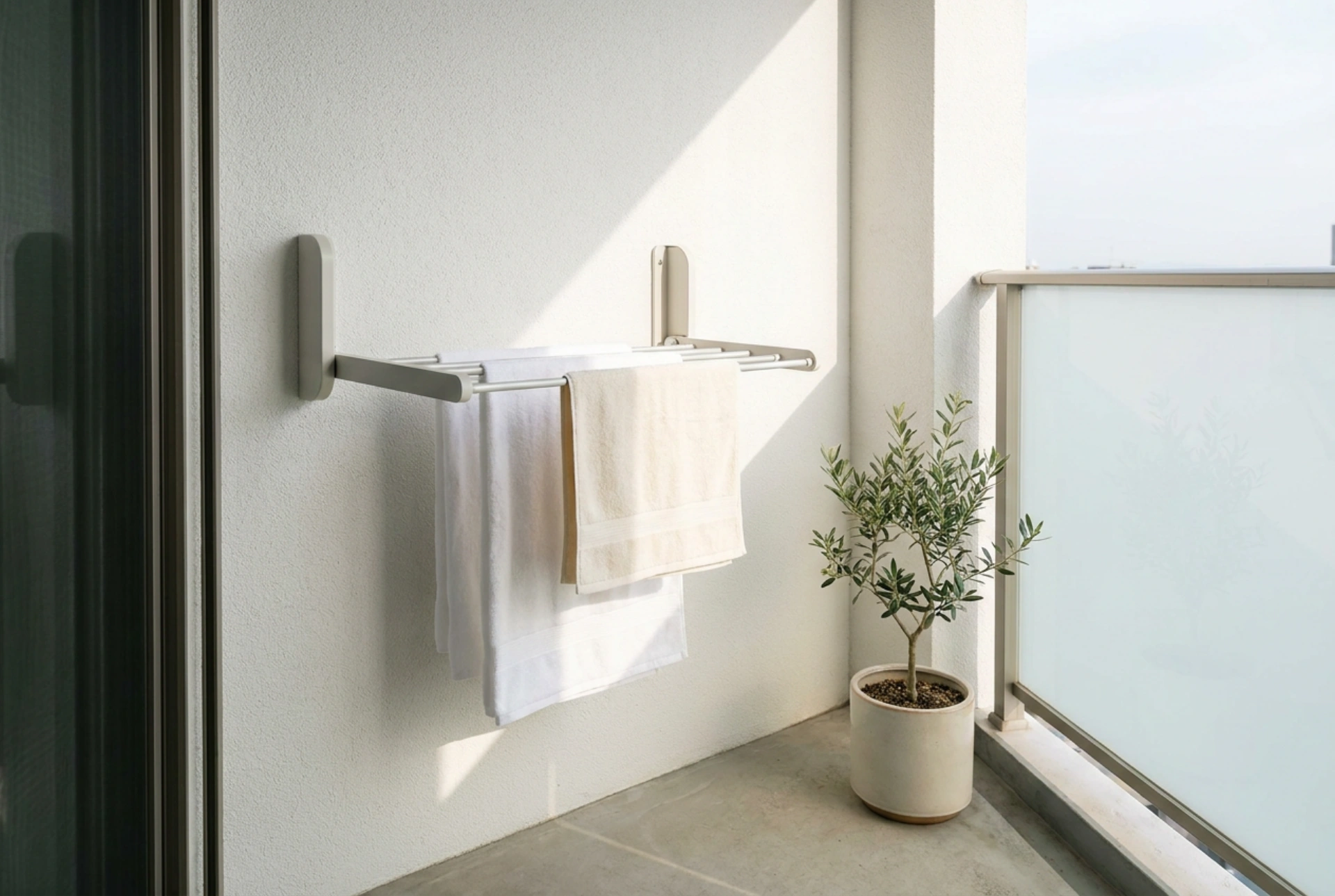


Properly arranging clotheslines on a balcony maximizes natural airflow and structural stability while keeping the limited outdoor space visually clean and functional. By applying simple physical principles of evaporation and structural tension, you can design an efficient drying system that works with your balcony's layout rather than against it.
The Physics of Airflow and Line Orientation
To dry laundry quickly, you must facilitate the rapid removal of boundary-layer moisture—the thin envelope of humid air that wraps around wet fabric. If clotheslines are packed too closely or oriented incorrectly, this moisture becomes trapped, slowing down the evaporation process and potentially causing musty odors.
For optimal drying, lines should run parallel to the prevailing wind direction on your balcony. This alignment allows air to pass freely between the hanging garments, carrying moisture away. If your balcony is deeply recessed, place the lines closer to the outer railing where air movement is strongest, leaving at least 15 to 20 centimeters of clearance from the ceiling or walls to prevent stagnant pockets of humid air. Spacing between individual lines should be a minimum of 10 to 12 centimeters to prevent adjacent wet garments from touching and to ensure unobstructed air circulation.
Material Science of Balcony Lines
Choosing the right material for your lines directly impacts how long they stay taut and clean. Outdoor elements like UV radiation, temperature fluctuations, and moisture rapidly degrade low-quality cords, leading to sagging lines that cause clothes to bunch together in the middle.
- PVC-Coated Steel Wire: This is the most stable option for permanent setups. The steel core prevents stretching under heavy, wet loads, while the PVC coating protects the metal from rust and makes it easy to wipe clean of outdoor dust.
- High-Density Polyethylene Monofilament: Known for its exceptional tensile strength and UV resistance, this material does not absorb water or rot, making it highly durable for outdoor use.
- Polyester Cord: Unlike cotton, polyester resists rotting, mildew, and stretching. It has excellent knot-holding capabilities, which is useful if you are using manual tensioning knots instead of hardware.
Tension Mechanics and Retractable Systems
A sagging line not only looks messy but also concentrates the weight of the laundry at the lowest point, pulling garments together and blocking airflow. Maintaining constant tension requires a basic understanding of load distribution.
For fixed lines, utilizing a simple metal turnbuckle or a tensioning cleat allows you to adjust the tautness of the line as it naturally stretches over time. This mechanical advantage counteracts the sagging force exerted by wet, heavy fabrics. For those looking to eliminate visual clutter entirely when the lines are not in use, retractable reel systems are highly effective. These systems house the lines inside a weather-proof casing mounted to one wall. When laundry day arrives, you pull the lines across and hook them to the opposite wall; once the clothes are dry, the spring-loaded mechanism reels the lines back in, restoring the balcony's clean, minimalist look.
Ergonomic Layout and Height Optimization
The height and vertical spacing of your drying system dictate both its physical usability and how much it intrudes on your view. Placing lines too high makes hanging laundry physically straining, while placing them too low exposes long garments to ground dirt and blocks balcony pathways.
The ideal height for a main clothesline is just above shoulder level, roughly 1.5 to 1.7 meters from the balcony floor. This allows you to hang average-sized items easily. If you frequently dry longer items like bedding or trousers, consider a multi-tiered pulley system. This setup allows you to lower the lines to a comfortable height for hanging, and then hoist them up near the balcony ceiling where warmer air naturally accumulates, accelerating the drying process while keeping the floor space completely clear.
Practical Steps for a Clean, Organized Setup
To execute a flawless installation, follow this logical sequence of operations:
- Measure the space: Calculate the total linear drying space you need based on your average wash load. One standard washing machine load typically requires about 10 to 15 meters of line.
- Assess anchoring points: Ensure that the walls, railings, or ceiling brackets can support the pulling force of wet laundry. Avoid drilling into structural concrete or thermal insulation layers without proper permission or specialized anchors.
- Install tensioners: If using fixed lines, install a turnbuckle on at least one end of each line. If using a retractable system, ensure the mounting bracket is perfectly level to prevent uneven line feeding.
- Maintain the lines: Regularly wipe the lines with a damp cloth containing a mild detergent to remove airborne soot and dust, which can transfer to freshly washed clothes.